How To Zest A Lemon With A Potato Peeler: Easy Guide
To zest a lemon with a potato peeler, remove thin strips of yellow skin, then mince them finely.
Learning how to zest a lemon with a potato peeler is simple once you know what to look for. The goal is to collect only the bright yellow outer skin, called the zest, while leaving the bitter white pith behind. With the right lemon, a sharp peeler, and a gentle touch, you can add fresh citrus flavor to cakes, sauces, drinks, seafood, and more.

What lemon zest is and why it matters
Lemon zest is the thin, colorful outer layer of a lemon’s skin. It contains fragrant natural oils that give lemon its strongest aroma and flavor. In many recipes, zest adds more citrus character than juice because the oils are concentrated in the peel.
The white layer beneath the yellow skin is called the pith. It tastes bitter and can make desserts, dressings, and sauces unpleasant. That is why learning how to zest a lemon with a potato peeler depends on making shallow, controlled cuts.
Fresh zest works well in:
• Cakes, cookies, muffins, and pies
• Pasta, rice, and grain dishes
• Fish, chicken, and roasted vegetables
• Salad dressings and marinades
• Tea, cocktails, lemonade, and sparkling water
• Compound butter and flavored sugar
A potato peeler does not create fine, ready-to-use zest like a microplane. Instead, it makes wide strips. You will need to chop or mince those strips before adding them to most recipes.

What you need before you start
You only need a few basic tools. The quality of the result depends more on control than on having special equipment.
• One fresh lemon
• A clean potato peeler
• A cutting board
• A small, sharp knife
• A small bowl or plate
Choose a lemon with firm, brightly colored skin. Organic lemons are often a practical choice when you plan to use the peel, but washing is still important. The United States Food and Drug Administration recommends rinsing fresh produce under running water before preparation. Do not use soap or bleach on the lemon.
A firm lemon gives the peeler a stable surface. Very soft or wrinkled lemons can slip, and their skin may tear instead of coming away in smooth strips. If the lemon feels dry, warm it at room temperature for a short time before peeling.
Wash and dry the lemon well. Water left on the skin can make the peeler slide. Dry skin gives you a better grip and helps you remove a cleaner layer.

How to zest a lemon with a potato peeler
Follow these steps for clean strips with very little pith.
-
Place the washed lemon on a stable cutting board.
-
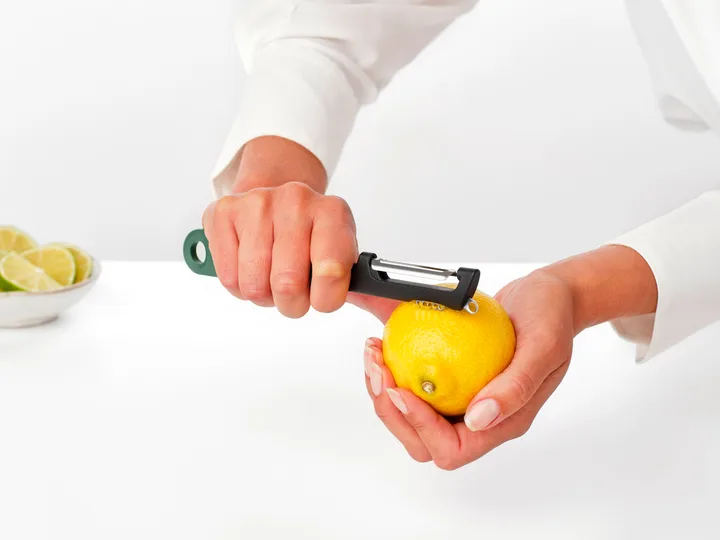
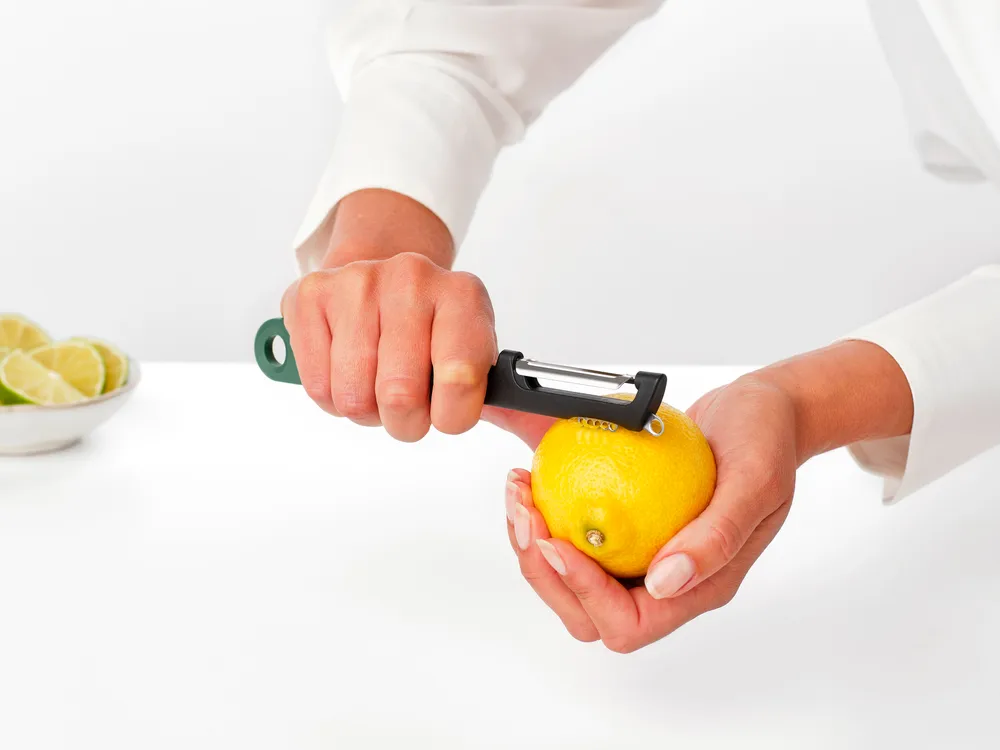
Hold the lemon in one hand. Keep your fingers away from the path of the peeler.
-
Place the peeler gently against the yellow skin.
-
Pull the peeler from top to bottom with light pressure.
-
Stop as soon as you see pale white pith beneath the strip.
-
Turn the lemon and repeat on a fresh yellow area.
-
Avoid peeling the same spot twice.
-
Place the strips on the cutting board.
-
Use a sharp knife to cut the strips into thin pieces.
-
Chop the pieces again if your recipe calls for finely grated zest.
The key to how to zest a lemon with a potato peeler is shallow pressure. Think of the peeler as lifting a thin ribbon from the surface, not carving into the fruit. A heavy push often removes too much pith.
It helps to move the lemon instead of forcing the peeler around a curved section. Rotate the lemon after each pass. This gives you a more even result and keeps your hand in a safe position.
For most recipes, two or three strips from one lemon provide enough zest. A medium lemon usually gives about 1 to 2 tablespoons of zest, though the amount varies with the fruit’s size and skin thickness.
How to cut and use the peeled strips
A potato peeler creates larger pieces than a fine grater. You should cut the strips based on the recipe.
For a cake, cookie, or frosting, slice the strips into very thin threads. Then chop across the threads until the zest is fine. Small pieces spread the lemon oil through the batter.
For a cocktail, garnish, or infused syrup, you may keep the strips wide. A wide strip can release aroma without adding small bits to the drink. Twist the strip over the glass to spray some of the lemon oil onto the surface.
For savory food, mince the zest with a sharp knife. Add it near the end of cooking when possible. Long cooking can reduce the bright aroma, although the flavor may still remain.
You can also rub minced lemon zest into sugar with your fingertips. This releases the lemon oils and creates fragrant lemon sugar for baked goods, tea, or fruit. Wash your hands well after handling citrus peel, especially before touching your eyes.

Tips for better results
These small adjustments make how to zest a lemon with a potato peeler easier and more consistent.
• Use a sharp peeler. A dull blade needs more force and is more likely to slip.
• Keep the lemon dry. Moisture reduces grip.
• Use short strokes. Short passes offer better control than one long pull.
• Work over a bowl. This catches small pieces and keeps the citrus oils near your food.
• Peel only the yellow surface. Stop when the color changes to white.
• Turn the fruit often. This prevents deep peeling in one area.
• Zest before juicing. A whole lemon is easier to hold than a soft, empty shell.
• Use a cutting board with a non-slip base. Stability improves safety.
In kitchen testing, one common mistake is pressing down as if peeling a potato. Lemon skin is much thinner, so that motion removes the pith quickly. A light touch gives a more fragrant and less bitter result.
Another useful lesson is to keep the peeler moving. If you pause in one place, the blade can dig into the fruit. Smooth movement helps create an even strip.

Common mistakes to avoid
The most common problem is taking too much white pith. If this happens, trim the white part from the back of the strip with a knife. A small amount is not dangerous, but a large amount can affect the taste.
Do not use a lemon with mold, deep soft spots, or a damaged peel. Cutting away visible mold does not always make spoiled produce safe. Choose a fresh lemon instead.
Do not hold the lemon directly over food while using the peeler. The tool can slip, and a peel strip may fall into the dish before you can check it. Peel over a board or bowl, then transfer the zest.
Avoid storing fresh zest uncovered in the refrigerator. Citrus aroma fades quickly, and the pieces can dry out. Place the zest in a small airtight container and use it within a few days.
If you need to save it longer, spread the zest in a thin layer and freeze it in a sealed container. Frozen zest may lose a little freshness, but it remains useful for cooked dishes, baking, and drinks.
Potato peeler versus other zesting tools
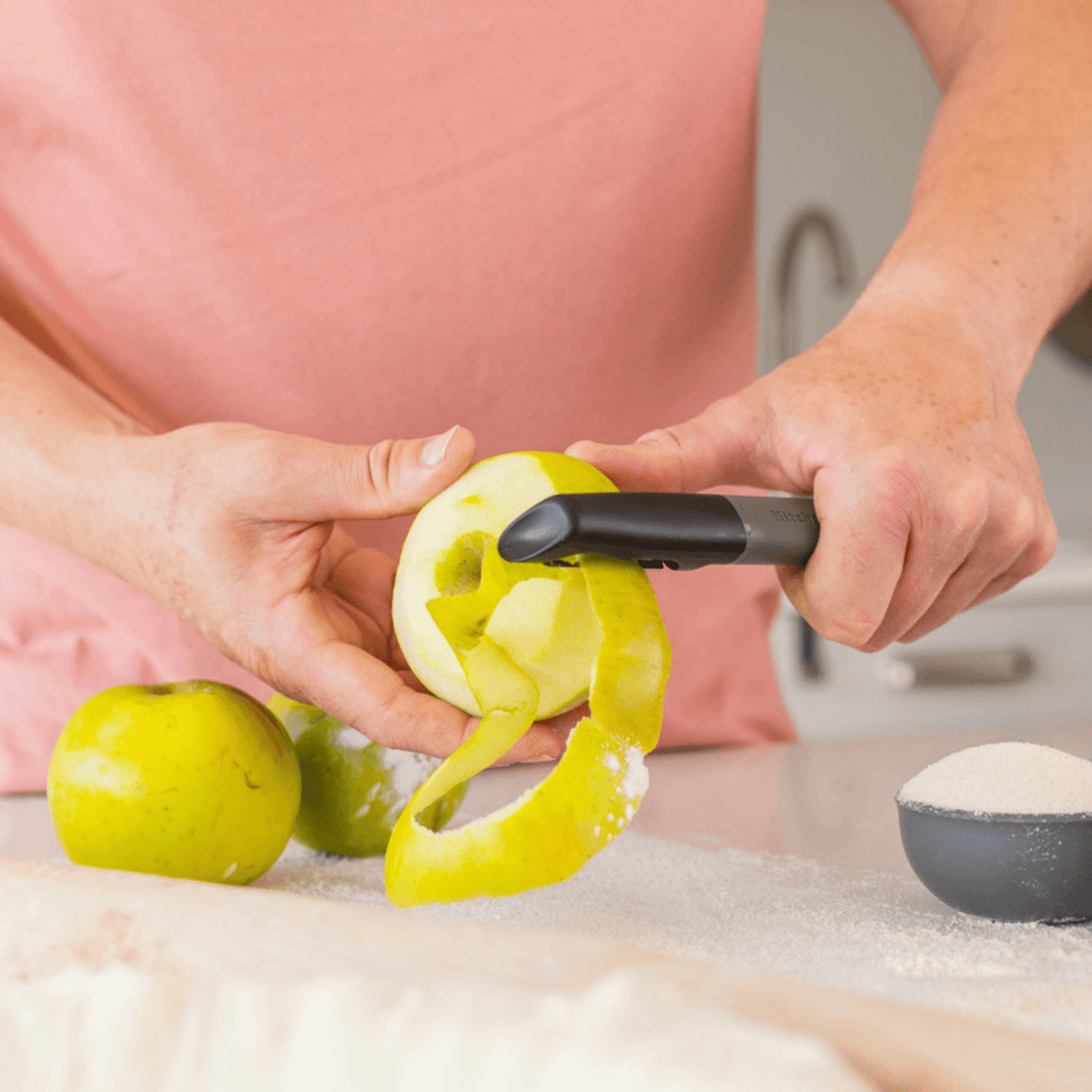
A potato peeler is useful because many kitchens already have one. It is also easy to clean and can create long strips for garnishes or infusions.
A microplane produces fine zest quickly. It is usually the best choice for recipes that need a smooth texture, such as custard, frosting, or delicate sauces.
A box grater can work when you do not have a microplane. Use the smallest holes and move the lemon carefully. It may produce uneven pieces and can remove some pith if you press too hard.
A citrus zester creates narrow threads. It is useful for decoration, but it can be slower than a peeler for larger amounts.
Here is a simple comparison:
• Potato peeler: Best for wide strips and kitchens without special tools
• Microplane: Best for fine, fluffy zest
• Box grater: Useful as a basic backup tool
• Citrus zester: Best for narrow decorative strands
When learning how to zest a lemon with a potato peeler, remember that the tool is not inferior. It simply creates a different shape. Once chopped, the strips can work in nearly any recipe that calls for lemon zest.

How to store lemon zest
Fresh lemon zest has the strongest scent when used right away. If you must store it, place it in a small airtight container and refrigerate it. Use it within two to three days for the best flavor.
For longer storage, freeze the zest. Put the minced pieces in a freezer-safe bag or container. Press out extra air, seal the container, and label it with the date.
You can freeze larger strips for drinks and syrups. You can also mix minced zest with sugar before freezing. Break off the amount you need as recipes call for it.
Lemon zest can be dried, but dried zest has a softer aroma and a different texture. Use it in spice blends, baked goods, or cooked dishes rather than recipes that depend on fresh citrus fragrance.
Do not store zest in a damp container. Moisture can cause clumping and may encourage spoilage. A clean, dry, sealed container is the safest option.
Frequently Asked Questions
Can I zest a lemon with any potato peeler?
Most standard peelers can do the job, especially those with a sharp, narrow blade. A Y-shaped peeler often offers good control, but the best choice is the one that feels stable in your hand.
How do I avoid the bitter white pith?
Use light pressure and take only a thin layer of yellow skin. Stop each stroke as soon as you see white beneath the peel.
Should I wash a lemon before zesting it?
Yes. Rinse the lemon under cool running water, rub the surface gently, and dry it with a clean towel. Washing removes surface dirt and some residue before the peel touches your food.
How much zest does one lemon make?
One medium lemon often provides about 1 to 2 tablespoons of zest. The amount depends on the lemon’s size, variety, and thickness of skin.
Can I zest a lemon after cutting it in half?
Yes, but it is usually harder to hold safely. Zesting the whole lemon first gives you better control, then you can cut it and squeeze the juice.
Can I use lemon zest in place of lemon juice?
Not exactly. Zest gives aroma and concentrated citrus flavor, while juice adds acidity and liquid. They support each other but are not direct substitutes in most recipes.
Is lemon zest safe to eat?
Yes, when the lemon is fresh and washed well. Remove damaged areas and avoid using spoiled or moldy fruit.