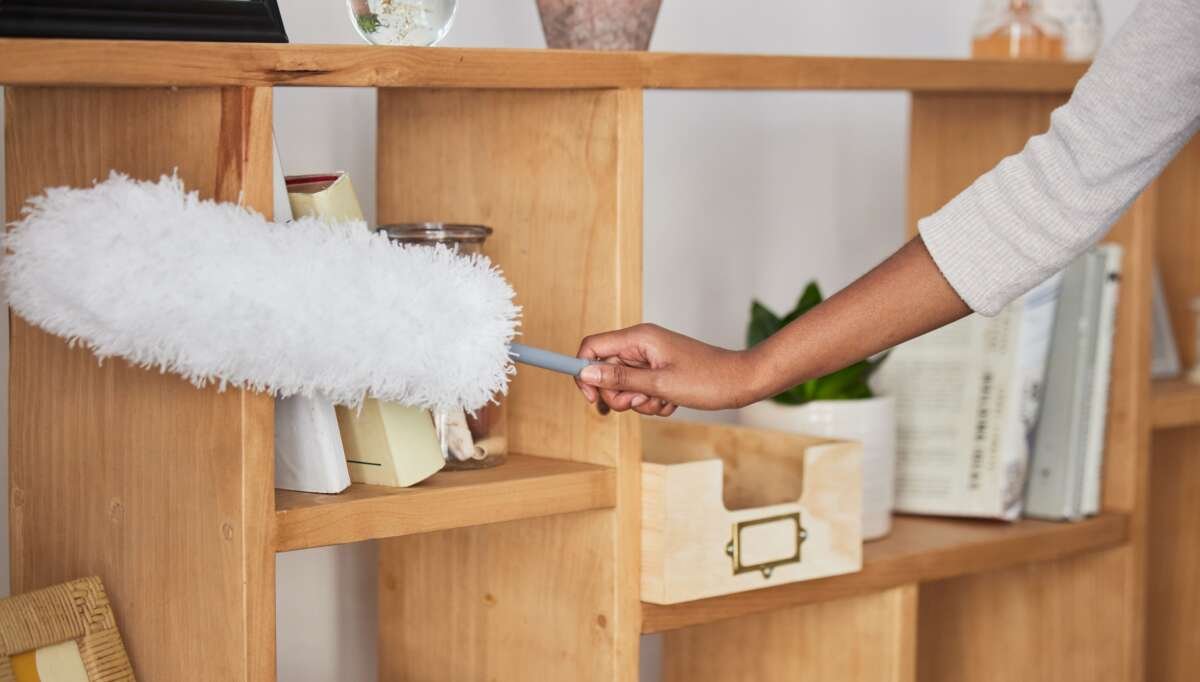
Do You Dust Or Vacuum First When Cleaning: Best Order
Dust first, then vacuum, because loose particles fall onto lower surfaces during cleaning.
If you dust after vacuuming, you may send crumbs, pet hair, and fine dust back onto the floor. As a cleaning writer who has tested many home-care routines, I find that dusting high surfaces first and vacuuming last gives the most complete result with less repeated work.
Why Dusting Before Vacuuming Works
The best order is simple: clean from top to bottom. Dust shelves, furniture, counters, and other raised surfaces first. Then vacuum the floor after the loose dirt has settled.
When you dust, some particles escape into the air. Others fall onto nearby surfaces. Even a careful person cannot catch every speck with a cloth. If you vacuum first, that floor may become dirty again before you finish.
The same idea applies to many cleaning tasks. You would not wash a window and then spray a dirty counter beside it. Cleaning in a logical order helps prevent cross-contamination and saves time.
The main benefits of dusting before vacuuming include:
• Less repeated work because fallen dust is removed at the end
• Cleaner floors and carpets
• Fewer airborne particles left behind
• Better removal of pet hair, crumbs, and grit
• A more efficient whole-house cleaning routine
The answer to “do you dust or vacuum first when cleaning” is not just about habit. It is about gravity, airflow, and the way cleaning tools move dirt around a room.

How to Dust Before You Vacuum
Start at the highest point in the room. Work downward in a steady pattern. This method prevents you from cleaning the same area twice.
Use a clean, slightly damp microfiber cloth for most hard surfaces. A dry cloth may push fine dust into the air instead of trapping it. Microfiber has small fibers that grab particles better than many paper towels or old cotton rags.
Follow these steps:
-
Remove small items from the surface you plan to clean.
-
Dust ceiling fans, light fixtures, and high shelves first.
-
Move to bookcases, tables, counters, and furniture.
-
Wipe electronics with a dry or manufacturer-approved cloth.
-
Clean baseboards and lower furniture.
-
Wait a few minutes if the air looks dusty.
-
Vacuum the floor, edges, rugs, and upholstery.
Do not soak wood, stone, or electronic surfaces. Too much water can damage finishes or leave marks. For delicate materials, check the care label or the manufacturer’s instructions.
A common mistake is using the same dirty cloth throughout the house. Once a cloth becomes coated with dust, it can spread grime. Fold the cloth into sections and switch to a clean side often.
When deciding “do you dust or vacuum first when cleaning,” remember this simple image: dust is like light snow. If you clear the ground before the snow stops falling, you will need to do it again.
The Best Room-by-Room Cleaning Order
A consistent cleaning order makes chores feel easier. It also helps you notice areas that are often missed, such as vents, curtain tops, and spaces under furniture.
For a bedroom, use this order:
• Open a window if outdoor air quality is good.
• Pick up clothing, books, and personal items.
• Dust the ceiling fan, headboard, nightstands, and dressers.
• Change the sheets.
• Clean mirrors and glass.
• Vacuum the floor, rug, and space beneath the bed.
For a living room, begin with clutter. Then dust shelves, lamps, picture frames, the television stand, and furniture. Finish by vacuuming upholstery, rugs, corners, and the main floor.
In the kitchen, clean from high to low. Dust or wipe the tops of cabinets, then clean counters, appliances, the sink, and cabinet fronts. Sweep or vacuum the floor before mopping it.
Bathrooms need a slightly different approach because moisture and germs matter. Clean mirrors and high surfaces first, then the sink, shower, toilet, and floor. Use separate cloths for the toilet area and other bathroom surfaces.
This room-by-room approach confirms why the answer to “do you dust or vacuum first when cleaning” is usually dust first. The exact products may change, but the top-to-bottom rule stays useful.

When Vacuuming First Can Make Sense
Dusting first is the best general rule, but cleaning is not always a perfect routine. In some cases, vacuuming first can be useful.
For example, if a floor is covered with thick pet hair, crumbs, or loose dirt, remove the worst debris before dusting. This keeps you from stepping on grit and spreading it around the room. After dusting, do a second, quick vacuum pass.
Vacuum first in these situations:
• A large amount of debris could damage a microfiber cloth
• You need to clean a heavily soiled area before working nearby
• You are using a vacuum with a sealed filtration system and strong suction
• You are cleaning upholstery before dusting surrounding furniture
• You want to remove loose allergens from a mattress or rug
This does not change the main answer to “do you dust or vacuum first when cleaning.” It simply shows that practical cleaning may need two stages.
A vacuum with a high-efficiency filter can help capture fine particles. Still, no vacuum removes every particle from the air, and filters need regular care. A full or poorly fitted filter can reduce suction and send dust back into the room.

Dusting and Vacuuming for Allergies
People with allergies may need a more careful method. Household dust can include fabric fibers, pollen, skin flakes, dust mite waste, and other small particles. Not every particle causes symptoms, but reducing dust can make a room more comfortable for some people.
Use these allergy-aware habits:
• Wear a well-fitting mask if dust triggers symptoms.
• Choose a damp microfiber cloth instead of a feather duster.
• Vacuum rugs, carpets, and upholstery slowly.
• Use a vacuum with good filtration and maintain the filter.
• Wash bedding regularly according to care instructions.
• Reduce clutter that traps dust.
• Keep pets off freshly cleaned surfaces when possible.
The Centers for Disease Control and Prevention and other public health guidance commonly recommend regular cleaning, ventilation, and proper product use. However, cleaning alone cannot remove every allergy trigger. Severe or ongoing symptoms should be discussed with a qualified health professional.
A damp cloth is usually better than dry dusting for settled particles. Yet moisture is not right for every surface, so test a small hidden area first.

Tools That Make the Job Easier
The right tools matter, but technique matters more. A costly vacuum will not fix an inefficient cleaning order.
Useful dusting tools include:
• Microfiber cloths for shelves, furniture, and baseboards
• A soft brush for vents and delicate objects
• An extendable duster for ceiling fans and tall surfaces
• A small vacuum attachment for corners and upholstery
• A clean bucket for washable cloths
For floors, choose the vacuum head based on the material. A motorized brush may work well on carpet, while a soft setting can protect some hard floors. Always follow the floor maker’s care instructions.
Do not use a vacuum on wet spills unless it is designed for wet cleaning. Water can damage a standard vacuum and create an electrical hazard. Blot liquid with a suitable towel, then follow the floor manufacturer’s advice.
In my own cleaning routine, I keep two microfiber cloths in each main area of the home. This small habit prevents the classic mistake of carrying kitchen grease into the living room. I also clean the vacuum filter on a set schedule instead of waiting for suction to drop.

Common Mistakes to Avoid
Even when people know the answer to “do you dust or vacuum first when cleaning,” small mistakes can reduce the result.