Yes, you can clean most sofas with a vacuum cleaner, as long as you use the right attachment and method.
A vacuum cleaner is one of the safest and easiest ways to remove dust, crumbs, pet hair, and loose dirt from a sofa. However, vacuuming cannot remove every stain, odor, or deeply set mark. The sofa fabric, care label, vacuum type, and cleaning technique all matter. This guide explains how to clean a sofa with a vacuum cleaner without damaging the upholstery.
Can We Clean a Sofa With a Vacuum Cleaner?
Yes, we can clean a sofa with a vacuum cleaner for regular maintenance. Vacuuming removes surface dust, food crumbs, hair, lint, and small particles that collect between cushions and along seams.
A vacuum cleaner is especially useful for fabric sofas, microfiber couches, velvet upholstery, and homes with pets. It helps stop dirt from being pressed deeper into the fibers during daily use.
Still, vacuuming is a dry cleaning step. It does not fully remove liquid spills, grease, ink, or old stains. Those problems may need a suitable upholstery cleaner or professional treatment.
When you clean a sofa with a vacuum cleaner, think of the process as brushing sand from a rug. You remove loose dirt first, but you may need another method for marks that have soaked in.

Why Vacuuming Your Sofa Matters
Sofas collect more dirt than many people realize. We sit, eat, sleep, and relax on them, so dust and skin flakes can build up quickly.
Regular vacuuming also helps reduce allergens. Dust mites feed on dead skin and often live in household fabrics, including cushions and upholstery. Vacuuming cannot remove every allergen, but it can reduce the amount of loose dust and debris.
Cleaning your sofa with a vacuum cleaner can also:
• Reduce pet hair and dander
• Prevent crumbs from attracting insects
• Keep fabric looking fresher
• Reduce musty smells caused by trapped dirt
• Protect upholstery from abrasive grit
• Extend the time between deep cleans
Tiny pieces of sand and grit can act like fine sandpaper. When people sit on the sofa, these particles rub against the fibers and may cause early wear.

Check the Sofa Care Label First
Before you clean a sofa with a vacuum cleaner, look for the care label. It is often under a cushion, beneath the sofa, or attached to the frame.
Common upholstery cleaning codes include:
• W: Water-based cleaning products are usually allowed.
• S: Use a solvent-based upholstery cleaner only.
• WS: Water-based or solvent-based products may be suitable.
• X: Vacuuming or professional cleaning is usually recommended. Avoid liquid cleaners.
The label does not usually prevent vacuuming, but it helps you understand what to do after vacuuming. A sofa marked “X,” for example, should not be treated with water unless a professional gives specific advice.
If there is no label, contact the manufacturer or test any product on a hidden spot. Some older fabrics, loose weaves, and delicate trims can react badly to moisture or strong suction.

Choose the Right Vacuum Attachment
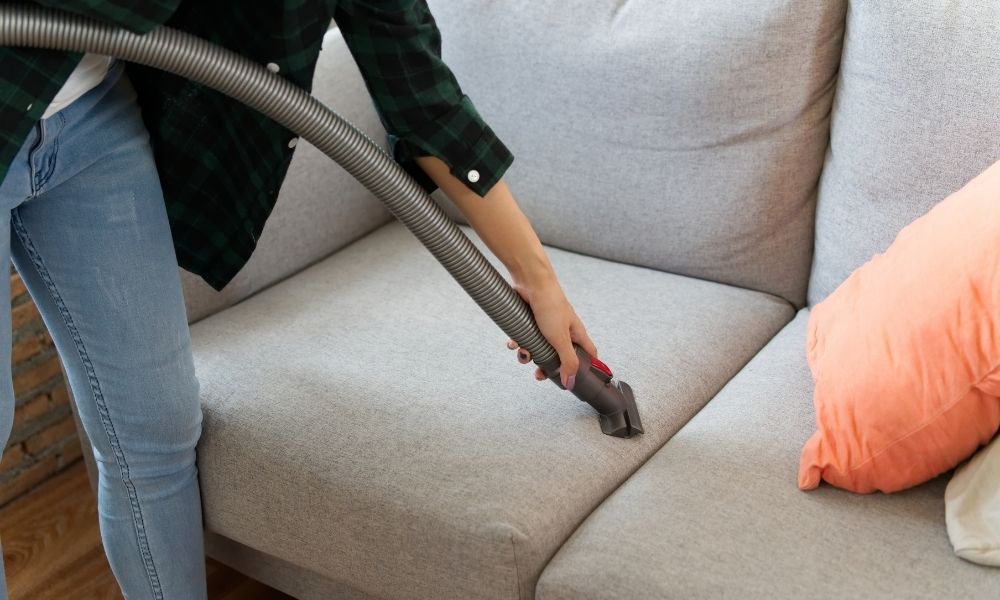
The attachment can make a major difference. A narrow nozzle may pull at fabric, while a soft brush can remove dirt with less risk.
Use these vacuum tools when possible:
• Upholstery tool: Best for cushions, seats, and broad fabric areas.
• Soft brush attachment: Useful for delicate fabric and loose dust.
• Crevice tool: Helps clean seams, corners, and gaps.
• Pet hair tool: Helpful for stubborn hair, but use gentle pressure.
Avoid using a bare floor head on the sofa. It may have stiff bristles or a hard edge that can snag the fabric.
If your vacuum has adjustable suction, choose a low or medium setting. High suction can pull loose threads, flatten pile, or make delicate fabric stretch.

How to Clean a Sofa With a Vacuum Cleaner
Follow a slow, careful process. Rushing can leave dirt behind and may damage the upholstery.
1. Remove cushions and loose items
Take off all removable cushions, throws, blankets, and decorative pillows. Check inside the sofa for coins, toys, wrappers, and other objects.
Never force a cushion out if it is fixed in place. Pulling hard can damage the zipper, seams, or inner foam.
2. Read the care label
Confirm the sofa fabric and its cleaning code. This step takes less than a minute and can prevent an expensive mistake.
3. Test the vacuum
Attach the upholstery tool and test it on a hidden area. Check that the fabric does not pull, fuzz, or change shape.
4. Vacuum the cushions
Start with the top of each cushion. Use slow, overlapping passes instead of quick strokes.
Vacuum both sides if the cushions are reversible. Pay close attention to the edges, piping, seams, and zipper areas.
5. Clean the sofa frame
Run the upholstery tool over the seat, back, arms, and front panel. Use the crevice tool for narrow gaps.
Move the tool slowly. A fast pass may remove only loose dust from the surface while leaving heavier dirt below.
6. Vacuum underneath the sofa
Dust often gathers beneath furniture. If the sofa is light enough to move safely, ask another person to help shift it.
Do not lift a heavy sofa alone. You could hurt your back or damage the legs.
7. Finish with a fabric check
Look for stains, damp spots, loose threads, or areas that still smell. Vacuuming may reveal problems that were hidden under crumbs or hair.
If you clean a sofa with a vacuum cleaner once a week, regular dirt becomes much easier to control.
How to Remove Pet Hair With a Vacuum
Pet hair can be harder to remove than ordinary dust. It may cling to fabric because of static or become trapped in the weave.
Start with the upholstery tool. Use short, gentle strokes in different directions. If hair remains, use a slightly damp rubber glove or a pet hair brush before vacuuming again.
Do not soak the fabric. A damp glove should lift hair, not wet the sofa.
For thick pet hair, work in small areas. Trying to clean the whole sofa at once often spreads hair instead of collecting it.
In my own sofa-cleaning tests, the most common mistake was using too much force. Pressing down harder did not improve cleaning. It only flattened the fabric and made the vacuum harder to move.
Can a Vacuum Cleaner Remove Sofa Stains?
A vacuum cleaner can remove dry, loose material from a stain, but it usually cannot remove the stain itself.
For example, vacuuming may lift dry crumbs from a food mark. It will not normally remove oil, coffee, wine, ink, or body oils that have soaked into the fabric.
Use this basic approach:
-
Vacuum the area first.
-
Check the sofa care code.
-
Blot fresh liquid with a clean white cloth.
-
Use a fabric-safe cleaner if the label allows it.
-
Test the cleaner on a hidden area.
-
Blot rather than scrub.
-
Let the area dry fully.
-
Vacuum the dry fabric again.
Scrubbing can spread the stain and damage the fibers. Blotting is gentler because it lifts the liquid instead of grinding it into the cloth.
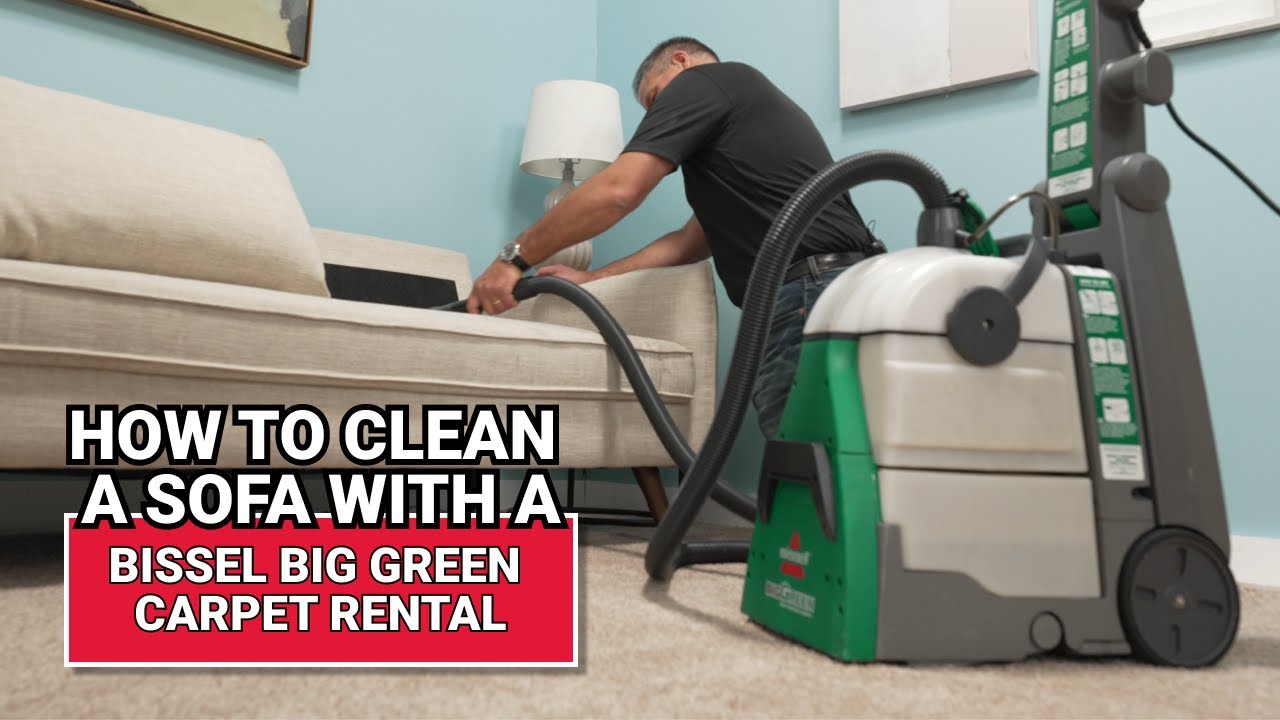
Never use a carpet shampoo machine or steam cleaner on a sofa unless the manufacturer says it is safe. Too much water can cause water rings, shrinkage, color bleeding, mold, or damage to the cushion filling.

How Often Should You Vacuum a Sofa?
The best schedule depends on how the sofa is used.
• Light use: Vacuum every two to four weeks.
• Average household use: Vacuum once a week.
• Homes with pets or children: Vacuum two or three times a week.
• Allergy-sensitive homes: Vacuum more often and clean nearby floors and rugs as well.
Vacuum high-use areas more often than decorative areas. The seat cushions, armrests, and front edge usually collect the most dirt.
A small handheld vacuum can help with quick cleanups. For full cleaning, a larger vacuum with adjustable suction and useful attachments is often more effective.
Common Mistakes to Avoid
Even a simple task can go wrong when the wrong tool or method is used.
Using too much suction
Strong suction may pull threads or stretch fabric. Start low and increase power only when the material handles it well.
Skipping the care label
A sofa may look durable but still react badly to water or chemicals. The care code gives useful guidance about the next cleaning step.
Vacuuming too quickly
Fast movements often leave dirt behind. Slow passes give the vacuum more time to lift particles.
Ignoring the seams
Dust, crumbs, and pet hair hide in seams and corners. Use the crevice tool carefully, but do not force it into tight areas.
Using a dirty filter
A clogged filter reduces suction and may send fine dust back into the room. Clean or replace filters according to the vacuum manual.
Scrubbing stains with the vacuum head
A vacuum should lift dry dirt. It should not be dragged aggressively across wet stains or delicate fabric.
Vacuuming loose threads
If a thread is already loose, the vacuum may pull it farther. Trim it carefully or ask an upholstery professional for help.
Vacuum Cleaner Types for Sofa Cleaning
Different vacuum cleaners suit different sofa-cleaning needs.
Upright vacuum
An upright vacuum can clean a sofa well if it has a flexible hose and upholstery attachments. It may be less convenient for narrow spaces.
Canister vacuum
A canister vacuum is often easy to use on furniture because the hose and small tools are flexible. It is a strong choice for homes with several fabric surfaces.
Stick vacuum
A stick vacuum is light and quick for everyday crumbs and hair. Its smaller dust bin may need frequent emptying.
Handheld vacuum
A handheld vacuum works well for small spills, crumbs, car seats, and quick pet hair removal. It may not have enough power for deep sofa cleaning.
Wet-dry vacuum
A wet-dry vacuum can be useful for approved upholstery cleaning, but only when the sofa manufacturer allows moisture. Wrong use may leave the cushions wet for too long.
Extra Tips for a Fresher Sofa
Vacuuming is the foundation, but a few simple habits can keep the sofa cleaner.
• Rotate and reverse removable cushions when the design allows it.
• Keep food and drinks away from fabric upholstery when possible.
• Wash removable covers according to the care label.
• Treat spills as soon as they happen.
• Keep pets’ nails trimmed to reduce snags.
• Open windows after approved spot cleaning to improve airflow.
• Do not place damp cushions back on the sofa.
Baking soda is sometimes used to control odors, but it should be applied carefully. Fine powder can enter seams and may be difficult to remove. If you use it, apply a light layer, wait briefly, and vacuum thoroughly. Avoid it if the manufacturer warns against powders.
When to Call a Professional Upholstery Cleaner
A professional may be the safest choice for valuable, antique, leather, silk, or heavily stained sofas.
Consider professional cleaning when:
• The sofa has a delicate or unknown fabric.
• The care label shows code X.
• The odor remains after vacuuming.
• Mold or mildew is present.
• A stain has spread over a large area.
• The cushions have water damage.
• The fabric has color bleeding or shrinkage.
• You are dealing with urine, vomit, or another deep biological stain.
Professionals have specialized tools and can choose a method based on the fiber, dye, backing, and cushion construction. They can also tell you when cleaning may cause more harm than good.
Frequently Asked Questions About Can We Clean Sofa With Vacuum Cleaner
Can we clean a sofa with a regular vacuum cleaner?
Yes, a regular vacuum cleaner can remove dust, crumbs, hair, and loose dirt from most sofas. Use an upholstery attachment and low suction when possible.
Can vacuuming damage a sofa?
Vacuuming can cause damage if you use high suction, a hard floor head, or rough movements. Test a hidden spot and use a soft attachment to reduce the risk.
Can we clean a leather sofa with a vacuum cleaner?
Yes, you can gently vacuum a leather sofa with a soft brush attachment. Avoid scratching the leather, and follow the manufacturer’s instructions for conditioning and spot cleaning.
Does vacuuming remove sofa odors?
Vacuuming may reduce odors caused by dust, crumbs, and pet hair. It will not usually remove odors caused by mold, urine, spills, or moisture trapped inside the cushions.
How often should I vacuum my sofa?
Most sofas benefit from weekly vacuuming. Homes with pets, children, or allergy concerns may need sofa vacuuming several times each week.
Can I vacuum a wet sofa?
Do not use a standard dry vacuum on a wet sofa. Let the sofa dry safely, or use an approved wet-dry vacuum only when the upholstery instructions allow it.
Conclusion
You can clean a sofa with a vacuum cleaner, and regular vacuuming is one of the simplest ways to protect upholstery. Use the correct attachment, reduce suction for delicate fabric, clean slowly, and focus on seams and cushion gaps.
Remember that vacuuming removes loose dirt but does not replace stain treatment or professional upholstery cleaning. Check the care label before using any liquid or machine-based method.
Start with a gentle weekly vacuum routine today. Your sofa will look fresher, feel cleaner, and stay in better condition for longer. Share your sofa-cleaning tips or explore more upholstery care guides for practical home advice.

Liora Pennings is a seasoned chef and kitchen enthusiast with a passion for turning everyday cooking into an effortless experience. With years of hands-on culinary expertise, she specializes in practical techniques, ingredient know-how, and smart kitchen solutions that help home cooks elevate their meals. At KitchFlair.com, Liora shares her best tips, time-saving tricks, and honest product reviews to guide readers toward a more efficient, enjoyable, and inspired cooking routine. Whether you’re a beginner or a seasoned home chef, Liora’s friendly, knowledge-packed insights make every visit to the kitchen a little easier—and a lot more delicious.