What Are Mixing Bowls Made Of: Materials Explained
Mixing bowls are mainly made of stainless steel, glass, plastic, ceramic, silicone, copper, wood, and bamboo.
Knowing what are mixing bowls made of helps you choose the right bowl for baking, cooking, meal prep, and food storage. Each material has its own strengths, limits, care needs, and safety concerns. A good bowl should match the task, not just look attractive on a kitchen shelf.
What Are Mixing Bowls Made Of?
Mixing bowls are made from several common materials. The most popular choices are stainless steel, glass, and plastic, but ceramic, silicone, copper, wood, and bamboo bowls also have useful roles.
The material affects a bowl’s weight, strength, heat resistance, stain resistance, and cleaning needs. It can also change how easily ingredients mix and how well the bowl works for tasks such as whipping egg whites or kneading dough.
The main materials include:
• Stainless steel: Strong, light, durable, and useful for nearly every kitchen task.
• Glass: Clear, nonreactive, and often safe for microwaves and ovens when labeled for that use.
• Plastic: Light, affordable, and easy to handle, though it may stain or scratch.
• Ceramic: Heavy, attractive, and stable, but more likely to chip or break.
• Silicone: Flexible, light, and useful for folding, pouring, and compact storage.
• Copper: Excellent for whipping egg whites, but it needs special care.
• Wood and bamboo: Warm, natural, and decorative, but less suited to wet storage or deep cleaning.

Stainless Steel Mixing Bowls
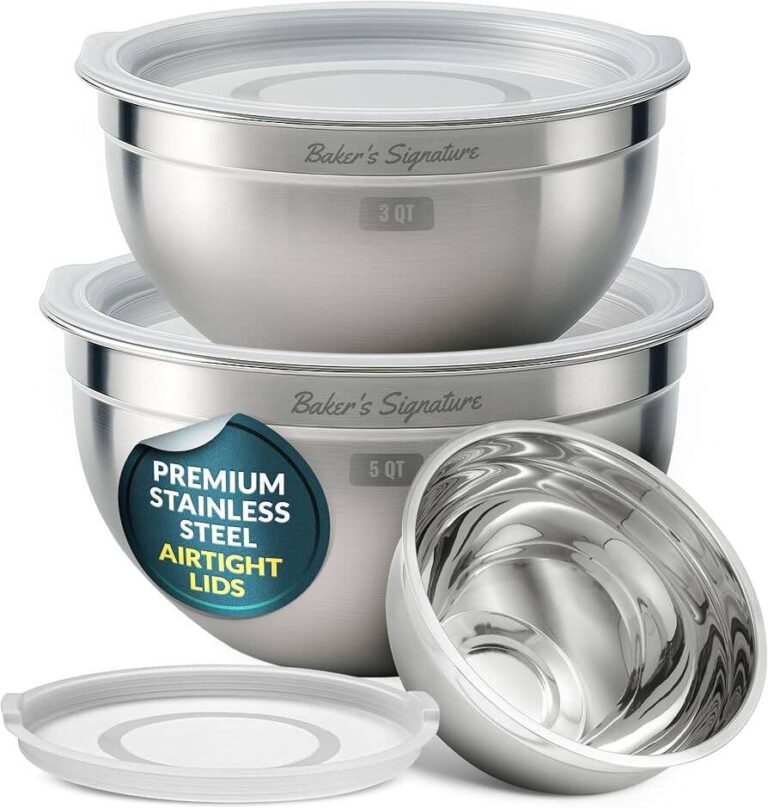
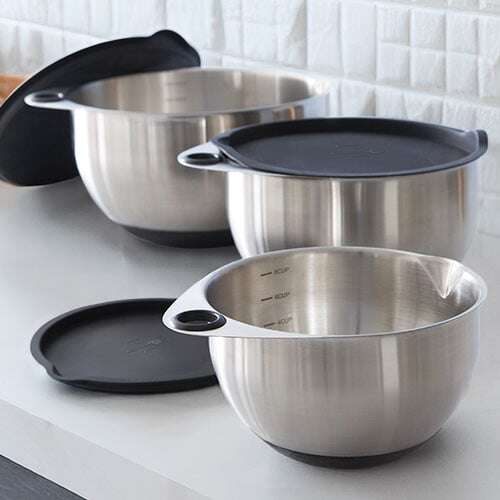
Stainless steel is one of the most useful materials for mixing bowls. It is made from steel blended with chromium and, in many grades, nickel. Chromium helps the metal resist rust, while nickel can improve shine and corrosion resistance.
Most quality bowls use food-grade stainless steel, often labeled as 18/8 or 18/10. These numbers describe the approximate levels of chromium and nickel. The higher the quality, the better the bowl usually resists rust, dents, and discoloration.
Stainless steel bowls work well for:
• Mixing cake batter and cookie dough
• Whisking sauces and dressings
• Tossing salads
• Marinating meat and vegetables
• Holding ingredients during meal preparation
• Using over a pot of simmering water as a double boiler
A stainless steel bowl does not absorb odors or flavors. It is also nonporous, so food particles do not easily sink into the surface. Many models are dishwasher safe, although the manufacturer’s care instructions should always come first.
The main drawback is that stainless steel is not microwave safe. It can also become very hot or cold, depending on the food and environment. Very thin bowls may dent, tip, or develop sharp edges after heavy use.
A practical tip is to choose a bowl with a wide base and a rolled rim. The wide base improves balance, while the rolled rim makes pouring safer and more comfortable.
Glass Mixing Bowls
Glass mixing bowls are made from heat-resistant glass or standard tempered glass. Some are made from borosilicate glass, which handles temperature changes better than ordinary glass. However, no glass bowl is completely immune to thermal shock.
Glass is nonreactive. This means it usually does not react with acidic foods such as tomatoes, lemons, vinegar, or yogurt. It also does not hold strong smells, which makes it useful for marinades and spice-heavy mixtures.
Glass mixing bowls are useful because they are:
• Clear, so you can see the ingredients from all sides
• Nonporous and easy to clean
• Often safe for refrigerators and freezers
• Available in oven-safe and microwave-safe designs
• Suitable for serving as well as mixing
Glass is heavier than plastic or stainless steel. That weight can help the bowl stay steady while you stir, but it may be difficult for children or people with limited hand strength to lift.
The biggest concern is breakage. Never move a cold glass bowl directly into a hot oven unless the bowl is clearly marked for that use. Avoid placing hot glass on a cold or wet surface. Sudden temperature changes can cause cracking or shattering.
When asking what are mixing bowls made of, many shoppers choose glass because it offers a clear view of ingredients and a clean, neutral surface. Still, the words “glass” and “oven safe” should not be treated as automatic synonyms.
Plastic Mixing Bowls
Plastic mixing bowls are made from different polymers. Common types include polypropylene, polyethylene, and sometimes melamine. The exact material matters because plastics vary in heat tolerance, flexibility, stain resistance, and durability.
Plastic bowls are popular because they are light and affordable. They are easy to carry, making them useful for children, outdoor cooking, camping, and large batches of food.
Plastic mixing bowls often include helpful features such as:
• Pouring spouts
• Measurement marks
• Non-slip bases
• Nesting designs
• Airtight lids
• Flexible sides
Plastic does not break like glass, but it can scratch, stain, and absorb odors over time. Tomato sauce, curry, turmeric, and oily foods may leave marks on some bowls. Scratches can also make the surface harder to clean.
Use plastic bowls only within their labeled temperature range. A bowl may be dishwasher safe but not microwave safe. It may also be microwave safe for reheating but not suitable for cooking high-fat foods, which can become very hot.
Avoid using bowls that are deeply scratched, cracked, melted, or cloudy from heat damage. The U.S. Food and Drug Administration evaluates food-contact materials, but safe use still depends on following the product label.
Ceramic Mixing Bowls
Ceramic mixing bowls are made from clay that has been shaped, dried, and fired at high temperatures. Many ceramic bowls receive a glass-like glaze on the outside and inside. The glaze can create a smooth, colorful, nonporous surface.
Ceramic bowls are valued for their style and weight. They often look attractive enough for serving, so you can move food from the prep area to the table without changing dishes.
Ceramic bowls are helpful for:
• Mixing and serving
• Holding warm ingredients
• Displaying fruit or baked goods
• Food preparation when a stable bowl is needed
Their weight keeps them from sliding across the counter. However, that same weight can make them less comfortable for frequent lifting. Ceramic can also chip, crack, or break if dropped.
A damaged glaze deserves attention. Do not use a bowl with deep cracks, flaking glaze, or exposed rough areas. Decorative ceramic bowls may not be made for food use, so look for a clear food-safe label before using one in the kitchen.
Silicone Mixing Bowls
Silicone mixing bowls are made from flexible, food-grade silicone. Silicone is a rubber-like material that can bend, fold, and return to its original shape. Many silicone bowls contain a firm rim or base to improve stability.
These bowls are useful in small kitchens because they collapse for storage. They also work well when you need to pour batter or transfer food through a narrow opening.
Common benefits include:
• Flexible sides for easy pouring
• Light weight
• Resistance to many stains and odors
• Easy storage
• Good heat resistance in products designed for cooking
Silicone bowls are not always stable enough for heavy mixing. A soft bowl may fold or tip when you beat thick dough. Some low-quality products may also feel oily, smell strongly, or pick up flavors.
Choose a bowl labeled as food-grade silicone and check its temperature rating. Wash it well after preparing oily foods. Silicone can be dishwasher safe, but grease may remain if the bowl is not cleaned thoroughly.
Copper Mixing Bowls
Copper mixing bowls are best known for whipping egg whites. Copper ions can interact with proteins in egg whites and help create a more stable foam. This makes copper especially useful for recipes such as meringue, soufflé, and angel food cake.
Copper bowls are not ideal for every ingredient. Acidic foods, including tomatoes, citrus juice, vinegar, and wine, may react with exposed copper. Many copper bowls therefore have a stainless steel or tin lining.
Copper requires more care than most other bowl materials. It may tarnish, and harsh cleaners can damage the finish or lining. Never assume that a decorative copper bowl is safe for food preparation.
For most home cooks, copper is a specialty tool rather than an everyday bowl. If you often make meringue, it can be valuable. If you mainly mix dough, salads, and sauces, stainless steel offers greater flexibility.
Wood and Bamboo Mixing Bowls
Wood mixing bowls are carved or formed from hardwoods such as maple, olive wood, beech, or acacia. Bamboo bowls are made from a fast-growing grass that is processed into a solid form or combined with other materials.
Wood and bamboo bowls have a warm, natural appearance. They are often used for serving salads, bread, fruit, and dry ingredients. Their light weight also makes them pleasant to handle.
These materials are more porous than glass, stainless steel, or glazed ceramic. They can absorb water, oil, colors, and odors. For that reason, they are not the best choice for storing wet food for long periods.
Care usually includes: