How To Sanitize Mixing Bowl: Easy Food-Safe Guide
To sanitize a mixing bowl, wash it first, apply an approved sanitizer, then let it air-dry completely.
A clean-looking bowl may still hold germs, grease, or food allergens in tiny scratches and seams. I have found that the safest way to sanitize a mixing bowl is to use a simple three-part routine: clean away soil, sanitize with the right method, and dry without wiping. This guide explains how to sanitize mixing bowl surfaces safely, whether your bowl is stainless steel, glass, plastic, or silicone.
Why Sanitizing a Mixing Bowl Matters
Washing and sanitizing are not the same thing. Washing removes flour, oil, egg, and food bits. Sanitizing lowers the number of harmful germs left on the surface.
A bowl can look spotless and still have bacteria on it. This matters most when you use the bowl for:
• Raw eggs, meat, poultry, or seafood
• Ready-to-eat foods such as whipped cream or salad
• Baby food or meals for older adults
• Foods served to people with weak immune systems
• Recipes that contain common allergens
For normal baking, thorough washing may be enough in many homes. However, sanitizing adds an extra layer of protection after contact with raw animal foods or during illness.
The best results come from cleaning first. Sanitizer cannot work well through dried batter, grease, or food soil. Think of cleaning as clearing the road so the sanitizer can reach the whole surface.
What You Need to Sanitize a Mixing Bowl
Gather your supplies before you begin. This makes the process faster and helps you avoid using unsafe products.
You may need:
• Hot water
• Dish soap
• A clean sponge or dish brush
• Disposable gloves, if desired
• An approved kitchen sanitizer
• Measuring spoons or a sanitizer test strip
• A clean drying rack
For most kitchens, a dishwasher is the easiest choice. A dishwasher cleans and sanitizes when it uses a sanitizing cycle or a final rinse that reaches the temperature listed by the manufacturer.
If you use bleach, choose regular, unscented chlorine bleach. Do not use scented bleach, splashless bleach, color-safe bleach, or products with added cleaners unless the label clearly says they are safe for food-contact surfaces.
Always read the product label. Sanitizer strength and contact time can differ by product, country, and bleach concentration.
How to Sanitize a Mixing Bowl by Hand
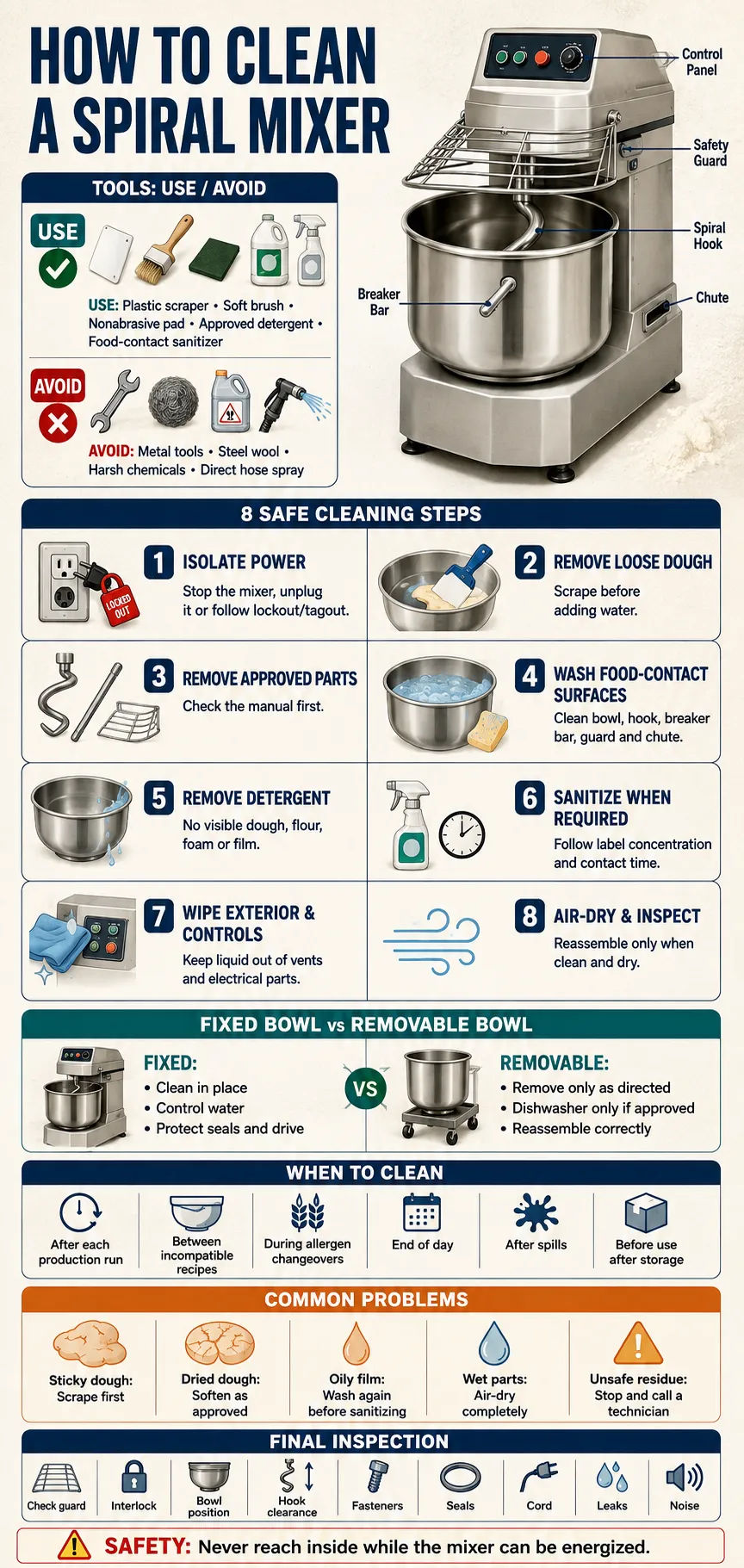
Follow these steps when you need to sanitize a mixing bowl without a dishwasher.
1. Remove leftover food
Scrape batter, dough, cream, or other food into the trash or compost. Use a soft scraper for dried food. Avoid sharp tools that can scratch plastic or coated surfaces.
2. Wash the bowl
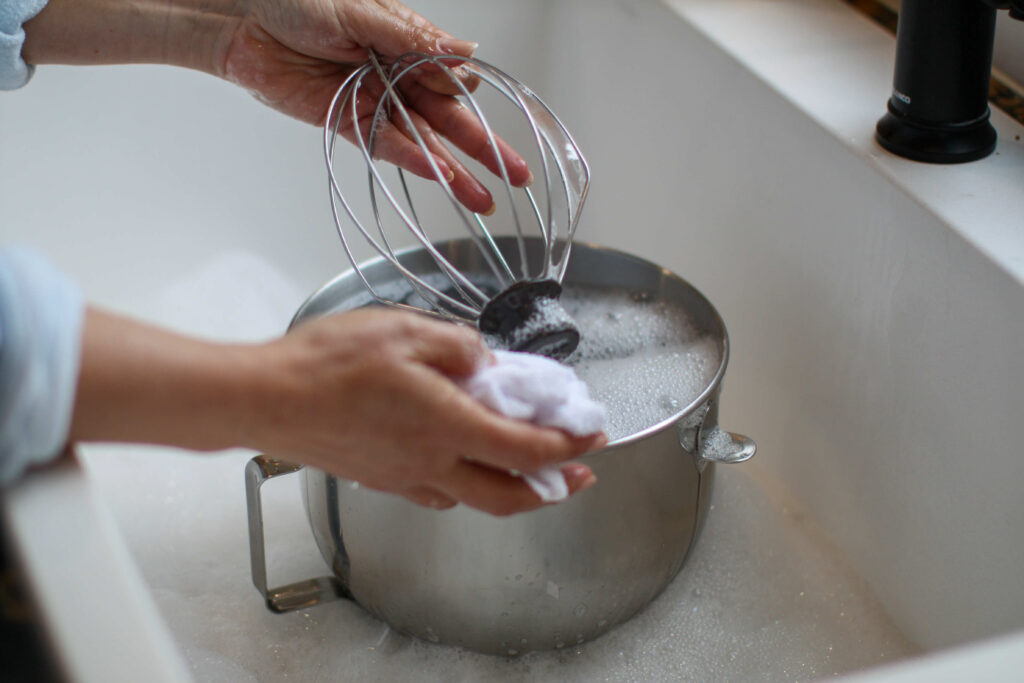
Fill the bowl with hot water and dish soap. Scrub the inside, outside, rim, base, and any ridges.
Pay close attention to the rim. I have often seen flour paste and egg film hide under the lip of a bowl. A small brush can reach areas that a large sponge misses.
3. Rinse well
Rinse the bowl under clean running water. Remove every trace of soap because leftover detergent can reduce the action of some sanitizers.
4. Apply the sanitizer
Use one of these methods:
• Place the bowl in a dishwasher with a sanitizing cycle.
• Fill or coat the bowl with a kitchen sanitizer made for food-contact surfaces.
• Use a properly diluted bleach solution when the product label allows it.
For a household bleach solution, public health guidance often uses about 1 tablespoon of regular, unscented bleach at 5% to 9% strength per gallon of water. Product labels may give different directions, so follow the label first.
Make sure the sanitizer touches every food-contact surface. If the bowl floats or has a deep shape, rotate it so the liquid reaches the whole inside.
5. Follow the contact time
Keep the surface wet for the time stated on the sanitizer label. A quick splash may not sanitize the bowl.
Contact time is the period during which the sanitizer must remain visibly wet. If the surface dries too soon, apply more solution and restart the timer.
6. Drain and air-dry
Place the bowl upside down or on a clean rack. Let it air-dry fully.
Do not dry the bowl with a used kitchen towel. Towels can transfer germs back to the surface. Air-drying also prevents contact with dust, crumbs, and dirty hands.

How to Sanitize a Mixing Bowl in the Dishwasher
A dishwasher is often the most reliable way to sanitize a mixing bowl at home. It uses measured detergent, strong water movement, and controlled heat.
Start by scraping off food. Place the bowl so water can reach the entire inside. Do not crowd it against plates or pans.
Choose a sanitizing cycle if your machine has one. Some machines include a high-temperature final rinse, while others only wash with warm water. A normal cycle may clean the bowl well but may not meet a formal sanitizing standard.
Check the care instructions before using high heat. Some plastic bowls can warp, cloud, or crack. Silicone bowls are often dishwasher-safe, but their flexible shape can trap water beneath them.
After the cycle ends, allow the bowl to dry inside the dishwasher or move it to a clean rack. Avoid touching the inside with unwashed hands.
A useful lesson from repeated kitchen cleanup is that loading matters. If a bowl rests at an angle that blocks the spray arm, even a hot cycle may leave residue behind.

How to Sanitize Different Bowl Materials
The material affects which sanitizer and temperature you can use. Always check the manufacturer’s care instructions.
Stainless steel
Stainless steel is durable and easy to sanitize. Wash it with dish soap, rinse it, and use a food-safe sanitizer as directed.
Avoid steel wool and harsh scouring pads. They can leave scratches where food residue may collect. Do not soak stainless steel in strong bleach for long periods because bleach can cause corrosion.
Glass
Glass handles heat well and has a smooth, nonporous surface. It can usually go in the dishwasher if the manufacturer allows it.
Avoid sudden temperature changes. Do not pour boiling water into a cold glass bowl because thermal shock can crack or break it.
Plastic
Plastic bowls require more care. Scratches can hold grease, food particles, and odors.
Use a soft brush rather than an abrasive pad. If the bowl remains cloudy, cracked, deeply scratched, or smelly after washing, replace it. Sanitizing cannot fully correct damaged plastic.
Silicone
Silicone is flexible and may hold onto oils. Wash it with hot, soapy water before sanitizing.
Check the label before using bleach or high heat. Rinse well if the product directions require rinsing, then let the bowl dry completely.
Ceramic
Glazed ceramic bowls are generally smooth and easy to clean. Inspect them for chips and cracks.
Do not use a chipped bowl for food preparation. Damage can trap residue and may create sharp edges.

Using Bleach Safely on a Mixing Bowl
Bleach can sanitize food-contact surfaces when diluted and used according to the label. It must be handled with care.
Keep these rules in mind:
• Use only regular, unscented chlorine bleach approved for the intended use.
• Follow the label for dilution and contact time.
• Never mix bleach with vinegar, ammonia, acids, or other cleaners.
• Use fresh solution when required by the label.
• Work in a well-ventilated area.
• Keep bleach away from children and pets.
• Store bleach in its original container.
• Rinse only if the product label tells you to rinse.
Bleach is not always the best choice for every bowl. It may damage metal, discolor some plastics, and irritate skin or airways. A commercial food-contact sanitizer may be a better option because its instructions are designed for kitchen use.
If you are unsure about concentration, do not guess. Use a labeled product or choose the dishwasher method.
Common Mistakes to Avoid
Learning how to sanitize mixing bowl surfaces is easier when you know what can go wrong.
Sanitizing before washing
Sanitizer does not replace cleaning. Food soil can shield germs from the solution.
Using too much bleach
A stronger solution is not automatically safer. Too much bleach can damage the bowl, leave an odor, and create a chemical hazard.
Using scented products
Fragrance and extra cleaning ingredients may not be suitable for surfaces that touch food.
Wiping with a dirty towel
A towel used to dry hands or counters can re-contaminate a clean bowl. Use a clean rack and air-dry instead.
Ignoring the rim and base
Food often collects beneath the rim, around handles, or under a rubber base. Scrub these areas during the washing step.
Using boiling water on every bowl
High heat may crack glass or warp plastic. Use the temperature recommended by the bowl maker.
Mixing cleaning chemicals
Never combine bleach with vinegar, ammonia, toilet cleaner, or acidic products. Dangerous gases can form.
Reusing old sanitizer
Some solutions lose strength over time. Prepare and store them only as the product instructions allow.
How Often Should You Sanitize a Mixing Bowl?
You do not need to sanitize every bowl after every use in a typical home kitchen. Wash the bowl well after normal use and sanitize it when the risk is higher.
Sanitize a mixing bowl after it holds:
• Raw meat, poultry, fish, or eggs
• Food that has spoiled
• Dough or batter that sat out for a long time
• Food handled by someone with a stomach illness
• Allergen-heavy foods when another person has a serious allergy
• Pet food or nonfood materials
Sanitizing is also helpful before preparing ready-to-eat food in a bowl that recently held raw ingredients.
When in doubt, clean and sanitize. The process takes only a few extra minutes, and it can prevent cross-contamination.

A Simple Routine for Safer Food Preparation
Use this short routine each time:
- Scrape food into the trash or compost.
- Wash the bowl with hot water and dish soap.
- Rinse away all soap and food residue.
- Apply a labeled food-safe sanitizer.
- Keep the surface wet for the stated contact time.
- Place the bowl on a clean rack.
- Let it air-dry before storing or using it.
Store dry bowls in a clean cabinet. Keep them away from raw meat trays, dirty sponges, and chemicals.
Replace sponges often, or use a brush that can be cleaned and dried between uses. A clean bowl cannot stay clean if it touches a contaminated sponge.