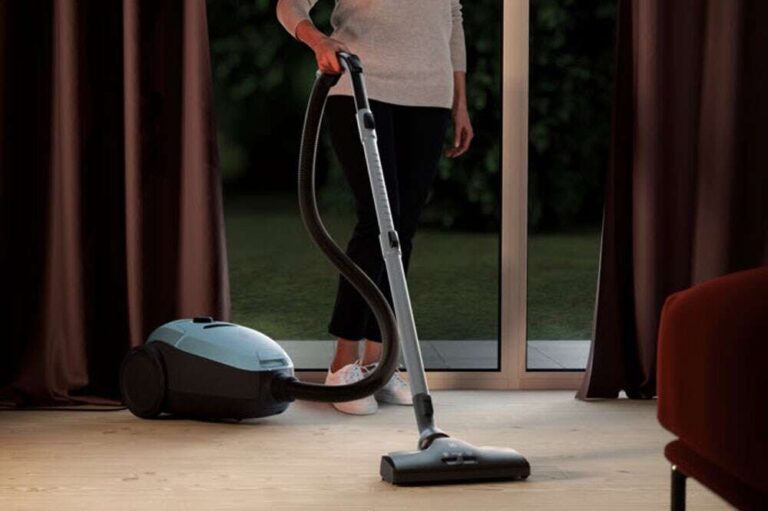
Changing a Miele vacuum cleaner bag in the United States is usually a quick, clean task. Turn off and unplug the vacuum, open the dust compartment, remove the full bag by its collar, and fit a new bag made for your exact Miele model. The bag should lock into place before you close the cover.
Miele sells several bag types, including GN, FJM, U, and KK. These bags are not always interchangeable, so check the label inside the vacuum, the owner’s manual, or Miele USA’s model support page before buying replacements.
Introduction
A full or poorly fitted bag can reduce suction, make the vacuum noisy, and allow dust to escape. Replacing it before it is packed tight helps the vacuum work as designed.
This guide covers common Miele canister vacuums sold in the United States, such as models in the Classic C1, Compact C1, Compact C2, Complete C3, and similar families. The exact bag type and compartment design can vary. If your vacuum is a Miele upright, stick vacuum, or bagless model, use its specific manual instead.

Before You Change the Miele Vacuum Bag
You need a new bag that matches your Miele vacuum, a clear work area, and a few minutes. You do not need tools.
1. Find the correct Miele bag type
Look for one of these details:
- The bag code printed on the old package or bag collar
- The model name and number on the vacuum
- A label inside the dust compartment
- The owner’s manual
- The product information on the official Miele USA website
Common Miele bag families include:
| Miele bag type | Common use |
|---|---|
| GN | Many full-size canister vacuums |
| FJM | Many compact canister vacuums |
| U | Certain older or specialty models |
| KK | Some older Miele vacuum models |
This table is a general guide, not a substitute for model matching. A bag that looks close may still have the wrong collar or dimensions.
2. Check whether the bag is actually full
Many Miele canister vacuums have a dustbag change indicator. The indicator may turn red when the bag is full, but it can also react to a blocked hose, clogged filter, or a large item stuck in the floorhead.
A bag often needs replacement when:
- The dustbag indicator reaches the full mark.
- Suction stays weak after you clear the hose and floorhead.
- The vacuum makes a strained or unusually loud sound.
- The bag feels packed with dust.
- The bag has a tear or its collar is not sealed.
Do not wait for dust to spill out of the compartment. A full bag can increase strain on the motor and reduce airflow.
3. Prepare the vacuum
Before opening the vacuum:
- Switch the vacuum off.
- Unplug it from the wall outlet.
- Let the motor stop fully.
- Place the vacuum on a stable floor.
- Have the replacement bag within reach.
Unplugging the vacuum prevents accidental start-up while your hands are near the brush, hose inlet, or internal parts.
4. Protect yourself from dust
Most bag changes are low-mess because Miele bags use a closing collar. If the old bag is very full, cracked, or used in a home with heavy dust, open the compartment slowly.
For less mess:
- Keep the bag upright as you remove it.
- Do not shake or squeeze the bag.
- Place it directly into a trash bag.
- Wash your hands afterward.
- Consider a mask if dust triggers allergies or asthma.

How to Change a Miele Vacuum Cleaner Bag
The basic process is the same across many Miele canister models, but the release tab and bag holder may look different.
Step 1: Turn off and unplug the vacuum
Press the power button, then unplug the cord. Do not rely only on the power switch.
Step 2: Open the dust compartment
Release the dust-compartment latch and lift the cover. On many Miele canister vacuums, the cover is at the top of the main body.
Open the cover gently. If it will not open, check whether the hose or wand is blocking the release mechanism. Never force the lid.
Step 3: Remove the full bag
Find the bag’s cardboard or plastic collar. Hold the collar or its pull tab and slide the bag out of the holder.
Many Miele bags close as they leave the holder. The self-closing flap helps keep dust inside. Keep the opening pointed upward while you remove the bag.
Place the used bag in a household trash bag. Do not try to empty and reuse a disposable Miele bag. Reusing it can damage the bag or reduce airflow.
Step 4: Check the compartment
Before installing the new bag, look inside the dust compartment for loose dust or debris.
Use a dry cloth to wipe nearby surfaces if needed. Avoid pouring water into the compartment. The motor and electrical parts are inside the vacuum body, and moisture can cause damage.
Also inspect the bag holder. It should not be cracked, bent, or blocked.
Step 5: Fit the new bag
Hold the new bag by its collar. Slide the collar into the bag holder in the same position as the old one.
Push it in until it sits flat and feels secure. The bag should not be folded under the holder or sit at an angle.
On models with a locking rail, slide the collar fully into the rail. On other models, press it into the holder until it stops. The correct fit should feel firm without excessive force.
Step 6: Unfold the bag
Gently open the paper or fabric bag so it can expand inside the compartment. Do not pull hard on the bag material.
A folded bag may still allow the lid to close, but it can restrict airflow and fill unevenly.
Step 7: Close the dust-compartment cover
Lower the cover and press it closed until the latch engages.
If the cover will not close, stop and check the bag. The most common causes are:
- The collar is not fully seated.
- The wrong bag type is installed.
- The bag is folded into the lid area.
- The bag holder is blocked.
- The bag is overfilled or damaged.
Do not force the cover. Miele canister vacuum covers are designed to close only when the bag is fitted correctly.
Step 8: Test the vacuum
Plug the vacuum back in and switch it on. Check for:
- Normal suction
- No hissing around the lid
- No dust blowing from the exhaust
- No unusual motor noise
- A bag indicator that behaves normally
If the vacuum runs normally, the bag change is complete.

How to Reset or Check the Miele Bag-Full Indicator
Most Miele bag-full indicators do not need a manual reset. They respond to airflow and pressure inside the vacuum.
If the indicator still shows full after you install a new bag, check the setup first:
- Make sure the new bag is the correct type.
- Confirm that the bag collar is fully inserted.
- Check the hose for a blockage.
- Check the wand and floorhead for trapped debris.
- Inspect the exhaust and motor-protection filters.
- Test the vacuum with the floorhead and hose in their normal position.
Some Miele manuals describe a specific way to test the indicator. The test may involve setting the vacuum to its highest suction level and using the standard floorhead. Follow the instructions for your exact model because indicator behavior can differ.
If the indicator stays full with a new, correctly fitted bag and clear airflow, the sensor or airflow system may need service.

What to Do If the New Bag Does Not Fit
A new Miele bag should slide into the holder without force. If it does not fit, stop rather than trimming, folding, or modifying it.
Check the bag code
Compare the replacement package with the code listed in your manual or inside the vacuum. Similar-looking Miele bags may use different collars.
Check the vacuum model
The model name may appear on the front, top, or underside of the vacuum. Use the full model information when checking compatibility. A product family name alone may not identify the correct bag.
Check the collar direction
The collar normally fits in one specific direction. Remove the bag and turn it around if the holder design allows this. Do not bend the collar.
Check for an old collar or debris
A broken part of the old bag collar may remain in the holder. Remove loose debris carefully. If the holder is damaged, do not operate the vacuum until it is repaired.
Use the manual for unusual models
Older Miele vacuums and non-canister models may use a different bag system. Miele USA provides product manuals and support information for many models.

When to Change the Miele Filters
A bag change does not replace filter maintenance. Miele canister vacuums commonly use a motor-protection filter and an exhaust filter. The exact filter type and replacement schedule depend on the model.
Replace or maintain filters according to the owner’s manual. A dirty filter can cause weak suction even when the bag is new.
Change the filter sooner if:
- The filter is visibly dirty.
- The vacuum smells dusty.
- Airflow remains weak after a new bag is installed.
- The manual gives a replacement interval.
- The vacuum has been used for fine dust, drywall dust, fireplace ash, or construction debris.
Do not vacuum fine construction dust, hot ash, liquids, or other materials that your Miele manual excludes. These materials can damage the bag, filters, or motor.

Common Mistakes to Avoid
Avoid these errors when replacing a Miele vacuum cleaner bag:
- Using a generic bag without checking fit: Poorly fitted bags can leak dust or restrict airflow.
- Installing the wrong Miele bag type: GN and FJM bags are not automatically interchangeable.
- Forcing the compartment cover: A cover that resists closing usually signals a fitting problem.
- Running the vacuum without a bag: This can expose the motor and filters to dust.
- Reusing a disposable bag: The bag may tear or lose its seal.
- Ignoring the filters: A clean bag cannot correct a blocked filter.
- Pulling on the paper bag: Hold the collar, not the bag material.
- Using a wet cloth inside the compartment: Moisture can reach electrical parts.
- Continuing to run the vacuum with poor suction: Check for a blockage before assuming the new bag is defective.

Frequently Asked Questions
How often should I change a Miele vacuum cleaner bag?
Change the bag when the indicator shows full, suction remains weak, or the bag is visibly packed. The interval depends on the size of the home, floor type, pets, and the amount of dirt collected. A home with pets may fill bags faster than a small home with hard floors.
Can I use a Miele GN bag in a vacuum that takes FJM bags?
Do not assume that you can. GN and FJM bags have different designs and are intended for different Miele models. Check the model manual or the bag compatibility information before installing one.
Why will my Miele vacuum lid not close after I changed the bag?
The bag collar may not be fully seated, the bag may be folded, or the replacement may be the wrong type. Remove the bag, check the holder, unfold the new bag, and reinstall it without forcing the cover.
Why is my Miele vacuum still showing a full bag?
The indicator may be responding to restricted airflow rather than a full bag. Check the bag collar, hose, wand, floorhead, motor-protection filter, and exhaust filter. If the airflow is clear and the indicator remains wrong, consult Miele service.
Can I empty and reuse a Miele vacuum bag?
Disposable Miele bags should not be emptied and reused. Removing the contents can damage the bag or its seal. Install a new bag that matches your vacuum model.
Key Takeaways
- Turn off and unplug the vacuum before opening it.
- Match the replacement bag to the exact Miele model.
- Remove the old bag by its collar or pull tab.
- Fit the new collar fully into the holder.
- Never force the compartment lid closed.
- Check the hose and filters if suction remains weak.
- Dispose of the used bag in household trash unless local rules say otherwise.
Conclusion
Changing a Miele vacuum cleaner bag is simple when you use the correct bag and seat its collar properly. Unplug the vacuum, remove the old bag, inspect the compartment, install the new bag, and test the airflow.
If the bag does not fit, the lid will not close, or suction remains poor, stop and check the model, bag code, hose, and filters. For a damaged holder, electrical fault, or persistent airflow problem, use the model-specific Miele USA manual or contact an authorized service provider.

Liora Pennings is a seasoned chef and kitchen enthusiast with a passion for turning everyday cooking into an effortless experience. With years of hands-on culinary expertise, she specializes in practical techniques, ingredient know-how, and smart kitchen solutions that help home cooks elevate their meals. At KitchFlair.com, Liora shares her best tips, time-saving tricks, and honest product reviews to guide readers toward a more efficient, enjoyable, and inspired cooking routine. Whether you’re a beginner or a seasoned home chef, Liora’s friendly, knowledge-packed insights make every visit to the kitchen a little easier—and a lot more delicious.