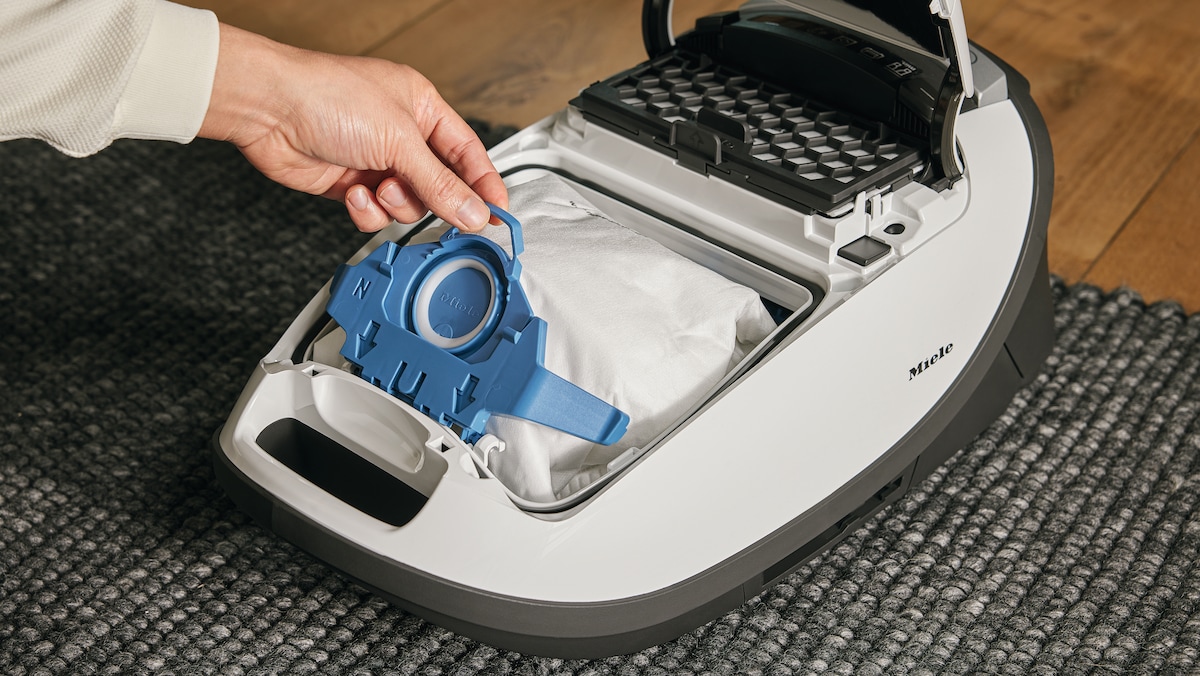
Changing a bag in a Miele vacuum cleaner is a quick task. In most Miele bagged canister vacuums sold in the United States, you open the dust compartment, close the bag’s self-sealing collar, remove the full bag, and slide in a new bag made for your model. The exact bag type is usually Miele GN or Miele FJM, but you should confirm this in your owner’s manual or on the package before installing one.
A correct bag change helps maintain suction, limits dust leaks, and protects the vacuum’s motor. Do not force the lid closed. If it will not shut, the bag may be the wrong type or may not be seated correctly.

Before You Start
You need a replacement bag that matches your Miele vacuum cleaner. Miele uses several bag systems, and bags that look similar may not fit the same holder.
Check the bag type
Common Miele bag types in the United States include:
| Bag type | Common use | What to check |
|---|---|---|
| GN | Many full-size Miele canister vacuums | Confirm the model is designed for GN bags |
| FJM | Many compact Miele canister vacuums | Confirm the model is designed for FJM bags |
| U | Certain older or specialized Miele models | Check the manual carefully |
| C3-series variations | Some models may use a specific bag system | Use the model number, not only the vacuum’s appearance |
The model number is often printed on a label on the vacuum body, near the rear wheels, or underneath the machine. You can also find it on the original manual or purchase record.
Gather these items
- One compatible Miele dustbag
- A trash can
- A clean, dry cloth, if needed
- The vacuum’s owner’s manual, if the model or bag type is unclear
Do not wash or reuse a disposable Miele dustbag. Replace it when full or when the vacuum’s bag indicator shows that airflow is restricted.
How to Change a Bag in a Miele Vacuum Cleaner
Follow these steps for most Miele bagged canister vacuums. Model details can vary, so use the manual if your vacuum has a different compartment or release system.
1. Turn off and unplug the vacuum
Switch the vacuum off. Then remove the plug from the wall outlet.
Unplugging the vacuum prevents accidental startup while your hands are near the bag compartment. Let the vacuum cool if you have used it for a long time.
2. Open the dust compartment
Place the vacuum on a stable floor. Release the dust compartment lid using the lid button or handle.
On many Miele canister models, the lid opens from the top of the main body. You may need to remove the hose or move it aside if it blocks the lid.
Do not pull hard on the lid. If it does not open, check whether the hose, wand, or lid release is still engaged.
3. Close the full bag
Find the plastic collar where the bag connects to the vacuum inlet. Pull the collar away from the inlet or lift it according to the design of your model.
The collar should slide into a closed position. This seals the bag opening and helps keep dust inside while you remove it.
4. Remove the old bag
Hold the bag by its cardboard or plastic collar. Lift or pull it out of the bag holder.
Keep the bag upright as you remove it. A very full bag may contain fine dust that can spill if it is squeezed or tipped.
Place the old bag directly into a trash can. Avoid shaking it or trying to empty it into another container.
5. Check the bag compartment
Before installing the new bag, look inside the compartment.
Remove any loose dust with a dry cloth. Do not pour water into the vacuum or use a damp cloth near electrical parts. Also check the inlet area for a large blockage, but do not push objects farther into the hose or motor path.
If the compartment contains a large amount of dust even though the bag was properly installed, inspect the bag holder and seals for damage.
6. Prepare the new bag
Take one new bag from its package. Make sure it is the correct type for your Miele model.
Do not unfold or crush the bag. Hold it by the collar and keep the bag material supported so it does not catch on the compartment edges.
7. Install the new bag
Line up the collar with the bag holder and slide it into place. Push it in until it is fully seated.
The collar should sit flat and securely. On many Miele vacuums, the bag can be installed only when it is aligned with the guide rails or holder.
Check that:
- The collar is fully on the inlet.
- The bag is not folded under the collar.
- The bag is inside the compartment rather than caught around the lid.
- The bag opening is not blocked.
- The bag holder has not been bent or damaged.
8. Close the dust compartment lid
Lower the lid and press it closed until it latches.
The lid should close with normal hand pressure. If it stops or springs back, open it and check the bag position. Do not force it because an incorrectly fitted bag can prevent the lid from sealing.
9. Test the vacuum
Reconnect the hose if you removed it. Plug in the vacuum and turn it on.
Check for:
- Normal suction
- No unusual air noise around the lid
- No dust escaping from the compartment
- No warning light or full-bag indicator immediately after installation
A slight delay in the indicator may occur on some models, but a warning that remains on can point to a blockage, a filter issue, or a bag that is not seated correctly.

How to Tell Which Miele Bag You Need
The safest way to choose a Miele vacuum bag is to match the bag type to the exact model number. Do not choose only by the color of the packaging or the shape of the old bag.
Miele’s official replacement bags are commonly sold in packs identified by a bag type, such as GN or FJM. Some packages also list compatible vacuum series. Compare that information with the manual or the model label on your machine.
Why GN and FJM bags are not interchangeable
GN and FJM bags may look similar, but their collars and dimensions differ. The bag holder and sealing system are designed for a specific bag shape.
Using the wrong bag may cause:
- The lid to remain open
- Poor suction
- Dust leaks
- A bag that slips off the inlet
- Damage to the bag holder or seal
If you are unsure, stop before installing the bag. Check the model manual or contact Miele customer service in the United States.
Do generic bags fit?
Some third-party bags claim compatibility with Miele vacuums. Fit and sealing quality can vary between brands and models.
A bag that fits loosely may allow dust to pass into the filter and motor area. If you use a non-Miele bag, verify that the package names your exact vacuum series and that the collar matches the original. The owner’s manual remains the best reference for the required bag specification.
When Should You Change a Miele Vacuum Bag?
Change the bag when the bag indicator shows that it is full, when suction drops because the bag is full, or when the bag is visibly packed with debris.
Miele bag indicators generally respond to airflow resistance. The indicator may move or show full even when the bag does not look completely filled if the vacuum is picking up dense dust or if the airflow path is blocked.
Change the bag sooner if you vacuum:
- Fine drywall dust
- Fireplace ash
- Construction debris
- Large amounts of pet hair
- Fine powder
- Heavy soil from carpets
A disposable household vacuum bag is not designed for large amounts of fine construction dust or hot ash. These materials may damage the vacuum or create a safety risk.
Do not wait for weak suction alone
Low suction can have several causes. A full bag is only one possibility.
Before replacing a bag because of low suction, check:
- Whether the bag indicator is showing full.
- Whether the hose or wand is blocked.
- Whether the floorhead has hair or debris around its air path.
- Whether the exhaust or motor protection filter needs replacement.
- Whether the bag collar is sealed and correctly attached.
A new bag will not solve a blockage elsewhere in the vacuum.

What to Do If the New Bag Will Not Fit
If the bag does not slide into place, do not force it. First confirm the bag type and the vacuum model.
Then check the following:
- The old collar has been fully removed.
- The new bag is facing the same direction as the old one.
- The collar is aligned with the holder guides.
- The bag is not folded or twisted.
- No cardboard, plastic, or dust is stuck in the holder.
- The bag holder is not damaged.
If the collar appears correct but will not seat, compare it with the old bag. A different collar shape is a strong sign that the bag is not compatible.
What to Do If the Lid Will Not Close
A Miele bag compartment lid often will not close when the bag is missing or incorrectly positioned. This design helps prevent the vacuum from operating without a bag.
Try these steps:
- Open the lid again.
- Remove the bag.
- Check the bag type.
- Reinsert the collar along the guide rails.
- Make sure the bag is not trapped under the lid.
- Close the lid without pressing on it excessively.
If the lid still will not close with the bag removed, inspect the latch and hinge for damage. Do not operate the vacuum with the lid partly open.
What to Do If Suction Is Still Low After Replacing the Bag
A fresh bag should improve airflow only when the old bag was the cause. If suction remains weak, follow this order:
Check the hose
Disconnect the hose from the vacuum. Look through it or use a suitable blunt object to identify a blockage. Do not use a sharp tool that could puncture the hose.
Check the wand and floorhead
Separate the wand from the hose and floorhead. Remove hair, threads, and debris from the air path and brush area.
Check the filters
Miele vacuums use filters that protect the motor and clean the exhaust air. Filter types and replacement schedules vary by model.
Some filters are replaceable. Others may be washable only when the manual specifically says so. Never wash a filter that is labeled for replacement only, and allow any washable filter to dry fully before reinstalling it.
Check the bag seal
Open the compartment and confirm that the bag collar is flat against the inlet. A loose collar can let air bypass the bag or allow dust into the compartment.
If the vacuum still has weak suction, an unusual smell, overheating, or abnormal noise, stop using it and consult Miele support or a qualified appliance repair service.

Common Mistakes to Avoid
Using the wrong bag
A bag that looks close enough may still have the wrong collar. Match the bag to the model or approved bag type.
Reusing a full bag
Miele disposable bags are designed for one use. Emptying and reinstalling one can damage the seal and release fine dust.
Forcing the compartment lid
A lid that will not close usually signals a fit or alignment problem. Find the cause instead of applying more pressure.
Running the vacuum without a bag
Do not run a bagged Miele vacuum without its dustbag installed. Dust can enter areas that are difficult to clean and may reach the filters or motor.
Ignoring a blockage
A new bag will not restore airflow if the hose, wand, floorhead, or filter is blocked.
Touching a hot vacuum
If the machine has overheated, unplug it and let it cool before checking the bag or filters. Repeated overheating needs further inspection.
Key Takeaways
- Unplug the Miele vacuum before changing the bag.
- Confirm whether your model uses a GN, FJM, U, or another bag type.
- Close the old bag’s collar before removing it.
- Seat the new bag fully on the holder.
- Never force the lid closed.
- Check the hose, floorhead, and filters if suction stays low.
- Use the owner’s manual when your model differs from the standard canister design.
Frequently Asked Questions
How often should I change a Miele vacuum bag?
Change it when the full-bag indicator shows that the bag is full, suction drops from a full bag, or the bag is visibly packed. Homes with pets, fine dust, or heavy traffic may need more frequent changes.
Can I empty and reuse a Miele vacuum bag?
No. Miele disposable bags should be removed and replaced. Reusing a bag can weaken its seal, release dust, and reduce airflow.
Can I use a GN bag in a vacuum that takes FJM bags?
No. GN and FJM bags are different systems. Use only the bag type listed for your exact Miele model.
Why does my Miele vacuum say the bag is full after I installed a new one?
A blockage in the hose, wand, or floorhead can trigger the indicator. The bag may also be incorrectly fitted, or a filter may be restricted. Check the bag seal and airflow path before installing another bag.
Should I replace the filter when I change the bag?
Not always. Bag replacement and filter replacement are separate maintenance tasks. Follow the schedule and filter instructions in your model’s manual.
Where can I find the Miele vacuum model number?
Look for a rating or identification label on the vacuum body, often near the rear, underside, or wheels. The model number may also appear on the original manual or purchase documents.
Final Recommendation
For most Miele bagged vacuums in the United States, the process is simple: unplug the machine, close and remove the old bag, install the exact replacement type, and close the lid without force. If the bag will not fit or the vacuum still has poor suction, stop and check model compatibility, blockages, and filters before continuing to use it.
For model-specific instructions, consult the official Miele manual for your vacuum or contact Miele USA support.
Official references

Liora Pennings is a seasoned chef and kitchen enthusiast with a passion for turning everyday cooking into an effortless experience. With years of hands-on culinary expertise, she specializes in practical techniques, ingredient know-how, and smart kitchen solutions that help home cooks elevate their meals. At KitchFlair.com, Liora shares her best tips, time-saving tricks, and honest product reviews to guide readers toward a more efficient, enjoyable, and inspired cooking routine. Whether you’re a beginner or a seasoned home chef, Liora’s friendly, knowledge-packed insights make every visit to the kitchen a little easier—and a lot more delicious.