Introduction
For most coffee makers in U.S. homes, wash the removable parts after each use, clean the machine’s exterior and brew area once a week, and descale it every 1–3 months. Use the shorter interval if you have hard water, brew coffee every day, or notice a slower flow or bitter taste.
Always check your coffee maker’s manual first. A Keurig®, drip machine, espresso maker, and French press may need different care.

How Often Should You Clean a Coffee Maker?
The right schedule depends on what you clean. “Cleaning” and “descaling” are not the same task.


- Daily cleaning removes coffee oils, grounds, and leftover water.
- Weekly cleaning removes buildup from parts you touch and use often.
- Descaling removes mineral deposits from the water system.
- Deep cleaning helps address mold, stale odors, or neglected buildup.
Use this basic schedule as a starting point:
| Coffee maker type | After each use | Weekly | Descale or deep clean |
|---|---|---|---|
| Drip coffee maker | Empty grounds; rinse carafe and basket | Wash removable parts | Every 1–3 months |
| Single-serve brewer | Remove the used pod; rinse the drip tray | Wash tray, pod holder, and reservoir | About every 3–6 months, or when the alert appears |
| Espresso machine | Flush the group head; clean the portafilter | Wash the basket and drip tray | Follow the manual; water hardness matters |
| French press | Rinse and wash the beaker and plunger | Take apart and scrub the filter | Deep clean when oils or odor remain |
| Cold brew maker | Rinse the filter and container | Wash all parts well | After each batch or as the manual states |
These intervals are general guidance, not a replacement for the instructions for your model. For example, Keurig says its brewers may need descaling about every three to six months, while some models display a descale reminder. Your water quality and use can shorten or lengthen that interval.
A practical rule
Clean the coffee maker sooner when:
- You brew several pots or cups each day.
- You use unfiltered tap water.
- Your home has hard water.
- The machine sits unused for more than a week.
- Coffee tastes bitter, sour, or stale.
- The brew cycle takes longer than normal.
- Water flows in spurts.
- You see white flakes or chalky marks.
- The reservoir smells musty.
- The machine shows a clean or descale warning.
A machine that looks clean can still have mineral buildup inside its water path. A clean carafe also does not mean the full brewer is clean.

Cleaning vs. Descaling: What Is the Difference?
Cleaning removes organic residue. Descaling removes minerals.
Coffee oils collect in the brew basket, carafe, portafilter, and other parts that touch coffee. These oils can turn rancid and affect flavor. Coffee grounds can also leave a film or clog small openings.
Scale is a hard deposit caused by minerals in water. It often contains calcium carbonate. Scale can form inside heating elements, tubes, valves, and spray heads. It may reduce water flow and make the machine heat less evenly.
A simple way to remember the difference:
- Soap and water remove coffee residue.
- A descaling solution removes mineral scale.
Vinegar can help dissolve some mineral deposits, but it may leave a strong smell and may not be approved for every machine. Some manufacturers specifically recommend a branded descaler or another product made for coffee equipment. Follow the manual before using vinegar, citric acid, or any chemical cleaner.
Do not mix cleaning products. Never combine vinegar with bleach or other chemicals.


How to Clean a Drip Coffee Maker
Clean a drip coffee maker with warm water, mild dish soap, a soft cloth, and a nonabrasive sponge. Unplug the machine before wiping it or handling parts near the electrical base.
After every pot
- Turn off and unplug the coffee maker.
- Remove the paper filter and throw it away.
- Empty the used coffee grounds.
- Rinse the filter basket.
- Wash the carafe with warm, soapy water.
- Leave the lid and removable parts open so they can dry.
- Wipe spilled coffee from the warming plate.
Do not leave wet grounds in the basket. They can grow mold and create a stale smell.
Once a week
Wash the filter basket, carafe lid, and any removable water parts with mild dish soap. Use a soft bottle brush for narrow areas.
Wipe the showerhead or spray area with a damp cloth if your manual allows it. Do not force a sharp object into small holes. You may damage the spray head or push residue farther inside.
Wipe the outside of the machine. Keep water away from the control panel, plug, and electrical base.
After a long period of storage
If the coffee maker has sat unused for several days or weeks, wash the removable parts before brewing. Empty old water from the reservoir. Run fresh water through the machine according to the manual.
If the machine smells musty, has visible growth, or still smells bad after cleaning, stop using it until you complete a full cleaning and descaling cycle. Replace parts that remain stained, cracked, or foul-smelling.

How to Descale a Coffee Maker
Descale a coffee maker when mineral buildup affects performance or at the interval listed in the manual.
Before you start, check three things:
- The correct descaling product for your model.
- Whether the water filter should be removed.
- Whether the machine has a special cleaning or descale cycle.
General descaling steps
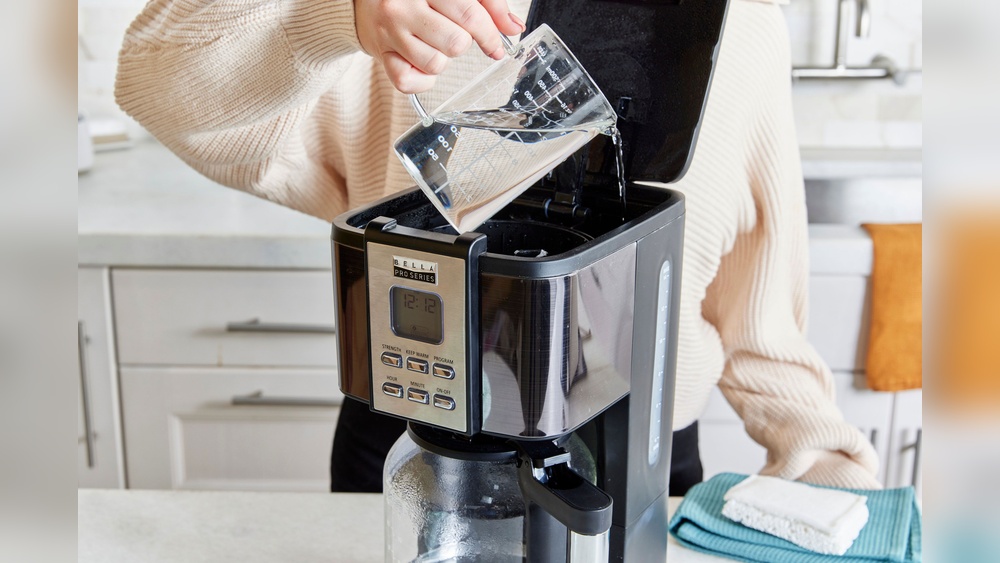
- Empty the coffee maker.
- Remove the water filter if the manual says to do so.
- Mix the approved descaling solution as directed.
- Add the solution to the water reservoir.
- Place an empty carafe or large container under the outlet.
- Run the cleaning or descale cycle.
- Discard the used solution.
- Rinse the reservoir.
- Run one or more full cycles with clean water.
- Taste or smell the first test brew before making coffee.
The exact number of rinse cycles varies by product. Use more rinses if the machine smells like cleaner or if the manufacturer requires them.
When vinegar is appropriate
Vinegar is a common home remedy, but it is not automatically safe for every coffee maker. It can damage some seals or leave a strong odor. It may also fail to remove heavy scale as well as a product designed for the machine.
Use vinegar only when the manufacturer permits it. Otherwise, use the recommended descaler and follow its label.
Never pour bleach into a coffee maker. Bleach is not a coffee-machine descaler, and residue could contaminate the water path.


How to Clean a Keurig or Other Single-Serve Brewer
Single-serve coffee makers need frequent cleaning because water, coffee oils, and small pod fragments can collect in several small parts.
After each use, remove the used pod and empty any loose water from the drip tray when needed. Wipe spills from the pod area.
At least once a week:
- Unplug the brewer.
- Remove and wash the drip tray.
- Wash the water reservoir and lid if the manual permits it.
- Clean the pod holder.
- Wipe the area around the needle.
- Rinse all parts well.
- Let parts dry before putting them back.
Some single-serve machines have an entrance needle and an exit needle. The manual may give a specific tool and method for cleaning them. Do not insert a sharp object unless the manufacturer says to do so.
Descale the brewer when its light or display requests it, or at the interval in the manual. Many manufacturers suggest descaling every few months, but heavy use and hard water can require more frequent care.
Do not confuse a water-filter replacement with descaling. A filter can improve water quality, but it does not remove scale that has already formed inside the machine.

How to Clean an Espresso Machine
Espresso machines need cleaning after each use because coffee oils and fine grounds build up quickly.
After making espresso:
- Knock out the used coffee puck.
- Rinse the portafilter and basket.
- Flush the group head for a few seconds.
- Wipe the steam wand immediately after steaming milk.
- Purge the steam wand briefly, if the manual directs you to do so.
- Empty the drip tray when it becomes full.
Milk residue can harden inside a steam wand. It can also create an unpleasant odor and a hygiene risk. Wipe the wand before the milk dries.
Backflushing is a deeper cleaning process used by many semi-automatic espresso machines. It pushes water and, when approved, espresso-machine detergent through the group head. The timing and detergent type depend on the machine. Follow the manual.
Do not use ordinary dish soap inside the boiler, pump, or group head unless the manufacturer specifically approves it.

How to Clean a French Press
A French press should be washed after every use. Coffee oils remain on the glass or stainless-steel beaker and on the metal filter.


- Pour out the coffee grounds.
- Rinse the beaker.
- Remove the plunger.
- Take apart the filter if the design allows it.
- Wash each part with warm, soapy water.
- Rinse well.
- Dry the parts before reassembly.
Do not rinse coffee grounds into a sink drain if they may cause a clog. Put them in the trash or compost them where local rules allow.
A French press does not need descaling in the same way an electric brewer does. However, hard-water film can still form on the glass, metal, or lid. Clean that film with a method approved for the material.

What Happens If You Do Not Clean Your Coffee Maker?
A neglected coffee maker may produce poor-tasting coffee and run less efficiently.
Common results include:
- Bitter or rancid flavors from old coffee oils.
- Slow brewing from mineral scale.
- Weak or uneven coffee.
- A stale or musty smell.
- Clogged needles, valves, or spray holes.
- White flakes in the water or coffee.
- Overflow from a blocked filter basket.
- Visible mold or residue in damp areas.
A slow brew does not always mean the machine is dirty. A blocked filter, incorrect grind, too much coffee, or a failing pump can cause a similar problem.
If cleaning and descaling do not restore normal flow, stop using the machine if it leaks, overheats, sparks, or damages the power cord. Electrical repairs should be handled by the manufacturer or a qualified technician.
Common Coffee Maker Cleaning Mistakes
Cleaning only the carafe
The carafe is visible, but coffee residue can also collect in the basket, lid, spray head, pod holder, and water path. Wash all removable parts listed in the manual.
Leaving water in the reservoir
Standing water can become stale and may leave an odor. Empty the reservoir when you will not use the machine for several days. Let it dry with the lid open when the design allows.
Using too much soap
Excess soap can leave a film and affect taste. Use a small amount of mild dish soap, then rinse thoroughly.
Using abrasive tools
Steel wool and harsh powders can scratch glass, plastic, and stainless steel. Use a soft sponge or cloth unless the manual says otherwise.
Forgetting the water filter
Some machines use a replaceable charcoal filter. Replace it on the manufacturer’s schedule. A filter does not replace normal cleaning or descaling.
Rinsing without descaling
A water-only rinse may remove loose residue, but it will not dissolve established mineral scale. Use the approved descale process when scale is the problem.
Putting every part in the dishwasher
Some parts are dishwasher-safe, and others are not. Check the manual before using a dishwasher. Heat can warp plastic parts or damage seals.


A Coffee Maker Cleaning Schedule for Different Homes
Your use pattern should guide the schedule.
| Your situation | Suggested approach |
|---|---|
| One pot per day with filtered water | Wash parts after use; clean weekly; descale about every 3 months |
| Several pots per day | Wash parts after each use; clean weekly; check for scale monthly |
| Hard tap water | Wash parts after use; descale more often than the standard schedule |
| Occasional use | Clean after each use; empty and dry the reservoir between uses |
| Shared office coffee maker | Clean high-touch and removable parts daily; follow the workplace sanitation plan |
| Coffee maker used for milk drinks | Wipe and flush milk-contact parts after every use |
| Brewer with a clean alert | Run the cleaning cycle when the alert appears, then follow the manual |
These are practical starting points. The manual, water hardness, and machine design are the deciding factors.
If you are unsure about your water, your local water utility may publish a water-quality report. The U.S. Environmental Protection Agency explains how public water systems report local water information through its Consumer Confidence Report resources.

How to Tell Whether Your Coffee Maker Is Clean
A clean coffee maker should have no visible coffee film, loose grounds, musty smell, or cleaner odor.
After cleaning:
- Water should flow at a normal rate.
- The basket should not overflow during a normal brew.
- The carafe should smell neutral.
- The first test brew should not taste sour, bitter, or chemical.
- The water reservoir should look clear.
- The machine should not display a cleaning warning after the cycle is complete.
If the coffee still tastes bad, check the beans, grind size, water, paper filter, and brew ratio. The coffee maker may be clean while another part of the brewing process causes the flavor problem.
If white flakes continue to appear, repeat the approved descaling process. If the problem remains, the machine may have damaged internal parts or severe scale buildup.
Frequently Asked Questions
Can I clean my coffee maker every day?
Yes. Daily rinsing and washing of removable parts are usually safe and useful. You do not need to run a full descale cycle every day. Excessive descaling may wear parts or expose them to unnecessary chemicals.
How often should I run vinegar through my coffee maker?
Only use vinegar if the manufacturer allows it. The correct interval depends on the machine and your water. A manufacturer-approved descaler is often the safer choice when the manual does not recommend vinegar.
How often should I change the water in a coffee maker?
Use fresh water for each brew when practical. Empty old water if the machine will sit unused for several days. Follow the manual for machines with a hot-water tank or internal reservoir.
Can a dirty coffee maker make you sick?
A dirty machine can hold old coffee residue, mold, or other contamination, especially in damp areas. Clean removable parts, avoid storing old water, and stop using the machine if you see mold that cleaning does not remove. People with special health concerns should follow advice from a health professional.
Is descaling the same as cleaning?
No. Cleaning removes coffee oils and residue. Descaling removes mineral deposits from the water system. Most coffee makers need both.
Final Takeaway
For most U.S. households, clean removable parts after every use, wash the brew area weekly, and descale every one to three months. Use a shorter schedule for hard water, heavy use, milk drinks, or visible buildup.
Start with the owner’s manual. Then set a repeating reminder for weekly cleaning and descaling. That small habit helps protect flavor, flow, and the working life of the coffee maker.

Liora Pennings is a seasoned chef and kitchen enthusiast with a passion for turning everyday cooking into an effortless experience. With years of hands-on culinary expertise, she specializes in practical techniques, ingredient know-how, and smart kitchen solutions that help home cooks elevate their meals. At KitchFlair.com, Liora shares her best tips, time-saving tricks, and honest product reviews to guide readers toward a more efficient, enjoyable, and inspired cooking routine. Whether you’re a beginner or a seasoned home chef, Liora’s friendly, knowledge-packed insights make every visit to the kitchen a little easier—and a lot more delicious.