How To Make Zoodles With A Peeler: Easy Guide
Use a vegetable peeler to shave zucchini into ribbons, then trim, season, and cook briefly.
Learning how to make zoodles with a peeler is simple, even if you do not own a spiralizer. With the right zucchini, a sharp peeler, and a light touch, you can make tender vegetable noodles in minutes. This guide covers the best tools, clear steps, cooking methods, common mistakes, and easy serving ideas.
What Are Zoodles?
Zoodles are zucchini noodles. The name combines “zucchini” and “noodles.” They are a popular low-carb alternative to wheat pasta and work well in salads, stir-fries, soups, and pasta-style meals.
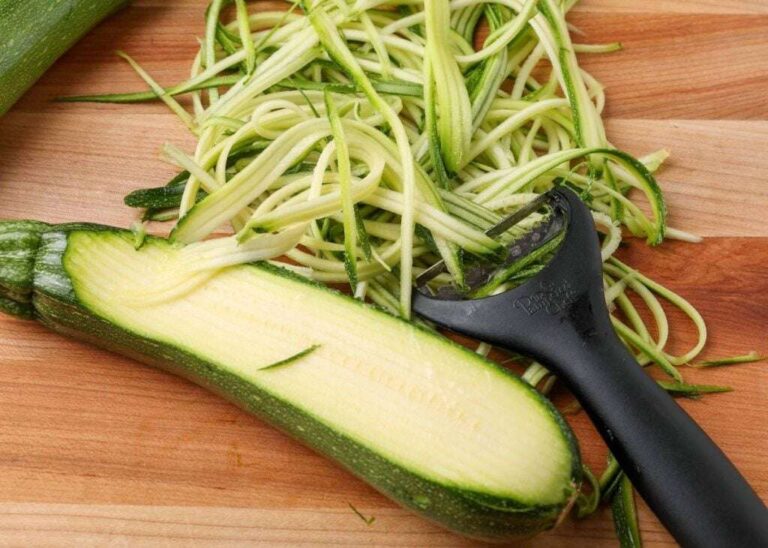
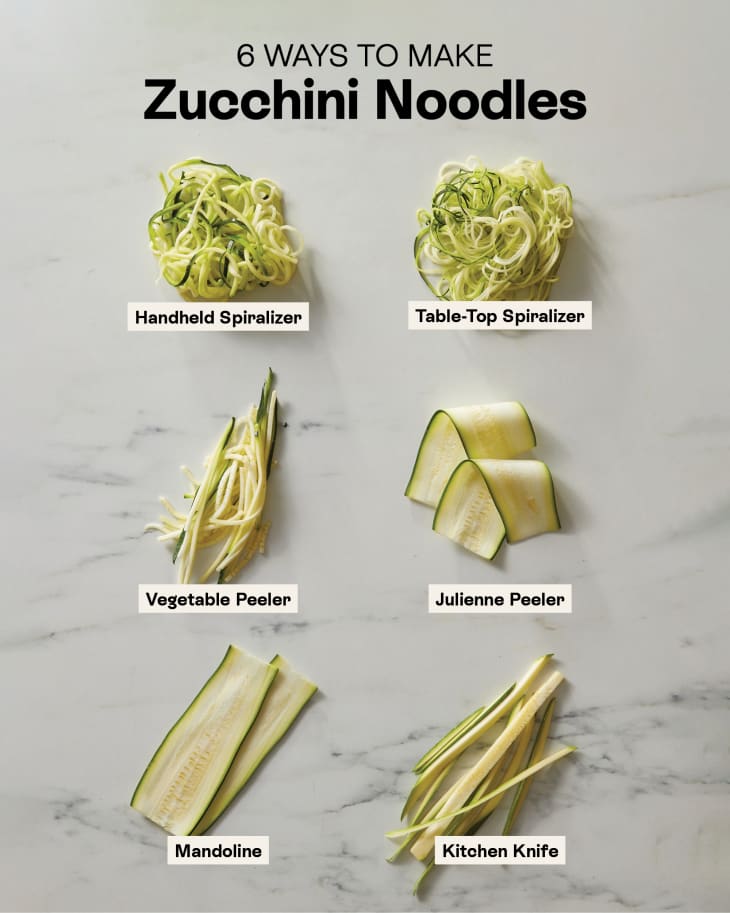
When you learn how to make zoodles with a peeler, you create wide ribbons rather than round, spiral noodles. These ribbons cook fast and hold sauces well. They also add color, fiber, and fresh flavor to a meal.
A peeler gives you more control than a spiralizer. You can make thin strips, broad ribbons, or short noodle pieces based on the dish you plan to serve.
Tools and Ingredients You Need
The method for how to make zoodles with a peeler needs only a few basic items. A sharp tool makes the work faster and helps you create even strips.
Gather:
• 1 medium zucchini, about 6 to 8 inches long
• A Y-shaped vegetable peeler or standard vegetable peeler
• A cutting board
• A chef’s knife
• A clean kitchen towel or paper towel
• Salt, pepper, and your preferred sauce
A Y-peeler often works best because its wide blade makes broad, pasta-like ribbons. A standard straight peeler also works well, especially for thin strips.
Choose firm zucchini with smooth, glossy skin. Small or medium zucchini usually have fewer seeds and a firmer center. Very large zucchini can be watery and may contain large seeds that make soft zoodles.
Wash the zucchini under cool running water and dry it well. The skin is edible, so you do not need to peel it before making zoodles.
How to Make Zoodles With a Peeler
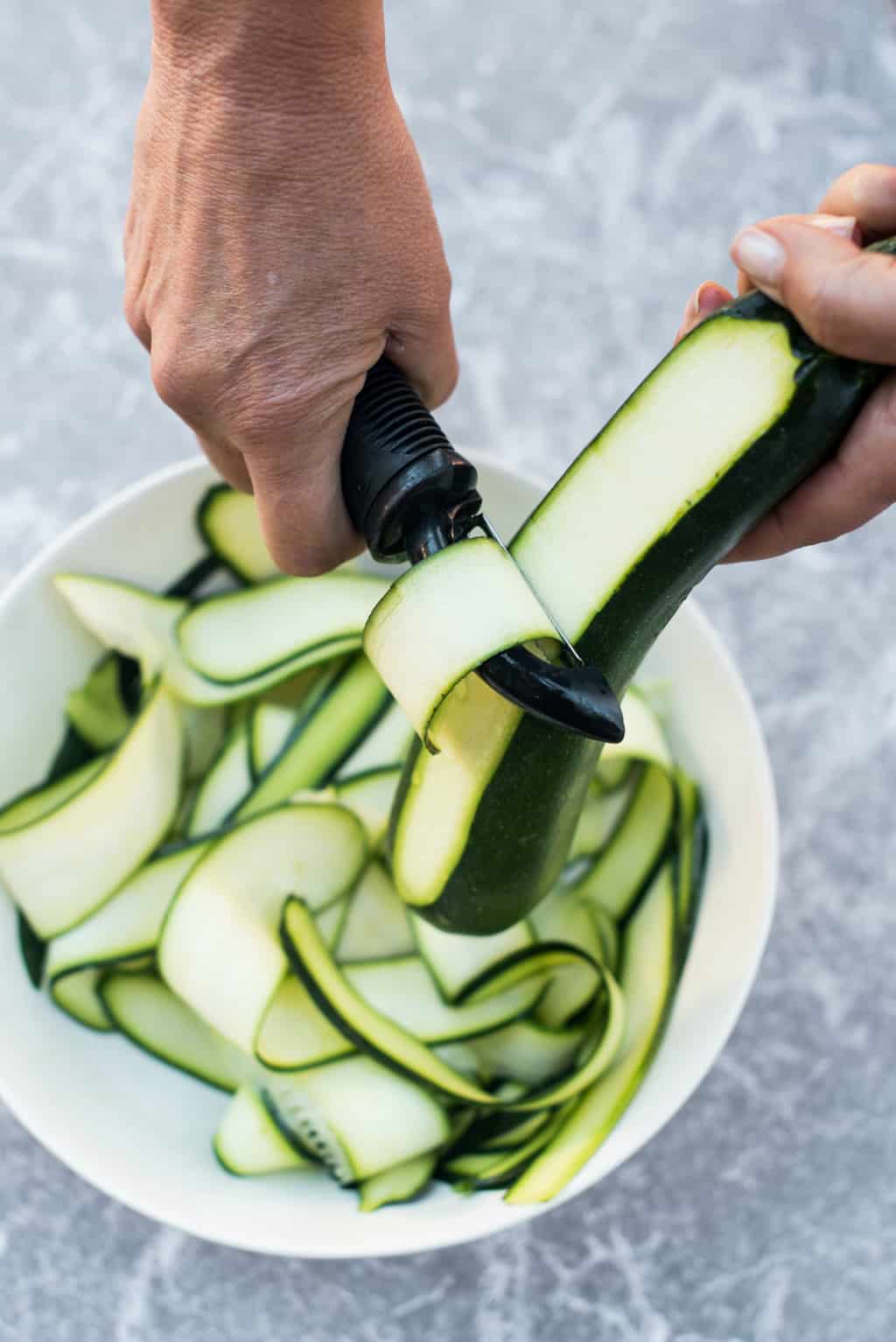
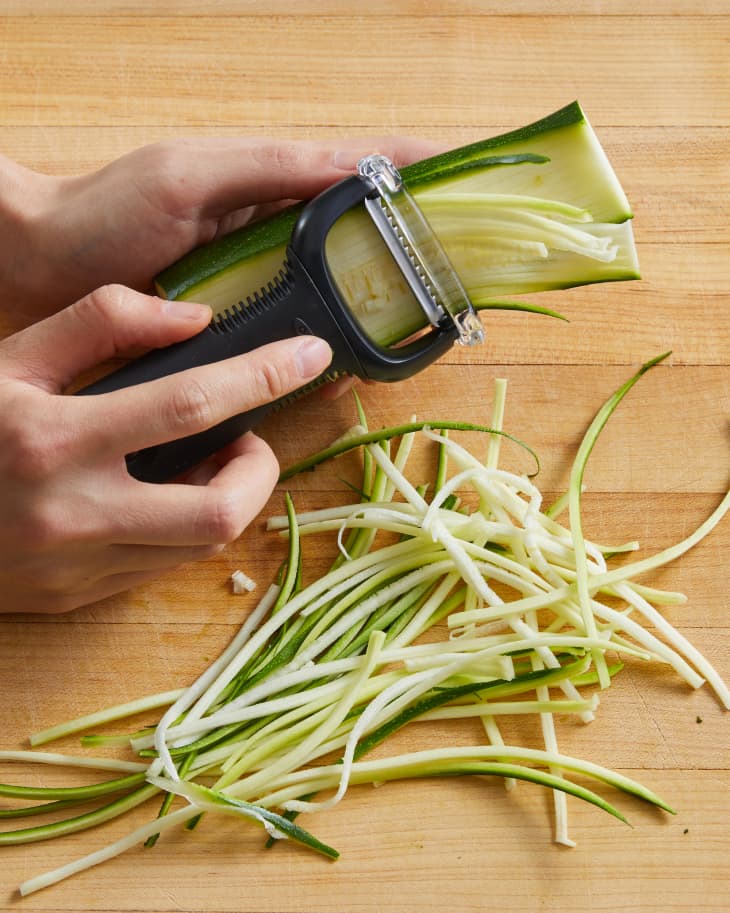
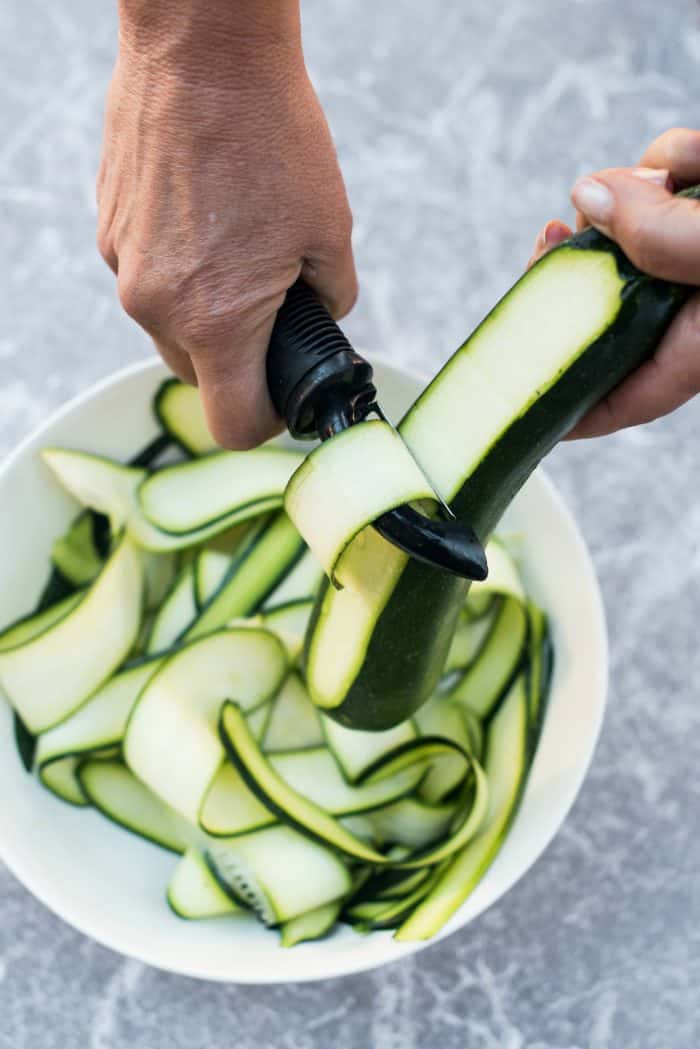
The key to how to make zoodles with a peeler is steady pressure. Let the blade glide over the zucchini instead of forcing it into the flesh.
Follow these steps:
-
Trim both ends of the zucchini. Remove the stem and the small blossom end.
-
Place the zucchini on a cutting board. You can hold it lengthwise or cut it in half if it feels easier to control.
-
Set the peeler at one end of the zucchini. Press lightly and pull the peeler toward the other end in one smooth motion.
-
Turn the zucchini slightly after each pass. This helps you peel evenly around the outside.
-
Continue making strips until you reach the soft, seedy center.
-
Stop peeling when the center becomes loose or watery. Save the core for soup, eggs, muffins, or a vegetable broth.
-
Use a knife to cut long ribbons into shorter zoodle pieces if you prefer a more traditional noodle shape.
-
Pat the zoodles dry with a clean towel before cooking.
Do not press too hard. Heavy pressure creates very thin strips that can break or turn mushy. Light, even strokes make stronger zoodles with better texture.
If you are new to how to make zoodles with a peeler, practice on one side first. After a few strokes, you will learn how much pressure your peeler needs.
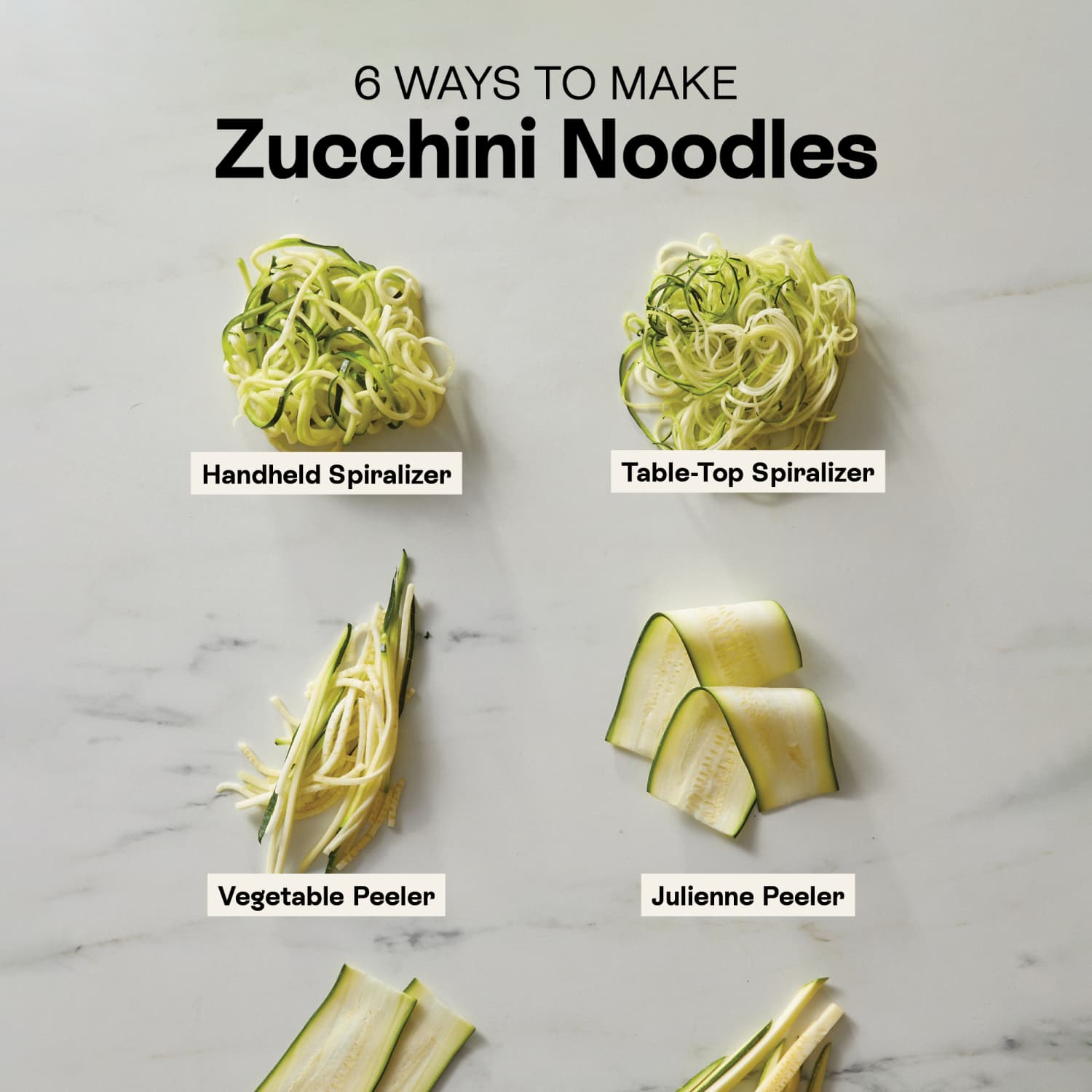
How to Make Different Zoodle Shapes
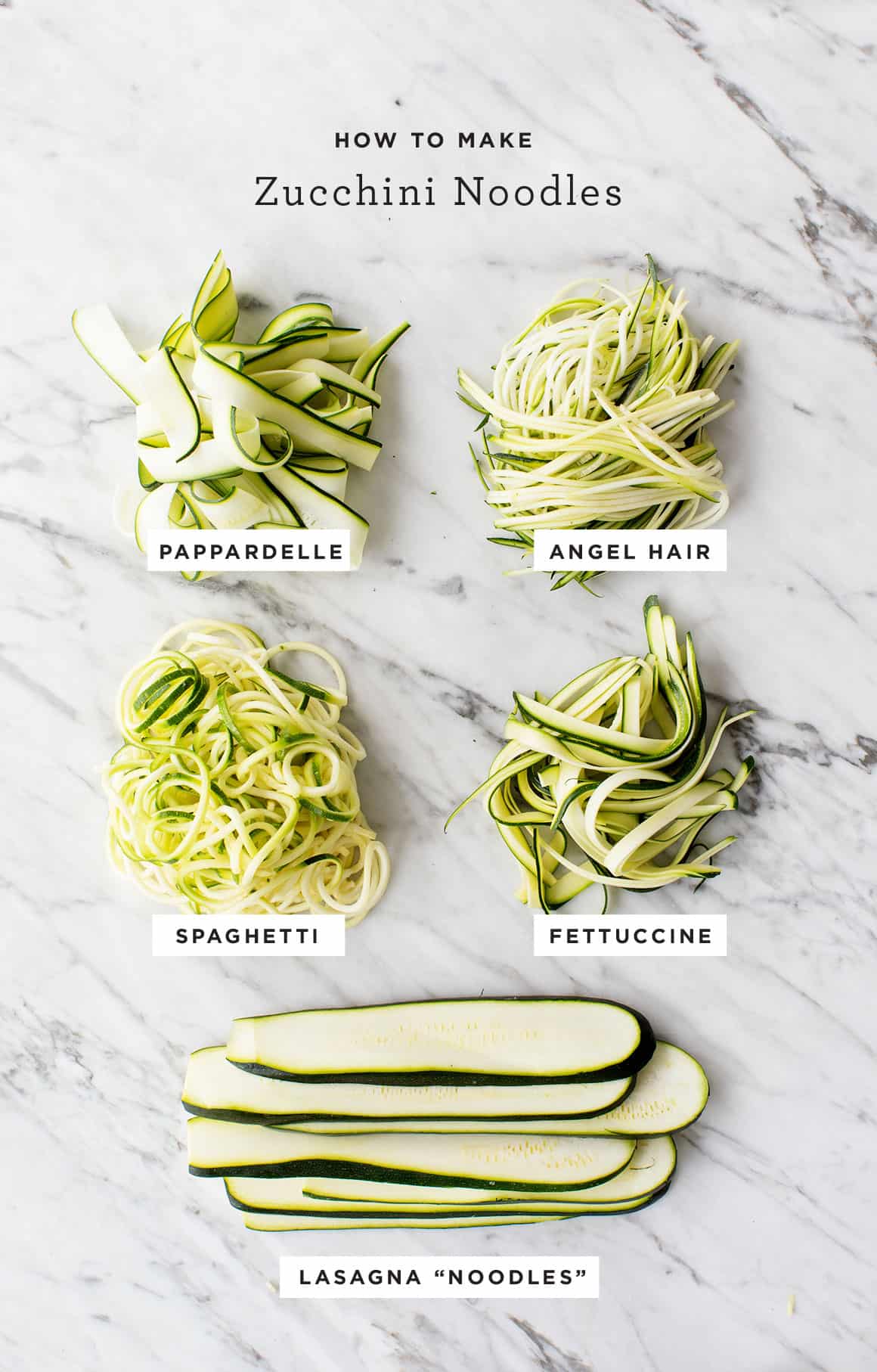
A peeler can create more than one style of zucchini noodle. The shape affects both texture and appearance.
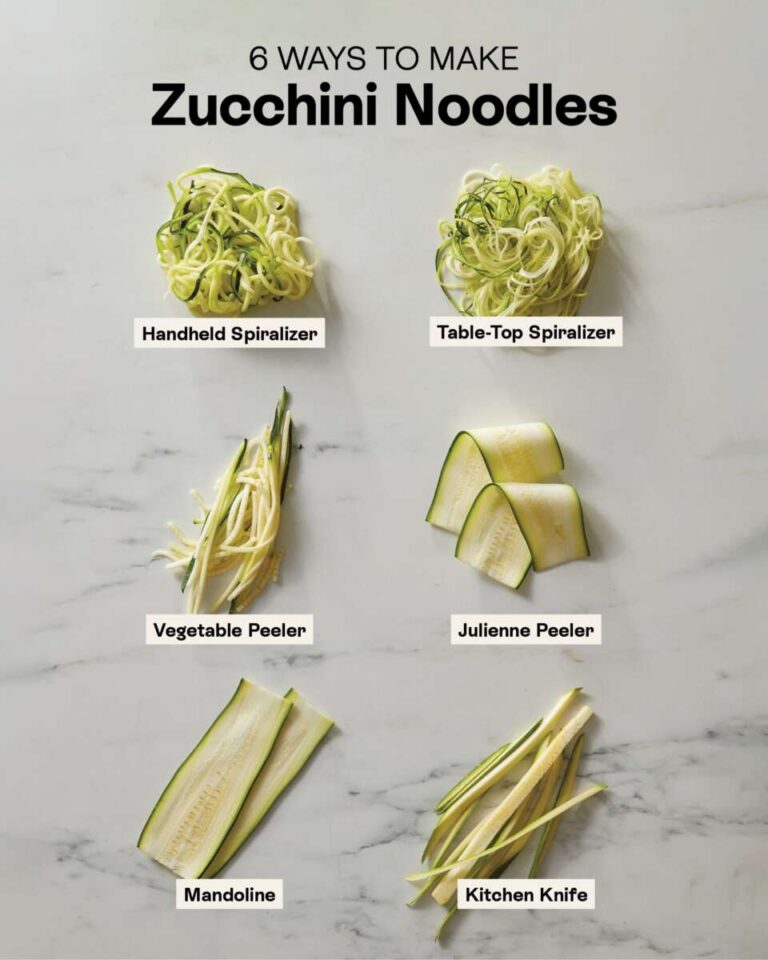
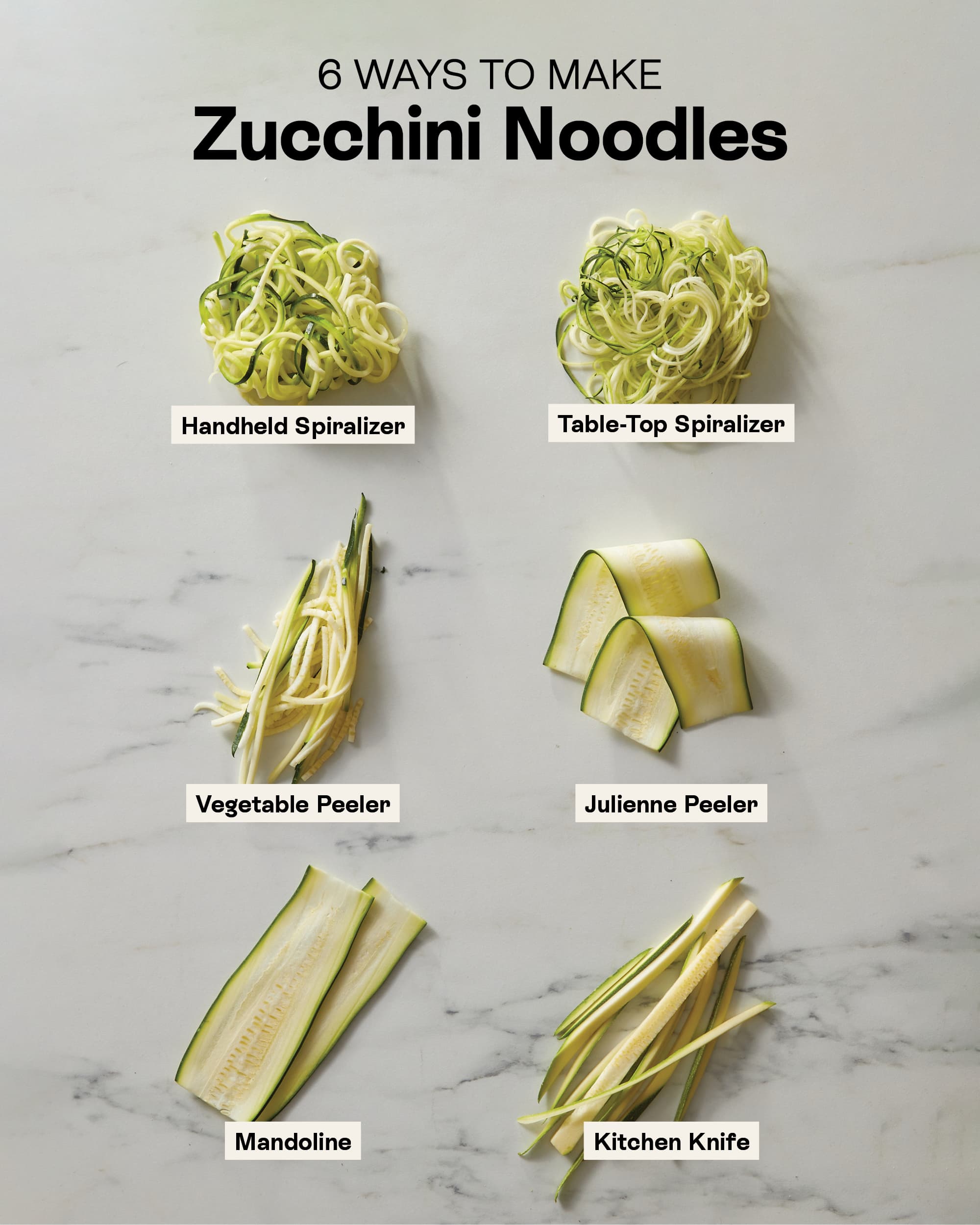
Wide zucchini ribbons
Use a Y-peeler and make full-length passes. These wide ribbons resemble pappardelle and work well with creamy sauces, pesto, and roasted vegetables.
Thin zucchini strips
Use a narrow standard peeler. Pull the blade gently across the zucchini to create slim strips. These are ideal for salads and quick stir-fries.
Short zoodle pieces
Cut the zucchini into shorter sections before peeling. This gives you manageable strips for soup, lunch bowls, and children’s meals.
Mixed-width zoodles
Alternate between a Y-peeler and a standard peeler. The different widths create a rustic texture and help sauces cling to the noodles.
One useful lesson from testing how to make zoodles with a peeler is that uniformity is not always necessary. Slightly different strips often make the dish look more natural and homemade.
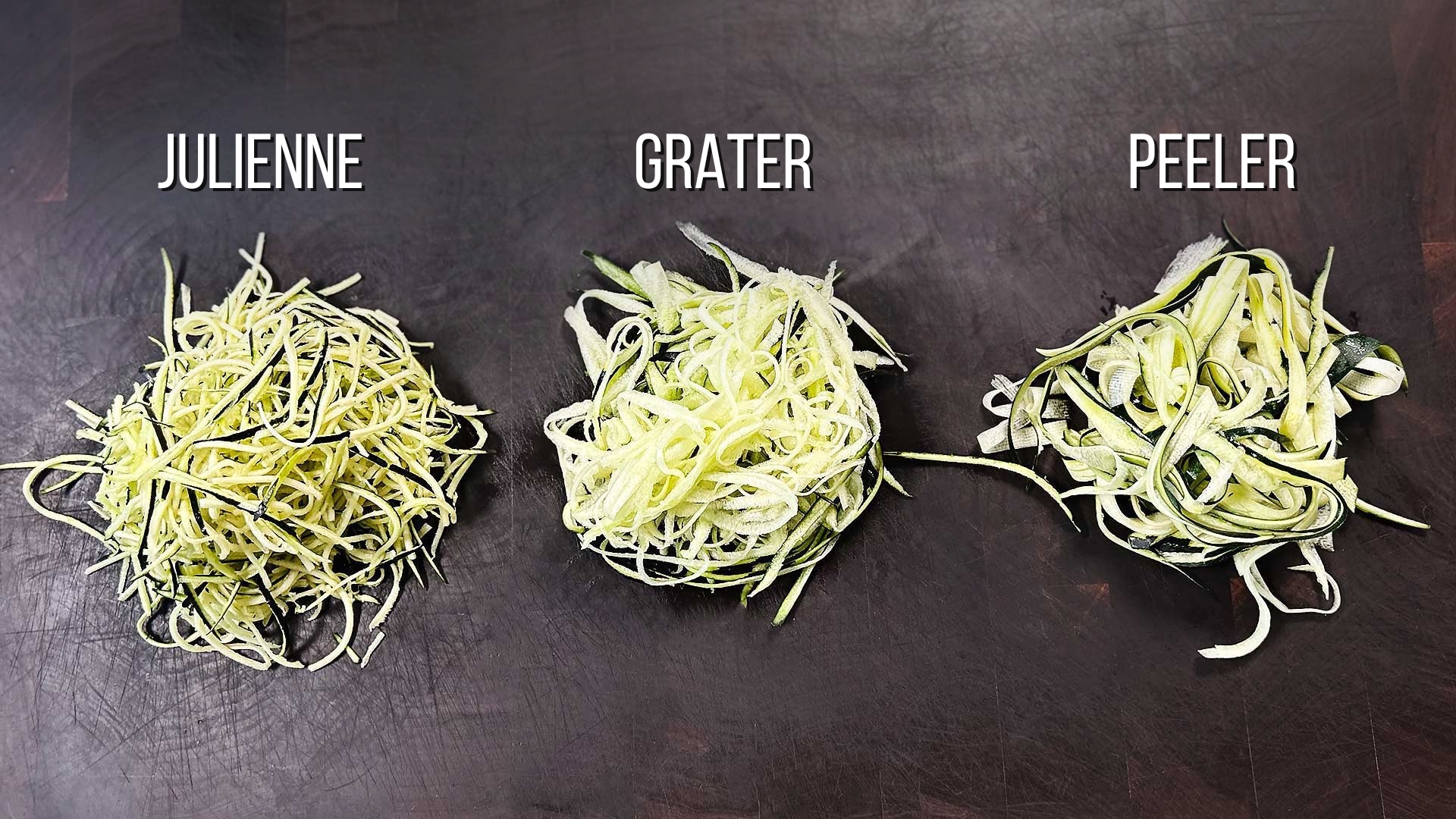
Should You Peel Zucchini Before Making Zoodles?
No. You can leave the skin on. Zucchini skin is tender and edible, and it adds green color to the finished dish.
Keeping the skin on also helps the zucchini hold its shape. If you peel the zucchini first, the flesh may become harder to grip, and the zoodles may break more easily.
You may remove the skin if:
• The zucchini has rough or damaged skin
• You prefer pale noodles
• The vegetable is not fresh
• You are cooking for someone who cannot eat the skin
For most meals, wash and dry the zucchini, then start peeling. This is the easiest approach when learning how to make zoodles with a peeler.
How to Keep Zoodles From Getting Watery
Zucchini contains a high amount of water. That moisture is useful in fresh dishes, but too much can make your sauce thin and your zoodles limp.
Use these simple steps:
• Choose firm, fresh zucchini.
• Stop peeling before you reach the seedy core.
• Place the zoodles on a towel after peeling.
• Pat them dry instead of squeezing them.
• Salt them only shortly before cooking.
• Avoid covering the pan while cooking.
For extra moisture control, place the zoodles in a colander and sprinkle them lightly with salt. Let them sit for 10 to 15 minutes, then pat them dry. This draws out some water, but it also softens the zucchini.
Do not salt zoodles hours in advance. They may release too much liquid and lose their fresh bite. When learning how to make zoodles with a peeler, timing matters as much as the peeling technique.
The Best Ways to Cook Zoodles
Zoodles cook much faster than wheat pasta. Most need only one to three minutes of heat.
Sautéed zoodles
Heat 1 teaspoon of olive oil in a skillet over medium-high heat. Add the zoodles and toss them for one to two minutes. Season with salt, pepper, garlic, or red pepper flakes.
This method gives you tender zoodles with a slight bite. It is one of the easiest ways to use zoodles in a weeknight meal.
Blanched zoodles
Bring a pot of water to a boil. Add the zoodles for about 30 to 60 seconds, then drain them well.
Blanching creates soft, bright zoodles. It works best when you want to serve them with a warm sauce but do not want to fry them in oil.
Microwaved zoodles
Place the zoodles in a microwave-safe bowl. Heat them for 45 to 90 seconds, checking often.
This method is quick, but it can release more water. Pat the zoodles dry before adding sauce.
Raw zoodles
Raw zoodles have a crisp texture and fresh taste. Toss them with lemon juice, olive oil, herbs, cherry tomatoes, feta, or a cold pesto dressing.
When deciding how to make zoodles with a peeler, consider the sauce. Fresh sauces suit raw zoodles, while warm sauces pair well with briefly cooked strips.
How to Add Sauce Without Making Zoodles Soggy
Add the sauce after cooking, not before. Warm the sauce in a separate pan, then toss it with the zoodles just before serving.
Good sauce choices include:
• Basil pesto
• Marinara
• Garlic and olive oil
• Peanut sauce
• Sesame ginger dressing
• Alfredo-style sauce
• Tomato, corn, and fresh basil
Use less sauce than you would use for wheat pasta. Zoodles have a mild taste and release water, so a heavy amount of sauce can make the plate watery.
For a thicker meal, add cooked chicken, shrimp, tofu, beans, mushrooms, or Parmesan cheese. These foods add protein and richness without requiring long cooking.
Common Mistakes to Avoid
Even with a simple tool, a few mistakes can affect the final texture. These tips make how to make zoodles with a peeler easier and more reliable.
Peeling too deeply
The center of the zucchini contains more seeds and water. Stop when you reach that area. Continuing to peel can create weak, soggy strips.
Using a dull peeler
A dull blade tears the zucchini instead of slicing it. Replace the peeler or sharpen it if the blade catches on the skin.
Cooking too long
Long cooking turns zoodles soft. Start with one minute, taste them, and cook longer only if needed.
Overcrowding the pan
A crowded pan traps steam. Cook large batches in two rounds, or use a wide skillet.
Adding salt too early
Salt pulls water from zucchini. Season near the end of cooking unless you are deliberately draining the zoodles first.
Treating zoodles exactly like pasta
Zoodles do not need a long boil. They are vegetables, not dried noodles. Their best texture is usually tender-crisp.
A common mistake I see when helping home cooks with how to make zoodles with a peeler is chasing a perfect noodle shape. The goal is not perfection. The goal is a fresh, pleasant texture that supports the rest of the meal.
Easy Zoodle Meal Ideas
Once you know how to make zoodles with a peeler, you can use them in many dishes.
Try these combinations:
• Garlic zoodles with shrimp, lemon, and parsley
• Zoodles with pesto, cherry tomatoes, and mozzarella
• Marinara zoodles with turkey meatballs
• Sesame zoodles with edamame and shredded carrots
• Zoodles with grilled chicken and Parmesan
• Cold zoodle salad with cucumber, feta, olives, and lemon
• Zoodles mixed with regular pasta for a balanced family meal
Mixing zucchini noodles with traditional pasta is especially useful for beginners. The pasta provides familiar texture, while the zoodles add color and vegetables.
You can also use zoodles as a topping for soups. Add raw strips to the bowl just before serving, or warm them briefly in the broth. This keeps them from becoming overly soft.
Nutrition and Food Safety Tips
Zoodles are naturally low in calories and provide nutrients such as vitamin C, potassium, and fiber. Their exact nutrition depends on the zucchini size, preparation method, and toppings.
They do not contain the same amount of starch as wheat pasta. That means zoodles may not provide the same energy or fullness for every person. Add protein, healthy fats, or a small portion of regular pasta if you want a more balanced and satisfying meal.
For safe preparation:
• Wash your hands before handling produce.
• Rinse the zucchini under running water.
• Use a clean cutting board.
• Keep raw zucchini away from raw meat and seafood.
• Refrigerate prepared zoodles promptly.
• Use refrigerated zoodles within a few days for the best quality.
Food safety guidance generally recommends keeping perishable foods cold and preventing cross-contamination. Zoodles are best when fresh, but safe storage still matters.
How to Store Zoodles
Fresh zoodles release water as they sit. For the best results, use them on the same day you make them.
If you need to store them:
-
Pat the zoodles dry.
-
Place them in a container lined with a paper towel.
-
Add another paper towel on top.
-
Close the container loosely or use a vented produce bag.
-
Refrigerate for up to two days.
Do not freeze raw zoodles if you want a firm noodle texture. Freezing breaks down the zucchini’s structure and can make the strips soft after thawing.
You can freeze cooked zucchini for soups and casseroles, but it will not have the same texture as freshly made zoodles.
Frequently Asked Questions About How to Make Zoodles With a Peeler
Can I make zoodles with a regular vegetable peeler?
Yes. A regular peeler creates thin zucchini strips, while a Y-peeler usually creates wider ribbons. Both tools work well for how to make zoodles with a peeler.
Do I need to remove the zucchini seeds?
No, but you should stop peeling when you reach the soft, seedy center. The center contains more water and can make the zoodles mushy.
How long should I cook zoodles?
Most zoodles need one to three minutes in a skillet. Cook them just until tender, because longer cooking can make them watery and soft.
Why are my zoodles watery?
Zucchini naturally contains a lot of water. Pat the strips dry, avoid the seedy core, cook them briefly, and add sauce just before serving.
Can I eat zoodles raw?
Yes. Raw zoodles are crisp and work well in salads, cold bowls, and dishes with pesto or lemon dressing. Wash the zucchini well before peeling.
What is the best peeler for making zoodles?
A sharp Y-peeler is often the easiest choice for wide ribbons. A standard straight peeler is useful when you want thinner strips.
Can I make zoodles ahead of time?
You can prepare them up to two days ahead and store them in the refrigerator with paper towels. For the best texture, make and cook them on the same day.
Conclusion
Learning how to make zoodles with a peeler is an easy way to add more vegetables to your meals without buying special equipment. Use firm zucchini, peel with light pressure, stop before the seedy center, and cook the strips briefly.
Start with a simple dish such as garlic, olive oil, lemon, and Parmesan. Once you find the texture you like, try pesto, marinara, stir-fry sauce, or a fresh salad dressing. Make a batch this week, share your favorite combination, and explore more simple vegetable recipes.

Liora Pennings is a seasoned chef and kitchen enthusiast with a passion for turning everyday cooking into an effortless experience. With years of hands-on culinary expertise, she specializes in practical techniques, ingredient know-how, and smart kitchen solutions that help home cooks elevate their meals. At KitchFlair.com, Liora shares her best tips, time-saving tricks, and honest product reviews to guide readers toward a more efficient, enjoyable, and inspired cooking routine. Whether you’re a beginner or a seasoned home chef, Liora’s friendly, knowledge-packed insights make every visit to the kitchen a little easier—and a lot more delicious.