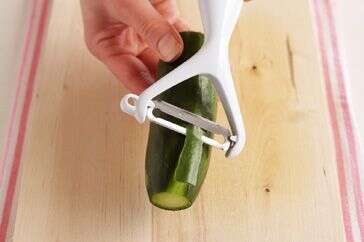
What Is A Swivel Peeler: Uses And Benefits
A swivel peeler is a handheld kitchen tool with a movable blade that follows the shape of fruits and vegetables.
If you have ever struggled to peel a curved potato, carrot, or apple with a fixed blade, a swivel peeler can make the task much easier. Its blade pivots from side to side, so it stays close to the food as you work. This guide explains what is a swivel peeler, how it works, where it performs best, and how to choose, use, and care for one.
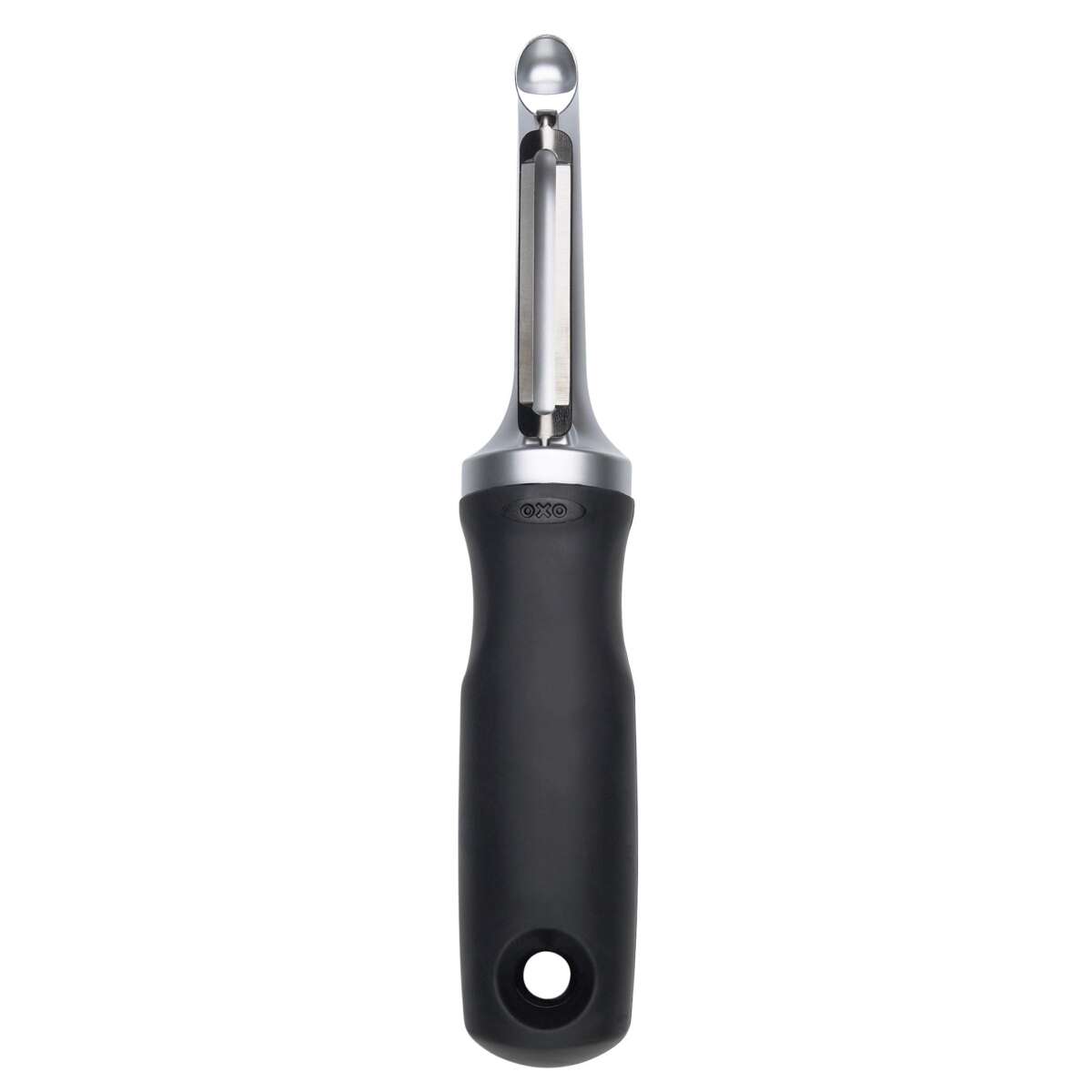
What Is a Swivel Peeler?
A swivel peeler is a kitchen utensil designed to remove thin layers of skin from fruits and vegetables. It has a handle, a sharp peeling blade, and a joint that lets the blade move from side to side. This movement is called a swivel action.
The blade adjusts to the shape of the food instead of forcing you to hold the food at one exact angle. That makes the tool useful for round, long, and uneven produce.
Most swivel peelers have these parts:
• Handle: Gives you a firm grip while peeling.
• Swivel blade: Moves with the curve of the food.
• Cutting edge: Removes the skin in a narrow strip.
• Frame or head: Holds the blade in place.
• Finger space: Helps keep your hand away from the cutting edge.
So, what is a swivel peeler in simple terms? It is a flexible vegetable peeler that follows the food’s shape. Think of it as a small blade on a hinge rather than a stiff scraper.
How Does a Swivel Peeler Work?
A swivel peeler works through a simple combination of sharpness, pressure, and movement. As you pull the blade across a vegetable, the blade pivots to match the surface. This helps it remove the skin without digging too deeply into the flesh.
The swivel action is especially helpful on curved foods. A potato, for example, has a rounded surface. A rigid peeler may catch or skip, while a swivel peeler can turn slightly as it moves.
To use a swivel peeler:
- Wash and dry the produce.
- Hold it firmly on a cutting board.
- Grip the peeler with your dominant hand.
- Place the blade against the skin.
- Pull the tool toward you or away from you with light pressure.
- Turn the food and continue until the skin is gone.
Use short strokes on small foods. Use longer strokes on carrots, cucumbers, and zucchini.
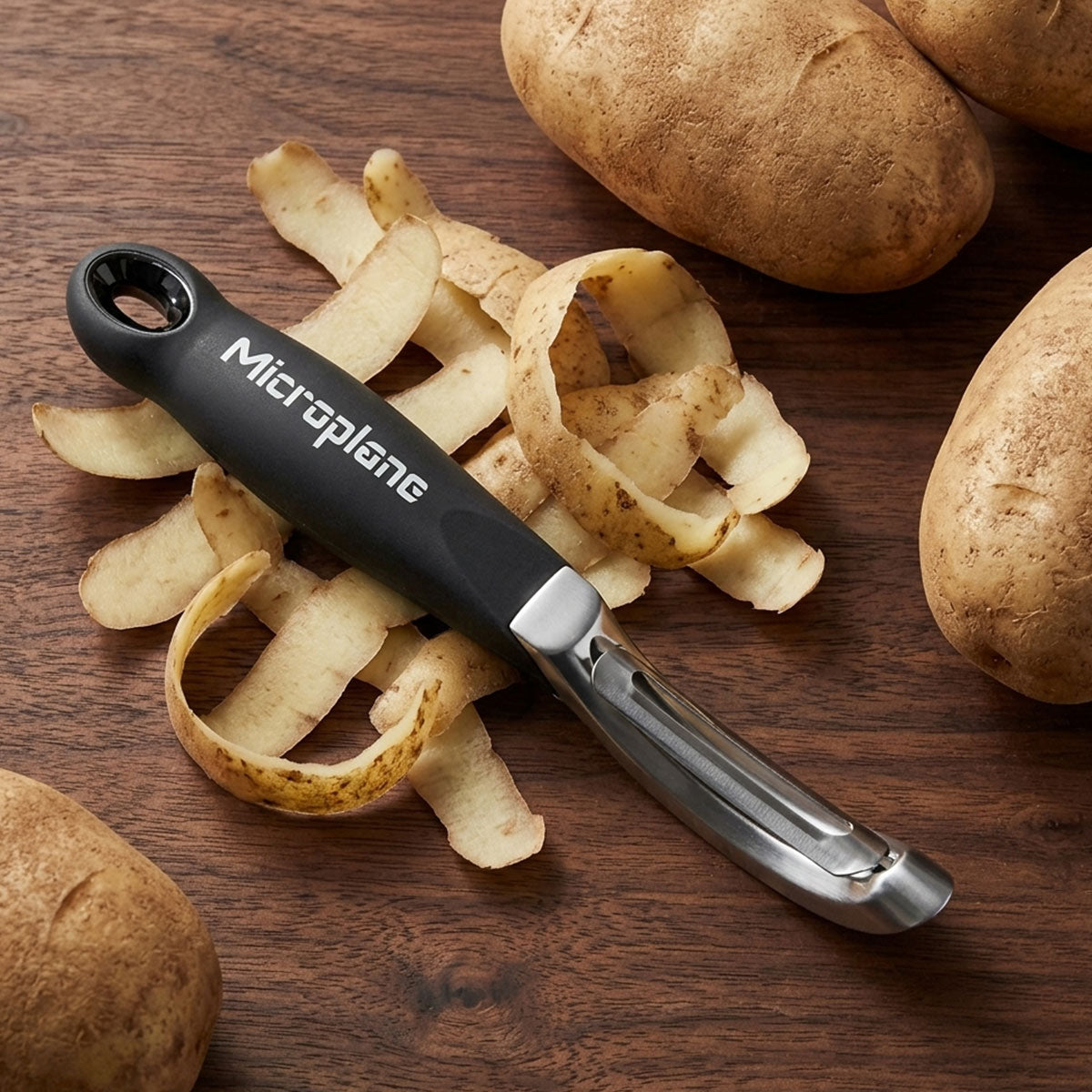
In my kitchen tests, the biggest mistake was pressing too hard. A sharp swivel peeler needs very little force. Heavy pressure often causes thick strips, wasted food, and a greater chance of slipping.
What Foods Can You Peel With a Swivel Peeler?
A swivel peeler can handle many common fruits and vegetables. Its flexible blade makes it a strong choice for produce with smooth or gently curved skin.
Common uses include:
• Potatoes
• Carrots
• Apples
• Pears
• Cucumbers
• Zucchini
• Sweet potatoes
• Turnips
• Parsnips
• Mangoes
• Kiwis
• Asparagus
• Butternut squash
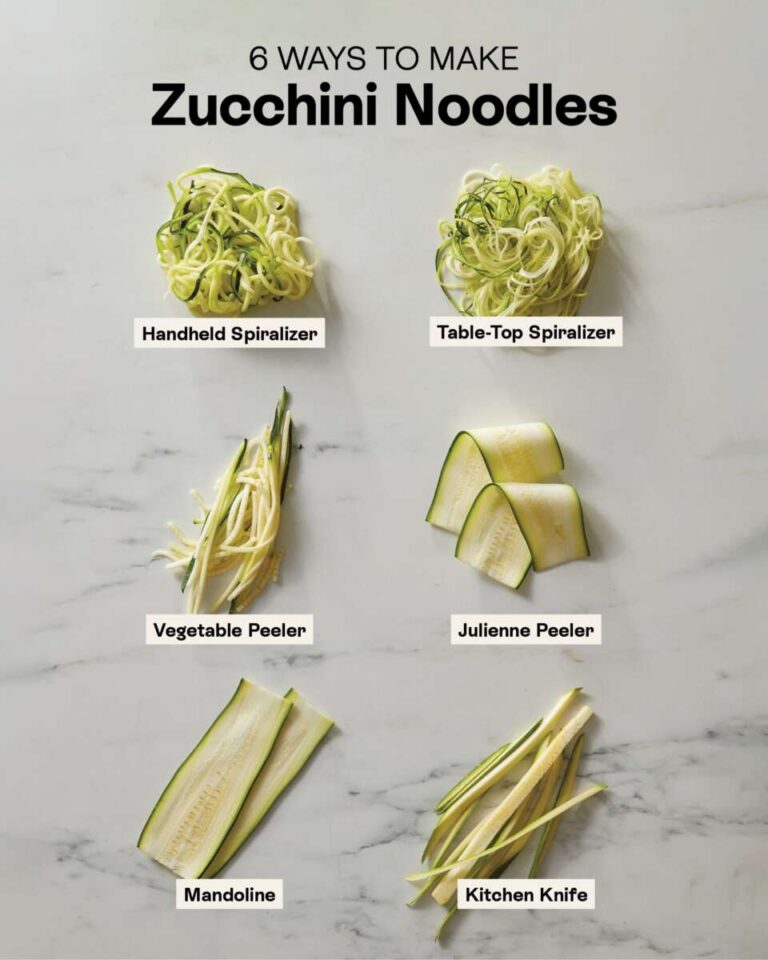
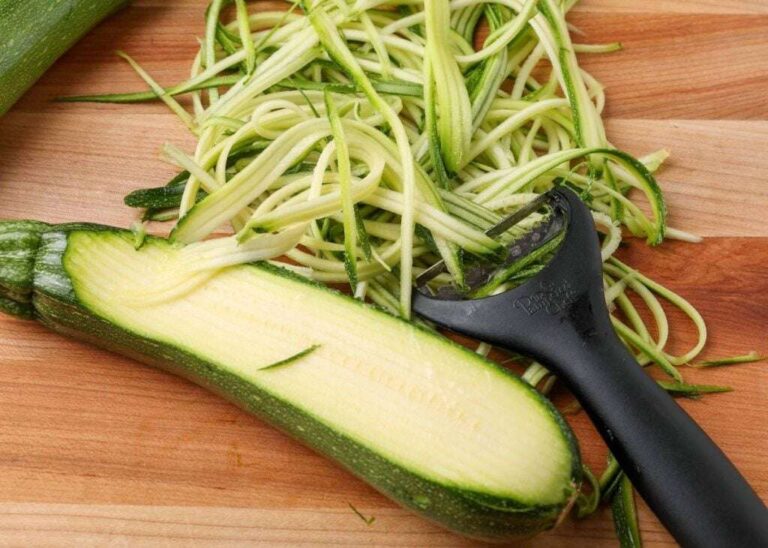
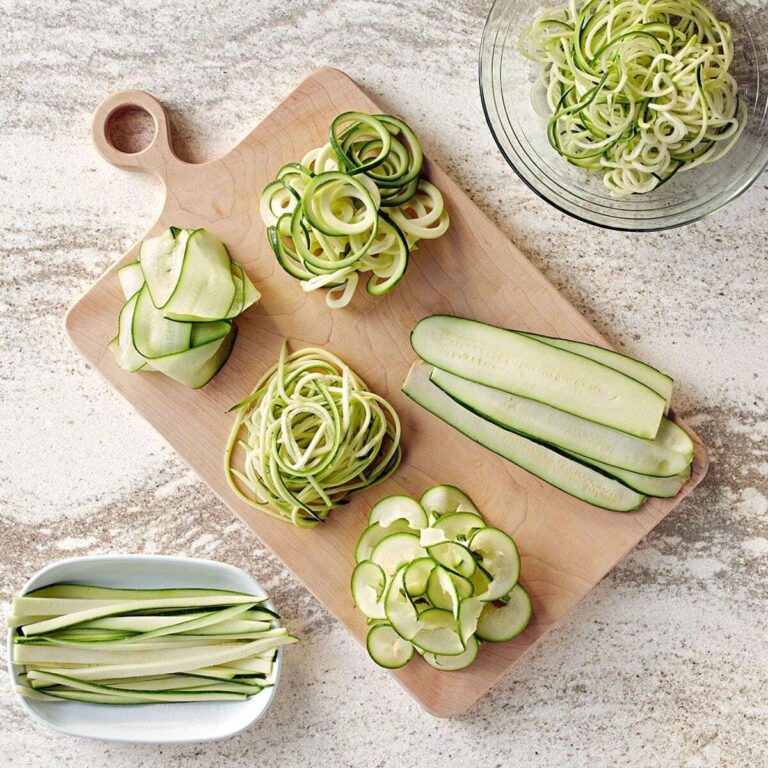
A swivel peeler can also make decorative strips from carrots, cucumbers, and zucchini. These strips work well in salads, sandwiches, pasta dishes, and vegetable garnishes.
Some cooks use a swivel peeler to shave hard cheese or make thin chocolate curls. However, check the manufacturer’s instructions first. A vegetable peeler is not always designed for hard foods.
Soft tomatoes and ripe peaches can be difficult. Their skin may tear instead of forming a clean strip. For these foods, blanching or using a small paring knife may work better.

What Are the Benefits of a Swivel Peeler?
The main benefit of a swivel peeler is control. The moving blade follows the surface, so you can peel curved food with fewer stops and slips.
Other benefits include:
• Thin peeling: A sharp blade removes the skin while saving more edible flesh.
• Better control: The flexible head follows the food’s natural shape.
• Faster prep: You can peel several foods with fewer awkward movements.
• Simple design: There are no complex settings to learn.
• Comfortable use: Many models need only light pressure.
• Versatile performance: One tool can handle many fruits and vegetables.
• Easy storage: Most peelers fit in a utensil drawer.
A swivel peeler can also reduce waste. Food waste depends on blade sharpness, pressure, and technique, but a clean, thin cut usually removes less flesh than a dull or poorly designed tool.
For people with limited hand strength, an ergonomic swivel peeler may feel easier than a stiff model. Still, comfort varies. A tool that works well for one person may feel awkward to another.
Are There Different Types of Swivel Peelers?
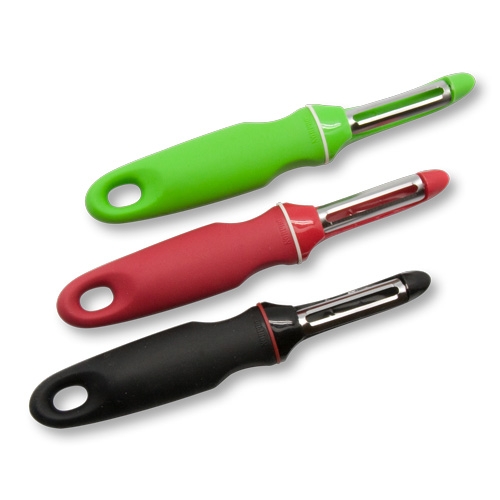
Yes. Swivel peelers come in several styles. The best choice depends on the foods you prepare and how the handle feels in your hand.
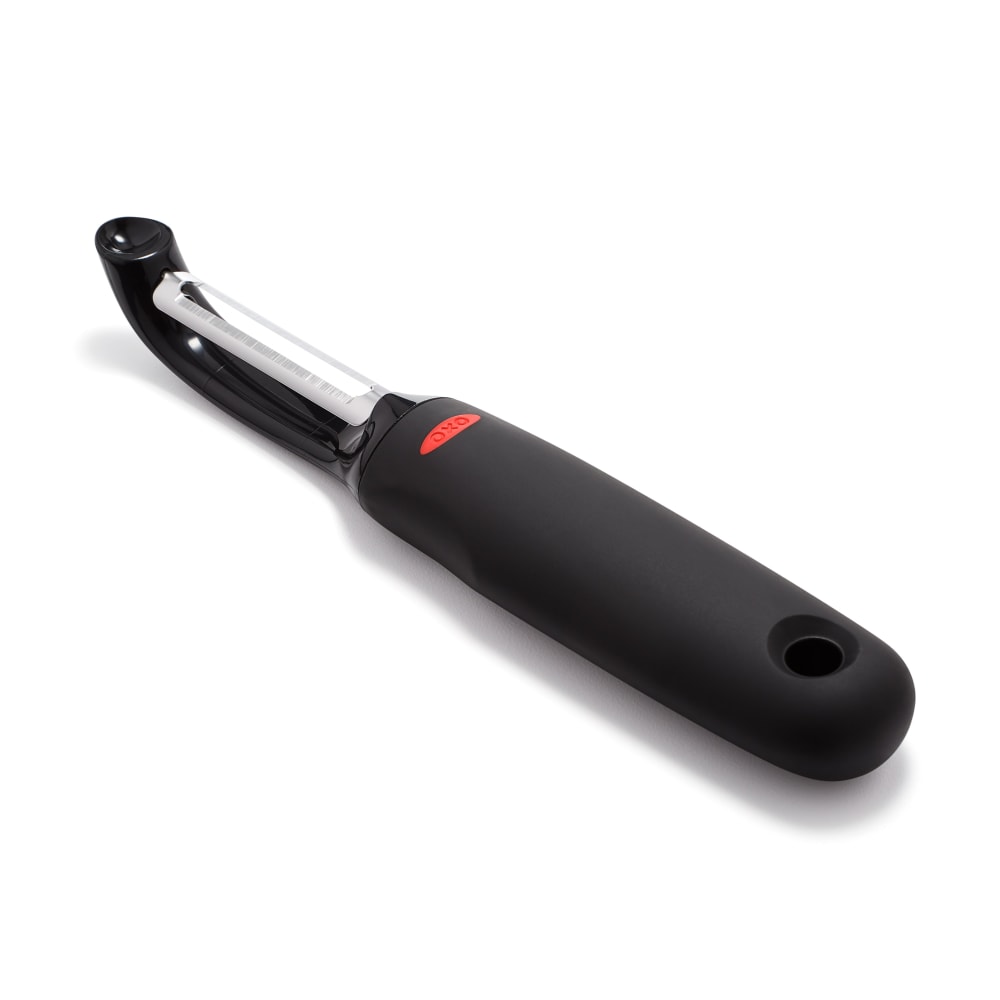
Standard Swivel Peeler
This is the most common design. It has a vertical blade that moves from side to side. It works well for potatoes, carrots, apples, and cucumbers.
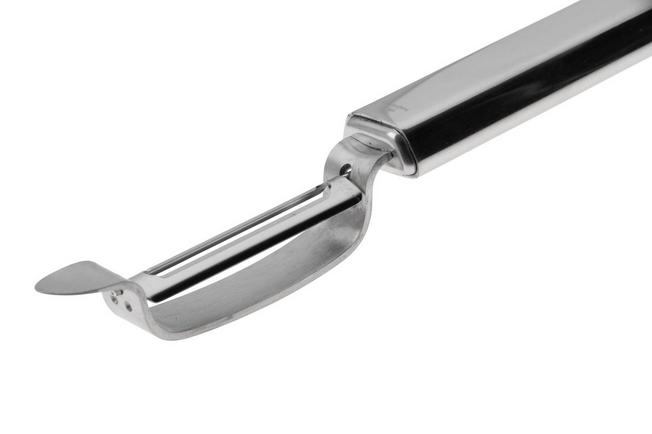
Y-Shaped Swivel Peeler
A Y-shaped peeler has a blade across the top of the handle. You move it toward or away from your body. Many people like this design because it allows smooth, even strokes.
Serrated Swivel Peeler
A serrated blade has small teeth along its edge. It can grip slippery foods and may work well on tomatoes, peaches, and soft fruits. It may leave a rougher surface than a smooth blade.
Julienne Peeler
A julienne peeler cuts food into thin strips rather than removing a broad layer of skin. It is useful for salads, stir-fries, slaws, and vegetable noodles.
Double-Edged Swivel Peeler
Some models cut in either direction. This can speed up preparation, especially when peeling long vegetables. The design may take a short time to learn.
When comparing styles, look at the blade material, handle shape, balance, and cleaning method. A fancy design cannot replace a sharp, stable blade.

Swivel Peeler vs. Straight Peeler
The key difference is blade movement. A straight peeler has a fixed blade, while a swivel peeler allows the blade to pivot.
A straight peeler can offer strong control on flat or narrow surfaces. It may also feel more precise for certain tasks. However, it can catch on rounded foods if you change direction often.
A swivel peeler usually feels smoother on curved produce. It is often the better all-purpose option for home cooks who prepare many types of vegetables.
Here is a simple comparison:
• Swivel peeler: Flexible, versatile, and effective on curved foods.
• Straight peeler: Firm, direct, and useful for controlled, straight cuts.
• Y-peeler: Comfortable for long strokes and large batches.
• Paring knife: Precise, but it requires more skill and attention.
There is no single best peeler for every cook. Many professional kitchens keep more than one style because different tools suit different tasks.

How to Choose the Best Swivel Peeler
When shopping for a swivel peeler, focus on function rather than appearance. A comfortable, sharp, well-balanced tool will usually serve you better than an attractive tool with a weak blade.
Consider these features:
Blade Material
Stainless steel blades resist rust and are easy to clean. Some blades are coated to reduce sticking, but the coating can wear over time. Look for a blade that feels sharp and sits evenly in the frame.
Handle Comfort
Choose a handle that feels secure when wet. Textured rubber or a shaped plastic grip may reduce slipping. Avoid a handle that feels too narrow or sharp against your palm.
Swivel Movement
The blade should move smoothly without feeling loose. A small amount of movement is necessary, but excessive wobbling can make peeling uneven.
Cleaning
A dishwasher-safe peeler is convenient, but hand washing may help preserve the blade. Check the care label before placing it in a dishwasher.
Size and Balance
A lightweight model may reduce hand fatigue. A slightly heavier model may feel more stable. Hold the peeler if possible and test how naturally it fits your hand.
Safety Design
Look for a guarded blade, a strong frame, and a handle that keeps your fingers away from the cutting edge. No safety feature replaces careful handling, but good design can lower risk.
How to Use a Swivel Peeler Safely
Peelers are small, but their blades can be very sharp. Safe technique matters more than speed.
Follow these habits:
- Use a stable cutting board.
- Hold the food with your fingers behind the peeling path.
- Keep your thumb away from the blade.
- Peel away from your hand when possible.
- Use light, steady pressure.
- Slow down near the ends of food.
- Do not try to catch a falling peeler.
- Put the peeler down before reaching for another item.
For round foods, cut a small flat section first. This gives the food a stable base. A stable vegetable is much less likely to roll while you peel it.
Do not use a swivel peeler on frozen food. Hard surfaces can cause the blade to jump. Let frozen produce thaw first, or use a tool made for that task.
Children should use a peeler only with close adult supervision. Even a small blade can cause a serious cut.
How to Clean and Maintain a Swivel Peeler
Clean the peeler after every use. Food particles can collect around the blade and joint, especially after peeling potatoes or root vegetables.
Use this simple care routine:
• Rinse the peeler under warm water.
• Use a small brush to remove trapped food.
• Wash with dish soap.
• Rinse away all soap.
• Dry it fully before storage.
Avoid leaving a swivel peeler in standing water. Moisture can affect some joints and may encourage rust on low-quality metal.
Never test sharpness with your finger. If the peeler begins to skip, crush the skin, or require extra pressure, the blade may be dull. Replace the tool if the blade cannot be sharpened safely or if the frame is bent.
Store the peeler in a drawer, utensil holder, or protective cover. Do not leave it loose in a sink where someone may grab it without seeing the blade.
Common Mistakes to Avoid
Even a good swivel peeler can perform poorly when used the wrong way. Most problems come from pressure, poor food placement, or a dull blade.
Avoid these mistakes:
• Pressing too hard: This removes too much food and increases slipping.
• Peeling wet produce: Excess water can make the food and handle slippery.
• Using a dull blade: A dull peeler often feels more dangerous than a sharp one because it needs extra force.
• Moving too fast: Speed reduces control, especially near corners.
• Ignoring the food’s shape: Turn the produce as you work instead of forcing one long stroke.
• Using the wrong tool: A vegetable peeler may not be suitable for thick squash skin or hard cheese.
• Leaving the tool dirty: Dried food can block the swivel joint and affect movement.
When I first used a swivel peeler on a large sweet potato, I tried to copy the long strokes used on a carrot. That approach was awkward and wasteful. Short strokes and a stable cutting board worked much better.
When Should You Use a Knife Instead?
A swivel peeler is not the right tool for every food. A paring knife may be better when the skin is very thick, irregular, or difficult to grip.
Use a knife when:
• The food has deep eyes or damaged spots.
• The skin is thick and tough.
• You need to remove only a small area.
• You want to create a specific shape.
• The produce is too soft for a peeler.
For example, a knife may be more useful for trimming a pineapple, removing thick squash skin, or cutting blemishes from a potato. A swivel peeler is usually better for thin, smooth skins.
Use the tool that gives you the best control. The goal is not to prove that one utensil can do everything. The goal is to prepare food safely and with as little waste as possible.
Is a Swivel Peeler Worth Buying?
For most home cooks, a swivel peeler is a practical and affordable kitchen tool. It can replace several basic peeling tools and make daily food preparation easier.
It is especially useful if you often cook:
• Roasted vegetables
• Soups and stews
• Fresh salads
• Vegetable noodles
• Fruit desserts
• Stir-fries
• Potato dishes
A swivel peeler may not be worth buying if you rarely peel produce or already have a tool that feels comfortable and performs well. The value comes from regular use, not from owning another gadget.
Choose quality over the lowest price. A strong frame, sharp blade, and comfortable grip can make a noticeable difference. A poorly made model may bend, rust, or become uncomfortable after a short time.
Frequently Asked Questions About What Is a Swivel Peeler
What is a swivel peeler used for?
A swivel peeler removes thin skin from fruits and vegetables. Its movable blade follows curved surfaces, making it useful for potatoes, carrots, apples, cucumbers, and similar foods.
Why does a swivel peeler move?
The blade moves from side to side so it can follow the shape of the food. This helps create smoother strokes and may reduce uneven cuts on rounded produce.
Is a swivel peeler better than a regular peeler?
A swivel peeler is often more versatile because it adapts to curved foods. However, a regular fixed peeler may provide better control for certain straight or precise cuts.
Can you sharpen a swivel peeler?
Some swivel peeler blades can be sharpened, but many are designed for replacement rather than home sharpening. If the blade skips or needs heavy pressure, replacing the tool is usually the safest option.
Are swivel peelers safe to use?
Yes, when used with care. Keep your fingers behind the blade, use a stable cutting board, peel with light pressure, and clean the tool after use.
Can a swivel peeler go in the dishwasher?
Some models are dishwasher safe, but not all are. Check the product instructions, and remember that careful hand washing may help protect the blade and swivel joint.
Conclusion
A swivel peeler is a simple kitchen tool with a blade that pivots to follow the curves of fruits and vegetables. It can make peeling faster, smoother, and less wasteful when you use light pressure and safe hand placement.
The best swivel peeler has a sharp stainless steel blade, a comfortable handle, a smooth joint, and a strong frame. Choose one that fits your hand, clean it after each use, and replace it when the blade becomes unreliable.
Try these tips the next time you prepare potatoes, carrots, or apples. Then explore other kitchen guides and share your favorite peeling method with fellow home cooks.

Liora Pennings is a seasoned chef and kitchen enthusiast with a passion for turning everyday cooking into an effortless experience. With years of hands-on culinary expertise, she specializes in practical techniques, ingredient know-how, and smart kitchen solutions that help home cooks elevate their meals. At KitchFlair.com, Liora shares her best tips, time-saving tricks, and honest product reviews to guide readers toward a more efficient, enjoyable, and inspired cooking routine. Whether you’re a beginner or a seasoned home chef, Liora’s friendly, knowledge-packed insights make every visit to the kitchen a little easier—and a lot more delicious.