What Is A Potato Peeler: Uses And Types
A potato peeler is a hand tool that removes thin skin from potatoes and other fruits and vegetables.
A potato peeler looks simple, but its blade design, grip, and movement can change how fast and safely you prep food. This guide explains what a potato peeler is, how it works, the main types, and how to choose and use one with confidence.
What Is a Potato Peeler?
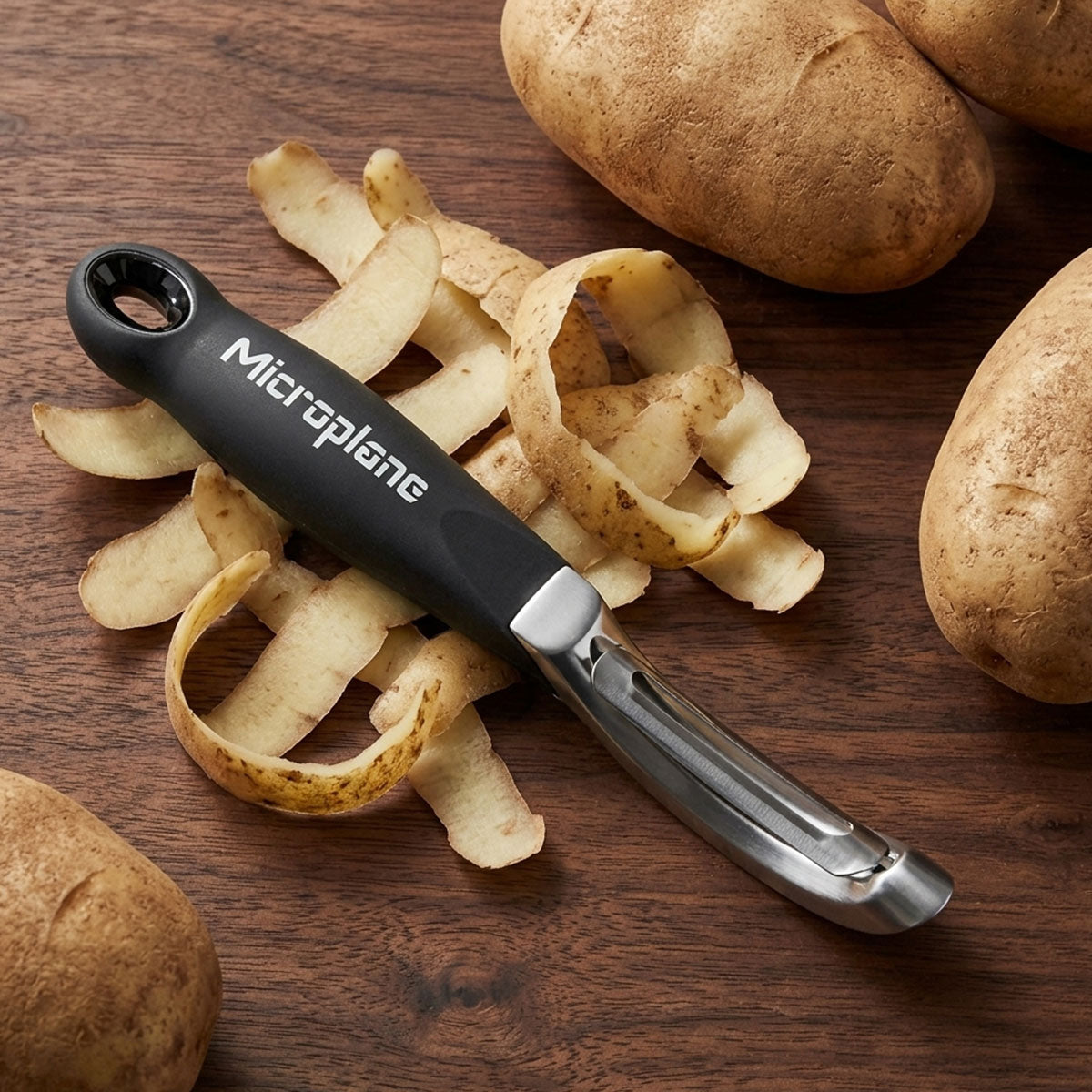
A potato peeler is a small kitchen utensil made to remove the outer skin from potatoes. It usually has a sharp blade attached to a handle. You pull the blade across the potato, and it lifts away a thin strip of skin.
Although its name points to potatoes, a potato peeler can do much more. You can use it on:
- Carrots
- Apples
- Cucumbers
- Sweet potatoes
- Parsnips
- Zucchini
- Butternut squash
- Hard cheese and chocolate, in some cases
The main goal is control. A good potato peeler removes the skin without taking away too much of the edible flesh underneath. Think of it as a small, precise plane for food.
Most peelers have a carbon steel or stainless steel blade. Stainless steel is common because it resists rust and is easy to clean. The handle may be made from plastic, metal, wood, or rubber.

How Does a Potato Peeler Work?
A potato peeler works through a narrow cutting edge. When you move the blade across a potato, the edge cuts just under the skin. The thin opening above or beside the blade guides the peel away from the surface.
Many potato peelers have a swivel blade. This blade moves slightly as you peel. The movement helps it follow the curves and bumps of a potato. A fixed blade stays in one position and can feel more stable on straight surfaces.
To use a potato peeler:
- Wash the potato under cool running water.
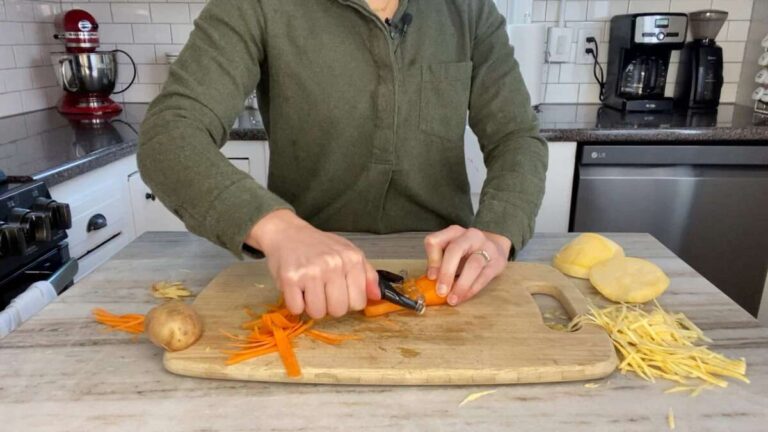
- Hold it firmly in your non-dominant hand.
- Place the blade against the skin.
- Pull the peeler away from your hand.
- Turn the potato and repeat until the skin is gone.
- Rinse the peeled potato before cooking.
Always move the potato peeler away from your fingers. This simple habit lowers the chance of cuts. For small pieces, place the food on a cutting board instead of holding it in your hand.
In my own kitchen testing, the most common mistake is pressing too hard. Light pressure usually gives a cleaner peel and helps the blade glide. Heavy pressure makes the tool dig into the flesh and can cause uneven strips.

Main Types of Potato Peelers
Not every potato peeler has the same shape. Each style suits a different task and hand position.
Swivel Potato Peeler
A swivel peeler has a blade that turns from side to side. It adjusts to the curves of round foods, which makes it a popular choice for potatoes and carrots.
Benefits include:
- Smooth movement around curved surfaces
- Less wrist twisting
- Easy use for most home cooks
- Good performance on soft and firm produce
A swivel potato peeler is often the best all-purpose option.
Y Peeler
A Y peeler has a wide blade placed across the top of the handle. You hold it like a small razor and pull it toward you or across the food.
Y peelers can remove skin quickly because they cover a wider area with each stroke. They also work well for long vegetables, such as carrots and cucumbers. Some users find the shape easier on the wrist.
Straight Peeler
A straight peeler looks like a small knife with a blade that runs along the handle. It offers a familiar grip and can provide good control on narrow vegetables.
This type may take more practice on round potatoes. It can also be useful for removing blemishes or making thin strips for garnishes.
Serrated Peeler
A serrated potato peeler has tiny teeth along its blade. It can grip smooth or slippery foods, such as tomatoes, peaches, and very ripe fruit.
However, it may leave a rougher surface on a potato. It is best for foods that are difficult to grip with a smooth blade.
Julienne Peeler
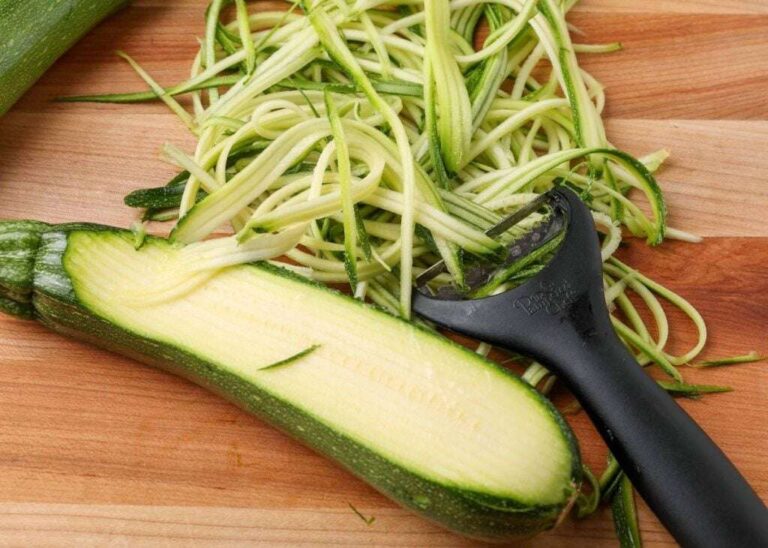
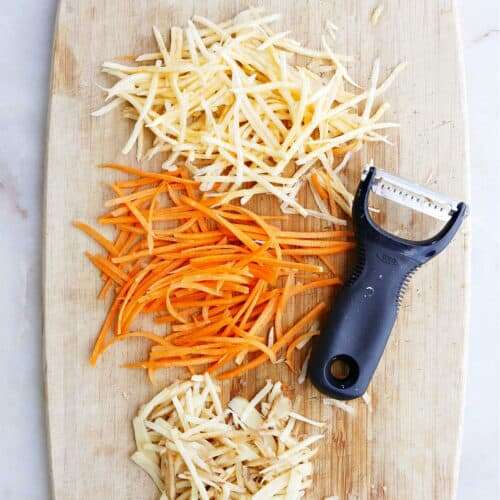
A julienne peeler has teeth that cut food into thin strips. It does not simply remove skin. Instead, it creates matchstick pieces for salads, stir-fries, and garnishes.
This tool is useful, but it is not a replacement for a standard potato peeler.

Potato Peeler Versus a Paring Knife
A potato peeler and a paring knife can both remove skin, but they work in different ways.
A potato peeler usually removes a thinner, more even layer. This can reduce food waste and speed up preparation. It also keeps your fingers farther from the cutting edge during normal use.
A paring knife offers more control for detailed work. You can cut away eyes, bruises, thick spots, and unusual shapes. It also works better when a potato has a very thick or tough skin.
Use a potato peeler when:
- The food has a fairly smooth surface
- You want fast, even peeling
- You want to remove minimal flesh
- You are preparing several potatoes
Use a paring knife when:
- The potato has deep eyes
- The skin is very thick
- You need to trim damaged areas
- The surface is too irregular for the peeler
A useful approach is to combine both tools. Peel the broad surface with a potato peeler, then use a small knife to remove eyes and blemishes. This method is quick and creates less waste than using a knife for the entire job.
Benefits of Using a Potato Peeler
A potato peeler offers more than convenience. It can improve speed, consistency, and food preparation habits.
It Saves Time
A sharp potato peeler can remove skin in seconds. This matters when you are preparing mashed potatoes, roasted vegetables, soups, or large family meals.
It Reduces Waste
A good blade takes off a thin layer. A knife often removes more flesh because it needs to cut below the skin. Less waste can save money over time.
Some potato skins are safe and pleasant to eat when scrubbed well. Whether you peel them depends on the recipe, texture, and personal taste. For example, many people leave the skin on for roasted potatoes but peel potatoes for smooth mashed potatoes.
It Improves Texture
Removing tough skin can make soups, purées, sauces, and mashed vegetables smoother. It can also help vegetables cook more evenly when the outer skin is thick.
It Supports Better Food Prep
A reliable potato peeler makes it easier to cook fresh food at home. The tool is small, affordable, and simple to store. It can also help beginners feel more comfortable with basic kitchen tasks.
It Can Help With Decorative Cuts
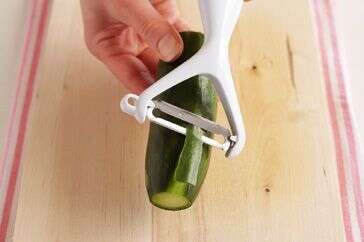
Some peelers create long ribbons from carrots, cucumbers, and zucchini. These ribbons can add color and texture to salads, pasta dishes, and vegetable plates.

How to Choose the Best Potato Peeler
The best potato peeler is the one that feels safe, sharp, and comfortable in your hand. Price matters, but design often matters more.
Look for these features:
- Sharp blade: A dull edge requires extra force and can slip.
- Comfortable handle: Rubber or textured grips can help wet hands.
- Stainless steel construction: This material is durable and resists rust.
- Swivel action: A moving blade follows curved produce more easily.
- Dishwasher-safe design: This can make cleanup simpler.
- Wide blade opening: It helps remove wider strips from large vegetables.
- Lightweight body: A lighter tool may reduce hand fatigue.
- Easy-to-clean joints: Small gaps can trap food and moisture.
Left-handed users should check the blade design before buying. Some peelers work well with either hand, while others feel natural only in one direction.
If possible, hold the potato peeler before purchasing it. Your thumb should rest comfortably, and your wrist should remain fairly straight. A tool that feels awkward in the store may become tiring during meal preparation.
My practical lesson is to avoid choosing a peeler only because it looks attractive. I once used a metal model with a narrow handle that seemed sturdy, but it caused hand strain after several potatoes. A simple, balanced handle proved much better for daily use.

How to Use a Potato Peeler Safely
A potato peeler has a sharp blade, so safe handling matters. It is not a toy, even though it looks small.
Follow these safety tips:
- Wash the food before peeling it.
- Keep your fingers behind the blade.
- Move the tool away from your body when possible.
- Use a cutting board for small or unstable foods.
- Do not use a dull or damaged blade.
- Keep the handle dry if it becomes slippery.
- Store the peeler where children cannot reach it.
- Place it carefully in a dishwasher or sink.
Do not try to peel a potato while holding it close to your fingertips. If the potato is very small, cut it in half first and place the flat side on a board.
When peeling a large, hard vegetable, take short strokes. Long strokes may give you speed, but they can reduce control. A slow first pass is often safer and more efficient than correcting a deep cut.

Cleaning and Maintaining a Potato Peeler
Clean a potato peeler soon after use. Food residue can dry around the blade and make the tool harder to wash.
Rinse the peeler under warm water. Use a small brush or sponge to remove bits caught near the blade. If the manufacturer allows dishwasher cleaning, follow the care instructions. Some tools may become dull or discolored in a dishwasher.
Dry the potato peeler completely before storing it. Moisture can cause rust on low-quality metal parts, especially around screws and joints.
Replace the peeler when:
- The blade has visible rust.
- The blade feels loose.
- The handle is cracked.
- The tool slips during normal use.
- It needs strong pressure to remove skin.
- The blade has chips or rough edges.
Do not try to sharpen a basic potato peeler with a kitchen knife sharpener. Many peeler blades are thin and difficult to restore safely. Replacement is often the better choice.

Common Potato Peeler Mistakes
Even a simple tool can be frustrating when used incorrectly. Avoiding a few common mistakes can improve your results.
Pressing Too Hard
Extra force does not make peeling better. It usually removes too much flesh and makes the blade catch.
Using a Dull Blade
A dull potato peeler may skid across the surface. This can increase hand strain and the chance of a cut. If light pressure no longer works, inspect the blade or replace the tool.
Peeling Wet Food With Wet Hands
Water can make both the food and handle slippery. Dry the handle and hold the potato firmly before you begin.
Ignoring Potato Eyes
A peeler may glide over shallow eyes but leave deeper spots behind. Remove these areas with the tip of a paring knife.
Green areas on potatoes deserve special care. Green color can indicate exposure to light and higher levels of glycoalkaloids, such as solanine. Cut away small green areas generously, and discard potatoes that are very green, bitter, shriveled, or badly damaged.
Leaving the Tool in a Sink
A peeler hidden under soapy water can cause an accidental cut. Wash it at once or place it in a visible, safe position.

Alternatives to a Potato Peeler
You do not always need a potato peeler. The right alternative depends on the food and the result you want.
A paring knife works well for deep eyes, rough patches, and thick skins. It gives excellent control but may create more waste.
A vegetable brush can remove dirt without removing the skin. This is useful when you want to roast or boil potatoes with the skin on.
A scrubber can help clean firm produce. Use one made for food preparation, not a harsh household pad that may leave residue or damage the surface.
For some recipes, boiling or blanching can loosen the skin. After heating, cool the food safely and slide the skin away. This method can work well for tomatoes and certain vegetables, though it is slower than using a potato peeler for everyday prep.
Frequently Asked Questions About What Is a Potato Peeler
What is a potato peeler used for?
A potato peeler removes the thin outer skin from potatoes and many other fruits and vegetables. It can also make ribbons, strips, or garnishes when designed for those tasks.
Is a potato peeler better than a knife?
A potato peeler is usually faster and removes a thinner layer than a knife. A knife is better for deep eyes, thick skin, damaged areas, and detailed trimming.
Can you use a potato peeler on sweet potatoes?
Yes, you can use a potato peeler on sweet potatoes. Because their skin can be firm, use a sharp blade and steady pressure, or choose a sturdy Y peeler for better control.