Can You Use An Apple Peeler To Make Zucchini Noodles: Yes!
Yes, you can use an apple peeler to make zucchini noodles, but the result may be wider ribbons.
If you are wondering, “can you use an apple peeler to make zucchini noodles?” the practical answer is yes, with a few limits. A handheld apple peeler can turn zucchini into thin strips, while a crank-style apple peeler may create long, uneven ribbons. It is a useful kitchen shortcut when you do not have a spiralizer, but the tool and technique matter.
Can you use an apple peeler to make zucchini noodles?
Yes, you can use an apple peeler to make zucchini noodles, especially if your peeler has a sharp, flat blade. The tool will usually create wide, flat ribbons rather than round, spaghetti-like noodles. These ribbons still work well in salads, stir-fries, pasta dishes, and light vegetable bowls.
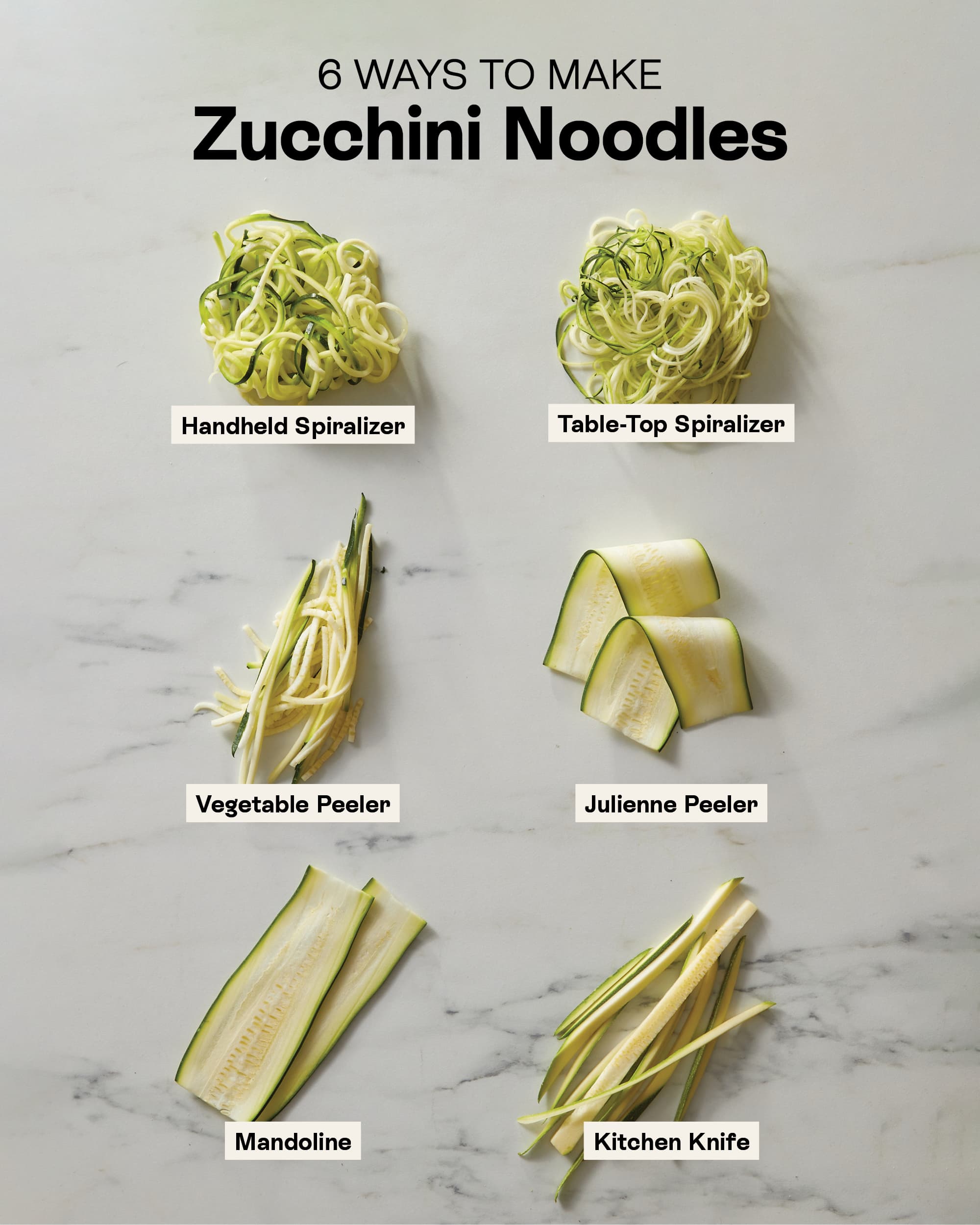
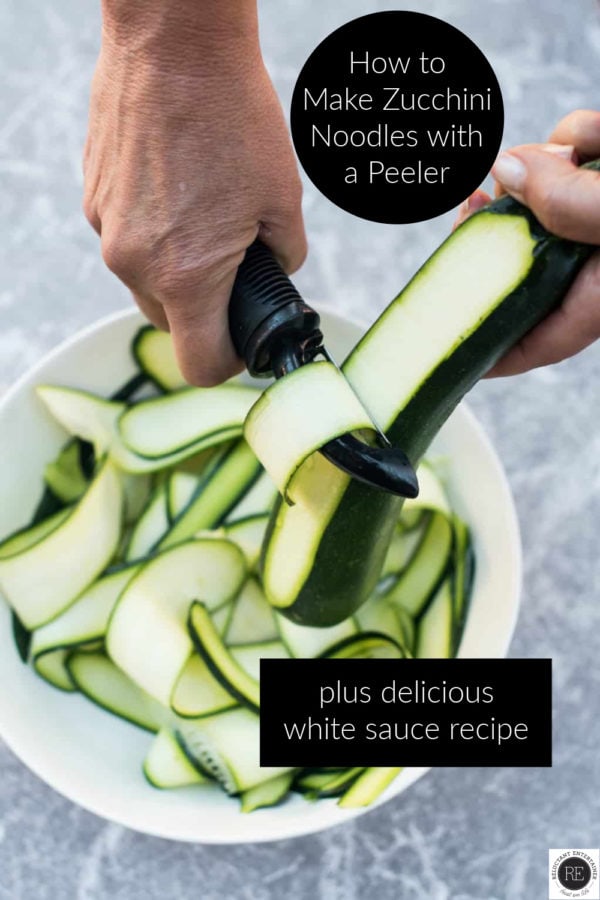
A standard handheld apple peeler often works much like a vegetable peeler. You pull the blade along the zucchini from end to end. Each pass removes a thin strip. Rotate the zucchini as you work, and stop when you reach the soft, seedy center.
A rotating apple peeler is less reliable. It is made to remove apple skin in one long coil, not to create uniform zucchini noodles. Still, it can work if the zucchini is firm and the blade is clean and sharp.

What type of apple peeler works best?
The style of apple peeler makes a big difference. Some tools are better suited to making zucchini ribbons than others.
Handheld apple peeler
A handheld peeler is the easiest option. It gives you good control and lets you choose the width and thickness of each strip. A Y-shaped peeler or swivel peeler usually produces the best results.
Use a handheld peeler if you want:
• Wide zucchini ribbons
• Thin strips for a salad
• A quick substitute for a spiralizer
• Better control over pressure and direction
A peeler with a sharp stainless steel blade is ideal. A dull blade may drag across the zucchini, crush the flesh, or create short pieces.
Crank-style apple peeler
A crank-style apple peeler can work, but it has clear limits. Many models are designed to hold an apple firmly and remove its skin while the fruit spins. Zucchini is softer and more delicate, so it may bend, slip, or break during the process.
If you try this method, choose a straight, firm zucchini. Avoid very large zucchini because their centers contain more seeds and water. These soft centers can make the vegetable difficult to hold in place.
Serrated peeler
A serrated peeler may create slightly textured ribbons. This can help sauce cling to the zucchini. However, serrated blades can also tear the vegetable if you press too hard.
For the smoothest zucchini noodles, a sharp, plain-edged blade is usually the better choice.
How to make zucchini noodles with an apple peeler
Learning how to use an apple peeler for zucchini noodles is simple. The key is to keep the zucchini firm, use light pressure, and avoid the watery center.
What you need
• One firm medium zucchini
• A clean apple peeler
• A cutting board
• A chef’s knife
• Paper towels or a clean kitchen towel
• A bowl for the ribbons
Choose zucchini that feels firm and has smooth, unbroken skin. Small or medium zucchini tend to produce better noodles than oversized garden zucchini.
Step-by-step method
-
Wash and dry the zucchini well. Extra water can make the vegetable slippery.
-
Trim both ends with a knife. This gives you flat surfaces and makes the zucchini easier to handle.
-
Place the zucchini on a stable cutting board. You can also hold it firmly in one hand, but keep your fingers behind the blade.
-
Pull the apple peeler from one end of the zucchini to the other. Use a long, gentle stroke.
-
Rotate the zucchini after each pass. This helps create even ribbons and prevents you from peeling only one side.
-
Continue until you reach the seedy core. The center is usually softer and more watery, so set it aside for soup, sauce, or a vegetable stock.
-
Place the ribbons in a bowl. If they seem wet, pat them gently with paper towels.
-
Cook or serve the zucchini noodles soon after making them. Fresh zucchini releases water as it sits.
The first few strips may look uneven. That is normal. Once you find the right pressure, the peeler should glide across the surface like a small plane over snow.

How to get better zucchini noodles with an apple peeler
The main challenge is consistency. An apple peeler removes a strip at a time, so your technique affects the shape more than it would with a spiralizer.
Try these practical tips:
• Use firm zucchini. Soft zucchini bends and tears more easily.
• Keep the blade sharp. A dull blade presses into the flesh instead of slicing it cleanly.
• Use light pressure. Pressing hard makes thick, wet strips.
• Make long strokes. Short strokes create small pieces instead of noodle-like ribbons.
• Rotate the zucchini often. This keeps the ribbons balanced and helps you avoid the soft center.
• Dry the zucchini before peeling. A dry surface is easier to grip.
• Chill the zucchini for 15 to 20 minutes. Cold zucchini is often firmer and easier to peel.
• Stop before the center becomes soft. The seedy core can make the noodles watery.
• Peel over a cutting board or bowl. This keeps the strips from falling onto the counter.
When I test a new peeler for zucchini, I first make a few strips near the stem end. This small test shows whether the blade is too sharp, too dull, or difficult to control. It also prevents wasting a whole zucchini while trying to learn the tool.
Zucchini ribbons versus spiralized noodles
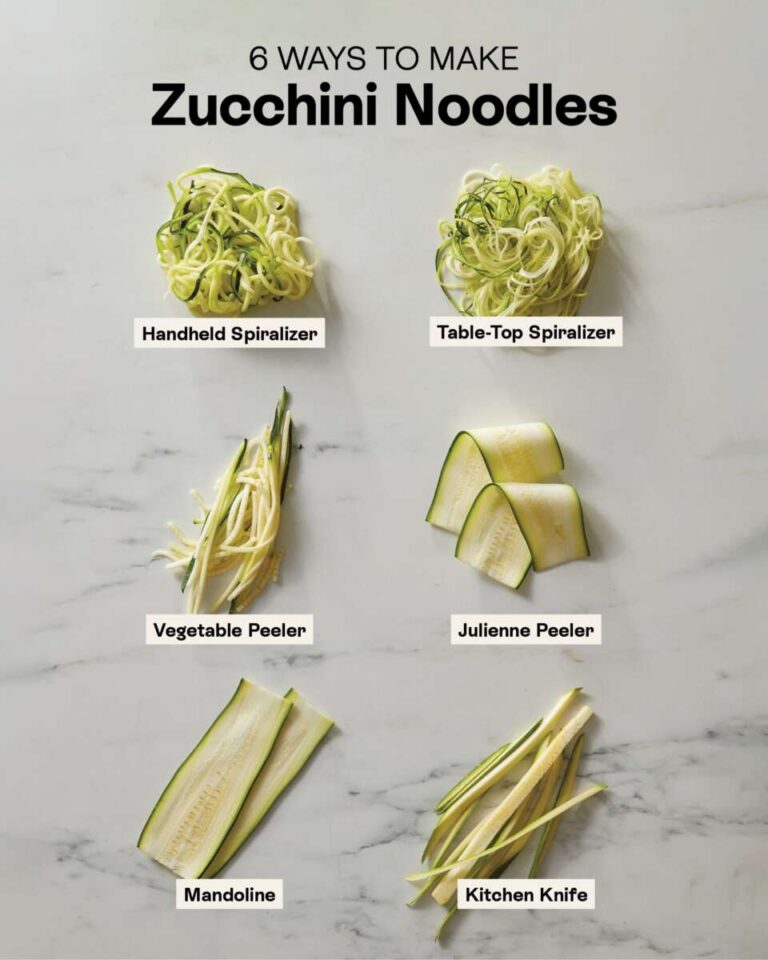
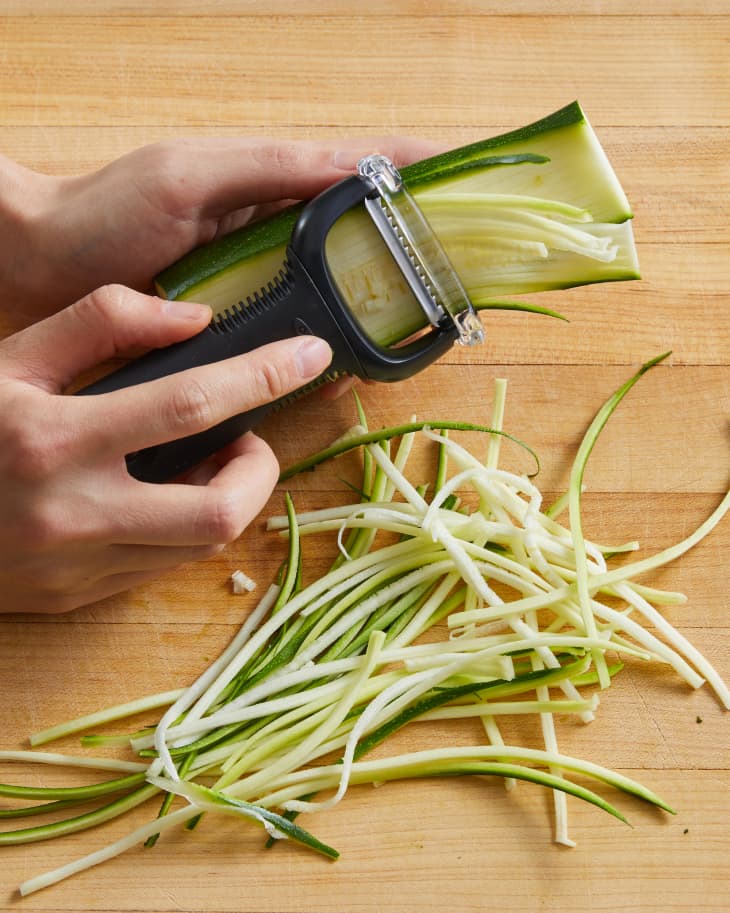
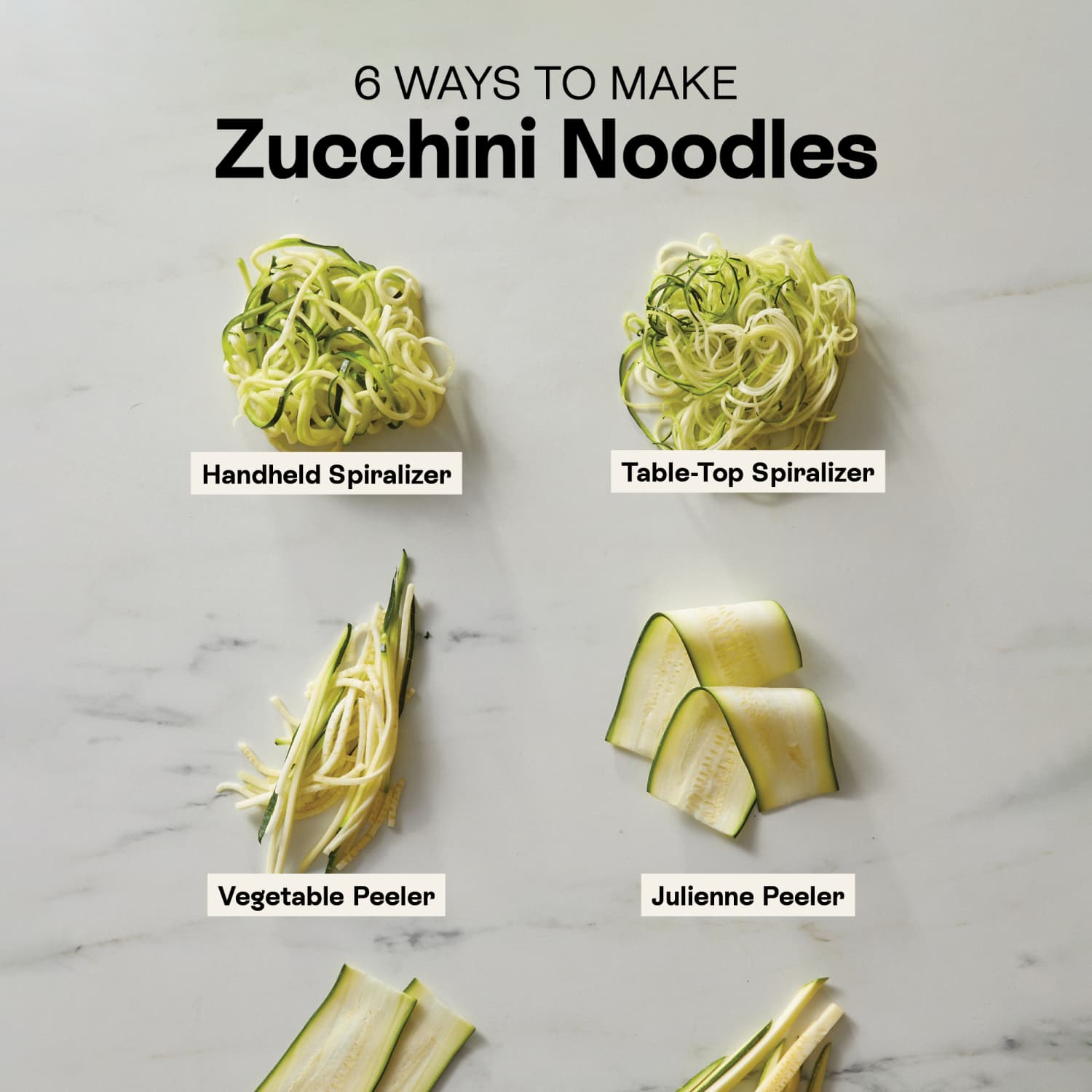
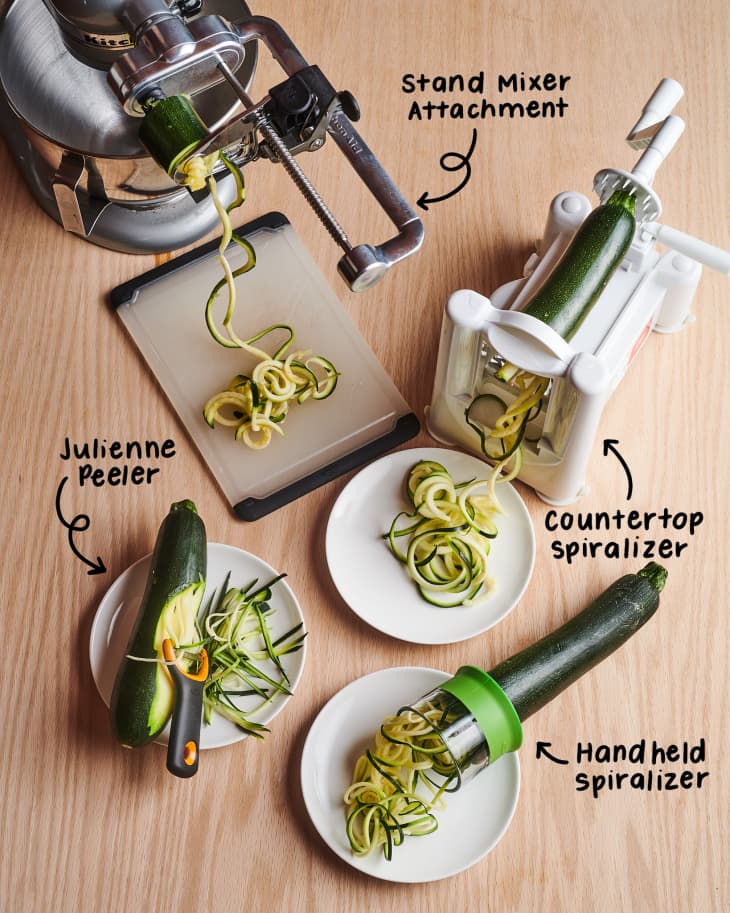
It helps to understand what an apple peeler can and cannot do. A spiralizer cuts zucchini into long, narrow strands with a round or spaghetti-like shape. An apple peeler usually creates flat ribbons.
Both forms are useful, but they behave differently when cooked.
Zucchini ribbons
Ribbons are broad and thin. They are excellent for:
• Cold salads
• Wraps and lettuce-free rolls
• Quick stir-fries
• Layered vegetable dishes
• Garnishes
• Light pasta substitutes
Their broad surface catches sauces well. A creamy sauce, pesto, or tomato dressing can cling to each fold.
Spiralized noodles
Spiralized noodles are longer and more rounded. They look more like traditional pasta and may feel more familiar in a noodle bowl. They are often better when you want a classic spaghetti shape.
Still, shape does not determine flavor. Both ribbons and spiral noodles taste mild, fresh, and slightly sweet. The best choice depends on the tool you have and the dish you plan to make.
Should you peel the zucchini first?
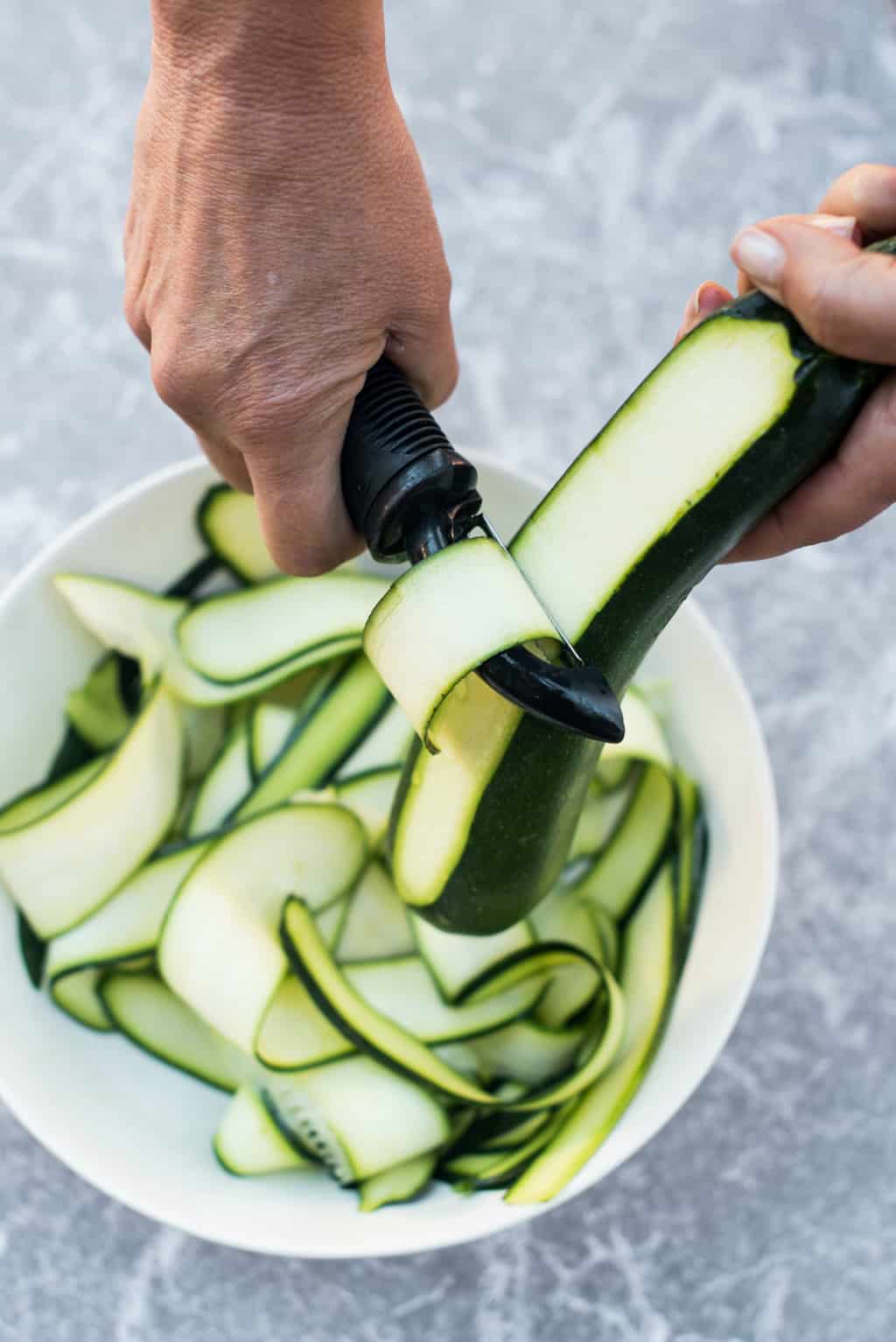
No, you usually do not need to peel zucchini before making noodles. The green skin is edible and adds color, fiber, and structure to the ribbons.
Leaving the skin on also helps the zucchini hold its shape. If you peel away all the skin first, the strips may become softer and more likely to break.
You may choose to remove the skin if:
• The zucchini is old or has tough skin
• The surface has blemishes
• You want pale noodles
• You are serving the dish to someone with a texture preference
Always wash the zucchini before peeling or slicing. Washing reduces surface dirt and helps keep the peeler clean while you work.
How to cook zucchini noodles made with an apple peeler
Zucchini contains a great deal of water. That is why cooking it too long can turn firm ribbons into a soft, watery pile. Quick cooking works best.
Sautéing
Heat a small amount of olive oil in a skillet over medium-high heat. Add the zucchini ribbons and cook for one to three minutes. Toss them often, then remove them as soon as they become tender.
This is the best method when you want warm zucchini noodles with a little bite.
Steaming
Place the ribbons in a steamer basket for about one to two minutes. Steaming keeps the flavor mild and uses no added oil. Watch the time closely because thin ribbons soften quickly.
Microwaving
Place the ribbons in a microwave-safe bowl and heat them for about 30 to 60 seconds. Check them, stir, and continue in short bursts if needed.
This method is useful for a fast lunch, but the zucchini may release more water.
Eating them raw
Raw zucchini ribbons are crisp and fresh. Toss them with lemon juice, olive oil, herbs, chickpeas, grilled chicken, or a little Parmesan cheese.
Raw ribbons are also ideal for meal prep if you keep the dressing separate until serving.
Adding them to sauce
Warm the sauce first, then add the zucchini noodles near the end. Cook just long enough to heat them. This protects the texture and limits excess water.
How to prevent watery zucchini noodles
Watery noodles are one of the most common problems with zucchini. The issue is not the apple peeler alone. Zucchini naturally contains a high amount of water, and salt can draw even more moisture from the flesh.
Use these methods to keep the texture firm:
• Pat the ribbons dry before cooking.
• Cook them quickly over medium-high heat.
• Avoid covering the pan, which traps steam.
• Add salt near the end of cooking.
• Drain the ribbons after cooking if needed.
• Serve the sauce on top instead of mixing it in too early.
For very wet zucchini, place the ribbons in a colander and sprinkle them lightly with salt. Let them sit for 10 to 15 minutes, then pat them dry. This can improve texture, but it may also make the zucchini slightly softer.
Do not squeeze the ribbons too hard. Excess pressure can crush them and make them look more like shredded zucchini than noodles.
Benefits and limitations of using an apple peeler
Using an apple peeler for zucchini noodles has several benefits. It is inexpensive, easy to store, and useful when you want a small serving. Many homes already have one, so there is no need to buy a special spiralizer for an occasional recipe.
The method also gives you control. You can make very thin ribbons for a salad or slightly thicker strips for a cooked dish. Flat ribbons can hold sauces better than some thin spiral strands.
However, there are limitations:
• The noodles will usually be flat, not round.
• The strips may vary in width.
• A crank-style peeler may not hold zucchini securely.
• The blade may clog with soft vegetable flesh.
• Large zucchini can become watery and difficult to manage.
• The process takes longer than using a spiralizer for large batches.
For one or two servings, an apple peeler is a practical choice. For frequent meal preparation, a vegetable spiralizer or julienne peeler will usually give more consistent results.

Apple peeler safety and cleaning tips
An apple peeler has a sharp blade, even if it feels like a simple tool. Use it carefully, and never pull the blade toward your fingers.
Keep these safety habits in mind:
• Place a damp towel under the cutting board to stop it from sliding.
• Keep your free hand behind the blade.
• Do not force the peeler through tough spots.
• Replace or repair a damaged blade.
• Keep children away while using the tool.
• Wash the peeler soon after use.
Zucchini residue can dry around the blade and make cleaning harder. Rinse the tool under warm water, then use a small brush to remove trapped vegetable fibers. Dry it fully before storing it.
If the peeler is dishwasher-safe, follow the manufacturer’s instructions. Some handles or blades can become damaged by high heat.
Best dishes for apple-peeler zucchini noodles
Apple-peeler zucchini noodles work in many simple meals. Since the strips are usually flat, think of them as vegetable ribbons rather than exact pasta replacements.
Try them in:
• Lemon-garlic zucchini ribbons with olive oil
• Pesto zucchini noodles with cherry tomatoes
• Cold zucchini salad with feta and cucumber
• Stir-fried zucchini with mushrooms and tofu
• Zucchini ribbons with grilled shrimp
• Tomato sauce with zucchini and white beans
• Sesame zucchini noodles with carrots
• Zucchini ribbons layered into a vegetable lasagna
For a balanced meal, pair the noodles with a protein source and a flavorful topping. Eggs, beans, chicken, fish, tofu, nuts, and cheese can all work well.
A small amount of acid also helps. Lemon juice or vinegar brightens the mild taste of zucchini and keeps the dish from feeling flat.
Common mistakes to avoid
The most common mistake is expecting an apple peeler to produce perfect spaghetti strands. The tool is designed for peeling, so flat ribbons are a more realistic result.
Other mistakes include:
• Using a soft or oversized zucchini
• Pressing too hard
• Peeling through the seedy center
• Cooking the ribbons for too long
• Salting them too early
• Adding watery sauce before serving
• Using an unstable cutting board
• Leaving the finished ribbons at room temperature for too long
The lesson is simple: treat zucchini gently. It is more like a sponge than a firm root vegetable. Too much heat, pressure, or salt can draw out moisture and weaken its texture.
Frequently Asked Questions
Can you use an apple peeler to make zucchini noodles?
Yes, you can use an apple peeler to make zucchini noodles. It usually creates flat ribbons rather than round noodles, but the ribbons work well in salads, stir-fries, and pasta-style dishes.
Can you use a rotating apple peeler for zucchini?
You can try a rotating apple peeler, but it may not hold soft zucchini as securely as an apple. A firm, medium-sized zucchini gives the best chance of success, while a handheld peeler offers better control.
Is an apple peeler the same as a vegetable peeler?
Many apple peelers and vegetable peelers use similar blades, but they are not always identical. A handheld apple peeler may work well, while a crank-style apple peeler is less suited to making uniform zucchini strips.
How do you keep zucchini noodles from getting watery?
Pat the zucchini dry, avoid the seedy center, and cook the ribbons quickly. Add salt and sauce near the end so the zucchini has less time to release water.
Do you need to peel zucchini before making noodles?
No, you do not need to remove the skin. Zucchini skin is edible and helps the ribbons keep their shape, although you can peel it if the skin is tough or damaged.
What is the best tool for round zucchini noodles?
A spiralizer is the best tool for round, spaghetti-like zucchini noodles. A julienne peeler can also make narrow strips, while an apple peeler is better for broad ribbons.
Can you eat zucchini noodles raw?
Yes, raw zucchini noodles are safe when the zucchini is washed properly. They have a crisp texture and taste good with lemon, olive oil, herbs, pesto, or a light dressing.
How long should you cook zucchini noodles?
Most zucchini noodles need only one to three minutes in a skillet. Thin ribbons may need even less time, so remove them as soon as they are warm and just tender.
Conclusion
You can use an apple peeler to make zucchini noodles, especially when you want quick, flat ribbons without buying another kitchen tool. A handheld peeler gives the best control, while a crank-style apple peeler may produce uneven results. Use firm zucchini, light pressure, and short cooking times for the best texture.
The method is simple: wash the zucchini, peel it into ribbons, stop before the watery center, and serve the strips raw or cook them briefly. Try the technique with pesto, lemon, garlic, or a simple stir-fry, then share your favorite zucchini noodle recipe in the comments.

Liora Pennings is a seasoned chef and kitchen enthusiast with a passion for turning everyday cooking into an effortless experience. With years of hands-on culinary expertise, she specializes in practical techniques, ingredient know-how, and smart kitchen solutions that help home cooks elevate their meals. At KitchFlair.com, Liora shares her best tips, time-saving tricks, and honest product reviews to guide readers toward a more efficient, enjoyable, and inspired cooking routine. Whether you’re a beginner or a seasoned home chef, Liora’s friendly, knowledge-packed insights make every visit to the kitchen a little easier—and a lot more delicious.