How To Zest A Lemon With A Peeler: Easy Guide
To zest a lemon with a peeler, remove thin strips of yellow skin, then slice them into fine pieces.
Learning how to zest a lemon with a peeler is simple once you know how to avoid the bitter white pith beneath the skin. This guide shares tested kitchen tips, safe handling steps, useful tools, storage advice, and easy ways to use fresh lemon zest.

What Is Lemon Zest?
Lemon zest is the thin, colored outer layer of a lemon peel. It contains fragrant oils that give food a bright lemon flavor without adding much liquid or acidity.
The yellow part is zest. The white layer underneath is called the pith. Pith has a sharp, bitter taste, so the goal is to remove only the yellow skin.
Learning how to zest a lemon with a peeler gives you long strips of zest. You can use those strips in drinks, sauces, desserts, marinades, and savory dishes.
Fresh zest often tastes stronger than bottled lemon flavoring because its natural oils are still active. A small amount can lift the taste of an entire recipe.
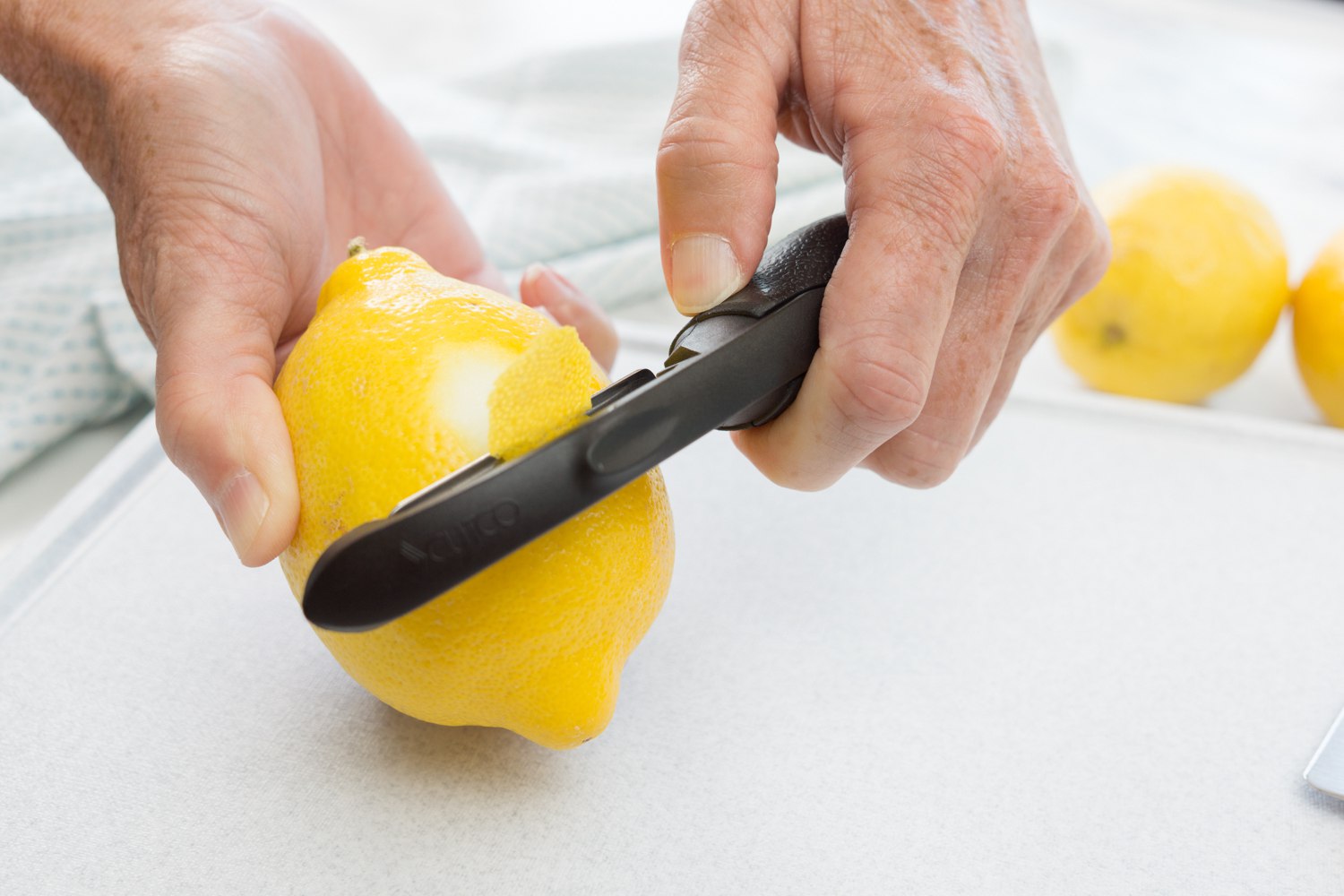
What You Need to Zest a Lemon With a Peeler
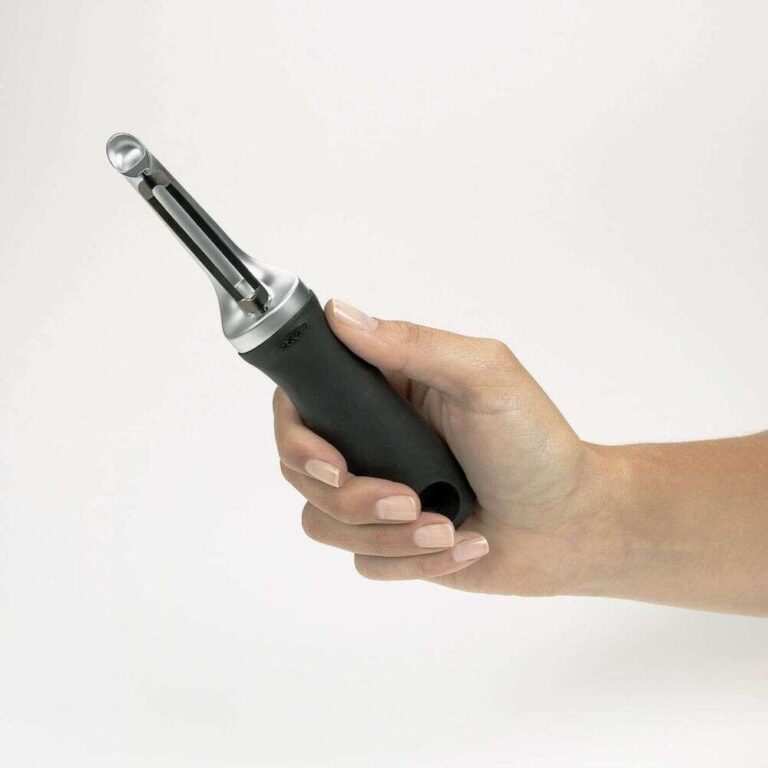
You need only a few basic items. A vegetable peeler works well, but use one with a sharp, smooth blade.
Gather:
- One fresh lemon
- A vegetable peeler
- A clean cutting board
- A small knife
- A sharp chef’s knife or paring knife
- A bowl or plate for the zest
A firm lemon is easier to peel than a very soft one. Look for fruit with bright skin and no mold, deep cuts, or wet spots.
Organic lemons can be a useful choice when you plan to eat the outer peel. However, organic does not mean the fruit is free from dirt or germs. Wash every lemon under cool running water before zesting.
Avoid using a dull peeler. It may slip, tear the skin, or remove too much pith. A sharp peeler should glide across the surface with light pressure.

How to Zest a Lemon With a Peeler
Follow these steps for clean, flavorful strips.
1. Wash and dry the lemon
Rinse the lemon under cool running water. Rub the surface with clean hands to remove dirt and residue.
Dry it well with a clean towel. A dry lemon gives you better control and is less likely to slip.
2. Hold the lemon securely
Place the lemon on a cutting board or hold it firmly in your non-dominant hand. Keep your fingers away from the path of the peeler.
You can also set the lemon on the board and peel it from top to bottom. This method may feel safer if you are new to using a vegetable peeler.
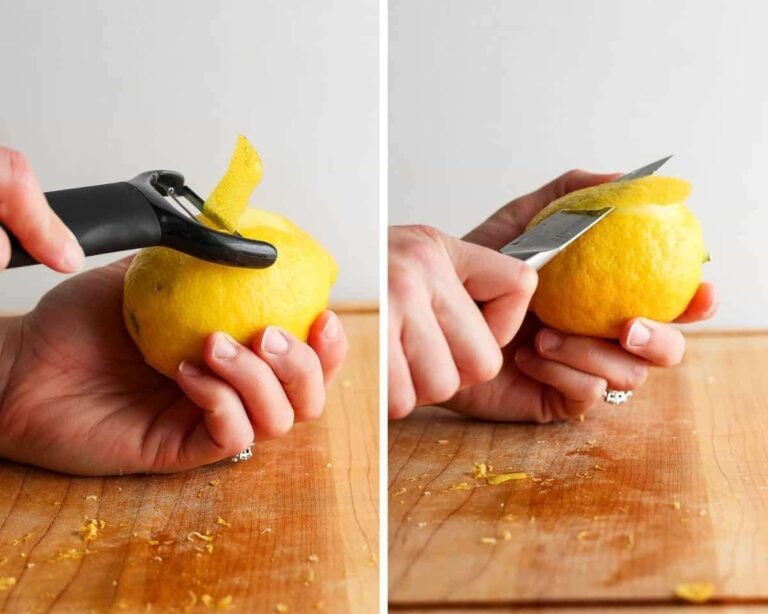
3. Pull the peeler across the skin
Place the peeler lightly against the yellow surface. Pull it from one end of the lemon to the other in a smooth motion.
Remove a narrow strip at a time. Stop as soon as you see white pith. You do not need to press hard.
When learning how to zest a lemon with a peeler, think of the blade as skimming the surface rather than digging into it.
4. Turn the lemon as you work
rotate the lemon after each strip. This helps you remove the zest evenly and prevents you from peeling the same area too deeply.
Leave the white pith behind. It is not harmful, but it can make your zest taste bitter.
5. Cut the strips into small pieces
Place the strips flat on the cutting board. Use a sharp knife to cut them into thin slivers or tiny pieces.
For most recipes, finely chopped zest spreads the flavor more evenly. Long strips work well for cocktails, tea, infused oil, and decoration.

How to Avoid the Bitter Pith
The most common mistake when zesting a lemon is pressing too hard. The colored skin is very thin, so the peeler does not need much force.
Use these tips:
- Keep the blade nearly flat against the lemon.
- Take shallow passes instead of one deep pass.
- Stop when the yellow color fades.
- Rotate the lemon often.
- Use a sharp peeler that cuts cleanly.
- Check each strip before chopping it.
If a strip includes a little pith, place it pith-side up and carefully shave away the white layer with a paring knife.
In my kitchen tests, slow pressure produced better zest than speed. Rushing often created ragged strips and removed too much white skin. A calm, light touch gives the best result.

Peeler Methods That Work Best
Different peelers create different shapes. The best method depends on how you plan to use the zest.
Standard vegetable peeler
A standard Y-style or swivel peeler creates wide strips. These strips are easy to chop and work well in baking, sauces, and marinades.
For fine zest, chop the strips with a knife after peeling. This gives you more control than trying to force a vegetable peeler to make tiny pieces.
Julienne peeler
A julienne peeler creates thin strands in one motion. It is useful for salad toppings, pasta dishes, and cake decoration.
This tool may remove slightly more skin than a standard peeler. Use light pressure and watch for pith.
Channel knife
A channel knife cuts narrow curls from citrus skin. It is useful for cocktails and garnish, but it may not be the best choice for recipes that need finely chopped zest.
Paring knife
A paring knife can remove lemon zest, but it requires more control. Carefully slice off thin pieces of yellow skin, then chop them.
For many home cooks, a vegetable peeler is safer and easier than a knife. It also creates more even strips.

How Much Zest Does One Lemon Make?
One average lemon usually provides about 1 to 2 tablespoons of finely chopped zest. The amount varies by lemon size, skin thickness, and how deeply you peel.
A recipe may call for the zest of one lemon rather than a measured amount. In that case, zest the whole lemon unless it looks unusually large or small.
If a recipe calls for 1 teaspoon of zest, peel only part of the lemon. You can save the remaining fruit for juice or keep the unused zest in the refrigerator.
Do not confuse zest with lemon peel. Zest refers mainly to the colored outer layer. Lemon peel may include both zest and pith.

How to Use Fresh Lemon Zest
Fresh zest adds aroma and flavor to both sweet and savory foods. Rub the zest between your fingers before adding it to a dish. This helps release its natural oils.
Try it in:
- Lemon bars, cakes, cookies, and muffins
- Whipped cream, frosting, and custards
- Pasta with olive oil and Parmesan
- Rice, couscous, and roasted vegetables
- Chicken, fish, and seafood marinades
- Salad dressings and herb sauces
- Tea, sparkling water, and cocktails
- Homemade sugar or finishing salt
For baked goods, mix the zest into the sugar first. The sugar helps draw out the lemon oil and spreads the flavor through the batter.
For savory recipes, add zest near the end of cooking. Heat can reduce some of its fresh aroma, so a final pinch often tastes brighter.

How to Store Lemon Zest
Use fresh zest right away when possible. It has the strongest aroma soon after it is cut.
To refrigerate zest, place it in a small airtight container or sealed bag. Press out extra air and use it within a few days for the best flavor.
You can also freeze lemon zest. Spread it in a thin layer on a plate or small tray, freeze it briefly, then transfer it to a labeled freezer bag.
Frozen zest can be added directly to many recipes. It may lose a little freshness, but it remains useful for baking, sauces, and marinades.
You can freeze lemon strips or chopped zest separately. Chopped zest is convenient for recipes, while strips are better for drinks and decoration.

Common Mistakes to Avoid
Knowing what not to do makes learning how to zest a lemon with a peeler much easier.
Pressing too hard
Heavy pressure removes pith and can make the zest bitter. Let the blade do the work.
Using a wet lemon
Moisture makes the fruit slippery. Dry the lemon before peeling it.
Using a dull peeler
A dull blade can catch on the skin. Replace it or sharpen it if it tears instead of slicing.
Peeling the whole lemon at once
If you need only a teaspoon, there is no reason to remove all the zest. Take what you need and save the lemon.
Waiting too long to use the zest
Cut zest loses aroma over time. Add it soon after cutting or store it correctly.
Forgetting food safety
Wash the lemon before peeling it, even if you will not eat the fruit itself. Bacteria and residue can move from the outer surface to your hands, tools, or cut fruit.
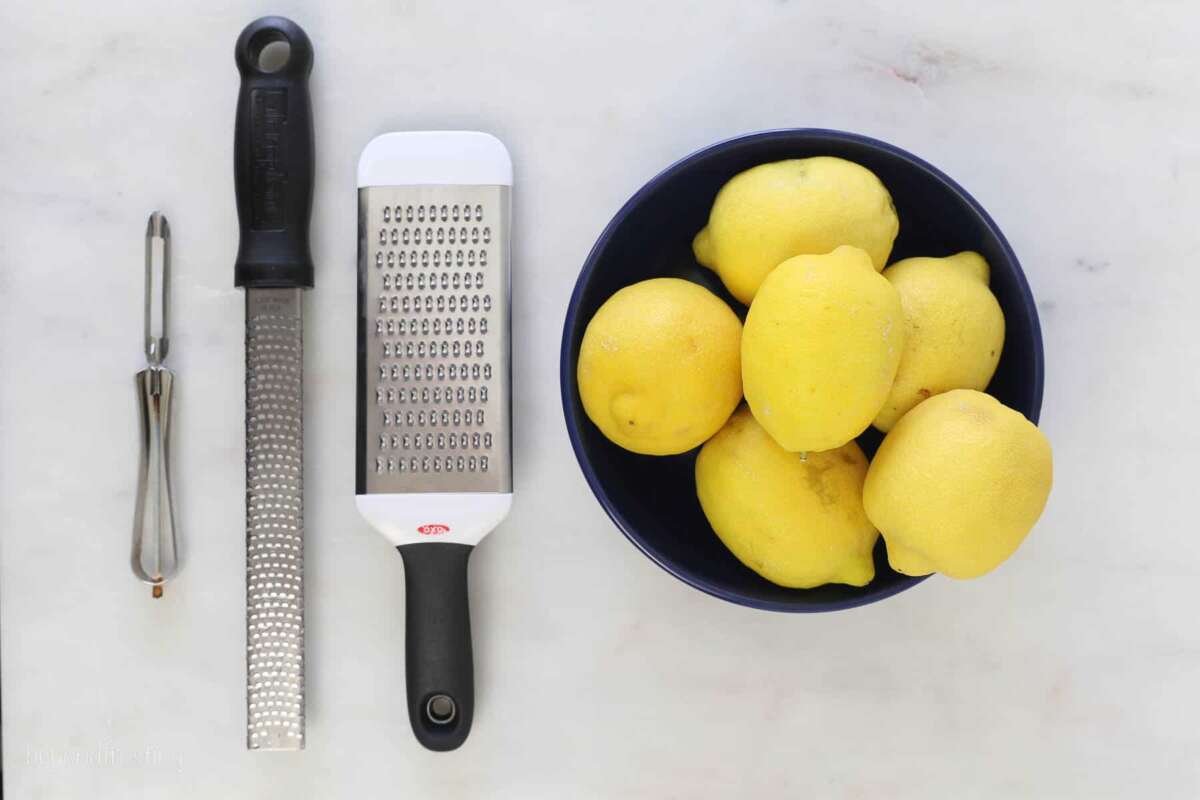
Peeler Versus Microplane Zester
A microplane creates very fine, fluffy zest. It is often the easiest tool for baking because the zest blends quickly into sugar, flour, or frosting.
A vegetable peeler creates wider strips. This makes it more useful when you want visible pieces, citrus curls, infused liquids, or zest that you plan to chop yourself.
Use a peeler when:
- You do not own a microplane.
- You want long strips.
- You need zest for a cocktail or garnish.
- You want to control the final size with a knife.
Use a microplane when:
- You need very fine zest.
- You want to mix zest into a batter.
- You want to reduce the chance of large pith pieces.
- You need a quick method for a small amount.
Neither tool is always better. The right choice depends on the dish and the texture you want.
Safety Tips for Zesting a Lemon
Zesting is easy, but sharp tools still require care. Keep the lemon stable and move the peeler away from your fingers.
Use a clean cutting board. If you cut raw meat on the same board, wash and sanitize it before preparing citrus or zest.
Keep your knife sharp. A sharp knife needs less force and is often safer than a dull one. Store the peeler and knife in a safe place after use.
If the lemon has mold, a damaged soft area, or an unusual smell, discard it. Do not try to peel away a small moldy spot and use the rest of the fruit.