How To Know When A Kettle Is Boiling: Easy Signs
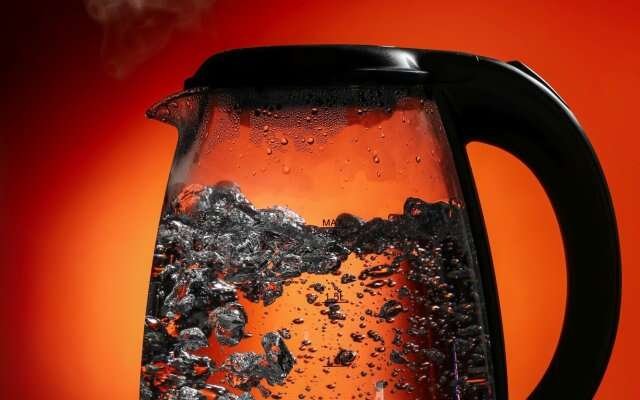
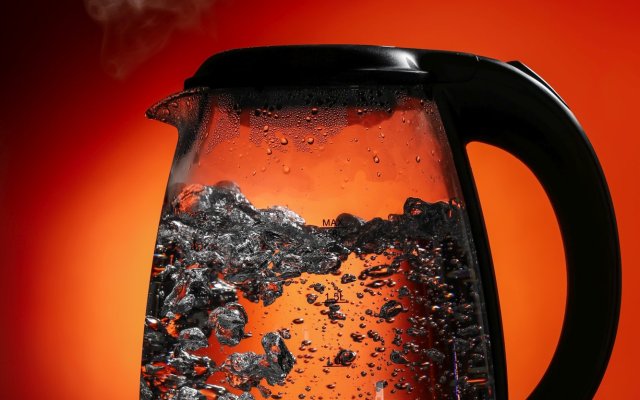
A kettle is boiling when the water reaches a strong, steady boil. You will see large bubbles rise from the bottom, break across the surface, and produce steady steam. An electric kettle usually clicks off at this point. On a stovetop, remove the kettle from the heat once the water reaches a rolling boil.
Introduction
For people in the United States, the easiest way to tell when a kettle is boiling is to watch for a rolling boil: large bubbles rise all over the water, not just along the edge. Steam may flow from the spout, and the kettle may make a louder humming or rumbling sound.
Small bubbles do not always mean the water is ready. They often show that the water is heating but has not reached a full boil. The exact boiling point also changes with altitude. At sea level, water boils at about 212°F (100°C), but it boils at a lower temperature in higher parts of the U.S.

What Does a Boiling Kettle Look Like?
A boiling kettle has more than one clear sign. Look for the signs below instead of relying on sound alone.
- Large bubbles rise across the whole surface.
- The water moves constantly and strongly.
- Steam leaves the spout or gathers near the lid.
- The kettle may vibrate, hum, or rumble.
- An electric kettle may switch off by itself.
The best visual sign is a rolling boil. The water should look active from edge to edge. If only a few small bubbles cling to the bottom or sides, the water is still heating.
A kettle can also produce steam before the water fully boils. Steam alone is useful, but it is not always proof that the entire kettle has reached a boil. For this reason, use the bubble pattern and the kettle’s shutoff feature together.
Small bubbles versus a rolling boil
| What you see | What it usually means | What to do |
|---|---|---|
| Tiny bubbles on the bottom | The water is warming | Keep heating |
| Small bubbles around the edges | The water is close to boiling | Watch closely |
| Steam with light movement | The water is very hot | Check again soon |
| Large bubbles across the surface | The water is boiling | Turn off or remove heat |
| Strong steam and automatic shutoff | The electric kettle has boiled | Wait before pouring |
The terms “simmer” and “boil” describe different levels of heat. A simmer has small, gentle bubbles. A full boil has larger bubbles and stronger movement throughout the water.

How to Tell When an Electric Kettle Is Boiling
An electric kettle is usually easiest to read because it is designed to shut off after the water boils. When the kettle clicks off, the water has normally reached its boiling point or a nearby temperature set by the appliance.
Use this simple process:
- Fill the kettle between the minimum and maximum marks.
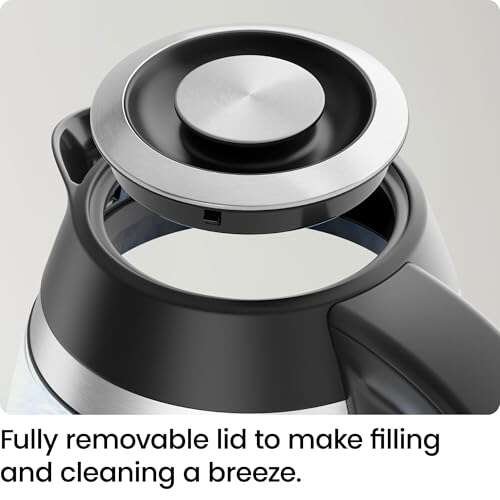
- Close the lid fully.
- Place the kettle on its base if it is cordless.
- Turn it on.
- Wait for the switch or control to shut off.
- Check for steady steam and boiling movement before pouring.
Do not open the lid right away if a large amount of steam is escaping. Steam can burn skin quickly. Give the kettle a short pause, then lift it by the handle.
What the automatic shutoff means
Most modern electric kettles have an automatic shutoff. A temperature-sensitive control detects steam or rising heat and cuts power. This feature helps prevent the kettle from continuing to heat after the water boils.
The shutoff does not mean every drop of water has reached the same temperature. It means the kettle has detected conditions linked to boiling. This is normally enough for tea, coffee, oatmeal, and other everyday uses.
Some electric kettles have temperature controls. If you choose 160°F, 175°F, or 200°F, the kettle may stop before a full boil. Check the selected setting before assuming the kettle is boiling.
If the kettle does not switch off
Turn off and unplug the kettle if it keeps heating after the water is boiling. Then check these points:
- The lid may not be closed.
- The kettle may be below its minimum fill line.
- The base or contact points may be wet or dirty.
- Mineral scale may affect the sensor.
- The switch or thermostat may be damaged.
Do not keep using an electric kettle that smells burnt, sparks, leaks, or has a damaged cord. Replace it or have it checked by a qualified repair service.

How to Tell When a Stovetop Kettle Is Boiling
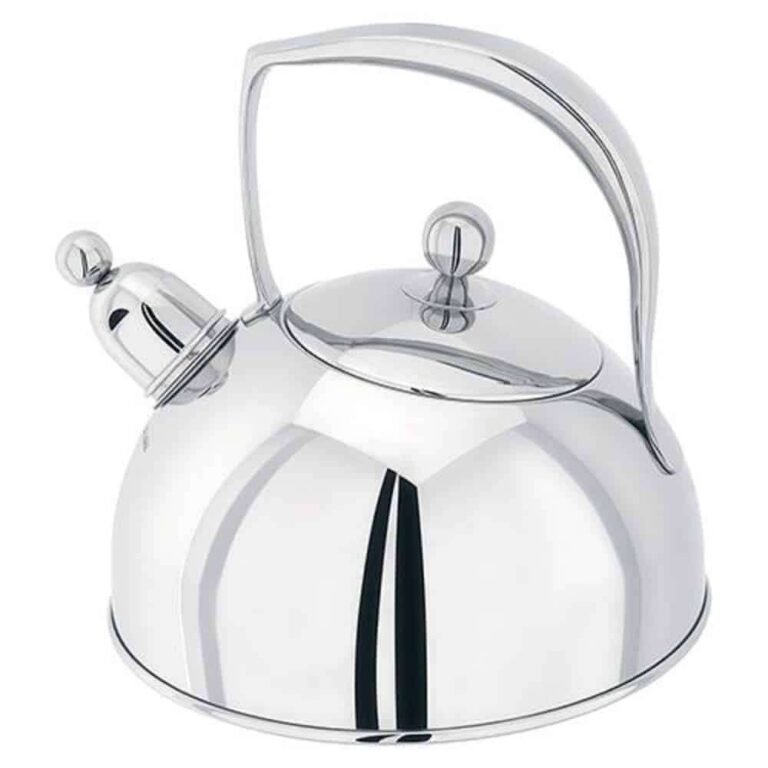
A stovetop kettle is boiling when you see a strong rolling boil or hear its whistle, if it has one. A whistle signals that steam is passing through a small opening. It does not replace safe visual checks if the lid is loose or the spout is blocked.
Place the kettle on the burner and use these signs:
- The water begins to move.
- Small bubbles form on the bottom and sides.
- Steam increases.
- Large bubbles rise across the full surface.
- The kettle whistles, if designed to whistle.
Once the water reaches a rolling boil, lower the heat or remove the kettle from the burner. Continued high heat wastes energy and may cause the kettle to boil dry.
Never touch the lid, spout, or metal body with bare hands. Use the handle and keep your face away from the opening. A kettle can remain hot even after the burner is off.
What if you cannot see inside?
Some stovetop kettles have a sealed body, so you cannot see the water. In that case, use a combination of:
- A steady whistle
- Strong steam from the spout
- A clear rumbling sound
- The time needed for the amount of water to heat
Time is only a rough guide. A full kettle takes longer than a half-filled one. A large burner heats water faster than a small burner, but the kettle’s material and shape also matter.
If you need an exact water temperature, use a food-safe thermometer. Insert it carefully without touching the hot metal sides or bottom of the kettle.
How Long Does It Take a Kettle to Boil?
A kettle may boil in about 3 to 10 minutes, but the time varies widely. The amount of water, starting temperature, kettle power, burner size, and altitude all affect the result.
A rough energy estimate can help explain the difference. Heating water requires more energy when:
- You heat more water.
- The starting water is cold.
- The kettle has lower power.
- Heat escapes around the kettle.
- You are at a high elevation and the water takes longer to reach its lower boiling point in some setups.
For example, a small electric kettle with one cup of room-temperature water may boil faster than a full kettle with several cups. This is only an example, not a guaranteed time for every model.
The U.S. Department of Energy recommends heating only the amount of water you need when practical. Less water usually means less energy and less waiting.
Factors that change boiling time
| Factor | Effect on boiling time |
|---|---|
| More water | Takes longer |
| Colder starting water | Takes longer |
| Higher-wattage electric kettle | Often heats faster |
| Covered stovetop kettle | Usually loses less heat |
| Poor contact with an electric base | Can slow or stop heating |
| High elevation | Lowers boiling temperature |
| Mineral buildup | May reduce performance over time |
Do not use a timer as the only test. A timer cannot show whether the kettle is boiling, especially when the amount of water changes.
Does Water Boil at 212°F Everywhere?
No. Water boils at about 212°F (100°C) at sea level, but the boiling point falls as elevation rises. Lower air pressure allows water molecules to escape into vapor at a lower temperature.
This matters in high-elevation areas of the United States, such as parts of Colorado, Wyoming, Utah, New Mexico, and California. The water may boil visibly, yet it may be cooler than 212°F.
The practical signs stay the same: look for large bubbles, strong movement, and steady steam. Do not keep boiling water for much longer just to reach 212°F. At a high elevation, the water may never reach that temperature in an open kettle.
Altitude can also affect cooking. Foods cooked in boiling water may take longer because the water is cooler even though it looks fully boiled.
Why an electric kettle may stop early
An electric kettle is often designed to detect boiling conditions, not to reach a fixed temperature of 212°F. At high altitude, its shutoff behavior may vary by model. If the kettle stops before the water looks fully active, check the manual and make sure the lid is closed.
For tasks that require a specific temperature, such as some brewing methods or laboratory work, use a calibrated thermometer and follow the relevant instructions.
What to Do After the Kettle Boils
After the kettle boils, turn off the heat or allow the electric kettle to shut off. Let it rest briefly before pouring. This reduces the chance of a splash caused by sudden movement or escaping steam.
Pour slowly and hold the kettle by its insulated handle. Keep your hand, face, and arms away from the spout. Pour over a stable cup or container on a flat surface.
Use boiled water soon when possible. If you store it, place it in a clean, covered container and follow the storage guidance for the drink or food you are preparing. Boiling does not remove every possible chemical contaminant, and it does not make a dirty kettle clean.
If you are boiling water because of a local water advisory, follow the exact instructions from your local health department or the U.S. Centers for Disease Control and Prevention. A rolling boil may be required for a stated length of time. Normal tea or coffee preparation is not the same as treating water during an emergency.
Kettle Safety Mistakes to Avoid
The main risks are burns, steam injuries, spills, and overheating. A few simple habits reduce these risks.
Do not overfill the kettle
Water expands and splashes as it boils. Overfilling can send hot water through the spout or vent. Stay below the maximum fill line.
Do not run an electric kettle empty
Many kettles have boil-dry protection, but it should not be treated as a normal operating feature. An empty kettle can overheat and become damaged.
Do not lift the lid while boiling
Opening the lid exposes your hand and face to steam. If you need to inspect the water, switch off the kettle first and wait.
Keep the base and plug dry
Never immerse an electric kettle, power base, cord, or plug in water. Unplug the appliance before cleaning it.
Do not move a full stovetop kettle quickly
A full kettle is heavy, and hot water can slosh through the spout. Move it slowly with a dry, secure grip.
Keep children away
Place the kettle and cord where children cannot pull them down. A short reach can cause a serious scald.
The U.S. Consumer Product Safety Commission provides general consumer safety information, while the appliance manual remains the best source for model-specific instructions.
Why Is My Kettle Not Boiling?
If the water stays warm but never reaches a rolling boil, start with the safest and simplest checks.
| Symptom | Possible cause | Safe next step |
|---|---|---|
| No heat at all | No power or faulty outlet | Test the outlet with another safe device |
| Electric kettle stops very early | Low water, open lid, or scale | Check the fill line, lid, and manual |
| Kettle keeps heating | Faulty sensor or switch | Unplug it and stop using it |
| Stovetop kettle heats slowly | Low burner setting or too much water | Use the correct burner and reduce the volume |
| Loud crackling or burning smell | Electrical or mechanical fault | Turn it off, unplug it, and replace or repair it |
| Water leaks | Damaged seal or body | Stop using the kettle |
Do not bypass an automatic shutoff or hold down a defective switch. That can create a fire or burn risk. If cleaning does not solve a scale problem, follow the manufacturer’s instructions or replace the appliance.
Mineral scale and slow heating
Hard water can leave mineral deposits inside a kettle. Scale may look white, gray, or chalky. It can make the kettle noisy and may reduce heating efficiency.
Use the cleaning method listed in the manual. Some manufacturers allow a diluted vinegar solution or a commercial descaler, but not every kettle has the same materials or care rules. Rinse the kettle well after cleaning.
Common Questions About Boiling Kettles
Can you tell a kettle is boiling by sound?
Often, yes, but sound is not the best sign by itself. A kettle may hum or rumble while the water is still heating. Use sound with visible bubbles, steam, or the automatic shutoff.
Is steam proof that water is boiling?
No. Steam can appear before the entire kettle reaches a full boil. Strong steam from a whistle may show that the water is very hot, but the most reliable household sign is a rolling boil or the kettle’s normal shutoff.
Should I wait for a full boil to make tea?
It depends on the tea and the instructions. Many black teas use boiling water, while green, white, and delicate teas often taste better with cooler water. Use the tea maker’s temperature guidance when provided.
Can I boil water in a microwave instead?
Yes, but microwave-heated water can become superheated. It may erupt when moved or disturbed. Use a microwave-safe container, follow the appliance instructions, and handle the container with care. A kettle is usually easier to monitor and pour.
Is boiled water safe to drink?
Boiling can kill many disease-causing organisms, but it does not remove all chemicals, metals, salts, or other contaminants. During a water advisory, follow official local instructions rather than relying on ordinary kettle use.
Key Takeaways
- A kettle is boiling when large bubbles rise across the whole surface.
- Small bubbles usually mean the water is still heating.
- An electric kettle commonly clicks off when it detects boiling conditions.
- A stovetop kettle may whistle, steam, and rumble at a full boil.
- Water boils at about 212°F at sea level but at a lower temperature at higher elevations.
- Do not overfill, run an electric kettle empty, or touch hot steam and metal.
- If a kettle leaks, sparks, smells burnt, or fails to shut off, stop using it.
Conclusion
The clearest answer to “how do you know when a kettle is boiling?” is simple: look for a steady rolling boil with large bubbles across the water. Add the kettle’s whistle, steam, sound, or automatic shutoff as supporting signs.
Once the water boils, switch off the heat, wait briefly, and pour with care. If the kettle behaves strangely, do not force it to keep working. Safety matters more than saving a few minutes.

Liora Pennings is a seasoned chef and kitchen enthusiast with a passion for turning everyday cooking into an effortless experience. With years of hands-on culinary expertise, she specializes in practical techniques, ingredient know-how, and smart kitchen solutions that help home cooks elevate their meals. At KitchFlair.com, Liora shares her best tips, time-saving tricks, and honest product reviews to guide readers toward a more efficient, enjoyable, and inspired cooking routine. Whether you’re a beginner or a seasoned home chef, Liora’s friendly, knowledge-packed insights make every visit to the kitchen a little easier—and a lot more delicious.