How To Choose A Kettle: Smart Buying Guide
For most households in the United States, an electric kettle is the easiest choice. Look for a model with the right capacity, a concealed heating element, automatic shutoff, boil-dry protection, and a handle that stays cool. Choose temperature control if you make green tea, pour-over coffee, or baby formula. Choose a simple boil-only model if you mainly need hot water for tea, oatmeal, or cooking.
The best kettle is not always the fastest or most expensive one. It should match how much water you heat, where you use it, and how easy it is to clean.
This guide explains how to choose a kettle for a U.S. kitchen, office, dorm, or travel setup. It covers electric and stovetop kettles, key features, safety, materials, capacity, power, water quality, and common buying mistakes.

Electric or Stovetop Kettle: Which Should You Choose?
An electric kettle is usually best for speed and ease. A stovetop kettle is better if you prefer a simple tool, already have a gas or electric range, or want one kettle that works without a power cord.
Electric kettles
Electric kettles have a built-in heating element. You fill the kettle, place it on its base, and turn it on. Most stop heating when the water boils.
Advantages include:
- Fast heating
- Automatic shutoff
- No need to use a stove burner
- Easy one-hand operation on many models
- Temperature settings on some models
- Good energy use for heating small amounts of water
Electric kettles are useful in apartments, offices, dorm rooms, and homes with induction or slow-heating cooktops. They also keep heat away from the stove, which can make daily use more convenient.
Stovetop kettles
A stovetop kettle heats on a burner. Some models whistle when the water boils. Others have a simple lid and no whistle.
Advantages include:
- No electronic parts
- No separate power base
- Often longer-lasting when well made
- Works during a power outage if you can use your stove
- Many styles suit both cooking and serving
Stovetop kettles can take longer to heat. They also need more attention. A stovetop kettle may continue heating after the water boils unless you turn off the burner.
A quick choice
Choose an electric kettle if you want speed, automatic shutoff, or precise temperature control.
Choose a stovetop kettle if you want a simple design, use a range often, or dislike extra electronics.
Choose a gooseneck electric kettle if you make pour-over coffee and need a slow, controlled pour. A gooseneck spout is useful for flow control, but it may pour more slowly for general kitchen use.
What Size Kettle Do You Need?
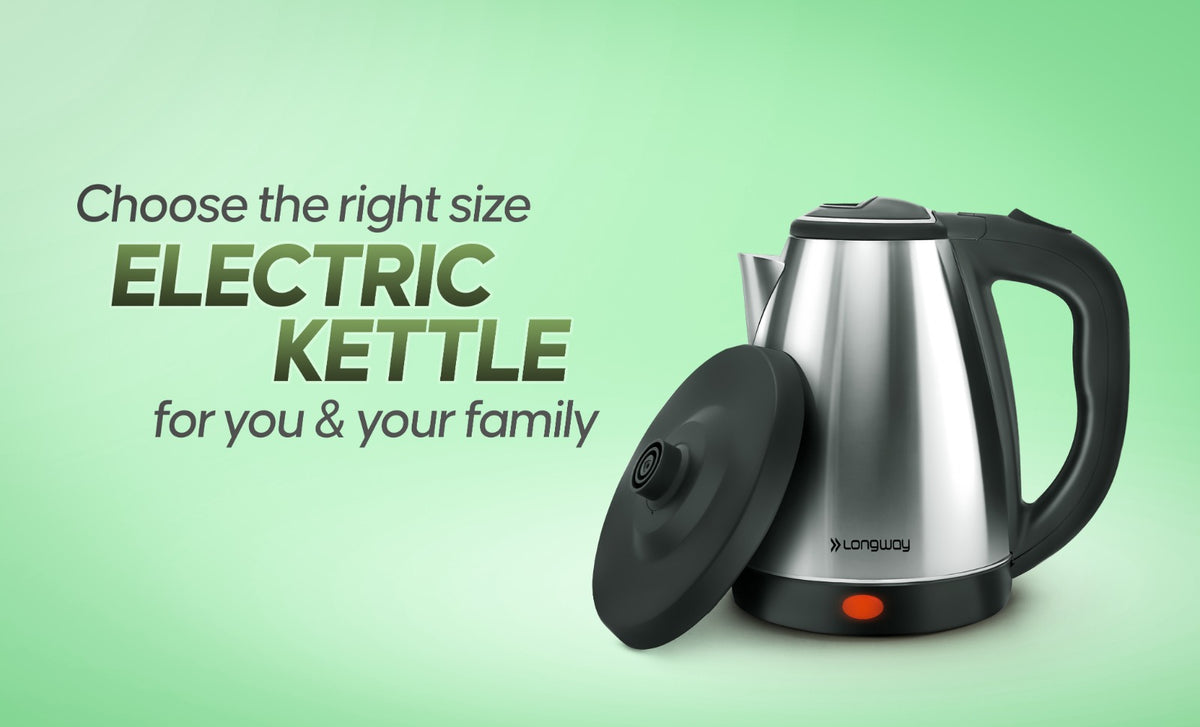
Choose capacity based on the amount of water you heat at one time. A larger kettle is not always better. More water takes more time and energy to heat.
Common sizes include:
| Kettle capacity | Best for | Main trade-off |
|---|---|---|
| 0.5 to 0.8 quart | Travel, one cup, small desk use | Limited capacity |
| 1.0 to 1.2 quarts | One or two people | Compact but may need refilling |
| 1.5 to 1.8 quarts | Most households | Good balance of size and use |
| 2.0 quarts or more | families and group service | Takes more counter space and time |
A typical mug may hold about 8 to 12 fluid ounces. Many American mugs hold more than a standard tea cup. Check the actual markings on the kettle rather than relying on the number of “cups” in the product description.
A simple capacity calculation
Use this formula:
Number of servings × water per serving = minimum water capacity
For example:
- Four mugs
- About 10 fluid ounces per mug
- Total: 40 fluid ounces
Forty fluid ounces equals 5 cups by volume. Since 1 U.S. liquid quart equals 32 fluid ounces, a kettle with at least 1.25 quarts would cover that need. A 1.7-quart model would give you extra room.
Do not fill a kettle above its maximum line. Boiling water can spill through the spout or vent. Do not fill it below the minimum line if the manual sets a minimum level.

How Much Power Should a Kettle Have?
For a U.S. kettle, check the wattage and voltage on the box or product label. Most household outlets in the United States provide about 120 volts. Use a kettle that is rated for the electrical system where you will use it.
Wattage affects heating speed. A higher-wattage kettle can often heat the same amount of water faster, but the result depends on the water volume, starting temperature, kettle design, and outlet.
Common electric kettle power ratings include:
- About 1,000 watts for small or travel models
- About 1,500 watts for many standard home models
- Higher ratings on some larger or faster models
Higher wattage is not always the best choice
A high-wattage kettle may trip a circuit when used with another powerful appliance on the same circuit. This can happen with a toaster oven, microwave, coffee maker, or portable heater.
Before buying, check:
- The kettle’s wattage.
- The circuit’s other loads.
- The manufacturer’s electrical requirements.
- Whether the plug and cord look suited to the product.
Do not use a plug adapter to force a foreign-voltage kettle into a U.S. outlet. A plug shape is not the same as voltage compatibility. Travel kettles made for several regions should clearly list their voltage range and switching method.

Which Kettle Features Matter Most?
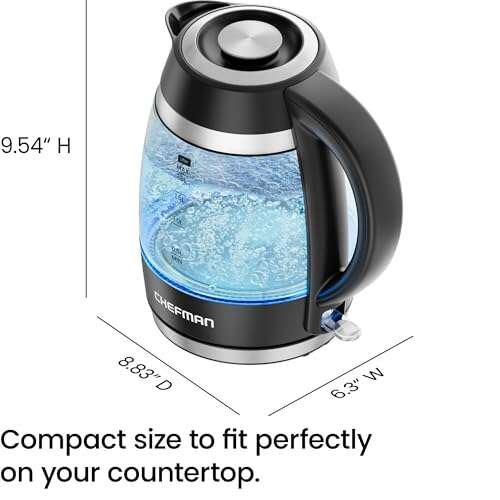
The best features are the ones that improve safety, control, or daily use. Extra screens, lights, and app controls are less important unless you will use them.
Automatic shutoff
Automatic shutoff turns the kettle off after the water reaches a set point. This helps prevent continued heating, but it does not remove the need for care.
A kettle may not shut off as expected if:
- The lid is not closed correctly
- The kettle is overfilled
- The spout is blocked
- The kettle is not seated on its base
- The control is damaged
- The kettle is used in a way the manual does not support
Boil-dry protection
Boil-dry protection turns off the kettle when it detects too little or no water. This is one of the most useful safety features.
It should be treated as a backup, not a normal operating method. Always add water before turning the kettle on.
Temperature control
Temperature control lets you heat water below boiling. This can help with:
- Green tea
- White tea
- French press coffee
- Pour-over coffee
- Hot chocolate
- Instant soups
- Yeast-based recipes that need warm water
Different drinks may call for different temperatures. The correct setting depends on the drink, recipe, and personal taste. Temperature presets are convenient, but the actual water temperature may vary by model and use.
If precise temperature matters, choose a model that displays the target temperature and check its manual for accuracy information. A separate kitchen thermometer can verify the water, but do not place any thermometer in a way that blocks the lid, spout, or safety controls.
Keep-warm function
A keep-warm function holds water at a selected temperature for a set period. It can help when several people need drinks at different times.
The trade-off is continued power use and longer exposure to heat. If you only make one drink, this feature may add cost and complexity without much benefit.
Water-level window
A clear water-level window helps you measure the amount of water. Look for markings that are easy to read from both sides if more than one person will use the kettle.
A single narrow window may be hard to read under dim kitchen lighting. A wide window can make filling easier.
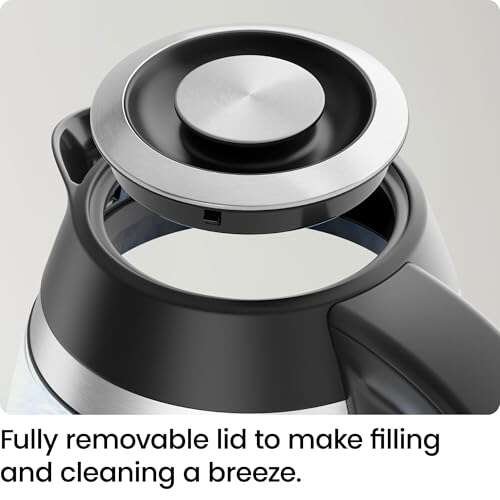
Lid and opening
A wide opening makes cleaning easier. It also lets you inspect the inside for mineral buildup.
A lid that opens with a button can be convenient, but it should open fully without forcing you to place your hand over the steam path. Avoid touching the lid or metal parts immediately after boiling.
Base and cord
A cordless jug that lifts off its base is easy to pour. A rotating base can help both left-handed and right-handed users.
Look for:
- A stable base
- A cord that does not cross the sink or cooking area
- A plug that fits your outlet
- A base that stays dry
- A cord length that suits your counter
Never immerse the base, plug, or electrical connection in water.
Which Kettle Material Is Best?
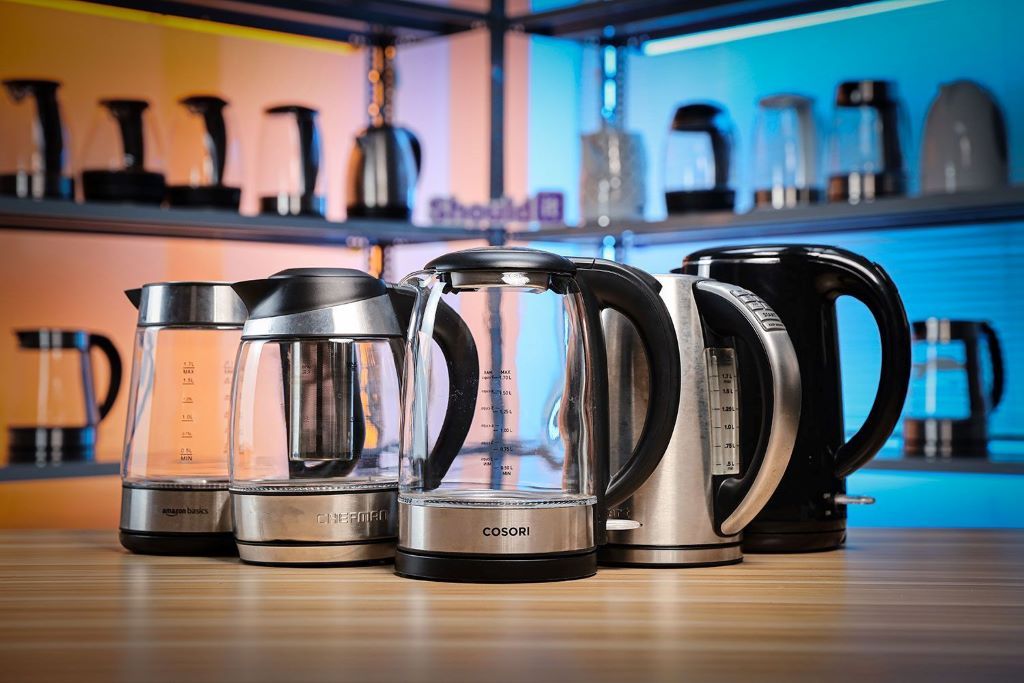
Material affects heat, weight, taste, visibility, and cleaning. No material is best for every buyer.
Stainless steel
Stainless steel is common because it is strong and opaque. It can resist dents better than glass, depending on its thickness.
Possible drawbacks include:
- The outside may become hot
- You cannot see the water level inside
- Some designs may show water marks
- Metal parts may retain heat after shutoff
Choose a model with a heat-resistant handle and clear external water markings.
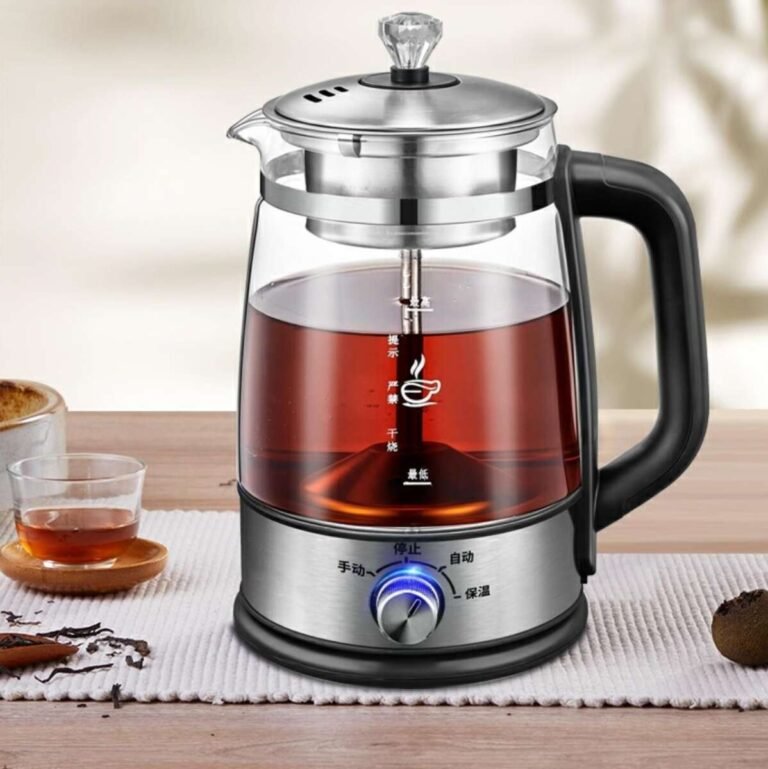
Glass
Glass lets you see the water and mineral buildup. It also looks clean and simple on the counter.
Possible drawbacks include:
- Breakage risk
- More visible water spots
- A hot surface after boiling
- Greater care during handling and cleaning
Do not assume a glass kettle is cool because you can see the water. Treat the glass as hot after use.
Plastic
Plastic kettles are often light and affordable. Their outer walls may stay cooler than a metal body, but this depends on the design.
Check:
- The material used for the water chamber
- Whether the manufacturer gives care instructions
- Whether the lid or spout has plastic parts
- Whether the kettle has a strong plastic odor
A plastic smell that remains after several cleaning and boil cycles is a reason to stop using the kettle and contact the manufacturer.
Mixed-material designs
Many kettles use stainless steel inside and plastic outside. This can balance durability, weight, and heat control.
Focus on the parts that touch the water. A decorative outer finish matters less than a clean interior, secure lid, and safe handle.

Do You Need Variable Temperature Control?
You need variable temperature control only if your drinks or recipes benefit from water below a full boil. It is not essential for basic black tea, instant noodles, or general hot water.
A boil-only kettle is often the better value when you:
- Mostly boil water for tea or coffee
- Want fewer controls
- Prefer a simpler design
- Do not need repeatable temperatures
- Want easier operation for guests
A variable-temperature kettle may be worth the extra cost when you:
- Make several kinds of tea
- Use a manual coffee method
- Want to avoid boiling water for delicate drinks
- Need a keep-warm setting
- Share the kettle with people who prefer different temperatures
The main trade-off is complexity. More controls mean more parts to learn and more features that may fail over time. Choose temperature control for a real need, not just because it appears on the box.

What Kettle Is Best for Tea and Coffee?
For tea, choose a kettle with clear temperature control if you drink green, white, or specialty tea. If you mainly drink black tea or herbal tea, a boil-only model may meet your needs.
For pour-over coffee, a gooseneck kettle gives better control over the flow. A temperature display can also help with repeatable brewing. However, the kettle alone does not control every part of coffee quality. Grind size, water amount, brew time, and pouring method also matter.
For French press coffee, a standard spout can work well. A gooseneck is helpful but not required.
For instant coffee, cocoa, oatmeal, and soup, capacity and ease of cleaning matter more than precise temperature control.
If you prepare infant formula, follow the instructions from the formula maker and your child’s health professional. Do not assume that a kettle’s temperature display alone makes water safe for formula preparation.
How Do You Clean and Descale a Kettle?
Clean the kettle based on the manufacturer’s instructions. Regular cleaning helps remove mineral deposits and keeps the kettle working as designed.
Basic cleaning steps
- Unplug the kettle and let it cool.
- Empty any remaining water.
- Wipe the outside with a damp cloth.
- Rinse the inside with clean water.
- Clean the lid and spout area as directed.
- Dry the kettle before placing it on the base.
Do not immerse an electric kettle, base, plug, or cord.
Removing mineral scale
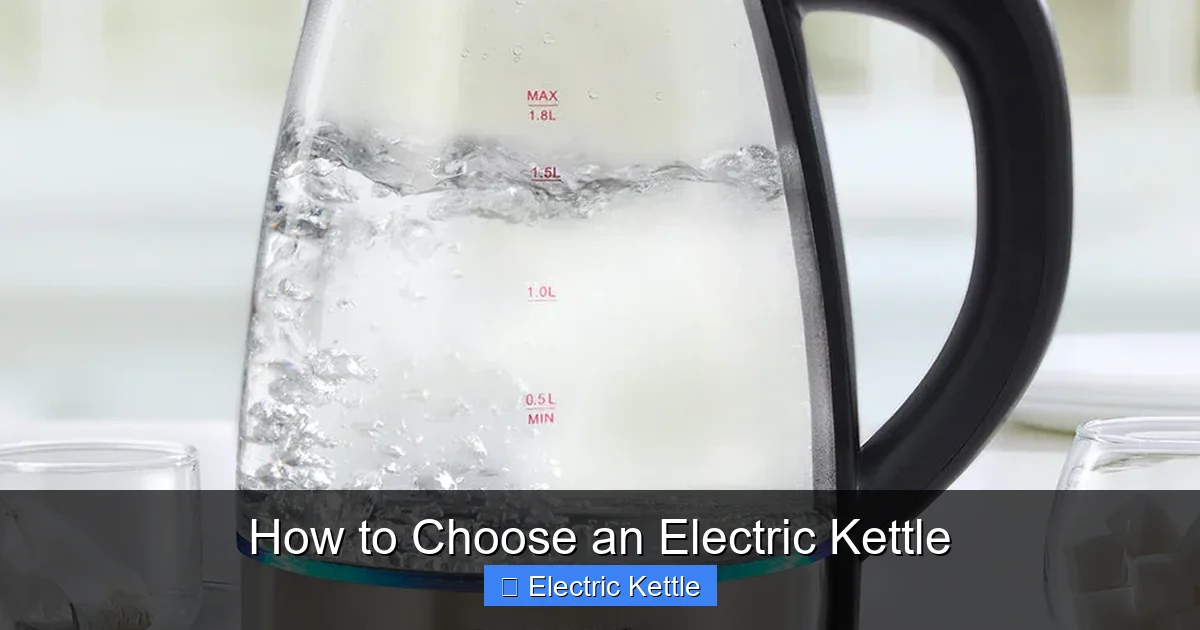
Hard water contains minerals that can form a white, gray, or chalky layer inside the kettle. This buildup is often called scale or limescale.
Scale may:
- Make the kettle look dirty
- Cause flakes to appear in the water
- Slow heating
- Make the kettle noisier
- Affect temperature sensing in some designs
Many manufacturers recommend a commercial descaler or a diluted food-safe acid such as white vinegar. Follow the kettle manual first. Some manuals warn against certain cleaners or require a particular rinse process.
A general approach is:
- Add the approved descaling solution.
- Let it sit or heat it only as the manual permits.
- Empty the solution.
- Rinse several times.
- Boil and discard clean water if the manual recommends it.
- Check for odor or residue before normal use.
Do not use abrasive pads or harsh chemicals unless the manufacturer allows them. They can damage coatings, seals, or clear surfaces.

What Safety Features Should You Check?
Choose a kettle with automatic shutoff and boil-dry protection. Then use it on a stable, dry surface away from the edge of the counter.
Follow these safety rules:
- Keep the base and electrical contacts dry.
- Do not fill above the maximum line.
- Keep the lid closed while heating.
- Do not open the lid over your hand or face.
- Pour slowly to control hot water.
- Keep the kettle away from children.
- Do not leave a hot kettle where its cord can be pulled.
- Do not use a kettle with a damaged cord, plug, base, or body.
- Do not repair electrical parts unless the manufacturer provides an approved method.
- Let the kettle cool before cleaning or storing it.
Steam can burn skin even when the water is not visibly splashing. Keep your face and hands away from the spout during and after boiling.
If the kettle smells like burning plastic, makes unusual sounds, leaks, trips the circuit, or fails to shut off, unplug it when safe to do so. Stop using it until the manufacturer or a qualified repair professional provides guidance.
How Much Should You Spend on a Kettle?
Set a budget after choosing the features you need. Price does not prove that a kettle is safer, faster, or more durable.
A basic kettle may be enough if you need:
- Boil-only operation
- A small or medium capacity
- Automatic shutoff
- Easy filling
- Simple cleaning
Spend more only when you need a meaningful feature, such as:
- Variable temperature control
- A stronger temperature display
- A gooseneck spout
- A keep-warm mode
- A larger capacity
- A design that is easier to clean
- A longer or clearer warranty
Before buying, check the warranty terms and return policy. Look for the length of coverage, exclusions, replacement rules, and whether the company provides parts or support.
Avoid choosing only by online ratings. Reviews can reveal issues such as leaks, poor lids, or difficult controls, but they do not replace the manufacturer’s instructions or safety information.
How to Choose a Travel Kettle
A travel kettle should be small, light, and compatible with the country where you will use it. Check voltage before packing it.
For travel, look for:
- A clearly stated voltage range
- A compact body
- A secure lid
- A stable base
- A short or neatly stored cord
- A capacity that matches one or two drinks
- A case or storage method that prevents damage
Do not assume a U.S. kettle will work safely overseas. Some countries use different voltages. A plug adapter may change the plug shape but not the voltage.
If you travel often, a dual-voltage kettle may be useful. Confirm that the model requires manual voltage selection or switches automatically. Follow the manual exactly.
A Simple Kettle Buying Checklist
Use this checklist before you buy:
- Type: Electric or stovetop?
- Capacity: How many ounces do you heat at once?
- Power: Is the wattage suitable for your U.S. outlet and circuit?
- Temperature: Do you need settings below boiling?
- Safety: Does it have automatic shutoff and boil-dry protection?
- Material: Do you prefer stainless steel, glass, plastic, or a mix?
- Cleaning: Is the opening wide enough to inspect and clean?
- Handle: Can you hold it securely when full?
- Spout: Does it pour neatly without splashing?
- Base: Is it stable and easy to use?
- Cord: Does it fit your counter layout?
- Warranty: Can you get support if it leaks or stops heating?
- Travel use: Is the voltage correct for your destination?
The strongest all-purpose choice for many U.S. homes is a medium-size electric kettle with a stainless-steel or mixed-material body, automatic shutoff, boil-dry protection, a clear water window, and a wide opening. Add temperature control only if your drinks or recipes need it.
Common Kettle-Buying Mistakes
Buying the largest kettle
A large kettle can be useful for a family, but it takes more space and more time to heat. Buy for your usual use, not the rare event when everyone wants a drink.
Ignoring minimum and maximum fill lines
Too much water can spill or delay shutoff. Too little water can trigger boil-dry protection or damage the heating system.
Choosing high wattage without checking the circuit
High power may shorten heating time, but it can add load to a busy kitchen circuit. Check the label and avoid running several high-power appliances together if the circuit cannot support them.
Treating temperature presets as exact
A display gives a target setting. It does not guarantee that every drop of water reaches the same temperature. Starting water temperature, fill level, altitude, and design can affect results.
Forgetting cleaning access
A narrow opening may make it hard to remove scale. Look inside the kettle before buying if possible.
Buying for looks alone
A kettle can look attractive and still have a poor lid, weak handle, awkward spout, or hard-to-read markings. Test the basic actions: fill, lift, pour, and clean.
Using a kettle with a damaged base or cord
Do not keep using an appliance that leaks near electrical parts or shows damage. Replacement is safer than guessing whether the fault is minor.
Evidence and Buying Limits
Kettle performance varies by model, so general guidance cannot prove that one brand or product is best. Manufacturer manuals are the right source for voltage, cleaning methods, fill limits, warranty terms, and temperature settings.
For U.S. electrical safety, buyers can consult guidance from the U.S. Consumer Product Safety Commission and appliance safety information from Electrical Safety First. For drinking water concerns, the U.S. Environmental Protection Agency provides information about household drinking water and contaminants.
These sources explain safety and water issues at a general level. They do not certify every kettle or establish that a particular model will last for a certain number of years.
FAQs About Choosing a Kettle
Is an electric kettle cheaper to run than a stovetop kettle?
It depends on the kettle, stove, water amount, energy price, and heating method. An electric kettle can be efficient for small amounts because it heats the water directly in a contained vessel. The most useful habit is to heat only the water you need.
Is stainless steel safer than plastic for a kettle?
Neither material is automatically best in every design. Check the water-contact parts, the manufacturer’s care instructions, and the condition of the kettle. Replace any kettle that develops cracks, leaks, damage, or a persistent unusual odor.
Can you leave water in an electric kettle overnight?
You can follow the manufacturer’s instructions, but fresh water is usually better for taste. Empty and dry the kettle if you will not use it for a while. Standing water can also increase mineral buildup in some homes.
Should you buy a kettle with a filter?
A removable filter at the spout can catch mineral flakes and help keep them out of a cup. It does not make unsafe water safe or remove every contaminant. The filter also needs regular cleaning.
Is a gooseneck kettle worth it?
It is worth considering if you make pour-over coffee and want precise flow control. It is less useful if you mainly boil water for tea, oatmeal, or cooking.
Key Takeaways
- Choose an electric kettle for speed and convenience.
- Choose a stovetop model for simple, cord-free operation.
- Buy capacity for your normal use, not your rarest use.
- Look for automatic shutoff and boil-dry protection.
- Check wattage and voltage for your U.S. outlet.
- Choose temperature control only when you need it.
- Pick a wide opening and removable filter for easier cleaning.
- Descale the kettle as directed by the manufacturer.
- Stop using any kettle that leaks, smells burnt, trips a circuit, or fails to shut off.
Conclusion
The right kettle should make hot water easy without adding needless features. Start with your daily amount of water, then choose the type, capacity, power, and controls that fit that routine.
For most U.S. kitchens, a medium electric kettle with strong safety features and simple cleaning access is a practical starting point. If you make specialty tea or pour-over coffee, add temperature control or a gooseneck spout for a clear reason. If you value simplicity, a well-made stovetop kettle may serve you better.

Liora Pennings is a seasoned chef and kitchen enthusiast with a passion for turning everyday cooking into an effortless experience. With years of hands-on culinary expertise, she specializes in practical techniques, ingredient know-how, and smart kitchen solutions that help home cooks elevate their meals. At KitchFlair.com, Liora shares her best tips, time-saving tricks, and honest product reviews to guide readers toward a more efficient, enjoyable, and inspired cooking routine. Whether you’re a beginner or a seasoned home chef, Liora’s friendly, knowledge-packed insights make every visit to the kitchen a little easier—and a lot more delicious.