Changing a filter in a Miele vacuum cleaner is usually simple: turn off and unplug the vacuum, open the correct filter compartment, remove the old filter, and install a genuine filter made for your exact model. The location and type of filter differ between Miele canister, upright, stick, and bagless vacuums sold in the United States.
Before you begin, check the model number on the vacuum and read the matching Miele USA owner’s manual. Using the wrong filter, washing a filter that is not washable, or fitting a damp filter can reduce suction and may damage the vacuum.

Which filter does your Miele vacuum use?
A Miele vacuum may have more than one filter. The filter you need to change depends on the vacuum type and the filter’s job.


Motor protection filter
The motor protection filter sits behind the dust bag or dust container. It helps stop fine dust from reaching the motor if the bag breaks or dust passes through the main filter system.
Many Miele bagged vacuum manuals advise changing this filter when you replace a box of dust bags. The exact schedule varies by model, so use the manual for your vacuum.
Exhaust filter
The exhaust filter cleans the air before it leaves the vacuum. Common Miele exhaust filters include:
- AirClean filter: A basic exhaust filter for general household cleaning.
- Active AirClean filter: Contains odor-absorbing material, often activated charcoal.
- HEPA AirClean filter: Designed to capture very small particles and may suit homes where fine-particle control is a priority.
Some filters have a small time-strip indicator. This indicator tracks time after the filter is installed. It does not measure the amount of dirt in the filter.
Fine dust filter
Many bagless Miele vacuums, such as models in the Blizzard CX1 range, use a fine dust filter. This filter may be washable, but the cleaning method and drying time depend on the model.
Stick vacuum filters
Miele cordless stick vacuums, including models in the Triflex family, may use a dust filter and a fine dust filter. Some parts can be rinsed, while others must be replaced. Do not assume that every filter in a cordless Miele vacuum is washable.
How to identify the filter you need
Look for the following before ordering:
- The complete model name and model number.
- The filter name printed on the old filter or its package.
- The filter type listed in the owner’s manual.
- The shape, locking tabs, and frame design.
- The voltage and market version if you bought the vacuum outside the United States.
A filter that looks similar may not seal correctly. A poor seal lets dusty air bypass the filter.

How to change the exhaust filter in a Miele bagged canister vacuum
For most Miele bagged canister vacuums, the exhaust filter is located near the rear of the machine. The cover may be marked with a filter symbol or may sit behind a grille.
What you need
Prepare:


- The correct replacement exhaust filter.
- A clean, dry work area.
- A trash bag for the used filter.
- The vacuum’s owner’s manual if the cover or filter type is unclear.
steps
1. Turn off and unplug the vacuum. Do not change the filter while the motor is running.
2. Place the vacuum on a stable surface. This makes it easier to open the rear filter cover without dropping the machine.
3. Open the exhaust-filter compartment. Press the release tabs or lift the cover as shown in the manual. Do not force it.
4. Remove the old filter. Hold it by the frame or tabs. Avoid shaking it inside the room.
5. Check the compartment. If you see loose dust, wipe it with a dry cloth or use another vacuum. Do not pour water into the vacuum.
6. Fit the new filter in the same direction. Match the arrows, tabs, grooves, or frame shape.
7. Close the filter cover fully. The cover should sit flat and latch without pressure.
8. Reset or activate the time indicator if your filter has one. Follow the instructions printed on the filter or in the manual.
9. Plug in the vacuum and test it. Listen for air leaks and check that the cover stays closed.
When to replace a Miele HEPA or Active AirClean filter
Replace the filter when:
- The filter’s time-strip indicator shows that replacement is due.
- The manual gives a replacement interval and that interval has passed.
- The filter is visibly damaged, warped, or no longer seals.
- The vacuum has a persistent odor that points to a saturated odor filter.
- Fine dust appears around the exhaust area.
Do not wash a standard AirClean, Active AirClean, or HEPA filter unless Miele specifically says that the exact filter is washable. Most replacement exhaust filters are not designed for rinsing.

How to change the motor protection filter
The motor protection filter is normally behind the dust bag compartment in a bagged Miele vacuum.
Steps for a bagged Miele vacuum
- Switch off and unplug the vacuum.
- Open the dust-bag compartment.
- Remove the dust bag if it blocks access. Close the bag’s dust flap before lifting it out.
- Find the motor protection filter frame. It is usually positioned between the dust bag and the motor.
- Remove the old filter from its frame.
- Insert the replacement filter into the frame. Make sure it fills the frame and sits flat.
- Reinstall the frame in the correct position.
- Install the dust bag again. Make sure the bag collar is fully seated.
- Close the dust compartment. The lid may not close if the bag or filter frame is out of position.
- Run the vacuum briefly and check for normal airflow.
Can you cut a universal filter sheet to fit?
Some Miele motor protection filters are supplied as a large sheet that can be trimmed to fit a frame. Only cut a filter when the Miele instructions specifically permit it.
Use the old filter as a size guide only if it is the correct original type. A filter that is too small can leave gaps. A filter that is too thick can restrict airflow or prevent the dust compartment from closing.

How to clean or replace a filter in a Miele bagless vacuum
Bagless Miele vacuums have a different service routine from bagged models. They often use a fine dust filter that must be cleaned at set intervals.
The exact procedure differs between models, but the safe general process is:
- Turn off and unplug the vacuum. For a cordless model, remove it from the charger and follow the manual’s battery instructions.
- Remove the dust container or filter housing.
- Take out the filter without striking it against a hard surface.
- Empty loose dust outdoors or into a sealed trash bag.
- Wash the filter only if the manual identifies it as washable.
- Use cool or lukewarm water unless the manual gives different instructions.
- Do not use detergent, bleach, or a washing machine.
- Allow the filter to dry completely. This may take at least 24 hours, but the manual’s drying instruction takes priority.
- Reinstall the dry filter.
- Close every cover and latch before operating the vacuum.
A damp filter can restrict airflow and create a musty smell. Moisture may also reach parts that should remain dry. Keep a spare filter if you need to use the vacuum while the cleaned filter dries.
Do not confuse cleaning with replacement
A washable fine dust filter can often be cleaned and reused. A disposable exhaust filter or motor protection filter usually needs replacement. If the filter is torn, crushed, permanently clogged, or no longer fits its frame, replace it rather than trying to restore it.

How to change filters in a Miele cordless stick vacuum
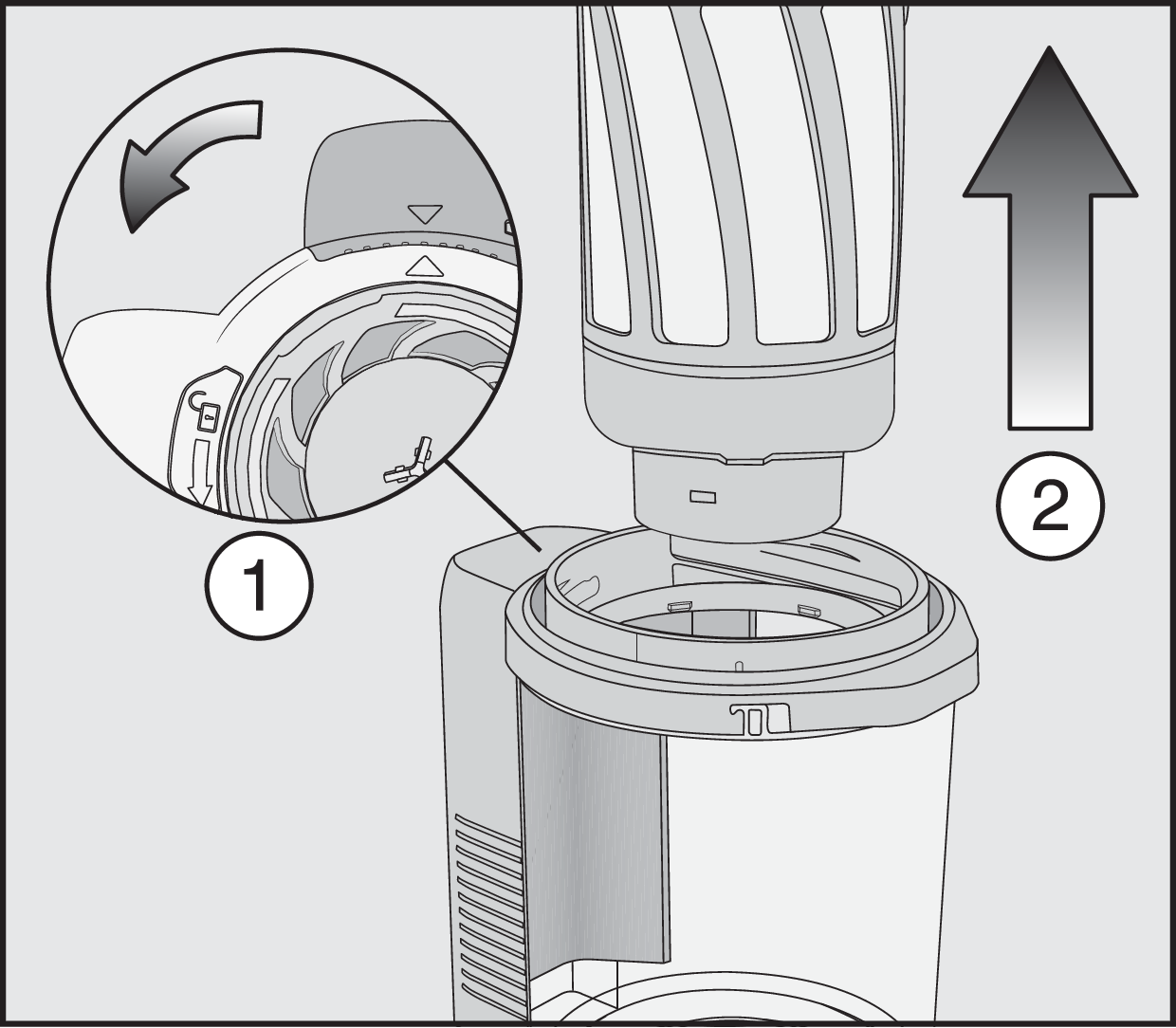
Miele cordless stick vacuums often have filters in or near the dust container. The removal method may include a twist lock, a pull tab, or a filter frame.
Use this general sequence:


- Turn the vacuum off.
- Remove the handheld unit or dust container as shown in the manual.
- Empty the dust container before removing the filter.
- Unlock and remove the filter.
- Check whether the filter is washable or disposable.
- Clean or replace it according to the model instructions.
- Dry a washable filter fully before fitting it again.
- Reinstall the filter and lock it in place.
- Refit the dust container.
- Run the vacuum for a short test.
If your Miele cordless vacuum has a filter warning or reduced-airflow message, clean the filter first if the manual permits cleaning. A warning that remains after cleaning may indicate a blocked air path, a full dust container, a damaged seal, or a filter that needs replacement.
Which Miele filter should you choose?
Choose the filter that matches both your vacuum model and your household needs. The table below gives a general guide, not a substitute for the model manual.
| Filter type | Main purpose | Best fit | Typical action |
|---|---|---|---|
| AirClean | Filters exhaust air for general cleaning | Homes without a special odor or fine-particle need | Replace as directed |
| Active AirClean | Helps reduce household odors | Homes with pets, smoke exposure, or strong odors | Replace as directed |
| HEPA AirClean | Provides high-level fine-particle filtration | Homes focused on fine-particle control | Replace as directed |
| Motor protection filter | Protects the motor | Bagged Miele vacuums | Replace as directed |
| Fine dust filter | Captures fine dust in some bagless and cordless models | Compatible bagless or stick vacuums | Clean or replace as directed |
The most suitable filter is not always the most expensive one. First confirm that your vacuum supports the filter. Then consider whether odor control or fine-particle filtration matters to you.
Do not treat “HEPA” as a universal upgrade that fits every Miele vacuum. The filter must match the compartment, frame, seal, and airflow design of the exact model.

How often should you change a Miele vacuum filter?
The correct interval depends on the filter and how often you use the vacuum. Miele manuals commonly give different schedules for different filters.
Use this practical guide:
- Exhaust filter: Follow the filter’s time indicator or the model manual.
- Motor protection filter: Often changed with a box of dust bags on compatible bagged models.
- Washable fine dust filter: Clean at the interval listed by Miele and replace it if damaged or ineffective.
- Disposable filter: Replace it rather than washing it.
- Homes with pets or heavy dust: Check filters more often, since they may load with debris faster.
A filter can need attention before its scheduled interval if you notice reduced suction, a dusty smell, visible damage, or dust near the exhaust. A schedule is a starting point, not permission to keep using a damaged filter.
Signs that a Miele filter needs attention
A dirty or incorrectly fitted filter may cause:
- Lower suction.
- A change in motor sound.
- A warm or dusty smell.
- Reduced battery runtime on a cordless model.
- A filter or airflow warning.
- Dust around the exhaust.
- A cover that will not close.
- A vacuum that shuts off during use.
These signs do not always mean the filter is the cause. Check the dust bag or container, hose, wand, floorhead, and air passages as well. A blocked hose can produce symptoms that look like a filter problem.
What to do if the new filter does not solve the problem
Check the simple causes first:
- Confirm the filter orientation. Arrows and tabs should match the housing.
- Check the seal. The filter frame should sit flat with no visible gap.
- Inspect the dust bag or container. Replace a full bag and empty a full container.
- Look for a blockage. Check the hose, wand, floorhead, and intake opening.
- Check for a damp filter. Remove the vacuum from service until the filter is fully dry.
- Confirm the filter is compatible. Compare the part number with the owner’s manual.
- Close each cover fully. Some Miele vacuums will not operate correctly if a cover is open.
- Allow the motor to cool. If the vacuum stopped from overheating, unplug it and follow the manual before restarting.
Stop using the vacuum if you smell burning, see smoke, find a damaged power cord, or hear unusual grinding or electrical sounds. Do not open the motor housing. Contact Miele support or a qualified appliance repair professional.


Common mistakes when changing a Miele vacuum filter
Using a filter from a different model
Miele filters can look alike while having different frames and seals. Match the part to the complete model number.
Washing a disposable filter
Water can damage filter media and leave moisture inside the vacuum. Wash only filters that Miele identifies as washable.
Operating the vacuum without a filter
The filter protects the motor and helps control dust. Do not run the vacuum with the filter removed unless the manual gives a specific service instruction.
Reinstalling a damp filter
A damp filter can restrict airflow and create odor. Let it dry completely before use.
Closing the cover by force
If the cover will not close, check the filter frame, bag collar, and filter direction. Forcing the cover may damage the latch or leave the filter unsealed.
Throwing away the model information
Write down the vacuum’s model number before ordering parts. Keep the manual and the old filter until the new one is confirmed to fit.
Where to find the correct Miele filter in the United States
Start with Miele USA’s official support and product pages. Search by the exact model number, then check the owner’s manual and approved replacement parts.
Useful information sources include:
- Miele USA customer support
- The owner’s manual supplied with the vacuum.
- The model label on the vacuum body.
- The filter package and printed replacement instructions.
- An authorized Miele dealer or service center.
Avoid relying only on a seller’s phrase such as “fits Miele vacuums.” Confirm the exact model, filter type, and part number. Compatibility matters more than a lower price.

Frequently asked questions
How do I know whether my Miele filter is washable?
Check the owner’s manual or the markings on the filter. If Miele does not identify it as washable, treat it as a replacement filter. Do not wash a standard disposable exhaust filter or motor protection filter.
Can I use my Miele vacuum without the filter?
No. A Miele vacuum should have its required filters installed before use. Operating without them can send dust toward the motor and into the room.
Why does my Miele vacuum still smell after I change the filter?
The odor may come from a full dust bag, dirty dust container, blocked hose, floorhead debris, or a saturated odor filter. Clean the approved parts and check the air path. If the smell is hot, electrical, or burning, stop using the vacuum.
How long should a Miele vacuum filter last?
There is no single interval for every Miele vacuum. The answer depends on the filter type, model, use, dust load, and whether the filter is washable. Follow the time indicator and the schedule in the model manual.
Can I use a HEPA filter in any Miele vacuum?
No. A HEPA filter must be designed for the exact vacuum or filter housing. A filter that does not fit correctly can leak air or restrict airflow.


Key takeaways
- Identify the exact Miele model before buying a filter.
- Unplug the vacuum before opening a filter compartment.
- Replace disposable filters; wash only filters marked as washable.
- Let washed filters dry fully before reinstalling them.
- Check the dust bag, container, hose, and floorhead if suction stays low.
- Stop using the vacuum if you smell burning, see smoke, or find electrical damage.
Conclusion
To change a filter in a Miele vacuum cleaner, unplug the machine, open the correct filter compartment, remove the old filter, and fit the exact replacement in the correct direction. The main difference is whether the filter is an exhaust filter, motor protection filter, or washable fine dust filter.
When the model is unclear, do not guess. Use the model label and Miele USA manual to confirm the filter type, replacement interval, and cleaning method before you begin.

Liora Pennings is a seasoned chef and kitchen enthusiast with a passion for turning everyday cooking into an effortless experience. With years of hands-on culinary expertise, she specializes in practical techniques, ingredient know-how, and smart kitchen solutions that help home cooks elevate their meals. At KitchFlair.com, Liora shares her best tips, time-saving tricks, and honest product reviews to guide readers toward a more efficient, enjoyable, and inspired cooking routine. Whether you’re a beginner or a seasoned home chef, Liora’s friendly, knowledge-packed insights make every visit to the kitchen a little easier—and a lot more delicious.