Introduction
Yes, you can use a stovetop tea kettle on an electric stove in the United States, as long as the kettle is made for stovetop use and its base is safe for your cooktop. This includes many stainless-steel, enamel, glass, and cast-iron kettles.
Place the kettle on the correct burner, add water, and use a medium heat setting. Do not place an electric kettle on the burner. An electric kettle must sit on its powered base and plug into a wall outlet.
Which Tea Kettles Work on an Electric Stove?
A tea kettle works on an electric stove when its materials and base can handle direct heat. The most important factor is not the kettle’s name. It is the manufacturer’s instructions and the shape of the bottom.
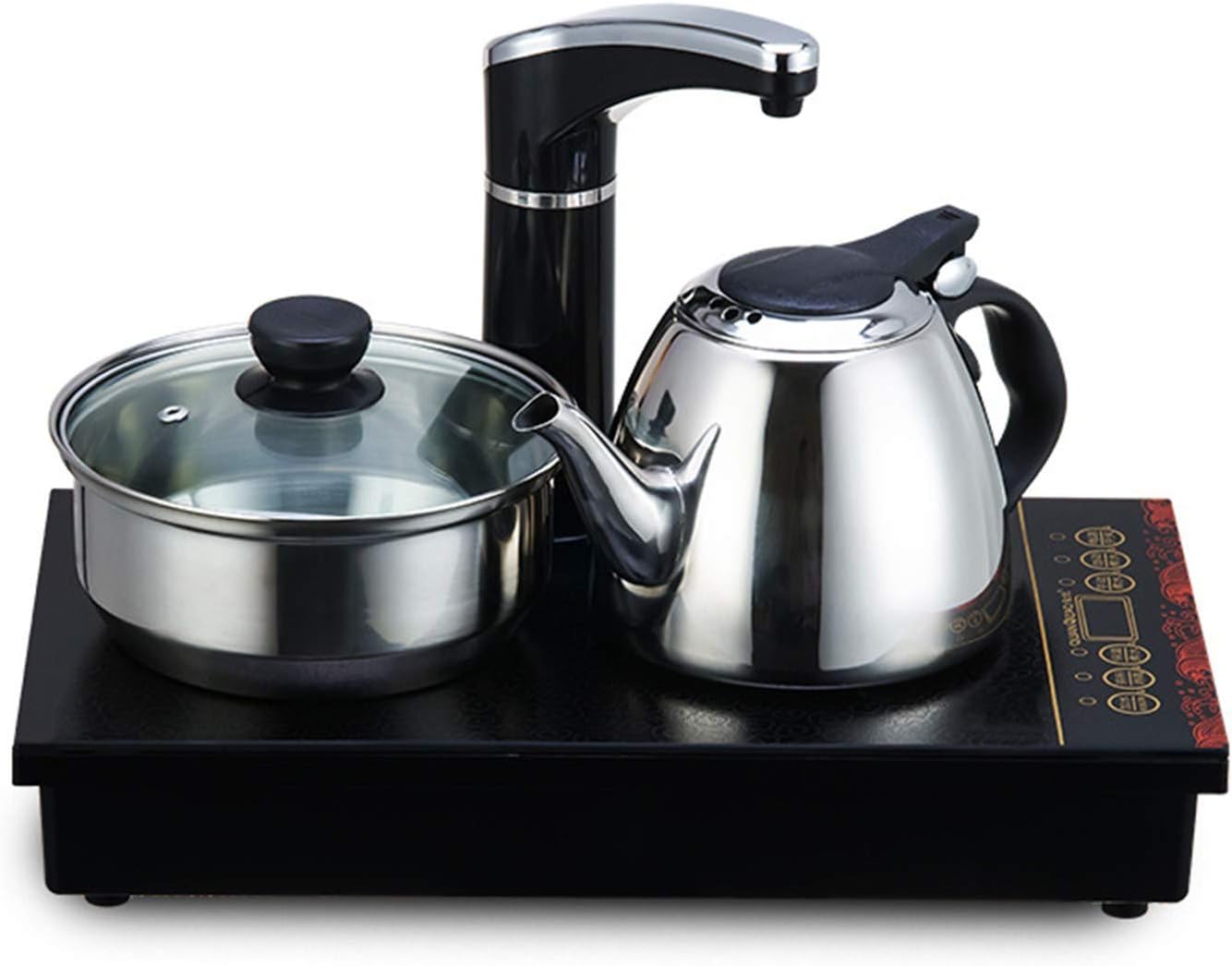
Stovetop tea kettles
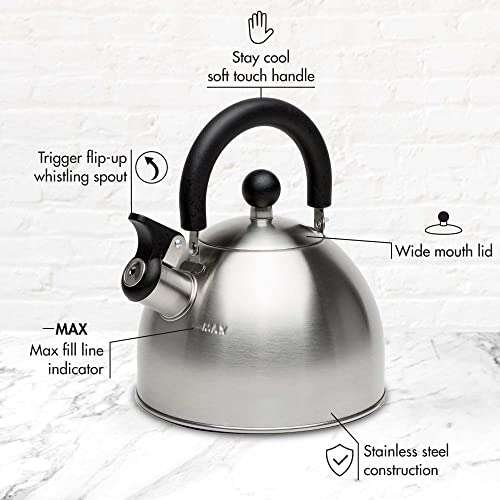
A stovetop kettle is designed to sit directly on a burner. It often has:
- A flat or slightly curved base
- A heat-safe handle
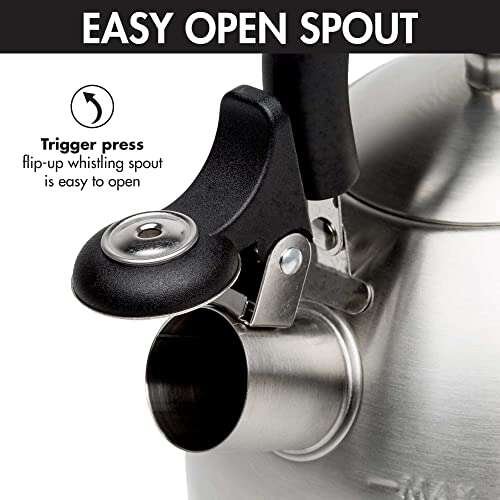
- A lid and spout
- A whistle or other boil signal
- A label stating that it works on gas, electric, or glass cooktops
Most stovetop kettles made from stainless steel or enamel-coated steel work well on standard U.S. electric ranges.
Electric tea kettles
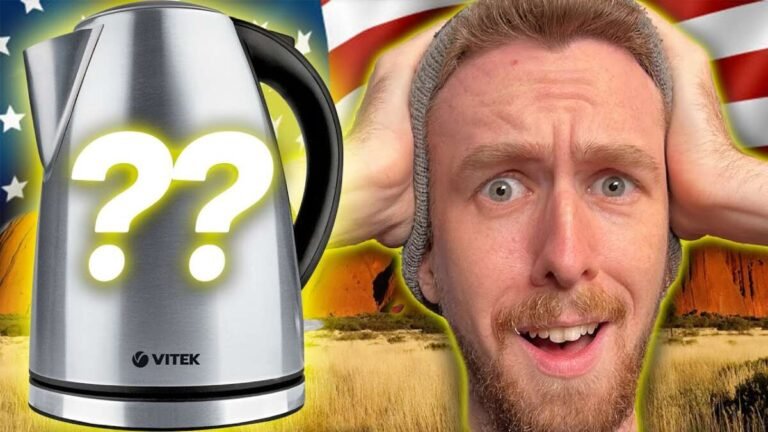
An electric kettle has a heating element inside its base. It sits on a separate electrical dock and usually plugs into a 120-volt outlet in the United States.
Never place an electric kettle on an electric stove burner. The burner can damage the plastic base, wiring, heating element, or temperature controls. It may also create a fire or electrical shock hazard.
Common kettle materials
| Kettle material | Electric stove use | Main concern |
|---|---|---|
| Stainless steel | Usually suitable | Confirm the base is flat and stovetop-rated |
| Enamel-coated steel | Usually suitable | Avoid chips and sudden temperature changes |
| Cast iron | Usually suitable | Heavy weight may damage or scratch a glass cooktop |
| Heat-resistant glass | Sometimes suitable | Follow the maker’s heat limits |
| Aluminum | Often suitable on a standard electric burner | Check the base and cookware instructions |
| Copper | Often suitable on a standard electric burner | May need a compatible lined interior |
| Plastic | Not suitable for direct burner heat | May melt or burn |
A kettle that works on gas may also work on a traditional electric coil burner. However, that does not always mean it is safe for a smooth glass or ceramic cooktop.
How an Electric Stove Heats a Tea Kettle
An electric stove sends power to a heating element. On a coil range, the element becomes hot and transfers heat to the kettle’s base. On a smooth-top range, the heating element sits below a glass-ceramic surface.
The kettle then transfers heat to the water. As the water temperature rises, bubbles form. At or near the boiling point, steam may trigger the kettle’s whistle.
At normal atmospheric pressure in the United States, water boils at about 212°F (100°C) at sea level. The boiling point drops at higher elevations, so the kettle may whistle before the water reaches 212°F.
The type of electric stove changes how you should use the kettle:
- Coil electric stove: Place the kettle in the center of the coil.
- Smooth glass or ceramic stove: Use a clean, flat-bottomed kettle and lift it instead of sliding it.
- Induction range: Use only a kettle with a magnetic base or an induction-compatible label.
An induction stove is also electric, but it heats magnetic cookware in a different way. A standard stainless-steel kettle may not work on induction unless its base contains a magnetic material.

How to Use a Tea Kettle on an Electric Stove
Follow these steps for a stovetop kettle.
1. Check the kettle
Look for a label, manual, or manufacturer statement that says the kettle is safe for electric, ceramic, glass, or induction cooktops.
Do not use the kettle if you find:
- A cracked body
- A loose handle
- A damaged lid
- A warped base
- A leaking seam
- Melted plastic
- A loose whistle cap
If the kettle has no clear instructions, check the maker’s website or contact customer service before using it on a glass cooktop.
2. Check the stove
Make sure the burner and the kettle base are clean and dry. Food residue or grit can scratch a smooth cooktop. A warped kettle may heat unevenly or rock on the burner.
For a coil burner, choose a burner that matches the kettle’s base size. For a smooth cooktop, the bottom should sit flat and make steady contact with the surface.
3. Add water
Fill the kettle with cold water through the lid or opening. Stay below the maximum-fill line if one is marked.
Do not fill the kettle to the top. Boiling water expands and creates steam. Too much water can spill through the spout or lid and cause burns.
If the kettle has a minimum-fill line, meet that level. Using too little water can cause the kettle to overheat after the water boils away.
4. Close the lid
Secure the lid before heating. If the kettle has a whistle, leave the whistle cover open only if the instructions require it. Some lids and whistles operate differently.
Keep the spout pointed away from your hands and face.
5. Set the burner to medium heat
Start with medium heat. A higher setting usually does not make the water boil much faster once the kettle is hot. It can make the handle, lid, or spout dangerously hot.
A medium setting also reduces the risk of boiling the kettle dry.
6. Turn off the burner when the water boils
When the kettle whistles or the water reaches the desired temperature, turn off the burner. Use a dry oven mitt or heat-safe handle cover if the handle is hot.
Remember that steam can burn skin quickly. Pour slowly and keep your face away from the spout.
7. Remove the kettle carefully
On a glass or ceramic cooktop, lift the kettle straight up. Do not drag it across the surface. Even a small grain of salt or sand under the kettle can scratch the cooktop.
Place the hot kettle on a heat-safe trivet. Do not place it on a wet, cold, or delicate surface.

What Heat Setting Should You Use?
A medium setting is a good starting point for most stovetop tea kettles. The exact setting depends on the stove, kettle, water amount, and burner size.
| Situation | Suggested approach |
|---|---|
| One or two cups of water | Use a small burner and medium heat |
| Full kettle | Use a burner that matches the base |
| Glass cooktop | Start at medium and avoid maximum heat |
| Kettle whistles too soon | Lower the heat and check the water level |
| Water takes too long to boil | Confirm the burner matches the base and the kettle sits flat |
| Kettle boils dry | Turn off the stove and let the kettle cool fully before inspection |
These settings are practical starting points, not universal temperature rules. Stoves label heat controls differently. One range’s medium setting may produce more heat than another’s.
Using the largest burner is not always faster. If the burner is much wider than the kettle’s base, heat can spread around the sides and warm the handle or nearby surface.
Using a Tea Kettle on a Glass or Ceramic Electric Stove
You can use a stovetop kettle on a smooth cooktop if the kettle is approved for that surface. A flat, clean base is essential.
Take these precautions:
- Inspect the base for rough spots or raised edges.
- Wipe away grit before placing the kettle down.
- Do not slide the kettle.
- Avoid dropping or setting it down heavily.
- Do not place a very hot kettle on a cold, wet surface.
- Keep the kettle centered over the heating area.
- Follow the stove maker’s cookware instructions.
Some cast-iron kettles are usable on glass cooktops, but their weight and rough surfaces increase the chance of scratches or impact damage. A lighter kettle with a smooth base is often easier to handle.
Do not use a kettle that is visibly warped. A poor contact surface can cause uneven heating and may be unsafe on a smooth cooktop.
Can You Use Any Kettle on an Electric Stove?
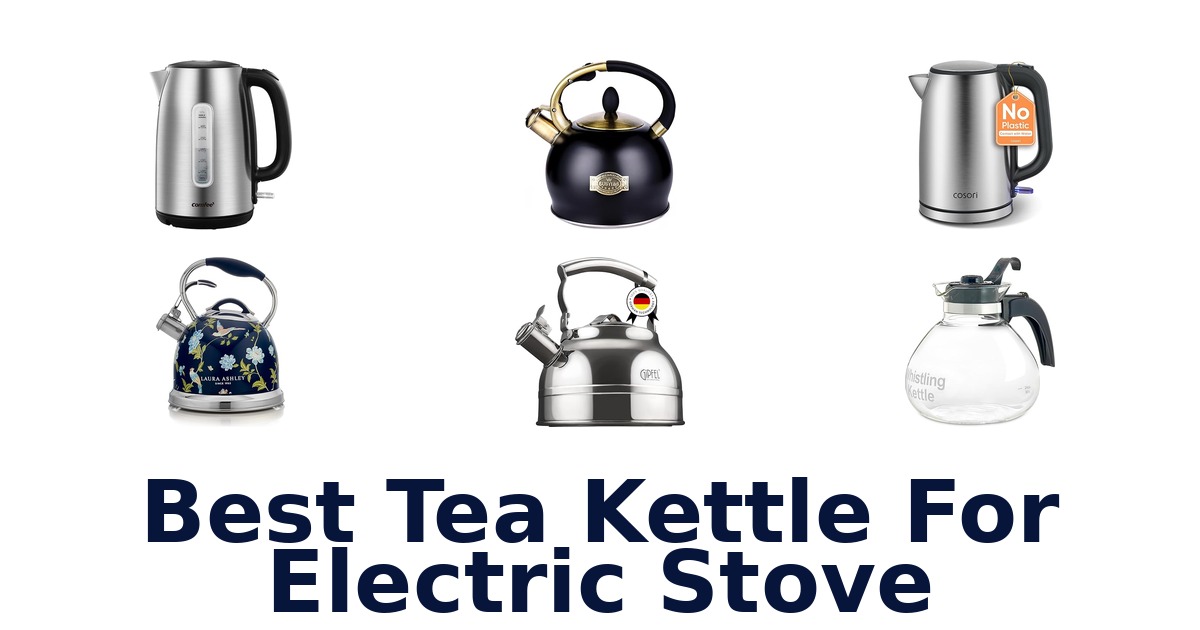
No. “Tea kettle” can refer to several different products, and they do not all belong on a burner.
Safe in many cases
A stovetop kettle marked for electric ranges is generally suitable. The base should be stable, smooth, and designed for direct heat.
Use caution
A kettle marked only for gas ranges may or may not be suitable for an electric stove. Check the manual. A kettle made for a traditional coil range may not be approved for glass or ceramic surfaces.
Do not use
Do not put these items directly on an electric burner:
- Electric kettles
- Plastic kettles
- Travel mugs
- Insulated vacuum flasks
- Coffee makers
- Kettles with electronic displays or power cords
- Containers with unknown heat limits
The safest rule is simple: if the item has a power cord or a separate electrical base, keep it off the burner.
Common Problems and What They Mean
The kettle does not boil
Check whether:
- The burner is actually on.
- The kettle is centered over the burner.
- The base sits flat.
- The burner size matches the kettle.
- The kettle contains enough water.
- The stove has a lock or control setting enabled.
A kettle with a thick base may take longer to heat. A very low heat setting can also make the process seem slow.
The handle becomes very hot
The handle may be too close to the burner, or the kettle may be too small for the burner. Steam can also heat the handle during boiling.
Use a heat-safe mitt and move the kettle to a smaller burner after the water reaches a simmer, if the manufacturer allows it. Never assume a handle is cool just because it is made from metal or has a plastic grip.
Water leaks from the lid or spout
The kettle may be overfilled, the lid may not be seated correctly, or the spout may be pointed downward during pouring. Let the kettle cool before checking the lid or seal.
If water leaks from the body or base, stop using the kettle. A damaged kettle can expose you to hot water and steam.
The kettle makes a strange smell or noise
A new kettle may have a temporary manufacturing smell. Wash it according to the instructions and boil fresh water once or twice before making tea.
A burning smell, smoke, sparking, or unusual discoloration is different. Turn off the burner, allow the kettle to cool, and inspect it. Do not continue using a damaged kettle.
The glass cooktop shows a mark
Some marks are residue from the kettle or burner. Others are scratches or damage to the cooktop. Do not scrape a hot surface or use abrasive products unless the stove maker approves them.

Safety Rules That Matter Most
The main risks are burns, dry boiling, spills, and damage to the cooktop.
Keep these rules in mind:
- Never leave a heating kettle unattended.
- Keep children away from the stove and steam.
- Use a dry oven mitt.
- Open the lid away from your face.
- Do not touch the spout after boiling.
- Do not move a kettle by its lid.
- Do not boil an empty kettle.
- Do not use a damaged or leaking kettle.
- Keep the kettle away from the edge of the stove.
- Turn off the burner before lifting the kettle.
- Keep the kettle cord, if it has one, away from all burners.
If the kettle boils dry, turn off the burner. Do not add cold water to a very hot kettle. Sudden cooling can damage some metals, enamel, and glass. Let the kettle cool according to the manufacturer’s guidance, then inspect it for warping, cracks, or loose parts.
For serious damage, replace the kettle rather than attempting an improvised repair.
Stovetop Kettle vs. Electric Kettle
Both types can heat water, but they suit different needs.
| Feature | Stovetop kettle | Electric kettle |
|---|---|---|
| Heat source | Burner | Built-in heating element |
| Needs a stove | Yes | No |
| Can work during a stove outage | No | Yes, if power is available |
| Temperature controls | Usually limited | Often available on some models |
| Main misuse risk | Overheating or steam burns | Using a damaged cord or base |
| Glass cooktop concerns | Scratches and heat compatibility | None if kept off the stove |
| Best fit | People who already use a stove | People who want a separate appliance |
A stovetop kettle is a practical choice if you have a compatible electric range and want to avoid another countertop appliance. An electric kettle may be more convenient when you want automatic shutoff or preset temperatures, but it must remain on its electrical base.

Frequently Asked Questions
Can you use a stainless-steel tea kettle on an electric stove?
Usually, yes. Check that the stainless-steel kettle is designed for stovetop use and has a stable base. If you have an induction range, confirm that the base is induction-compatible.
Can you use a glass tea kettle on an electric stove?
Only if the manufacturer specifically approves it for direct stovetop heat. Heat-resistant glass is not automatically safe on every burner. Follow the kettle’s temperature and surface instructions.
Can you use an enamel tea kettle on a smooth-top stove?
Often, yes, if the enamel kettle has a smooth, flat base and the manufacturer permits glass or ceramic cooktops. Lift it instead of sliding it to reduce scratch risk.
Is it faster to boil water on an electric stove or in an electric kettle?
The answer depends on the appliance, water amount, power level, and kettle design. An electric kettle may be convenient because its heating element is designed for water, while a stovetop kettle works well when you already have a suitable burner. Do not compare speed without using the same water volume and starting temperature.
Can you leave water in a tea kettle overnight?
You can, but fresh water is usually better for taste and reduces mineral buildup over time. Empty and dry the kettle if you will not use it for a while. Follow the manufacturer’s cleaning instructions.
Conclusion
You can use a stovetop tea kettle on an electric stove in the United States when the kettle is rated for that type of cooktop. Use medium heat, keep the water below the maximum-fill line, watch the kettle while it heats, and handle steam with care.
The key exception is an electric kettle. Keep it on its electrical base and never place it directly on a burner. Before using any kettle, check the manual, confirm that the base is flat and undamaged, and follow the instructions for your specific stove and kettle.

Liora Pennings is a seasoned chef and kitchen enthusiast with a passion for turning everyday cooking into an effortless experience. With years of hands-on culinary expertise, she specializes in practical techniques, ingredient know-how, and smart kitchen solutions that help home cooks elevate their meals. At KitchFlair.com, Liora shares her best tips, time-saving tricks, and honest product reviews to guide readers toward a more efficient, enjoyable, and inspired cooking routine. Whether you’re a beginner or a seasoned home chef, Liora’s friendly, knowledge-packed insights make every visit to the kitchen a little easier—and a lot more delicious.