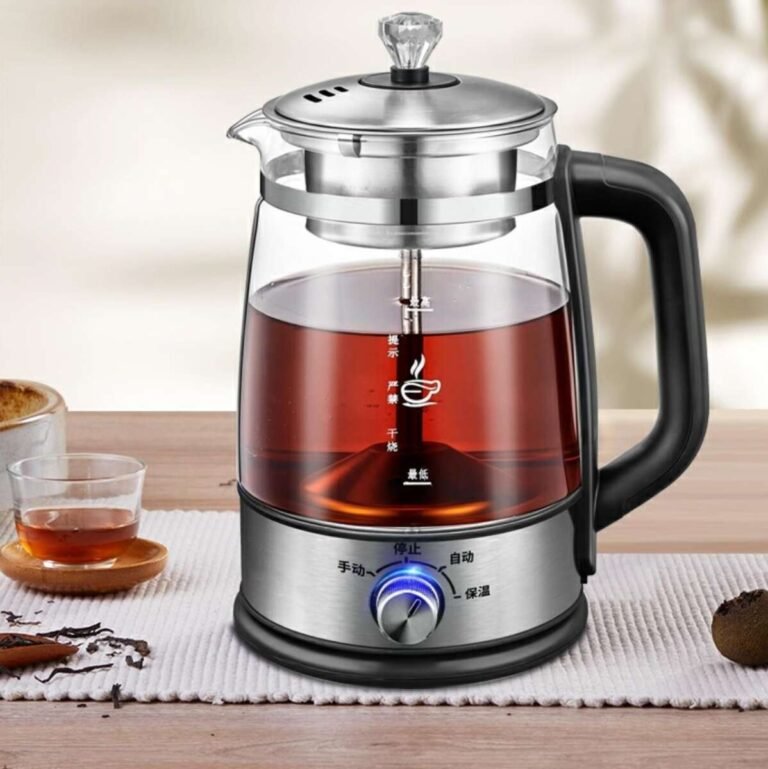
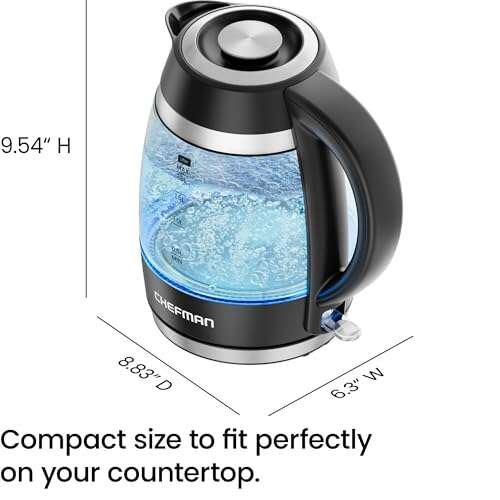
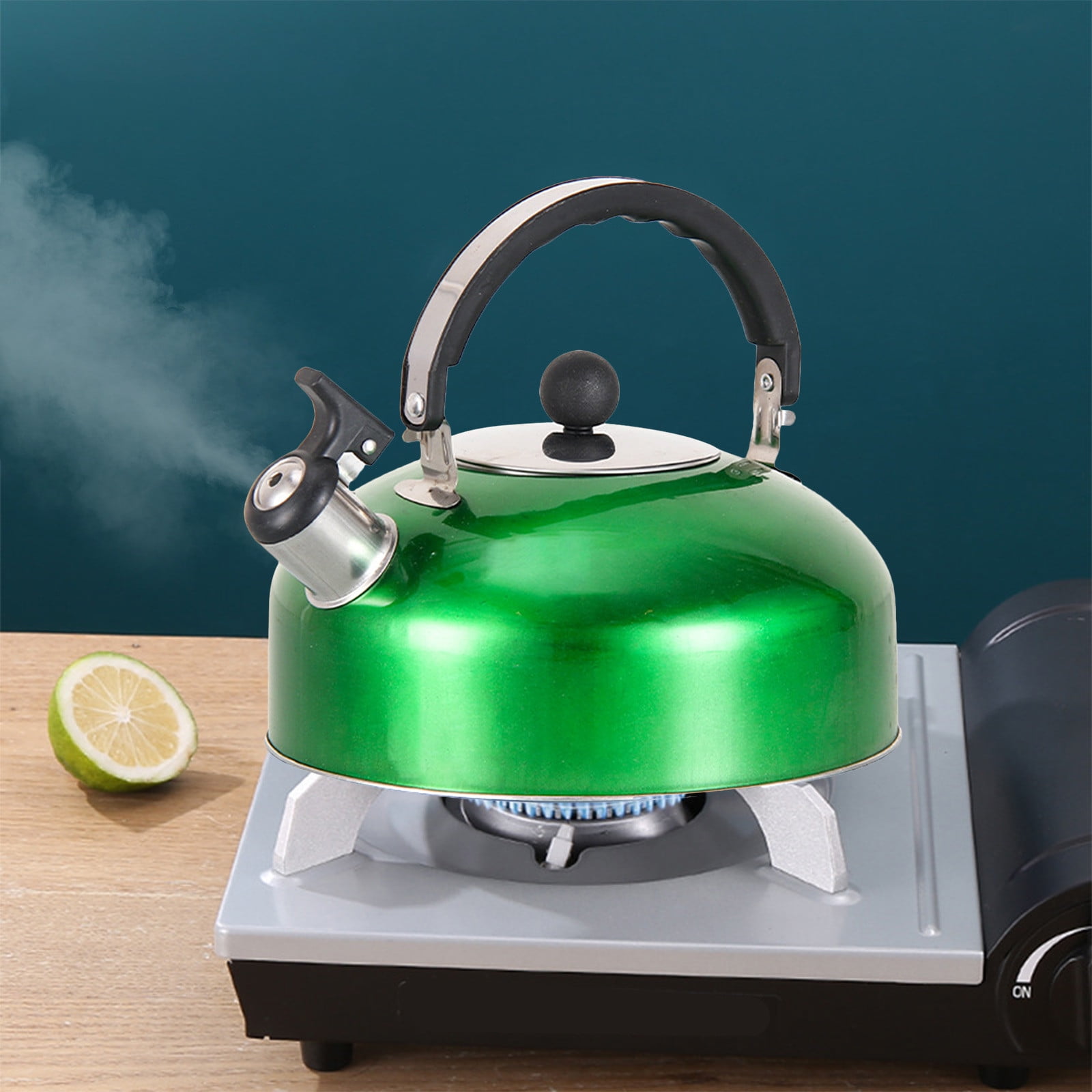
To use a stovetop tea kettle, fill it with cold water, place it on a matching burner, heat it until the water boils, then turn off the stove before pouring. Use the kettle only as its maker allows, and handle the hot lid, spout, and steam with care.
This guide applies to common U.S. gas, electric coil, smooth-top, and induction stoves. It covers whistling kettles, stovetop gooseneck kettles, and other kettles made for direct heat.
Before You Put the Kettle on the Stove
Check that the kettle is made for stovetop use. An electric kettle should not go on a burner unless its manual clearly says that it can. Plastic parts, hidden heating coils, and electrical bases can melt or become unsafe.
Also check the bottom of the kettle. A flat metal base works on most stoves. An induction stove needs a magnetic base. If a magnet sticks to the bottom, the kettle may work on induction, but the kettle’s manual is the final guide.
Prepare these items:
- A stovetop-safe tea kettle
- Cold, clean water
- A working burner
- An oven mitt or heat-safe handle
- A cup, mug, or teapot
- Tea, if you plan to brew it right away
Remove loose packaging, labels, and protective film before heating the kettle. Make sure the handle is firmly attached and that the lid fits well.
How much water should you add?
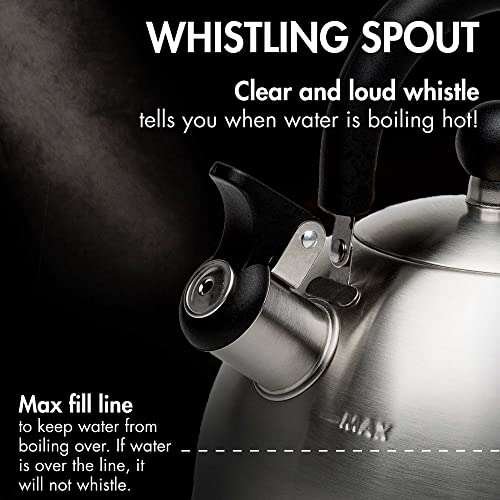
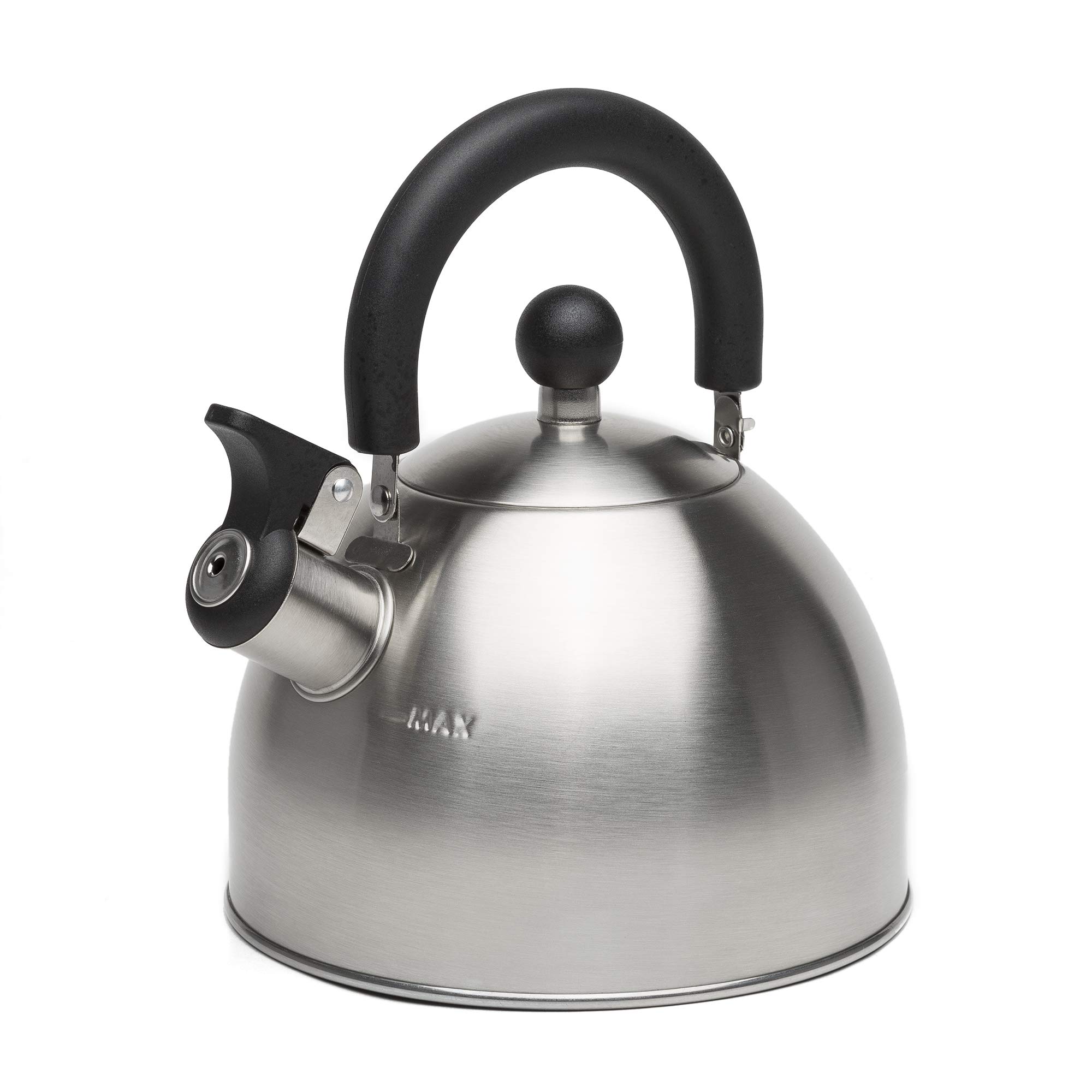
Fill the kettle with enough water for your cups, but stay between the minimum and maximum marks. If the kettle has no marks, leave room below the spout and lid.
Do not fill a kettle to the very top. Boiling water expands and moves. Extra space helps prevent hot water from spilling through the spout or around the lid.
For a simple estimate:
- One 8-ounce cup needs about 8 fluid ounces of water.
- Two cups need about 16 fluid ounces.
- Add a small amount for water left in the kettle or lost as steam.
A 2-quart kettle holds 64 fluid ounces, but you should use less than its full capacity if the manufacturer sets a lower maximum fill line.

How to Use a Tea Kettle on a Gas or Electric Stove
The basic method is the same on gas and electric stoves. The main difference is heat control. Gas heat changes at once, while an electric coil or smooth-top burner may stay hot after you turn it down.
Step 1: Fill the kettle with cold water
Open the lid and pour in the amount of water you need. Use cold tap water or filtered water. Do not use the kettle to heat milk, soup, or other thick liquids unless the instructions specifically allow it.
Close the lid. A closed lid traps heat and helps the water boil sooner. Make sure the lid sits firmly but does not block the steam path.
Step 2: Place the kettle on the correct burner
Set the kettle in the center of a burner that matches its base. The base should sit flat and should not hang over the edge.
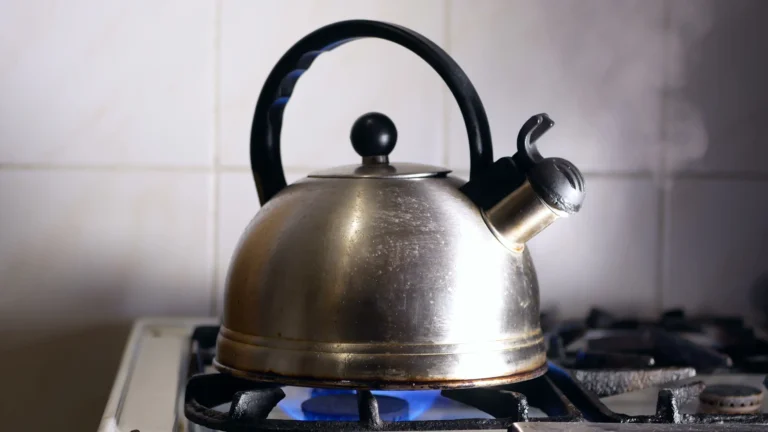
On a gas stove, keep the flame under the base rather than around the sides. Flames that rise along the sides can heat the handle, lid knob, or spout.
On an electric coil or smooth-top stove, choose a burner close to the kettle’s base size. A burner that is much larger can waste heat and may damage parts that extend beyond the base.
Step 3: Turn the burner to medium-high heat
Use medium-high heat for a normal boil. Very high heat may not boil the water much faster, but it can make the handle, lid, and outer surface dangerously hot.
If you use a gas stove, check that the flame stays under the kettle. If the flame reaches the handle or sides, lower the heat.
Stay nearby while the kettle heats. The U.S. Fire Administration and National Fire Protection Association both advise staying in the kitchen when cooking on the stove.
Step 4: Watch and listen for the boiling point
A whistling kettle will make a clear whistle when steam pushes through its whistle opening. Other kettles may show signs such as:
- Strong steam from the spout
- A rolling movement in the water
- A steady boiling sound
- A temperature indicator, if included
Steam can burn skin even when the water does not look violent. Keep your face, hands, and arms away from the spout and lid.
At sea level, water boils at about 212°F, or 100°C. The boiling point drops at higher elevations, so a kettle may whistle or boil at a lower temperature in parts of the western United States.
Step 5: Turn off the stove
Turn off the burner as soon as the water reaches the level of heat you need. Do not keep boiling the kettle just because it has a whistle.
On a gas stove, the heat stops at once. On an electric stove or smooth-top range, the burner may remain hot for several minutes. Move the kettle to a cool burner if the manual allows it and if you can do so safely.
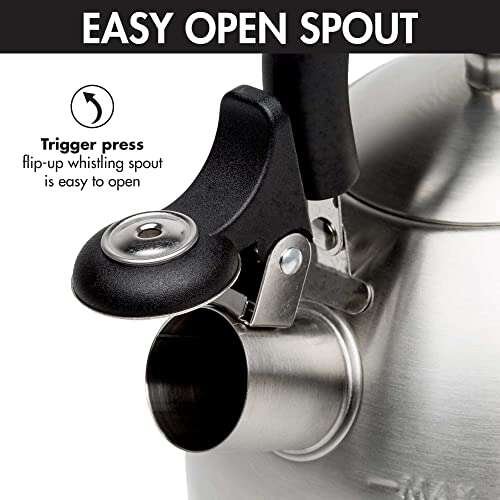
If the kettle has a whistle cap, turn off the burner before opening the cap. Use the handle or an oven mitt. Never place your hand over the spout.
Step 6: Pour slowly
Hold the handle firmly. Keep the spout pointed away from your body. Pour in a slow, steady stream to reduce splashing.
If the handle feels hot, use an oven mitt or heat-safe grip. Do not use a wet towel. Water conducts heat well and can transfer heat to your hand quickly.
When pouring for a child, older adult, or anyone with limited hand strength, set the kettle down and pour with care. A full kettle can be heavy and hard to control.

How to Use a Tea Kettle on an Induction Stove
An induction stove heats a magnetic metal base rather than using a glowing coil or open flame. The kettle must have a compatible magnetic base.
To use one:
- Confirm that the kettle is labeled for induction cooking.
- Place the kettle on the center of the induction cooking zone.
- Add water and close the lid.
- Select a medium or medium-high setting.
- Watch for steam, boiling, or the whistle.
- Turn off the induction zone before pouring.
If the stove does not detect the kettle, the base may not be magnetic, may be too small, or may not sit flat. Do not use an induction adapter unless the kettle and stove makers permit it. An adapter can change heating performance and add another hot surface.
Some induction stoves heat water very quickly. Check the kettle sooner than you would on a traditional electric coil. Fast heating does not remove the risk of scalding.

How Hot Should the Water Be for Tea?
Use boiling water for teas that need high heat, but do not assume every tea needs a full boil. The best temperature depends on the tea type and the instructions on its package.
| Tea type | Common brewing range | Practical stove method |
|---|---|---|
| Black tea | About 195–212°F | Bring water to a full boil or just below |
| Herbal tea | About 200–212°F | Use very hot or boiling water |
| Oolong tea | About 180–205°F | Stop before a strong boil when possible |
| Green tea | About 160–180°F | Do not use fully boiling water |
| White tea | About 160–185°F | Heat until hot, not aggressively boiling |
These ranges are general starting points, not strict rules. Tea brands may give different directions. A stovetop kettle without a temperature display may not let you stop at an exact temperature, so watch the water and use a thermometer if precision matters.
For green or white tea, turn off the stove before the water reaches a full boil. Let it cool for a short time before pouring. The exact cooling time depends on the amount of water, kettle material, room temperature, and altitude.

How to Use a Whistling Kettle Safely
A whistle tells you that steam is passing through the whistle opening. It does not mean the kettle is safe to touch or that the water cannot spill.
Follow these rules:
- Keep the whistle opening pointed away from people.
- Do not touch the lid, spout, or metal body with bare skin.
- Turn off the stove before removing the whistle cap.
- Do not lift the lid while the kettle is under heat.
- Keep children and pets away from the stove.
- Do not leave the kettle heating in an empty room.
- Do not block the steam opening.
- Do not use a kettle with a loose handle, cracked body, damaged lid, or blocked spout.
If the kettle whistles for a long time, turn off the burner. Let the kettle cool before checking it. A whistle that does not sound may indicate a loose cap, low water, a blocked opening, or a design that does not whistle at low heat.

What to Do If the Kettle Does Not Work as Expected
Check the safest and simplest causes first. Turn off the heat before inspecting the kettle.
| Problem | Likely cause | Safe action |
|---|---|---|
| Water does not heat | Wrong burner, low power, or induction mismatch | Check the burner and compatibility |
| Kettle will not whistle | Loose cap, blocked opening, or low heat | Turn off the stove and inspect when cool |
| Water boils over | Too much water or high heat | Let it cool, then fill below the maximum line |
| Handle becomes very hot | Flame reaches the handle or the handle lacks insulation | Lower the flame or stop using the kettle |
| Kettle rocks | Warped or uneven base | Stop using it on the stove |
| Burnt smell appears | Empty kettle, residue, or overheated part | Turn off the stove and let it cool |
| Water leaks | Loose lid, damaged seam, or cracked body | Stop using the kettle |
| Induction stove does not detect it | Nonmagnetic or undersized base | Use a compatible kettle |
Never test a suspected leak with your fingers while the kettle is hot. Place the kettle on a heat-safe surface after the stove is off and wait until it is cool.
If a kettle boils dry, turn off the burner and do not add cold water to the hot kettle. A sudden temperature change can damage some materials. Let the kettle cool naturally, then inspect it for warping, discoloration, cracks, or damaged parts.
How to Clean and Maintain a Stovetop Tea Kettle
Empty the kettle after use and let it dry with the lid open. This helps limit stale water and mineral buildup.
Hard water can leave white or chalky scale inside the kettle. Scale is mainly a mineral deposit. It can make the kettle harder to clean and may slow heat transfer.
For light scale:
- Check the kettle’s care instructions.
- Add a solution approved by the manufacturer, such as diluted white vinegar if allowed.
- Let the solution sit as directed.
- Rinse the kettle several times.
- Heat and discard one batch of plain water before making tea.
Do not scrub stainless steel with harsh materials that can scratch it. Do not immerse a kettle with wood, electrical, or heat-sensitive parts unless the instructions say it is safe.
Keep the spout and whistle opening clear. If mineral scale blocks the opening, steam may not escape as designed.
Replace the kettle if you find a crack, leaking seam, loose handle, damaged whistle, or base that no longer sits flat. A low-cost repair is not worth the risk of a hot-water spill.

Common Mistakes to Avoid
The most common mistakes involve too much heat, too much water, or poor handling.
Heating an electric kettle on a burner
An electric kettle is designed to sit on its electrical base. Its plastic housing and heating parts may fail on direct heat. Use it only as the manual describes.
Filling the kettle completely
A full kettle can boil over. Water may escape through the spout or lid and reach the burner. Follow the maximum fill mark.
Leaving the kettle unattended
Water can boil away, especially in a small kettle. An empty kettle can overheat and become damaged. Stay close while it heats.
Grabbing the lid or spout
These parts can be hot even when the handle feels safe. Use the handle and a dry oven mitt.
Pouring with the lid loose
A loose lid can fall while you pour. Hot water may splash toward your hand. Secure the lid before lifting the kettle.
Using high heat for every tea
High heat may shorten the time to boil, but it can also make control harder and heat the handle. Medium-high heat is usually enough.
Using the kettle for other foods
Milk can scorch and foam. Thick liquids can stick and block the spout. Unless the maker allows it, use the kettle for water only.

Stovetop Kettle vs. Electric Kettle
A stovetop kettle needs a burner. An electric kettle uses a built-in heating element and a power base. Neither is always better.
| Feature | Stovetop kettle | Electric kettle |
|---|---|---|
| Power source | Gas, electric, or induction stove | Wall outlet |
| Works during a power outage | Yes, if the stove works | No |
| Temperature control | Often manual | Often automatic or preset |
| Whistle or auto shutoff | Common whistle | Common auto shutoff |
| Main safety concern | Open heat, hot metal, and steam | Electricity, hot water, and steam |
| Best fit | Users who already cook on a stove | Users who want automatic shutoff or set temperatures |
Choose a stovetop kettle if you want a simple tool that does not need its own electrical base. Choose an electric kettle if automatic shutoff or exact temperature settings matter more to you.

Quick Safety Checklist
Before heating:
- Is the kettle made for stovetop use?
- Is the water below the maximum fill line?
- Is the lid secure?
- Is the base flat and stable?
- Is the burner the right size?
- Is the handle away from the flame?
- Is the spout pointed away from people?
After boiling:
- Did you turn off the burner?
- Did you use a dry oven mitt if needed?
- Did you keep your face away from steam?
- Did you pour slowly?
- Did you empty and dry the kettle?
If the kettle, stove, or handle seems damaged, stop using it until the problem is checked or the kettle is replaced.

Frequently Asked Questions
Can you use a tea kettle on a gas stove?
Yes, if the kettle is made for stovetop use. Keep the flame under the base, not around the sides or handle. Use medium-high heat and turn off the burner when the water boils.
Can you use a stovetop kettle on an electric stove?
Yes. Place the kettle on a burner that matches its base and keep it centered. Remember that electric burners stay hot after you turn them off.
Can you use a stovetop kettle on a glass-top stove?
Often, yes, if the kettle has a smooth, flat base and the manufacturer allows it. Do not slide the kettle across the glass. Lift it to prevent scratches, and avoid using a damaged or rough base.
Can you use any tea kettle on an induction stove?
No. The kettle needs a magnetic, induction-compatible base. Check the manual or test the base with a magnet. The stove maker’s and kettle maker’s instructions take priority.
How long does it take to boil water in a stovetop kettle?
There is no single time for every kettle. The result depends on the water volume, starting temperature, burner power, kettle material, lid position, and elevation. Use the whistle, visible boiling, or a thermometer rather than a fixed time.
Should you leave water in a tea kettle?
It is better to empty the kettle after use, especially if your water is hard. Fresh water reduces stale taste and limits mineral buildup. Let the kettle dry with the lid open.
Is it safe to boil a kettle dry?
No. A dry kettle can overheat and suffer damage. If it boils dry, turn off the heat, let it cool fully, and inspect it before using it again.
Conclusion
Using a tea kettle on the stove is simple: add the right amount of water, place the kettle on a suitable burner, heat it while staying nearby, and turn off the stove before pouring. The key safety steps are to use a stovetop-safe kettle, avoid overfilling it, keep steam away from your skin, and never handle a damaged or overheated kettle.
For your next cup, check the kettle’s fill line and care instructions first. Then use medium-high heat, watch for the boil, and pour slowly with a firm, dry grip.

Liora Pennings is a seasoned chef and kitchen enthusiast with a passion for turning everyday cooking into an effortless experience. With years of hands-on culinary expertise, she specializes in practical techniques, ingredient know-how, and smart kitchen solutions that help home cooks elevate their meals. At KitchFlair.com, Liora shares her best tips, time-saving tricks, and honest product reviews to guide readers toward a more efficient, enjoyable, and inspired cooking routine. Whether you’re a beginner or a seasoned home chef, Liora’s friendly, knowledge-packed insights make every visit to the kitchen a little easier—and a lot more delicious.