In the United States, a tea kettle usually takes 3 to 8 minutes to boil water. An electric kettle often takes 3 to 5 minutes for about 1.5 quarts, while a stovetop kettle may take 5 to 8 minutes on a strong burner. A small amount, such as 2 cups, can boil in about 2 to 4 minutes.
These times assume room-temperature water, a covered kettle, and a typical U.S. household outlet or stove. The exact time depends on the amount of water, kettle type, starting temperature, burner power, and elevation.

Quick answer: Typical boiling times
The table below gives practical estimates for common U.S. kettle sizes. These are general ranges, not guarantees for every model.


| Kettle type | Water amount | Typical time to boil |
|---|---|---|
| Electric kettle | 2 cups | 2–4 minutes |
| Electric kettle | 1 quart | 3–5 minutes |
| Electric kettle | 1.5 quarts | 4–6 minutes |
| Stovetop kettle | 2 cups | 3–5 minutes |
| Stovetop kettle | 1 quart | 5–8 minutes |
| Stovetop kettle | 1.5 quarts | 6–10 minutes |
| Microwave-safe container | 2 cups | About 3–5 minutes |
A “boil” usually means the water reaches about 212°F (100°C) at sea level. For tea, you do not always need a full rolling boil. Green tea, white tea, and some herbal teas often taste better with water below boiling.
At high elevations in the United States, water boils at a lower temperature. Denver, Colorado, for example, is high enough that water boils below 212°F. The kettle may switch off sooner, but the water can still take time to heat and may not be as hot as water boiled at sea level.

What determines how fast a tea kettle boils?
The biggest factors are water volume, starting temperature, heating power, kettle design, and air pressure.
Water volume
More water needs more heat. A full kettle takes longer than a single mug because the heating element must raise the temperature of a larger mass of water.
For example:
- One cup may boil in about 1 to 3 minutes in a powerful electric kettle.
- Two cups may take about 2 to 4 minutes.
- A full 1.7-liter kettle may take about 4 to 7 minutes.
Do not fill the kettle above its maximum line. Extra water adds time and can increase the risk of hot water spilling or boiling over.
Starting temperature
Cold tap water takes longer than warm water. Water at 50°F needs more energy to reach boiling than water at 70°F.
A simple rule is:
The colder the water, the longer the kettle needs to run.
Do not use hot water from an old water heater just to save a few minutes. For drinking and cooking, many people prefer fresh cold water from the tap, especially when the hot-water system may contain stored water.


Heating power
Electric kettle power is measured in watts. Many U.S. electric kettles use roughly 1,000 to 1,500 watts because standard U.S. household outlets supply about 120 volts.
Higher wattage often means faster heating, but wattage alone does not tell the whole story. Heat loss, the shape of the kettle, the lid, and the amount of water also matter.
A 1,500-watt kettle may boil a small amount of water faster than a 1,000-watt kettle. It may also draw more current, so use it with a sound outlet and avoid overloading the same circuit with other high-power appliances.
Kettle material and lid design
A tight lid helps hold heat in. An open pan or kettle loses more heat to the room, so it usually takes longer.
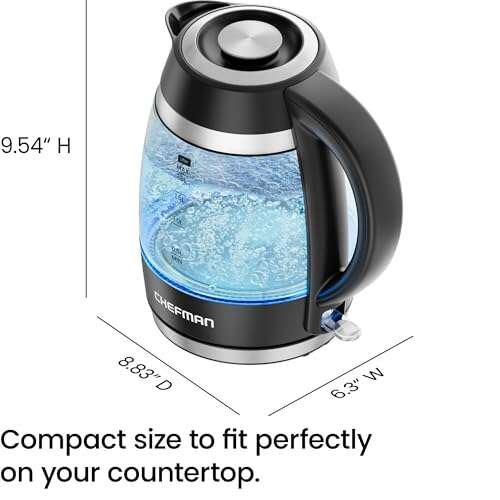
Stainless steel, glass, and plastic kettles can all heat water effectively. The heating element and design usually matter more than the outer material. A covered kettle with a direct heating element often heats water more efficiently than a kettle sitting on a broad stovetop surface.
Elevation
At higher elevations, water boils at a lower temperature because air pressure is lower. This affects the temperature at which boiling begins, not just the timer on the kettle.
If you live in a high-altitude area, a kettle may click off even though the water is below 212°F. That is normal. The water has reached its local boiling point.

How long does an electric kettle take to boil?
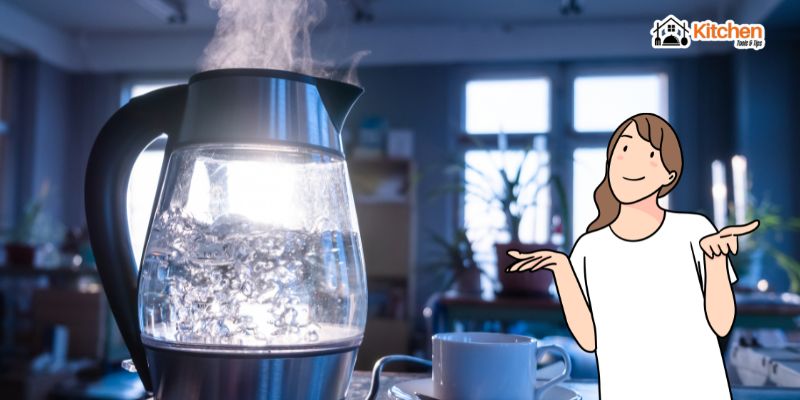
An electric kettle usually takes 2 to 5 minutes for 2 to 4 cups of water. A full 1.7-liter kettle may take about 4 to 7 minutes, depending on its power rating and design.
To get the fastest safe result:
- Measure only the water you need.
- Use fresh water at room temperature or colder.
- Close the lid fully.
- Place the kettle on its base correctly.
- Use a clear, unobstructed outlet.
- Start the kettle and wait for the automatic shutoff.
- Pour carefully after the heating cycle ends.
Most electric kettles have a thermostat that senses steam or rising temperature. The kettle then shuts off near boiling. It may not produce a long, visible rolling boil before switching off.
A simple energy calculation
The heating time can be estimated with this relationship:
[
\text{Energy needed} = \text{water mass} \times \text{specific heat} \times \text{temperature rise}
]
For a practical example, heating 1 liter of water from 68°F to 212°F requires about 151 watt-hours of heat in the water. A 1,500-watt kettle could supply that energy in roughly 6 minutes if it were perfectly efficient.
Real kettles lose some heat. The actual time may be longer or shorter because the kettle may not hold exactly 1 liter, the starting temperature may differ, and the heating element may not deliver its full rated power during the whole cycle.


This calculation explains why small amounts boil quickly and full kettles take longer.
How long does a stovetop tea kettle take to boil?
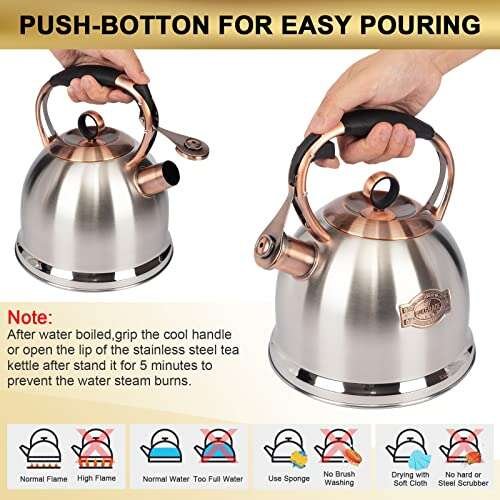
A stovetop tea kettle generally takes 5 to 10 minutes to boil a full load. Two cups may take about 3 to 5 minutes on a strong burner with a lid.
The result depends on the stove:
- Gas stoves transfer heat through a flame.
- Electric coil and smooth-top stoves heat through a hot surface.
- Induction stoves heat compatible cookware directly and may boil water faster.
- A weak burner takes longer than a high-output burner.
- A small kettle may heat faster than a large kettle because it holds less water.
Use a burner that matches the base of the kettle. A burner that is too small wastes time. A burner that is much larger than the base can send excess heat up the sides and handle.
Do not leave a stovetop kettle unattended. Some models whistle, but the whistle does not replace supervision. Turn off the burner once the water boils, and use the handle or a dry oven mitt when moving the kettle.
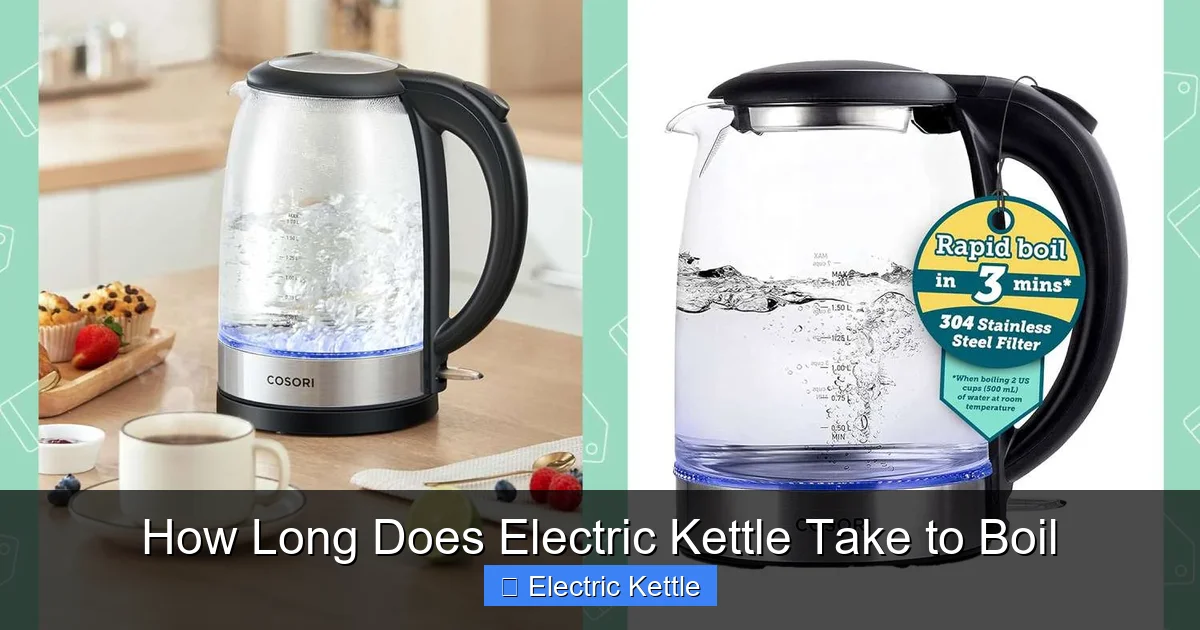
How long does a kettle take to boil one cup?
One cup of water, or about 8 U.S. fluid ounces, often boils in 1 to 3 minutes in an electric kettle and 2 to 5 minutes on a stovetop.
The fastest method is to heat only the amount you need. A full kettle wastes time and energy when you want one mug.
For a more accurate estimate:
- A powerful electric kettle may heat one cup in close to 2 minutes.
- A lower-power kettle may need 3 minutes or more.
- A stovetop kettle may take longer because heat must pass from the burner to the kettle and then into the water.
- Very cold water or a cold kettle can add time.
If your kettle has a minimum-fill line, keep the water above that line. Running an electric kettle with too little water can expose the heating element and may damage the appliance.

Why is my tea kettle taking too long to boil?
A kettle that takes much longer than usual may have scale buildup, a weak heat source, too much water, or a damaged heating element.
Check these causes in order:
1. You filled the kettle too far
The maximum fill line is not just a suggestion. A full kettle can take several minutes longer than the amount needed for one or two cups.


2. Mineral scale is covering the heating element
Hard water leaves calcium carbonate deposits inside many kettles. Scale acts as an insulating layer. It can reduce heating efficiency and make the kettle noisy.
Follow the cleaning instructions in the user manual. Many manufacturers allow a descaling solution made for kettles. Some allow diluted white vinegar, but vinegar can affect seals or leave an odor in some models. The manual should control.
Never mix vinegar with bleach or other cleaners.
3. The lid is open
An open lid allows more heat to escape. Close the lid fully unless the manual says otherwise.
4. The burner is too weak
For a stovetop kettle, check that the burner is on the correct setting and that the kettle base sits flat. On an electric stove, a burner that cycles on and off may take longer than expected.
5. The kettle is overloaded
Avoid using an extension cord unless the manufacturer permits it and the cord is rated for the kettle’s power. A loose connection, overloaded circuit, or damaged cord can create a safety risk.
Stop using an electric kettle if you see sparks, smell burning plastic, notice a damaged cord, or feel unusual heat near the plug. Replace the appliance or have it checked by a qualified professional.

Is it faster to boil water in a kettle or on the stove?
An electric kettle is often faster than a stovetop kettle for small or medium amounts of water. Its heating element transfers heat directly to the water, while a stovetop kettle loses some heat through the burner and kettle base.
An induction cooktop can also be very fast with a compatible kettle. A gas burner may be quick, but the result depends on flame size, kettle shape, and how much heat escapes around the sides.
The best choice depends on what you need:
| Situation | Usually practical choice |
|---|---|
| One mug of tea | Electric kettle |
| Several quarts for cooking | Large pot on the stove |
| No counter space | Stovetop kettle |
| Fast heating with induction | Induction-compatible kettle or pot |
| Precise low-temperature tea water | Variable-temperature electric kettle |
A kettle is not always the best tool. For pasta, soup, or a large batch of food, heating water in a pot may be simpler. For one or two cups, an electric kettle is usually more efficient in time and convenience.

Can you boil water in a microwave instead?
You can heat water in a microwave, but use extra care. Microwave heating can create superheated water, which is water heated above its normal boiling point without visible bubbling. It can suddenly erupt when you move the container or add tea, a spoon, or another object.
For safer microwave use:


- Use a microwave-safe container.
- Do not heat a sealed container.
- Avoid heating plain water for an excessive time.
- Let the container stand briefly before moving it.
- Use an oven mitt.
- Keep your face and hands away from the opening.
- Follow the microwave manufacturer’s instructions.
A kettle gives a clearer signal that the water is boiling and usually has an automatic shutoff. For regular tea making, a kettle is often easier to control.

Does boiling water make tea taste better?
Not always. The best water temperature depends on the tea.
- Black tea: Often brewed with water close to boiling.
- Oolong tea: Commonly brewed below or near boiling, depending on the style.
- Green tea: Often tastes less bitter when brewed with cooler water.
- White tea: Usually benefits from cooler water.
- Herbal tea: Often uses very hot water, but follow the package directions.
Boiling water can bring out more flavor, but very hot water can also extract bitter compounds from delicate leaves. If your tea tastes harsh, let the water cool for a few minutes or use a temperature-controlled kettle.
The water itself matters, too. Strong mineral flavors, chlorine, or stale water can affect the cup. Fresh, clean water usually produces a clearer result.

Tea kettle safety tips
Follow the manufacturer’s instructions and treat boiling water as a burn hazard.
- Keep the kettle away from children and pets.
- Do not touch the metal body right after boiling.
- Use the handle, not the spout or lid.
- Do not overfill past the maximum line.
- Keep the base and plug dry.
- Do not immerse an electric kettle in water.
- Unplug a countertop kettle when you are not using it, unless the manual says otherwise.
- Do not open a pressurized or sealed container of hot water.
- Pour slowly to prevent splashing.
- Place the kettle on a stable, heat-resistant surface.
The U.S. Consumer Product Safety Commission warns that hot liquids can cause serious scald injuries, especially to young children. Keep cords away from counter edges where someone could pull the kettle down.

Frequently asked questions
How long does a 1.7-liter kettle take to boil?
A 1.7-liter electric kettle commonly takes about 4 to 7 minutes when filled with room-temperature water. A lower-power model, cold water, scale buildup, or a high elevation can extend that time.
How long does a kettle take to boil cold water?
Cold tap water often takes 30 seconds to several minutes longer than room-temperature water, depending on the amount and kettle power. The more water you heat, the greater the difference.
Does putting the lid on make a kettle boil faster?
Yes. A closed lid reduces heat loss and can shorten the time needed to reach boiling. Use the lid as designed, and do not block a vent that the manufacturer says must remain open.
Can I leave water in an electric kettle overnight?
Many kettles can hold water safely when switched off, but the water may taste stale. Emptying and drying the kettle can also reduce mineral buildup. Follow the care instructions for your model.
How often should I descale a tea kettle?
Descale when you see chalky deposits, hear unusual crackling, or notice slower heating. In a hard-water area, this may be needed more often than in a soft-water area. Use the cleaning method listed in the manual.
Key takeaways
- Most tea kettles boil water in 3 to 8 minutes.
- An electric kettle often takes 2 to 5 minutes for 2 to 4 cups.
- A stovetop kettle often takes 5 to 10 minutes for a full load.
- Heating only the water you need is usually fastest.
- A closed lid, clean heating surface, and strong heat source improve speed.
- High elevation lowers the boiling temperature.
- Use care with hot water, steam, cords, and microwave heating.
Conclusion
For most homes in the United States, expect an electric tea kettle to boil a mug of water in about 2 to 4 minutes and a full kettle in about 4 to 7 minutes. A stovetop kettle commonly needs a few minutes more.
If your kettle suddenly takes much longer, check the water level, lid, burner, and mineral scale first. Measure the amount you need, keep the kettle clean, and follow the manufacturer’s safety instructions.
Liora Pennings is a seasoned chef and kitchen enthusiast with a passion for turning everyday cooking into an effortless experience. With years of hands-on culinary expertise, she specializes in practical techniques, ingredient know-how, and smart kitchen solutions that help home cooks elevate their meals. At KitchFlair.com, Liora shares her best tips, time-saving tricks, and honest product reviews to guide readers toward a more efficient, enjoyable, and inspired cooking routine. Whether you’re a beginner or a seasoned home chef, Liora’s friendly, knowledge-packed insights make every visit to the kitchen a little easier—and a lot more delicious.