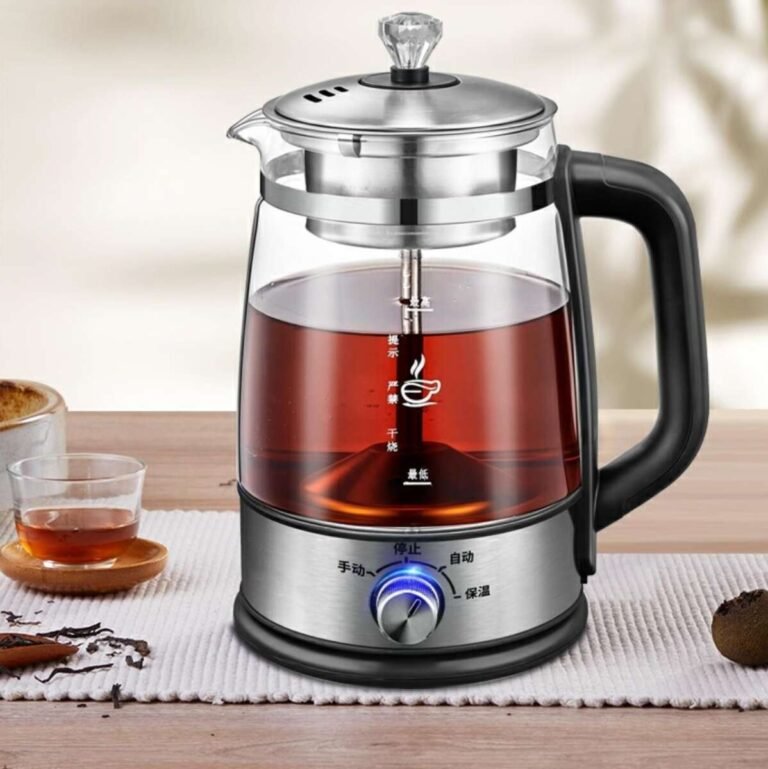
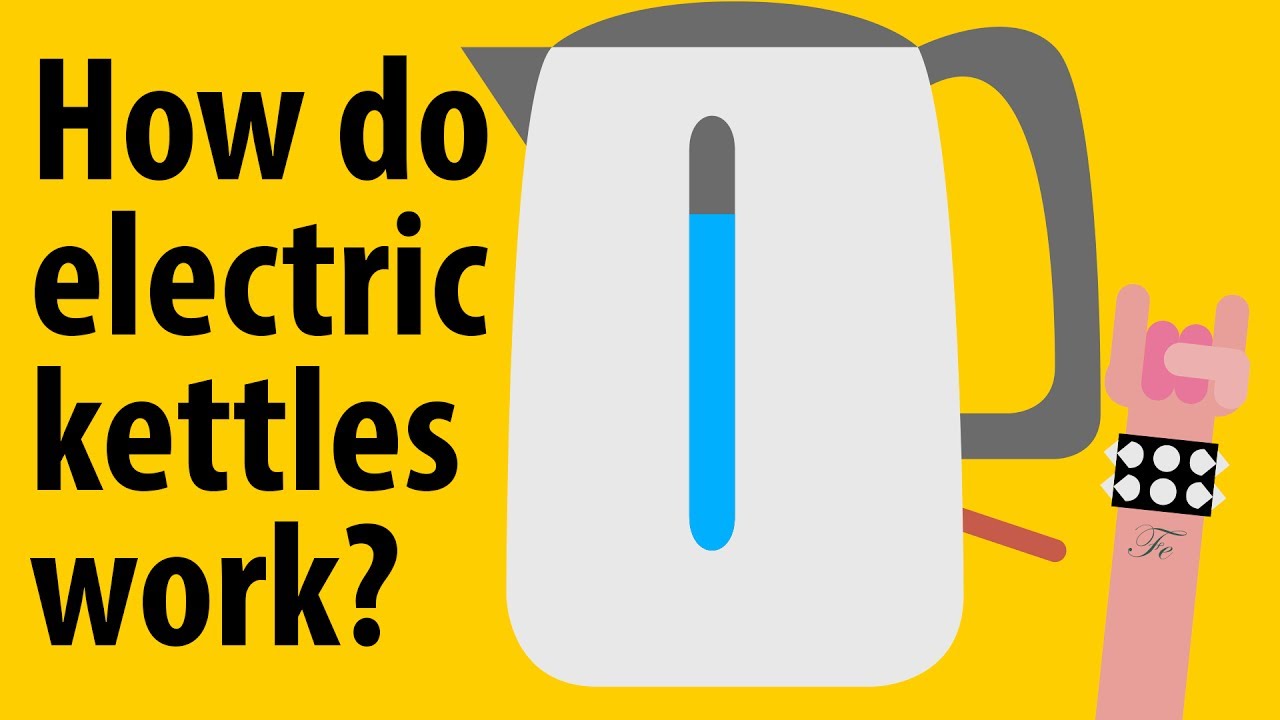
In a typical electric kettle used in the United States, electricity from a 120-volt outlet heats a metal element under the water. The water gets hot, makes steam, and triggers a switch that turns the kettle off. This process usually takes only a few minutes.
A kettle does not boil water through magic. It changes electrical energy into heat, moves that heat into the water, and uses a simple control system to stop heating at the right time.

What Is an Electric Kettle?
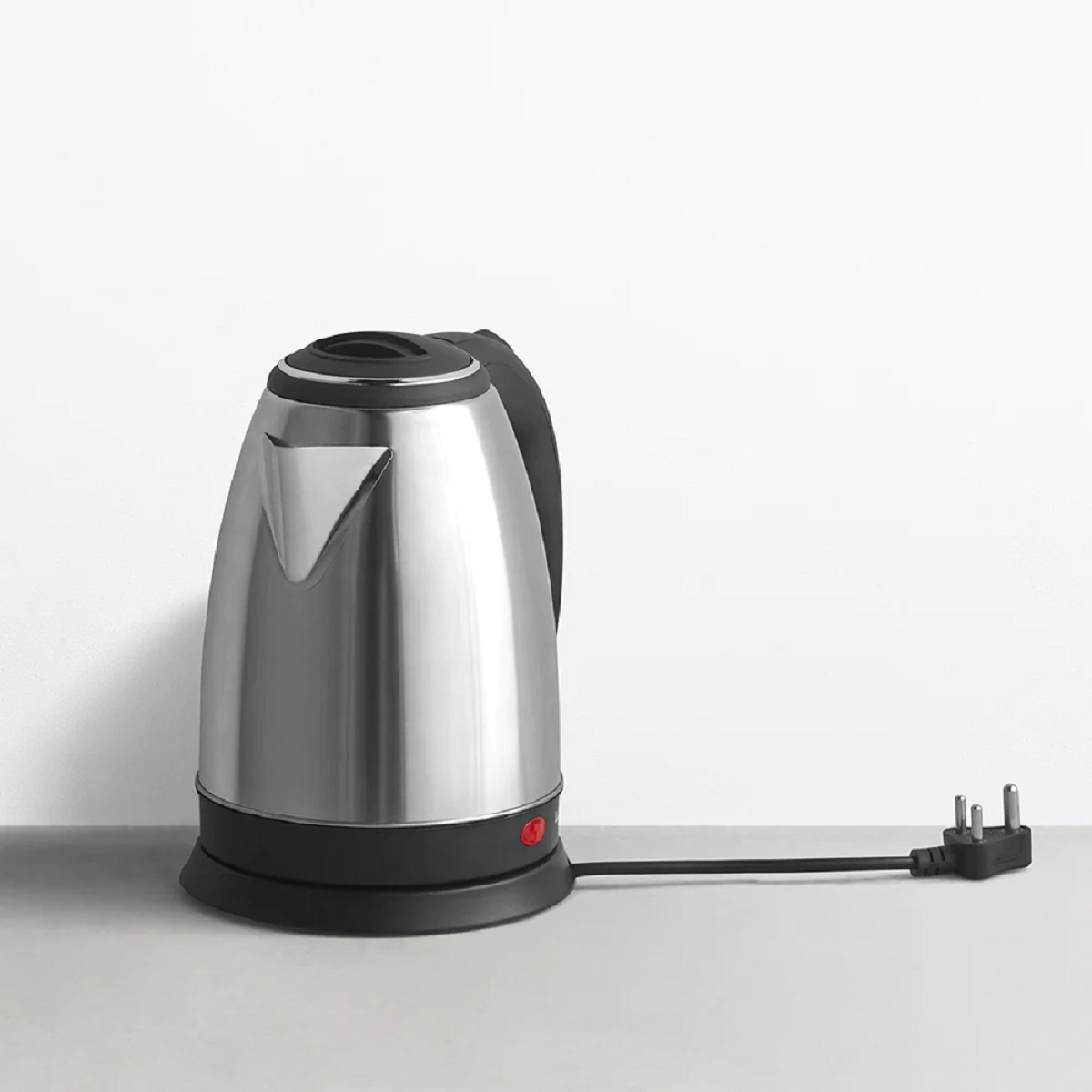
An electric kettle is a small appliance made to heat water. Most models have a jug, a heating element, a power base, a lid, a switch, and an automatic shutoff system.


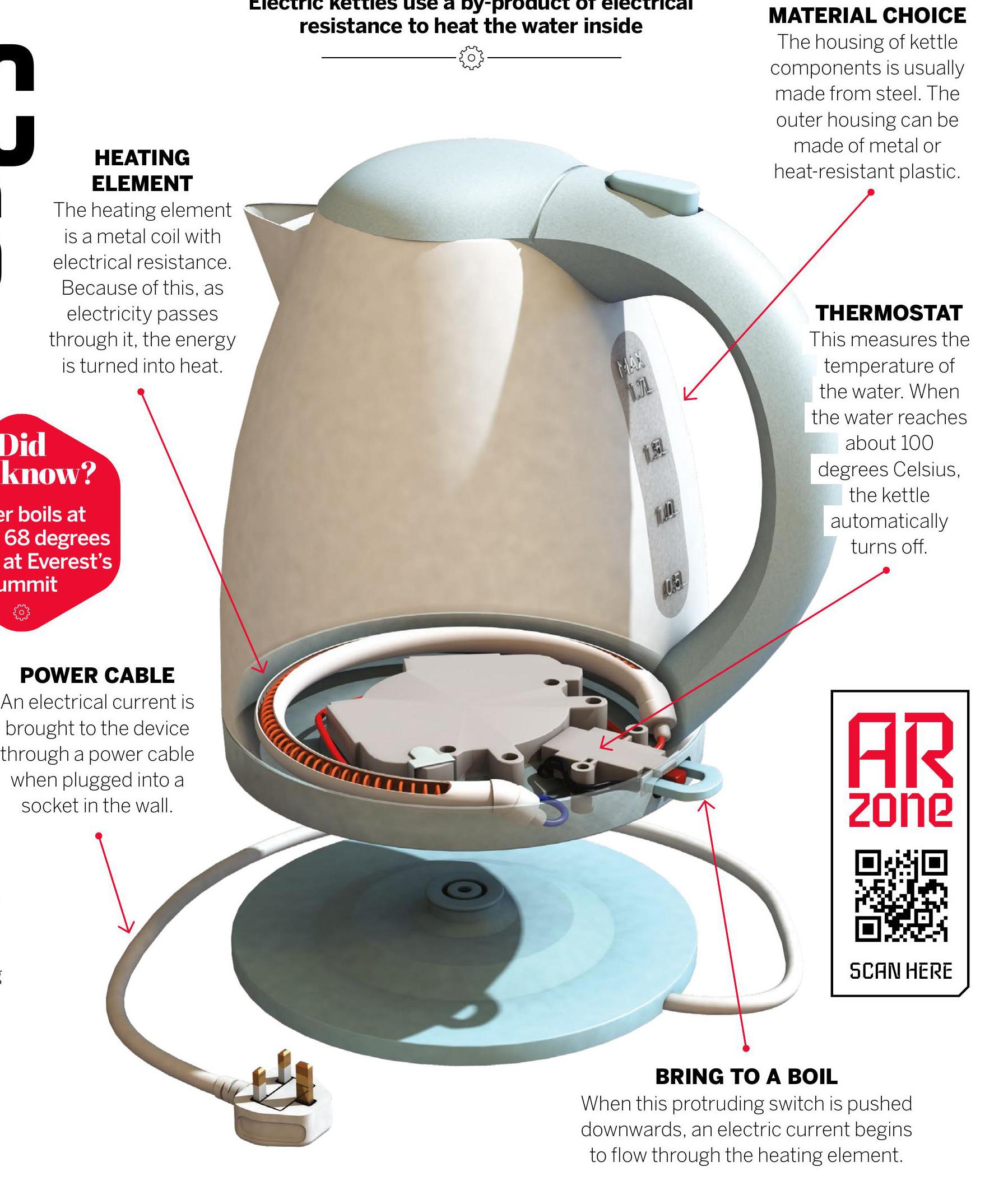
The main parts are:
- Water chamber: Holds the water.
- Heating element: Turns electrical energy into heat.
- Power base: Sends power to the kettle through electrical contacts.
- Switch: Starts or stops the heating cycle.
- Thermostat: Senses temperature.
- Steam channel: Guides steam toward the thermostat.
- Automatic shutoff: Stops power after the water reaches a boil.
- Lid and spout: Help contain and pour the hot water.
- Handle: Lets you lift the kettle without touching the hot body.
Many modern kettles use a concealed heating element. The element sits below a flat metal plate. This design is easier to clean than an exposed coil.
The kettle’s job is simple: heat water quickly and stop without constant watching.
How Does a Kettle Work Step by Step?
An electric kettle follows a clear sequence. The exact design can vary, but the basic process is much the same.
1. You fill the kettle with water
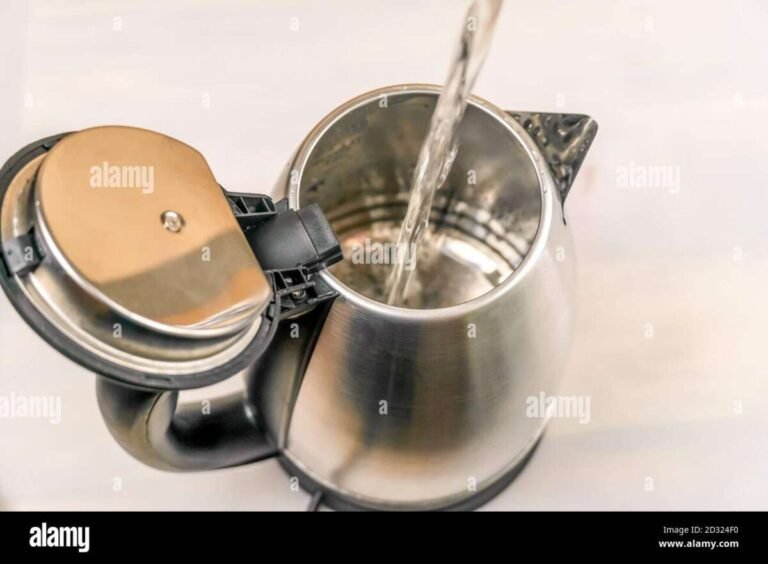
Water enters the chamber through the open lid. A fill line shows the safe amount.
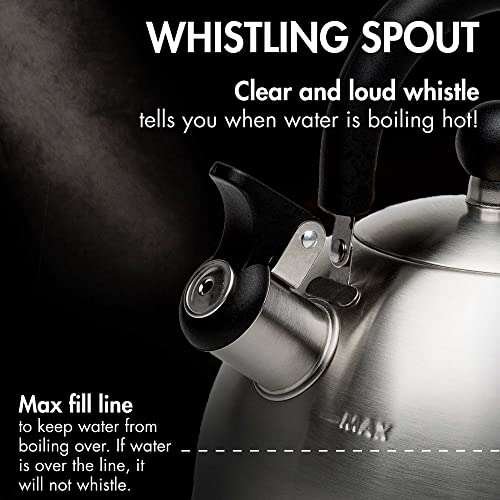
Do not fill above the maximum line. Boiling water expands slightly, and bubbles can push hot water through the spout. Too much water may also reach the steam channel or electrical parts.
Most kettles also have a minimum fill line. The heating element must stay covered by water. Running the kettle with too little water can cause overheating.
2. You place the kettle on its power base
The kettle sits on a round base. Metal contacts under the kettle meet contacts on the base.
Many cordless kettles can rotate on the base. This makes them easier to lift and replace. The base stays connected to the wall outlet while the jug comes off for pouring.
When the kettle is seated correctly, electricity can flow from the outlet to the switch and heating element.


3. You press the power switch
The switch closes the electrical circuit. Current then flows to the heating element.
The switch often has a small light. The light shows that the heating cycle is active. It does not always show that the water has reached a specific temperature.
The kettle will not heat if:
- The power cord is unplugged.
- The kettle is not sitting correctly on the base.
- The switch is damaged.
- The kettle has overheated and its safety cutout has opened.
- A fuse or circuit breaker has interrupted power.
4. The heating element converts electricity into heat
The heating element is usually a resistance wire sealed inside a metal tube or mounted beneath a metal plate.
Electrical resistance makes the element heat up as current passes through it. This is the same basic effect that heats a toaster or space heater.
The heat then moves through the metal and into the water. The water closest to the element warms first.
A kettle with a higher power rating can usually heat water faster, if the water volume and starting temperature are the same. A 1,500-watt kettle, for example, supplies more heat per second than a 1,000-watt kettle.
5. Warm water moves through convection
Water does not heat evenly at first. Warm water near the element becomes less dense and rises. Cooler water falls toward the bottom.
This movement is called convection. It spreads heat through the kettle.
As the water temperature rises, small bubbles may form near the heating surface. These bubbles can collapse before reaching the top. This stage is not yet a full boil.
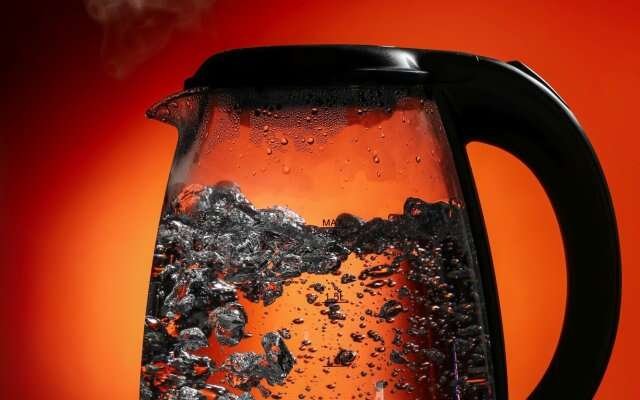
6. The water reaches a rolling boil
At normal sea-level pressure, pure water boils at about 212°F, or 100°C. The exact boiling point changes with air pressure and elevation.
At higher elevations, air pressure is lower. Water boils at a lower temperature. That means a kettle may shut off before the water reaches 212°F.
A rolling boil has strong bubbles that rise through the whole body of water. Steam also forms above the water surface.
The kettle does not need to keep heating after the water boils. More heat mostly changes liquid water into steam.
7. Steam reaches the thermostat
As boiling begins, steam enters a small channel near the lid or spout. The channel directs steam toward a temperature-sensitive part.


The thermostat may use a bimetal strip or a similar thermal device. A bimetal strip contains two metals that expand at different rates.
When steam heats the strip, it bends or snaps. This movement releases the power switch or opens the circuit.
This is why closing the lid matters. If the lid is open, steam may escape before it reaches the thermostat. The kettle may take longer to shut off or may not shut off as designed.
8. The kettle switches off
The thermostat interrupts the electrical current. The heating element stops receiving power.
You may hear a click when this happens. The indicator light may turn off, depending on the model.
The kettle may still contain very hot water and steam. Automatic shutoff prevents continued heating, but it does not make the kettle or water safe to touch at once.
9. The kettle cools and resets
After the kettle cools, the thermostat returns to its normal position. Many kettles can then be used again.
Some models include boil-dry protection. If the kettle has little or no water, the element becomes unusually hot. A separate safety device cuts the power.
If boil-dry protection activates, unplug the kettle and let it cool fully before adding water. Do not force the switch back on.

Why Does a Kettle Turn Off Automatically?
A kettle turns off when steam heats its thermostat. The thermostat then opens the circuit and stops current from reaching the heating element.
This system works well because boiling water produces a large amount of steam. The steam gives the kettle a reliable signal that the water has reached its boiling stage.
Automatic shutoff also limits wasted energy and reduces the risk of continued heating. It does not replace safe use. A kettle can still spill, burn skin, damage a counter, or create a fire risk if it is cracked, misused, or left near flammable items.
Some kettles have extra controls:
- Temperature presets: Stop at settings such as 160°F, 175°F, or 200°F.
- Keep-warm mode: Reheat the water when its temperature drops.
- Boil-dry protection: Cuts power when the water level is too low.
- Audible alerts: Signal that the cycle has ended.
- Variable temperature control: Uses electronic sensors instead of one basic boil switch.
A temperature-control kettle may not boil the water. It may stop at a lower setting for green tea, baby formula preparation, coffee, or other uses. Always follow the instructions for the specific product and use.


How Long Does a Kettle Take to Boil?
Boiling time depends on four main factors:
- The amount of water.
- The starting water temperature.
- The kettle’s power rating.
- Heat lost to the room and the kettle body.
The basic energy estimate is:
[
E = m \times c \times \Delta T
]
Here:
- E is the heat energy needed.
- m is the mass of water.
- c is water’s heat capacity.
- ΔT is the temperature increase.
The electrical power is measured in watts. A 1,500-watt kettle provides 1,500 joules of energy per second in ideal conditions.
Example calculation
Suppose a kettle heats 1 liter of water from 68°F to 212°F. That is a temperature rise of about 80°C.
The ideal energy need is about 335 kilojoules. At 1,500 watts, the ideal time is:
[
335,000 \div 1,500 \approx 223 \text{ seconds}
]
That equals about 3.7 minutes.
Real kettles lose some heat to the air, the container, and the lid. The actual time may be longer. A smaller amount of water will heat faster, while a full kettle will take longer.
The fastest method is to heat only the amount you need. Do not fill the kettle to the maximum line for one cup of tea.

Electric Kettle vs. Stovetop Kettle
Both kettle types heat water, but they use different heat sources.
| Feature | Electric kettle | Stovetop kettle |
|---|---|---|
| Heat source | Electrical heating element | Gas, electric, or induction burner |
| Shutoff | Often automatic | Usually manual |
| Heat control | May use presets | Controlled by the stove |
| Portability | Needs an outlet | Needs a compatible cooktop |
| Main risk | Electrical damage or dry operation | Hot burner, flame, or unattended water |
| Typical control | Switch or digital panel | Whistle or visual boiling |
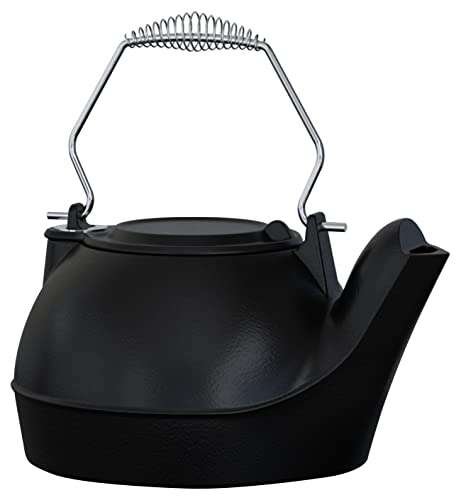
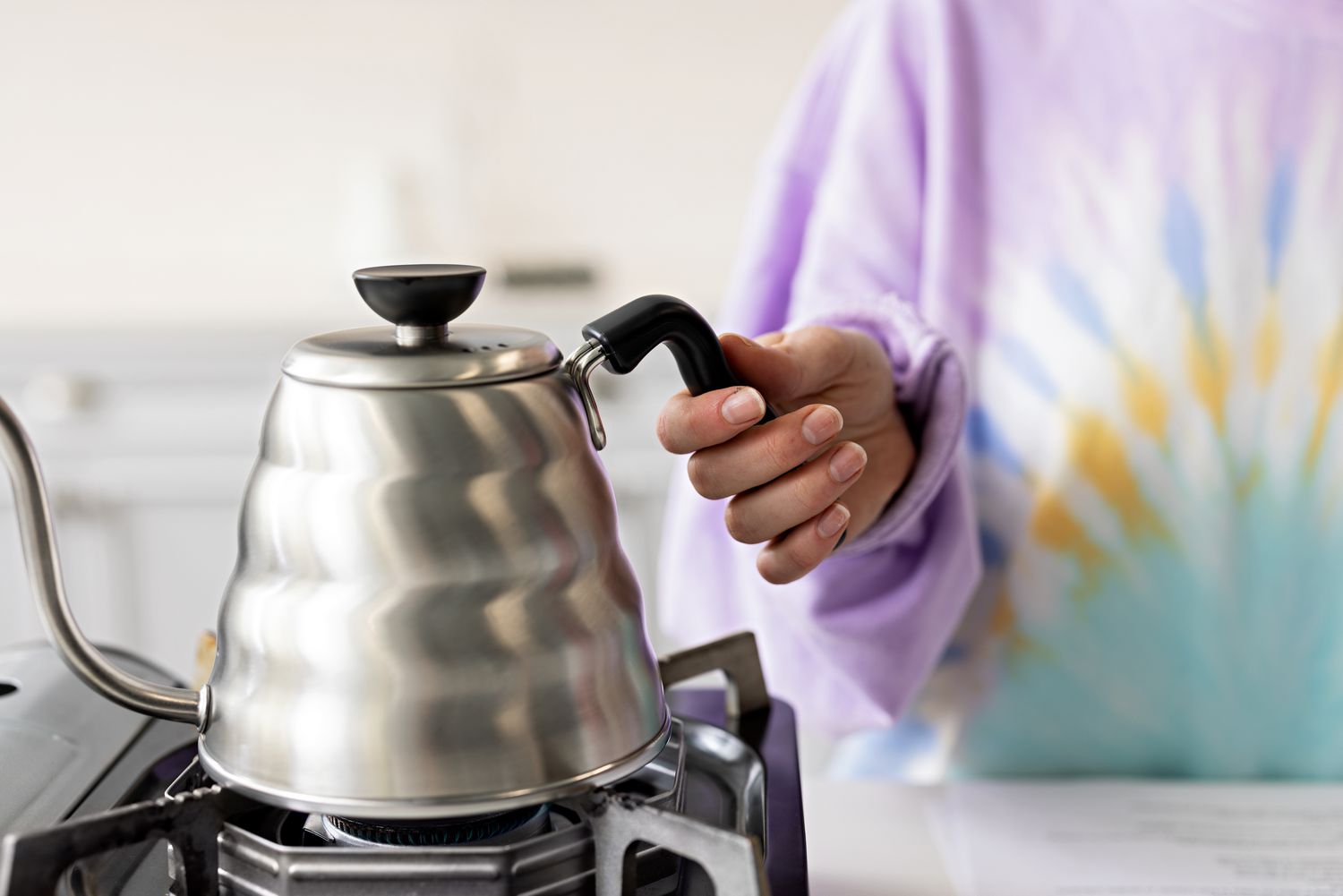
A stovetop kettle transfers heat from the burner through the kettle’s base. Steam may push a whistle cap, creating the familiar sound.


An electric kettle places the heating element close to the water. This often reduces the path heat must travel. The result can be quick heating, but performance depends on the model and conditions.
Neither type is always better. An electric kettle suits people who want a dedicated, often automatic appliance. A stovetop kettle suits people who prefer one tool that works on their cooktop.

What Makes a Kettle Safe?
Safe use starts with water level, electrical condition, and placement.
Follow these rules:
- Keep the water between the minimum and maximum marks.
- Close the lid before heating.
- Place the kettle on a dry, stable, heat-resistant surface.
- Keep the power base and plug dry.
- Do not immerse the kettle, base, cord, or plug in water.
- Unplug the kettle before cleaning.
- Keep the cord away from hot surfaces and the counter edge.
- Pour slowly and keep your hands away from steam.
- Keep children away while the kettle is heating or being poured.
- Do not use a kettle with a cracked body, damaged cord, loose plug, or leaking base.
- Do not open the lid over your face after boiling.
In the United States, use a kettle designed for the local electrical supply. A product made for another voltage may need more than a plug adapter. A simple adapter changes the plug shape, not the voltage.
If the kettle trips a circuit breaker, smells like burning plastic, sparks, or feels hot at the plug, stop using it. Unplug it if you can do so safely. Replace the appliance or have a qualified repair professional inspect it.
Why Is My Kettle Not Working?
Check the safest and simplest causes first. Unplug the kettle before inspecting the appliance.
The kettle does not turn on
Possible causes include:
- The outlet has no power.
- The kettle is not seated on the base.
- The power switch is damaged.
- The kettle is still hot and its safety cutout has not reset.
- The cord or plug is damaged.
Test the outlet with another suitable appliance. Do not use the kettle if the outlet is loose, wet, scorched, or damaged.
The kettle turns off too soon
This can happen when:
- The water level is too low.
- Steam reaches the sensor early.
- The lid is not seated correctly.
- Mineral scale affects the heating area or steam path.
- The thermostat is faulty.
Clean the kettle only as the manual directs. If the problem continues, stop using it. A faulty thermostat can make automatic shutoff unreliable.
The kettle does not turn off
Turn off the switch and unplug the kettle if you can do so safely. Do not leave it heating while you look for the cause.
A blocked steam path, damaged lid, or failed thermostat can prevent normal shutoff. Do not bypass the thermostat or try to repair live electrical parts yourself.
The kettle makes loud noises
Some noise is normal. It comes from bubbles forming near the heating element.
Loud popping, crackling, a burning smell, smoke, or visible arcing is not normal. Stop using the kettle and disconnect it from power.
How Do You Remove Mineral Scale From a Kettle?
Mineral scale forms when dissolved minerals in tap water collect on the heating surface. It often looks like white, gray, or tan flakes.
Scale can make the kettle slower and noisier. It may also affect the steam path or temperature sensor.
To descale the kettle:
- Unplug it and let it cool.
- Follow the cleaning directions in the manual.
- Use an approved descaling product or the method listed by the manufacturer.
- Rinse the kettle several times.
- Boil and discard clean water before normal use.
- Never put the electrical base in water.
Do not use abrasive tools on the heating plate. Do not mix cleaning chemicals. Vinegar is suitable for some kettles, but not every manufacturer allows it. The manual is the best source for the correct method.
Filter water may reduce scale in some homes, but it does not remove every dissolved mineral. Descaling is still needed when deposits appear.
Key Takeaways
- An electric kettle uses resistance heating to turn electricity into heat.
- The heating element transfers heat to the water.
- Convection spreads heat through the kettle.
- Steam activates a thermostat near the lid or spout.
- The thermostat opens the circuit and turns the kettle off.
- Boiling time depends on water volume, starting temperature, power, and heat loss.
- The lid, water level, and automatic shutoff are part of the safety system.
- A damaged or malfunctioning kettle should not be used.
Frequently Asked Questions
Does a kettle boil water faster than a microwave?
It depends on the amount of water and the appliances. An electric kettle transfers heat directly through a heating element, while a microwave heats water with electromagnetic energy. A kettle may heat water efficiently, but the result varies by wattage, volume, container, and starting temperature.
Can you boil milk in an electric kettle?
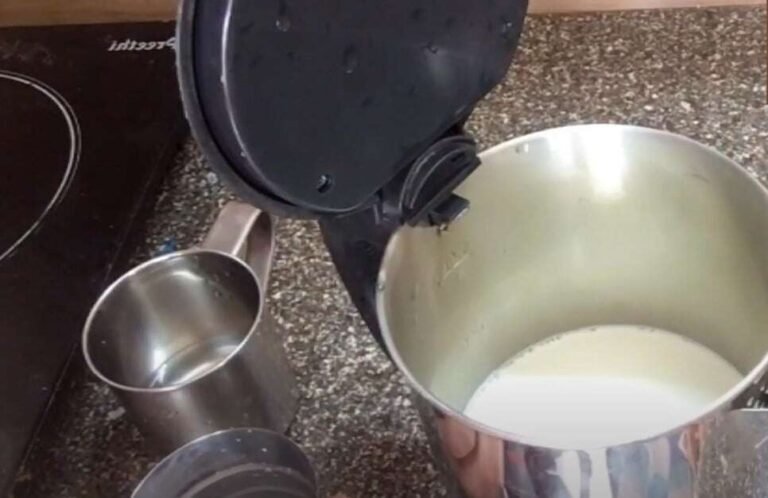
Usually, no. Milk can foam, burn onto the heating surface, block the steam path, and make cleaning difficult. Use the kettle only for liquids approved by its manual. Most standard kettles are designed for water.
Why does water taste different after boiling?
Boiling can change taste by driving off some dissolved gases. The kettle itself may also add a taste if it is new, dirty, or coated with mineral scale. Rinse a new kettle and descale it when needed.
Is it safe to leave water in a kettle overnight?
Leaving water in the kettle for a short time is not usually a mechanical problem, but fresh water may taste better. Empty the kettle if it will sit for a long period. Do not store water in a kettle that is dirty, damaged, or difficult to clean.
Why does a kettle shut off before I see a strong boil?
The thermostat may respond to steam before the entire surface shows a dramatic rolling boil. Elevation, water volume, lid position, and the kettle’s design also affect the shutoff point. If the water is only warm or the kettle shuts off far too early, inspect the fill level and clean mineral scale.
Conclusion
An electric kettle works through a short chain of events: electricity heats a resistance element, the element heats the water, steam reaches a thermostat, and the thermostat cuts power.
For the best results, use the correct water level, close the lid, keep the base dry, and heat only the amount you need. If the kettle leaks, sparks, smells burnt, or fails to shut off, unplug it and stop using it.

Liora Pennings is a seasoned chef and kitchen enthusiast with a passion for turning everyday cooking into an effortless experience. With years of hands-on culinary expertise, she specializes in practical techniques, ingredient know-how, and smart kitchen solutions that help home cooks elevate their meals. At KitchFlair.com, Liora shares her best tips, time-saving tricks, and honest product reviews to guide readers toward a more efficient, enjoyable, and inspired cooking routine. Whether you’re a beginner or a seasoned home chef, Liora’s friendly, knowledge-packed insights make every visit to the kitchen a little easier—and a lot more delicious.