What Is The Definition Of Mixing Bowl: Simple Guide
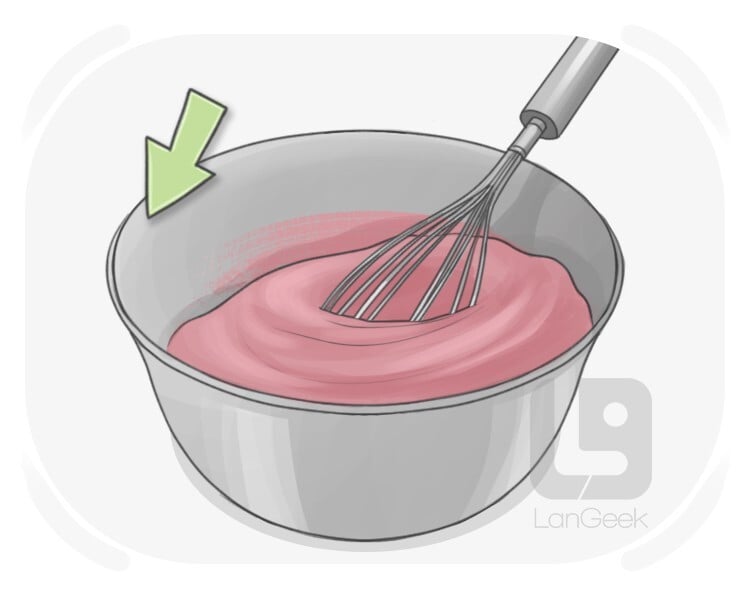
A mixing bowl is a kitchen container used to combine, hold, and prepare ingredients for cooking or baking.
If you have ever whisked eggs, stirred pancake batter, or tossed a salad, you have used a mixing bowl. The definition of mixing bowl includes more than its shape: it also covers the bowl’s purpose, materials, size, and design. This guide explains the definition of mixing bowl, how it differs from other kitchen bowls, and how to choose and use one well.
What Is the Definition of Mixing Bowl?
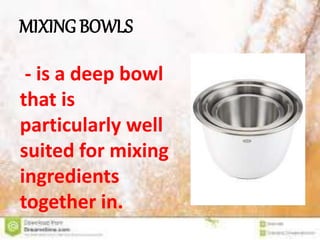
The definition of mixing bowl is a deep, open-top container made for combining, stirring, whisking, beating, folding, or holding food ingredients. It usually has sloped sides that help keep food inside while you mix.
A mixing bowl may be made from stainless steel, glass, ceramic, plastic, copper, or silicone. It can be used by hand or with an electric hand mixer. Some bowls also fit onto stand mixers.
In simple terms, the definition of mixing bowl describes a bowl built for food preparation rather than serving. A serving bowl may look similar, but a mixing bowl is designed to make kitchen tasks easier and cleaner.
Main Features of a Mixing Bowl
Several features help define a true mixing bowl. These features support control, comfort, and safe food preparation.
Deep sides
Mixing bowls are often deeper than soup or serving bowls. Deep sides help prevent flour, batter, dressing, or chopped food from spilling over the edge.
Wide opening
A wide top gives you room to add ingredients and use a whisk, spoon, spatula, or electric mixer. It also makes the bowl easier to clean.
Rounded interior
Many mixing bowls have curved inner walls. This shape helps a whisk or spatula reach the sides and bottom, so fewer ingredients remain unmixed.
Stable base
A firm base keeps the bowl from sliding across the counter. Some bowls have rubber or silicone bottoms for extra grip.
Pouring edge
Certain bowls have a small lip or spout. This feature helps you pour batter, sauces, beaten eggs, or liquids with less mess.
Measurement marks
Some modern mixing bowls include measurement lines. These marks are useful, but they should not replace accurate measuring cups when a recipe requires precision.
What Is a Mixing Bowl Used For?
The definition of mixing bowl is closely linked to its many uses. A single bowl can support nearly every stage of meal preparation.
Common uses include:
• Combining dry ingredients such as flour, sugar, salt, and baking powder
• Mixing wet ingredients such as eggs, milk, oil, and melted butter
• Preparing cake batter, cookie dough, pancake batter, and bread dough
• Whisking eggs for omelets, quiche, custard, or French toast
• Tossing salads with dressing
• Marinating meat, fish, tofu, or vegetables
• Holding chopped ingredients during meal preparation
• Kneading small amounts of dough
• Mixing meatballs, burgers, or meatloaf
• Combining fruit, grains, beans, or pasta for salads
A mixing bowl is like a small workbench for your kitchen. It gives ingredients one shared place where they can come together.

Mixing Bowl Materials Explained
Material affects how a bowl feels, performs, and lasts. The best choice depends on the food you prepare and the tools you use.
Stainless steel
Stainless steel bowls are light, strong, and resistant to stains and odors. They are popular for baking because they can handle vigorous whisking and electric mixers.
They also tolerate heat better than many plastic bowls. However, stainless steel can react with some acidic foods if the metal is poor quality or damaged. High-quality food-grade stainless steel is usually the safer choice.
Glass
Glass bowls do not absorb food odors or colors. They let you see the contents and often work well for microwaving, as long as the bowl is labeled microwave-safe.
Glass is heavier than steel or plastic. It can also break if dropped or exposed to sudden temperature changes.
Ceramic
Ceramic bowls often have a sturdy feel and attractive designs. They can move from kitchen prep to the table, which makes them useful for serving as well as mixing.
Their main limits are weight and possible chipping. Always check whether the bowl is food-safe and suitable for a dishwasher or microwave.
Plastic
Plastic bowls are light, affordable, and easy to handle. They are a good choice for children, outdoor cooking, or large batches.
Some plastics may stain or hold odors, especially after contact with tomato sauce, curry, or oily foods. Choose bowls marked for food use and follow the maker’s care directions.
Copper
Copper bowls are strongly linked with egg-white whipping. Copper ions can help stabilize egg foam, which is useful for meringues and similar recipes.
Copper needs careful care and is not ideal for every ingredient. Acidic foods can react with bare copper, so many copper bowls have a lined interior.
Silicone
Silicone bowls are flexible and often easy to store. They can work well for pouring and scraping because the sides bend slightly.
They may feel less stable than metal or glass. For heavy mixing, a silicone bowl with a firm base is often more comfortable.
Mixing Bowl Sizes and Their Uses
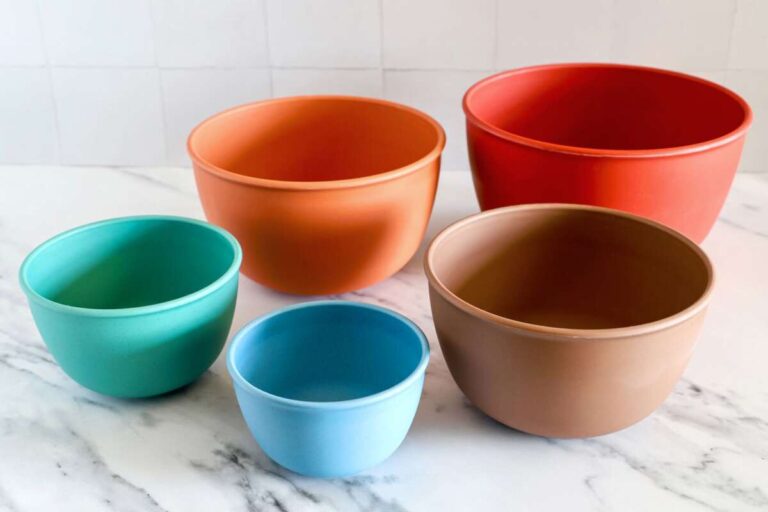
Mixing bowls come in many sizes. A useful set often includes small, medium, and large bowls.
• Small bowls, about 1 to 2 quarts, work for spices, sauces, whisked eggs, and small ingredient portions.
• Medium bowls, about 3 to 5 quarts, suit cookie dough, pancake batter, salad, and most daily tasks.
• Large bowls, about 6 to 8 quarts or more, help with bread dough, party-size salads, and large baking batches.
The stated capacity can be confusing. A bowl may hold its full volume only when filled to the rim, which is not practical for mixing. For less spilling, use a bowl that has extra space above the ingredients.
One lesson I have learned from kitchen prep is to choose a bowl larger than you first expect. A bowl that seems roomy before mixing can become crowded once flour, eggs, and liquid begin moving together.
Mixing Bowl vs. Other Kitchen Bowls
The definition of mixing bowl becomes clearer when you compare it with similar kitchen items.
Mixing bowl vs. serving bowl
A serving bowl is made mainly for presenting food at the table. It may have a wide, attractive shape but lack the depth needed for vigorous stirring.
A mixing bowl is built for preparation. It usually offers deeper sides and a shape that supports whisking and folding.
Mixing bowl vs. prep bowl
A prep bowl is often small. It holds measured ingredients before they are added to a recipe.
A mixing bowl is larger and is used to combine ingredients. Prep bowls support the cooking process, while mixing bowls perform the main mixing task.
Mixing bowl vs. batter bowl
A batter bowl is a type of mixing bowl designed for pouring. It often has a handle, spout, and measurement marks.
The term “batter bowl” points to a special design. The broader definition of mixing bowl includes batter bowls, but not every mixing bowl has a handle or spout.
Mixing bowl vs. basin
A basin may be used for washing, soaking, or holding items. It is not always designed for direct food contact.
A mixing bowl is specifically made for preparing food. It should be labeled as food-safe and easy to clean.
How to Choose the Right Mixing Bowl
The best bowl depends on your recipes, tools, storage space, and cleaning habits. Before buying one, consider these points:
-
Check the size. Choose a bowl large enough to leave room for stirring.
-
Check stability. A non-slip base can prevent spills.
-
Check the material. Stainless steel is durable, glass is easy to inspect, and plastic is light.
-
Check mixer compatibility. Use a deep bowl if you often use an electric hand mixer.
-
Check cleaning needs. Dishwasher-safe bowls can save time.
-
Check storage. Nesting bowls take up less cabinet space.
-
Check the rim. A pouring lip helps with sauces and batter.
-
Check the handle. A handle can improve control, especially when pouring.
-
Check heat limits. Not every bowl belongs in an oven, microwave, or freezer.
-
Check food safety labels. Use bowls made for contact with food.
A high-quality set does not need to be expensive. In most homes, three durable bowls in different sizes will cover nearly every basic task.
How to Use a Mixing Bowl Safely
Using a mixing bowl safely is simple, but a few habits matter.
• Keep the bowl on a dry, stable surface.
• Do not use a cracked glass or ceramic bowl.
• Avoid sudden temperature changes in glass bowls.
• Use a deep bowl with an electric mixer to reduce splatter.
• Do not place a bowl in an oven unless the label clearly allows it.
• Follow the manufacturer’s temperature and dishwasher instructions.