How To Peel And Slice Eggplant: Easy Step-By-Step Guide
To peel and slice eggplant, wash it, trim the ends, peel if desired, then cut it into even pieces.
Learning how to peel and slice eggplant is simple once you understand its soft flesh, firm skin, and shape. This guide shares tested kitchen methods, useful knife tips, ways to prevent browning, and the best cuts for roasting, frying, grilling, and stews.

Do You Need to Peel Eggplant?
No, you do not always need to peel eggplant. The skin is edible and contains fiber, color, and flavor. Many recipes keep the skin on because it helps the eggplant hold its shape during cooking.
Peeling can still be useful in some cases. Older eggplants may have tough skin, while peeled eggplant gives dishes such as creamy dips, soups, and smooth sauces a softer texture.
Use this simple guide:
• Keep the skin on for grilling, roasting, stir-frying, and stews.
• Peel the eggplant for silky dips, smooth purées, and recipes that call for tender pieces.
• Partially peel it for a striped look and extra support while cooking.
When I prepare eggplant, I often leave the skin on unless the fruit feels very large or the skin looks thick. A partly peeled eggplant is a good middle ground because it stays firm but has a tender bite.

How to Choose an Eggplant for Easy Slicing
The right eggplant is easier to peel and slice. Look for one that feels heavy for its size and has smooth, shiny skin. The stem should look green and fresh, not dry or brown.
Press the skin gently with one finger. It should give slightly and spring back. Avoid eggplants with deep soft spots, large bruises, wrinkled skin, or leaking areas.
Common types include:
• Globe eggplant: Large and round, with meaty flesh. It works well for roasting, baking, and eggplant Parmesan.
• Italian eggplant: Smaller and tender, with thin skin. It is useful for sautéing and pan-frying.
• Japanese eggplant: Long and narrow, with delicate skin. It cooks quickly and is easy to cut into rounds.
• Chinese eggplant: Slim, mild, and often less seedy. It works well in stir-fries.
• White eggplant: Similar in use to purple eggplant, with a firm texture and mild flavor.
A small or medium eggplant is often easier to slice than a very large one. Large eggplants may contain more seeds and can have a slightly tougher texture.

Tools You Need to Peel and Slice Eggplant
You only need a few kitchen tools to peel and slice eggplant safely. A sharp chef’s knife is the most important tool because a dull blade can slip on the smooth skin.
Gather:
• A cutting board with a stable, non-slip base
• A sharp chef’s knife or santoku knife
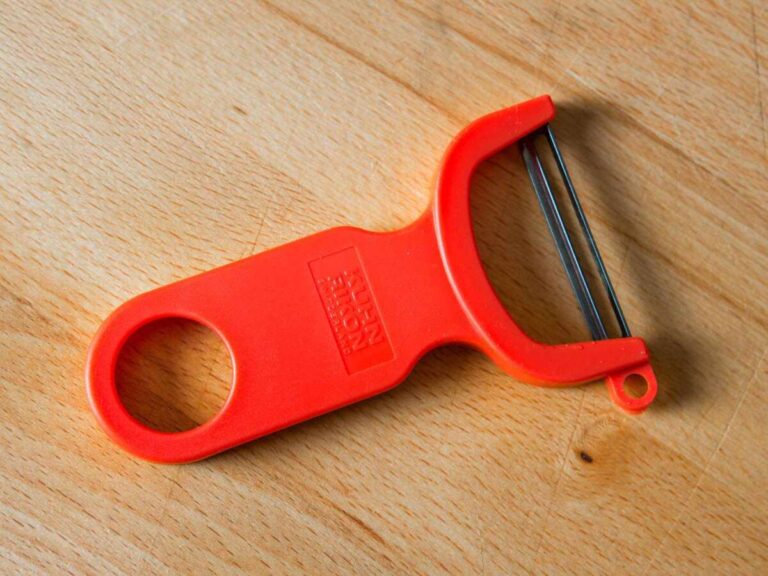
• A vegetable peeler
• A small paring knife
• A clean kitchen towel
• A bowl for the cut eggplant
Place a damp towel under the cutting board if it moves. This small step gives you better control and lowers the risk of injury.
Before you start, wash the eggplant under cool running water. Rub the skin with clean hands to remove soil and surface residue. Dry it well, since a wet eggplant can slide while you cut it.
How to Peel Eggplant Step by Step
Peeling eggplant takes only a few minutes. The method is much like peeling a potato, but eggplant skin is thinner and softer.
-
Place the washed eggplant on the cutting board.
-
Cut off the stem end and the bottom end with a sharp knife.
-
Stand the eggplant upright if it is stable.
-
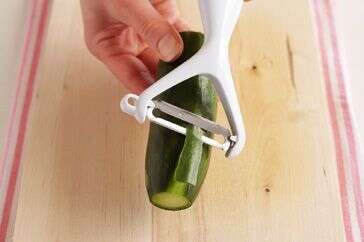
Run the vegetable peeler from top to bottom in long, even strokes.
-
Turn the eggplant as you work until all the skin is removed.
-
Check for small strips of skin and remove them with the peeler or paring knife.
If the eggplant is long, lay it flat on the cutting board. This gives you more control and makes it easier to remove narrow strips.
For partial peeling, remove one strip of skin from top to bottom. Turn the eggplant and repeat until you have purple and pale stripes. This style works well for braised dishes because the remaining skin helps the slices stay together.
Do not press too hard. Eggplant flesh is soft, and deep peeling wastes part of the vegetable. A light touch is enough.

How to Slice Eggplant Into Rounds
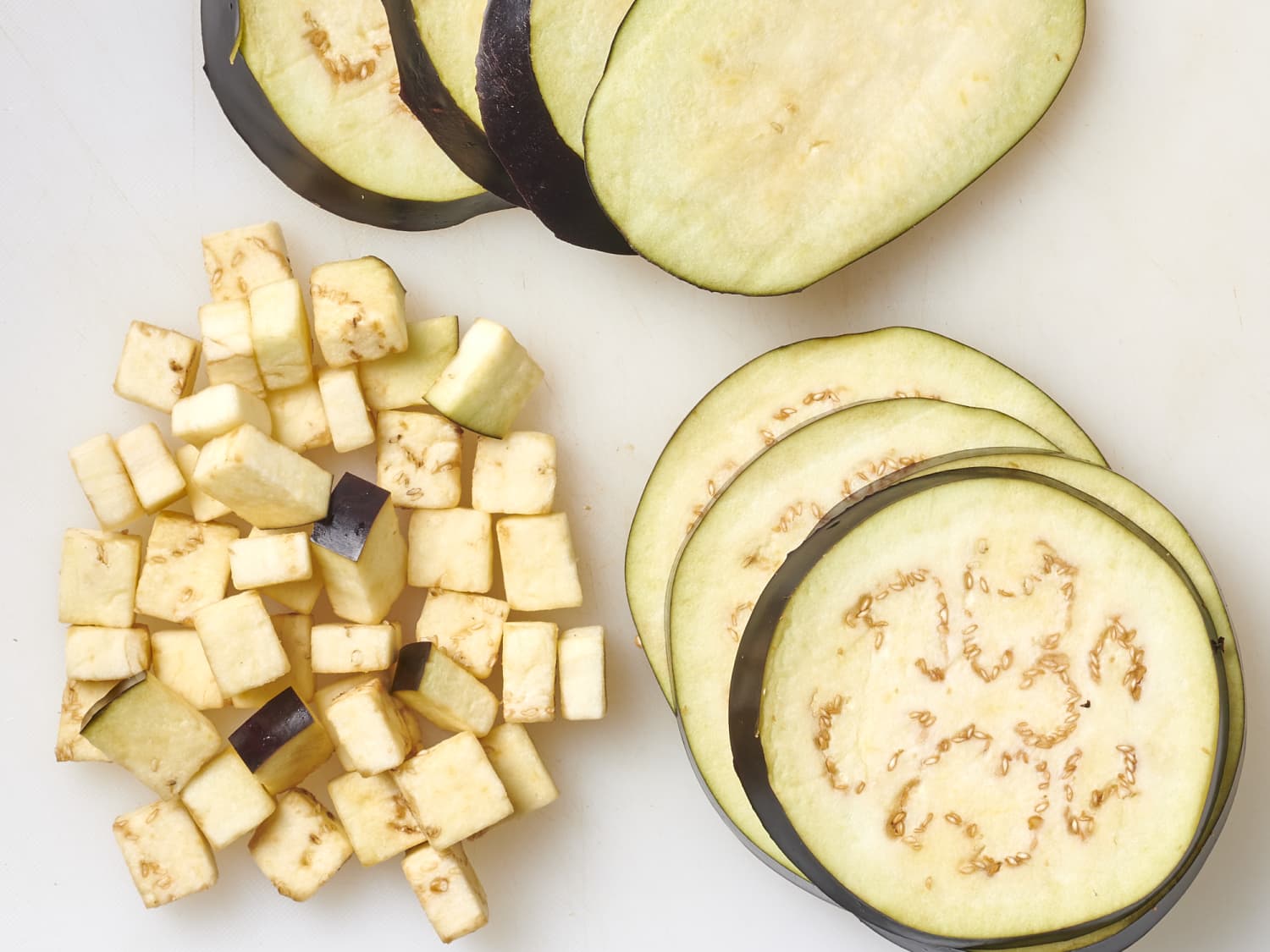
Rounds are one of the most useful eggplant cuts. They work well for frying, baking, grilling, and layering in casseroles.
To slice eggplant into rounds:
-
Trim both ends.
-
Peel it if your recipe requires peeled eggplant.
-
Lay the eggplant on its side.
-
Hold it firmly with your non-cutting hand.
-
Slice across the eggplant at an even width.
Aim for slices about ¼ to ½ inch thick. Thin rounds cook fast and crisp well. Thick rounds stay soft and meaty in baked dishes.
Keep your fingers curled inward as you hold the eggplant. Let the knife move forward and down rather than forcing it straight down. This motion gives cleaner slices and better control.
If you are learning how to peel and slice eggplant, rounds are the easiest cut to practice first. They have a stable shape and need little extra preparation.

How to Slice Eggplant Into Strips
Eggplant strips are useful for stir-fries, pasta dishes, sandwiches, and grilled vegetable plates. They cook quickly and mix well with other vegetables.
Follow these steps:
-
Trim the eggplant.
-
Cut it in half lengthwise.
-
Place each half flat side down.
-
Cut each half into long strips.
-
Cut the strips across if you need shorter pieces.
For thin strips, aim for about ¼ inch in width. For roasting or grilling, make strips closer to ½ inch thick so they do not soften too quickly.
When learning how to peel and slice eggplant into strips, keep each cut similar in size. Even pieces cook at the same rate. Mixed sizes can leave you with burnt edges and firm centers.

How to Cut Eggplant Into Cubes
Cubed eggplant is ideal for curries, stews, ratatouille, soups, and roasted vegetable bowls. Uniform cubes help the pieces cook evenly.
-
Cut off both ends.
-
Slice the eggplant in half lengthwise.
-
Place the halves cut side down.
-
Cut each half into long, even strips.
-
Turn the strips and cut across them into cubes.
Use ½-inch cubes for quick sautéing or stir-frying. Use 1-inch cubes for roasting, stews, and slow cooking.
Eggplant shrinks as it cooks because it contains a lot of water. For this reason, make the raw cubes slightly larger than the final size you want.

How to Cut Eggplant Into Planks
Eggplant planks are wide, flat slices. They are excellent for grilling, roasting, roll-ups, and eggplant Parmesan.
Lay the eggplant on its side and cut lengthwise into ½-inch planks. Try to keep the knife parallel to the board. A long chef’s knife makes this task easier.