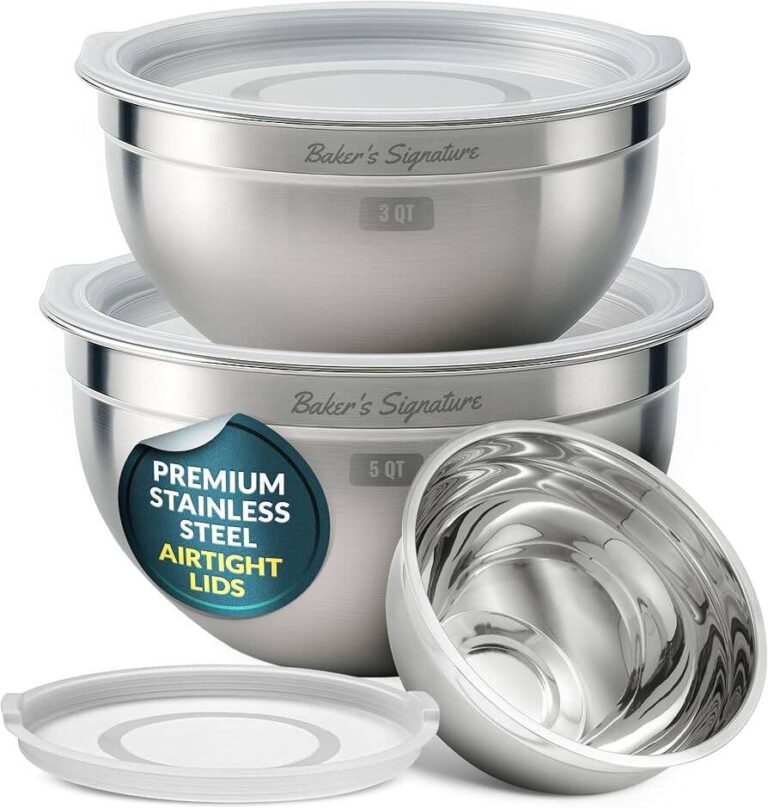
How To Clean Stainless Steel Mixing Bowls: Easy Guide
Clean stainless steel mixing bowls with warm soapy water, a soft sponge, and gentle scrubbing to protect the finish.
Stainless steel mixing bowls are strong, safe, and easy to care for, but flour paste, egg residue, grease, and hard-water spots can make them look dull. The good news is that most messes need only mild dish soap, warm water, and the right cleaning method.
I have cleaned many stainless steel bowls after busy baking sessions, and I have learned that timing matters. This guide explains how to clean stainless steel mixing bowls, remove stubborn stains, prevent scratches, and keep the metal bright without harsh damage.

Why stainless steel mixing bowls get dirty
Stainless steel does not rust easily, but it is not stain-proof. Food particles can dry onto the surface and form a hard film. Grease can leave cloudy marks, while minerals in tap water may create white spots.
Common causes of dirty mixing bowls include:
• Dried dough, flour, and batter
• Egg whites and yolk residue
• Butter, oil, and shortening
• Burned sugar or caramel
• Tomato, citrus, and other acidic foods
• Hard-water deposits
• Metal scratches from rough tools
Stainless steel contains chromium, which helps create a thin protective layer on the surface. Harsh cleaners, steel wool, and deep scratches can weaken that layer. For this reason, gentle cleaning is usually better than aggressive scrubbing.

What you need to clean stainless steel mixing bowls
You do not need a large collection of cleaning products. A few basic items can handle most kitchen messes.
• Warm water
• Mild dish soap
• A soft sponge or nylon brush
• A microfiber cloth or soft towel
• Baking soda for stuck-on food
• White vinegar for mineral spots
• A non-scratch scrubbing pad for tough residue
Avoid using chlorine bleach, oven cleaner, powdered scouring products, and steel wool. These products can scratch stainless steel or cause surface discoloration.
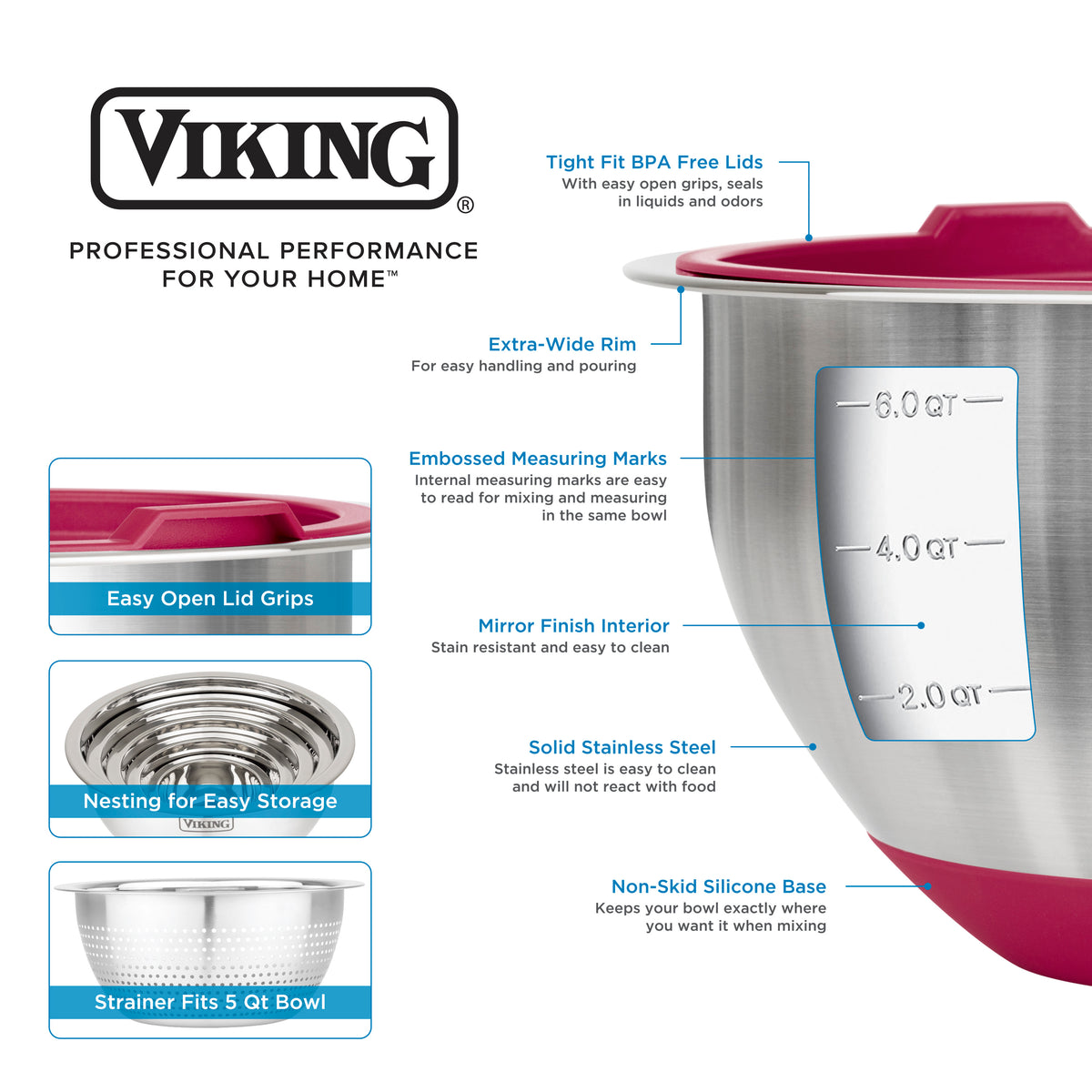
Before you clean a valuable or coated bowl, check the care instructions from the maker. Some bowls have polished or painted parts that need special care.
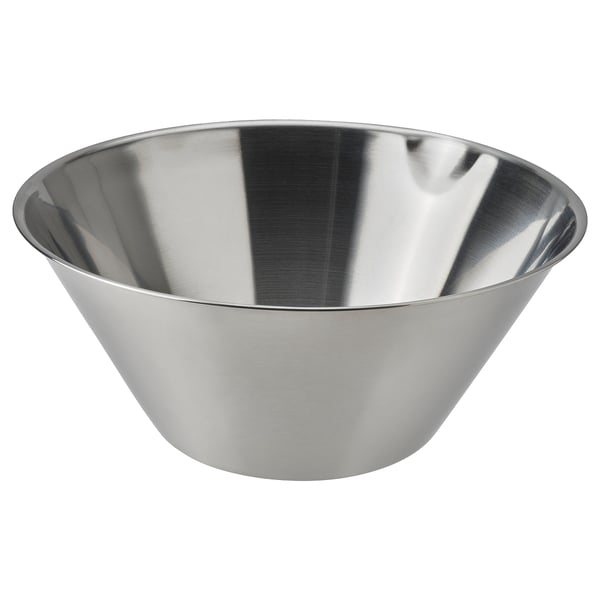
How to clean stainless steel mixing bowls after normal use
Cleaning a bowl soon after use is the easiest method. Fresh food residue usually comes away with little effort.
-
Scrape out leftover food with a silicone spatula.
-
Rinse the bowl with warm water.
-
Add a small amount of mild dish soap.
-
Wash the bowl with a soft sponge.
-
Rinse away all soap.
-
Dry the bowl at once with a clean towel.
Do not let food dry in the bowl for hours if you can avoid it. Dried batter can become as tough as glue. A quick rinse right after cooking can save several minutes of scrubbing later.
When learning how to clean stainless steel mixing bowls, always scrub with the grain if the bowl has a visible brushed finish. If the surface looks smooth and mirror-like, use light, even strokes instead of hard circular scrubbing.

How to remove dried food and stuck-on batter
Dried dough and batter often need soaking rather than force. Hard scrubbing may remove the food, but it can also leave fine scratches.
Follow these steps:
-
Fill the bowl with warm water.
-
Add a few drops of dish soap.
-
Let it soak for 15 to 30 minutes.
-
Loosen the residue with a silicone spatula or soft brush.
-
Wash the bowl with a sponge.
-
Rinse and dry it well.
For very stubborn food, sprinkle a thin layer of baking soda over the wet surface. Add a little water to form a soft paste. Leave it for 10 minutes, then gently rub with a non-scratch pad.
Baking soda works as a mild abrasive. It can lift food without the harsh cutting action of steel wool. Still, use a light touch, especially on polished bowls.
How to remove grease and oily film
Oil can leave a slippery coating that plain water will not remove. Dish soap is designed to break up grease, so it is the best first choice.
Put a small amount of dish soap directly on a damp sponge. Wash the inside and outside of the bowl, paying close attention to the bottom rim. Rinse with hot tap water, then dry the bowl to prevent a cloudy film.
Do not pour boiling water into a cold stainless steel bowl. A sudden temperature change can warp thin metal or damage certain bowl handles. Use hot tap water instead, and allow the bowl to warm gradually.
For a bowl that still feels greasy, wash it a second time with fresh soap. More soap is not always better. A small amount used with warm water is often enough.

How to remove water spots and cloudy marks
Hard water can leave white mineral deposits on stainless steel. These marks are not usually damage, but they can make a clean bowl look dull.
Mix equal parts white vinegar and water. Dampen a soft cloth with the mixture and wipe the spots. Let it sit for one or two minutes, then rinse the bowl well and dry it.
Do not leave vinegar on stainless steel for a long time. Acid can affect the surface if it remains in contact with the metal for extended periods. Never mix vinegar with bleach or other cleaning chemicals.
If the bowl has a strong vinegar smell, wash it once with mild dish soap. Drying the bowl right away will also reduce new water marks.

How to clean discoloration and rainbow stains
Stainless steel may develop blue, gold, or rainbow-colored marks after exposure to high heat. These colors are often caused by a thin heat oxide layer on the surface.
For light discoloration, wash the bowl with dish soap and warm water. If the mark remains, apply a small amount of diluted white vinegar with a soft cloth. Rinse well and dry immediately.
You can also use a stainless steel cleaner made for food-contact surfaces. Follow the label directions and rinse the bowl completely afterward. Do not use a cleaner that leaves a chemical coating unless the label clearly says it is safe for kitchen equipment.
Avoid heating an empty stainless steel bowl over a flame or placing it on a hot burner. Mixing bowls are not usually made for direct stovetop heat.

How to clean stainless steel mixing bowls in the dishwasher
Many stainless steel mixing bowls are dishwasher-safe, but the manufacturer’s instructions should come first. Some bowls have silicone bases, painted markings, or special finishes that may not handle a dishwasher well.
To wash a dishwasher-safe bowl:
• Scrape off food before loading it.
• Place the bowl so water can reach the entire surface.
• Keep it away from items that may scratch it.
• Use a normal dishwasher detergent.
• Remove the bowl after the cycle ends.
• Dry it with a soft towel if water spots are a concern.
Dishwasher detergent can be stronger than hand soap. Frequent cycles may make a polished bowl look less bright over time. Hand washing is often the gentlest choice when appearance matters.
Never place stainless steel and silver items together if the care instructions warn against it. Contact between different metals in a wet dishwasher environment can cause staining or corrosion.
How to sanitize stainless steel mixing bowls
Cleaning removes visible food and grease. Sanitizing lowers the number of harmful germs after cleaning. In most homes, washing with hot water and dish soap is enough for routine bowl care.
If the bowl held raw eggs, meat, or another high-risk food, wash it promptly with soap and hot tap water. Rinse well and let it air-dry or dry it with a clean towel. Food safety guidance stresses cleaning utensils and surfaces after contact with raw animal foods.