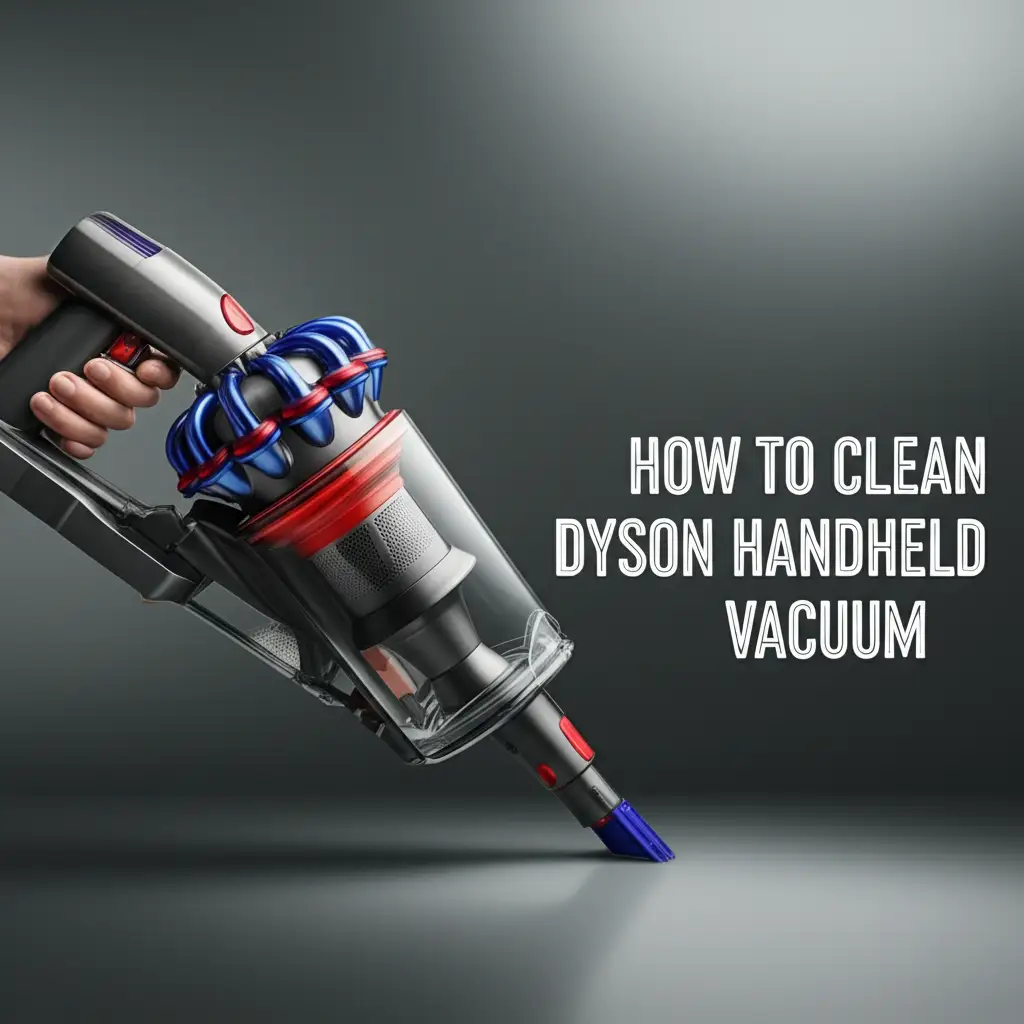
How To Clean A Dyson Handheld Vacuum Cleaner: Easy Guide
Cleaning a Dyson handheld vacuum cleaner takes about 15 to 30 minutes, plus drying time for the filter. For most Dyson cordless models sold in the United States, the basic process is to empty the bin, clean the filter, remove hair from the brush bar, clear the air path, and wipe the machine without getting water near the motor or battery.
Always check the owner’s manual for your exact model. Dyson handheld vacuums differ in filter type, brush-bar design, bin release, and approved cleaning method.

What You Need Before You Start
Gather a few simple items before cleaning your Dyson handheld vacuum:
- A dry microfiber cloth
- A soft, clean brush or old toothbrush
- Scissors
- Cold tap water
- A trash can
- A mild vacuum-safe brush, if available
- The owner’s manual for your Dyson model
Turn the vacuum off and unplug the charger before you begin. If the machine was recently used, let it cool first.
Do not place the main vacuum body, battery, charger, or motor near water. Water can damage the electrical parts and may create a shock or fire risk.
Check Your Dyson Model
The steps below suit many Dyson cordless handheld and stick vacuums, including models in the V6, V7, V8, V10, V11, V12, and V15 families. They may also help with Dyson handheld products such as the Humdinger and Car+Boat models.
However, parts can vary. Before removing a filter or brush bar, confirm that your model has:
- A washable filter
- A removable brush bar
- A user-accessible air path
- A bin that releases with a red lever or button
If the manual says a part is non-washable, do not wash it.

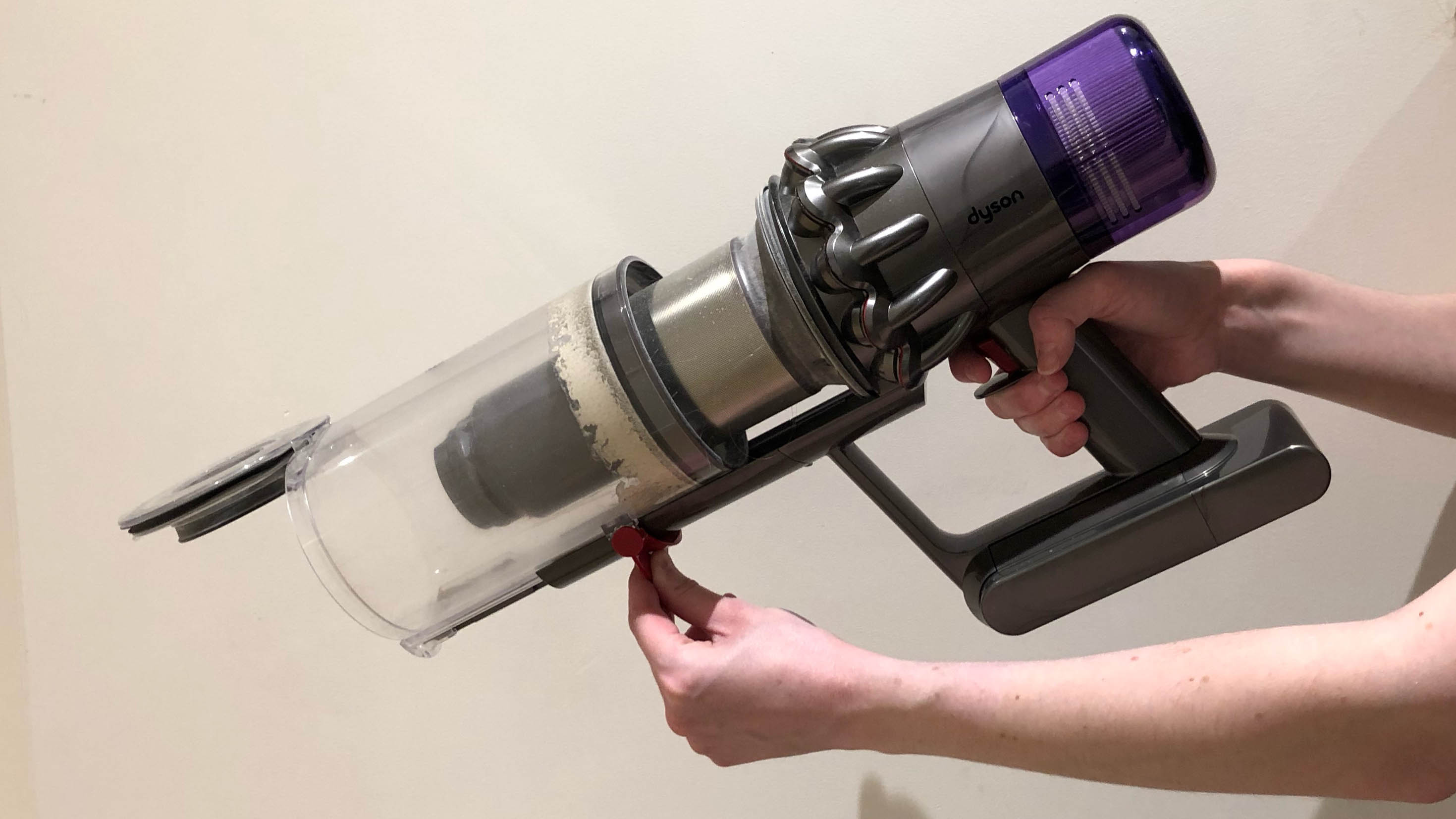
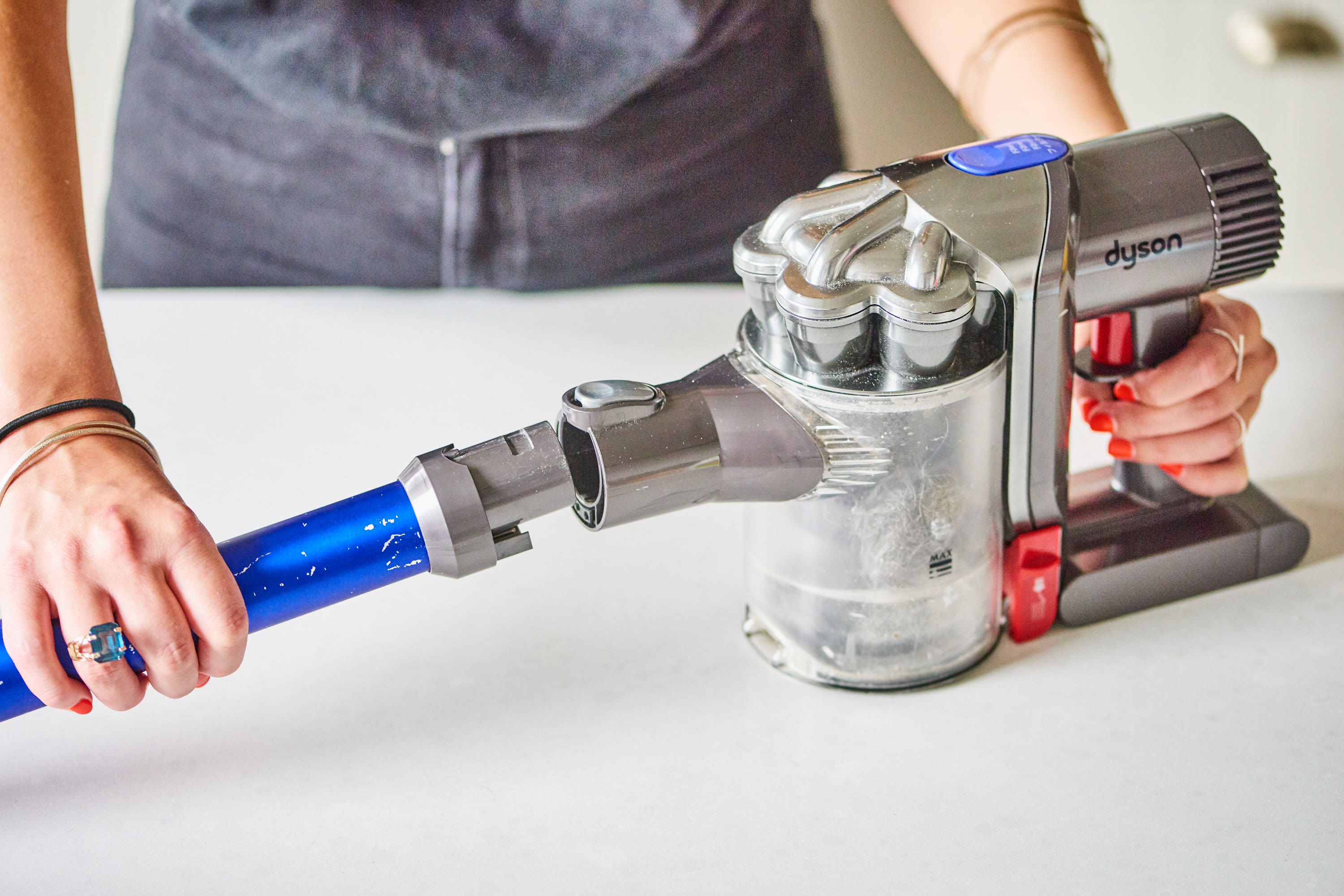
Step 1: Empty the Dust Bin
Empty the dust bin before cleaning any other part. A full bin can restrict airflow and make the vacuum appear weaker.
- Hold the vacuum over a trash can.
- Point the bin opening into the can.
- Press or pull the bin-release control.
- Let the dirt fall out.
- Close the bin until it clicks into place.
Keep your face away from the bin while emptying it. Fine dust may become airborne, especially if the vacuum has picked up flour, drywall dust, pet dander, or ashes.
Do not fill the bin above the maximum line. A vacuum may lose suction when the bin is packed with debris, even if the filter is clean.
How to Clean Dirt Stuck Inside the Bin
If dust sticks to the sides, use a dry cloth or soft brush. Avoid rinsing the bin unless the manual for your exact model says it is safe.
Some Dyson models allow parts of the bin or cyclone assembly to be removed for deeper cleaning. Others do not. Never force the bin apart. A cracked seal can cause leaks, poor suction, or dust escaping into the motor area.
Step 2: Wash the Dyson Filter
A dirty filter is one of the most common causes of weak suction, pulsing, and overheating. Many Dyson cordless models have one or more washable filters, but the location and number vary.
How to Wash a Washable Dyson Filter
- Remove the filter according to the manual.
- Tap it gently over a trash can to release loose dust.
- Rinse it under cold running water.
- Squeeze the filter gently to remove water.
- Continue rinsing until the water runs clear.
- Shake off excess water.
- Place the filter in a warm, well-ventilated area.
- Let it dry completely before reinstalling it.
Do not use soap, bleach, detergent, or cleaning chemicals unless Dyson specifically permits them for your model. Do not put the filter in a washing machine, dryer, microwave, or dishwasher.
The filter must be fully dry before you use the vacuum. Dyson commonly instructs users to allow at least 24 hours of drying time. A damp filter can restrict airflow, damage the motor, and cause a musty smell.
How Often Should You Wash the Filter?
The right schedule depends on use and the type of debris collected.
| Use pattern | Practical cleaning schedule |
|---|---|
| Light household use | About once a month |
| Daily use | Every 2 to 4 weeks |
| Homes with pets | Check every 1 to 2 weeks |
| Fine dust or renovation debris | Clean and inspect after each heavy use |
| Loss of suction or pulsing | Clean it immediately |
These are practical intervals, not universal Dyson requirements. Follow the schedule in your model’s manual if it differs.
Step 3: Remove Hair and Debris From the Brush Bar
Hair, thread, carpet fibers, and string can wrap around the brush bar. This makes the bar harder to turn and can cause a motorized head to stop.
- Disconnect the cleaner head from the wand or handheld body.
- Look for the brush-bar release mechanism.
- Use a coin or screwdriver only if the manual calls for one.
- Remove the brush bar when the design allows it.
- Cut wrapped hair lengthwise with scissors.
- Pull the hair away from the bar.
- Brush away dust from the ends and housing.
- Refit the brush bar and lock it securely.
Keep scissors pointed away from your hands and the brush bristles. Cut only the wrapped hair. Avoid cutting bristles, belts, wires, or seals.
Some Dyson cleaner heads have more than one brush bar. Check both if your model uses a soft roller and a secondary brush. A soft roller may need a different removal method than a standard bristle bar.
Can You Wash the Dyson Brush Bar?
Only wash the brush bar if Dyson’s instructions for your model allow it. If it is washable:
- Remove it from the cleaner head first.
- Rinse it with cold water.
- Do not use detergent.
- Let it dry fully before reinstalling it.
Never run a wet brush bar. Moisture can reach the motorized cleaner head and damage its electrical parts.

Step 4: Clear the Air Path and Attachments
A blockage in the wand, hose, nozzle, or cleaner head can reduce suction even when the filter is clean.
Check each opening for:
- Pet hair
- Paper
- Tissue
- Carpet fibers
- Small toys
- Clumps of dust
- Hair ties or string
Remove loose debris with your fingers or a dry brush. If an object is lodged deep inside, do not push it farther into the airway with a sharp tool.
For a wand, hold it up to a light source and look through it. If you cannot see light through the passage, a blockage may remain.
Clean small attachments with a dry cloth or brush. Do not rinse electrical attachments or motorized tools unless the manual clearly says they are washable.

Step 5: Wipe the Vacuum Body and Electrical Parts
Use a slightly damp cloth on the outside of the vacuum body, handle, bin, and wand. The cloth should not be wet enough to drip.
Keep water away from:
- The motor
- Battery contacts
- Charging port
- Charger
- Control buttons
- Electrical connectors
- The inside of the cyclone assembly
Dry the machine with a clean cloth before putting it away. If dust has collected around the battery contacts, use a dry cotton swab or soft brush. Do not scrape the contacts with metal.
Do not spray cleaner directly onto the vacuum. Spray cleaners can enter gaps and damage seals or electronic parts.

Step 6: Reassemble and Test the Vacuum
Reassemble the vacuum only after every washed part is completely dry.
Check that:
- The filter is seated correctly.
- The bin is closed.
- The brush bar turns freely.
- The cleaner head is locked in place.
- The wand and attachments are fully connected.
- The battery is installed correctly.
- No air path remains blocked.
Run the vacuum for a few seconds in a clear area. Listen for unusual sounds and check for normal airflow.
Signs that cleaning worked include:
- Stronger and steadier suction
- No pulsing during use
- A brush bar that spins normally
- No blockage warning
- Less dust around the bin or filter area
- No burning or musty smell
Stop using the vacuum if it smells like burning plastic, becomes unusually hot, sparks, makes a grinding sound, or shuts off repeatedly.

Why Is My Dyson Handheld Vacuum Still Losing Suction?
If cleaning does not restore suction, check the problem in this order:
| Symptom | Possible cause | What to check |
|---|---|---|
| Weak suction everywhere | Dirty filter or full bin | Wash the filter and empty the bin |
| Pulsing on and off | Restricted airflow or blocked filter | Check the wand, cleaner head, and filter |
| Brush bar will not spin | Hair wrap, blockage, or low battery | Remove hair and fully charge the battery |
| Loud whistle | Air leak or loose part | Check bin, filter, seals, and connections |
| Dust blows back out | Poor seal or damaged filter | Reseat or replace the filter |
| Musty smell | Damp filter or trapped debris | Dry the filter for at least 24 hours |
| Vacuum stops quickly | Overheating, blockage, or battery issue | Let it cool and inspect all air paths |
A filter may look clean while still being clogged with fine dust. Washing it is often more effective than brushing it alone.
If the vacuum still pulses after the filter is dry and the air path is clear, the problem may involve the battery, motor, sensor, seal, or internal blockage. Do not open the motor housing unless you are qualified and the warranty allows it. Contact Dyson Support or an authorized repair provider.

How Often Should You Deep-Clean a Dyson Handheld Vacuum?
Empty the bin after every use or when it reaches the maximum line. Inspect the brush bar weekly if you have long hair, pets, or thick carpets.
A simple maintenance plan looks like this:
- After each use: Empty the bin and remove visible hair.
- Weekly: Check the brush bar, cleaner head, wand, and nozzle.
- Every 2 to 4 weeks: Inspect and wash the filter based on use.
- Every few months: Wipe the body, inspect seals, and check all attachments.
- After picking up fine dust: Empty the bin and inspect the filter right away.
Never use a Dyson handheld vacuum to collect hot ashes, burning objects, liquids, wet food, or hazardous dust unless the model is specifically designed and approved for that material. Most household cordless Dyson vacuums are designed for dry debris only.

Common Mistakes to Avoid
Avoid these mistakes when cleaning a Dyson handheld vacuum:
Reinstalling a Damp Filter
This is the most serious routine cleaning mistake. A damp filter can reduce airflow and allow moisture to reach the motor.
Using Soap or Household Cleaner
Soap can leave residue that traps dust. Household cleaners may damage the filter material or plastic parts.
Washing the Main Vacuum Body
The motor and battery are not washable. Clean the body with a cloth instead.
Forcing Removable Parts
If a bin, filter, or brush bar does not come out easily, stop and check the manual. Different Dyson models use different release systems.
Cutting the Brush Bar
Cutting too deeply can damage bristles, belts, wires, or the brush-bar housing. Cut only the wrapped fibers.
Running the Vacuum Without a Filter
The filter protects the motor from fine dust. Do not operate the vacuum without every required filter installed.
Ignoring a Damaged Filter
Replace a filter that is torn, misshapen, permanently clogged, or unable to seal. A damaged filter cannot protect the motor properly.
When Should You Replace a Dyson Filter?
Replace the filter when it remains clogged after washing, smells bad after complete drying, no longer holds its shape, or has cracks and tears.
A replacement may also be needed if:
- Suction stays weak after cleaning all parts.
- Dust escapes around the filter.
- The filter no longer fits tightly.
- The vacuum continues to pulse with a clear air path.
- The filter has been washed many times and does not recover.
Use a filter made for your exact Dyson model and region. Do not assume filters for similarly named models are interchangeable.
Frequently Asked Questions
Can I rinse my Dyson handheld vacuum cleaner?
You can rinse only parts that Dyson identifies as washable for your exact model, such as some filters and brush bars. Never rinse the main motor body, battery, charger, or electrical cleaner head.
How long should a Dyson filter dry?
Allow the filter to dry for at least 24 hours in a warm, well-ventilated place. It must be completely dry inside and out before you reinstall it.
Why does my Dyson smell after cleaning?
A smell may come from a damp filter, hair wrapped around the brush bar, dust trapped in the cleaner head, or debris in the air path. Let washed parts dry fully and inspect the brush bar and attachments.
Can I use compressed air to clean a Dyson filter?
It is better to rinse a washable filter as directed rather than force compressed air through it. High-pressure air may damage filter material or push dust deeper into the filter.
What should I do if my Dyson gets wet?
Turn it off, disconnect the charger, and do not use it. Keep the motor and battery away from heat and let the machine receive professional guidance before testing it. Do not charge a wet vacuum or battery.
Final Cleaning Checklist
Before using your Dyson handheld vacuum again, confirm that:
- The dust bin is empty.
- The filter is clean and completely dry.
- The brush bar is free of hair.
- The wand and air path are clear.
- The attachments are dry.
- The bin and filter are locked in place.
- The vacuum has no burning smell or unusual noise.
The best routine is simple: empty the bin often, wash the filter on schedule, remove hair before it builds up, and keep water away from electrical parts. If the vacuum still loses suction after these steps, stop repeated use and check the model-specific manual or contact Dyson Support.

Liora Pennings is a seasoned chef and kitchen enthusiast with a passion for turning everyday cooking into an effortless experience. With years of hands-on culinary expertise, she specializes in practical techniques, ingredient know-how, and smart kitchen solutions that help home cooks elevate their meals. At KitchFlair.com, Liora shares her best tips, time-saving tricks, and honest product reviews to guide readers toward a more efficient, enjoyable, and inspired cooking routine. Whether you’re a beginner or a seasoned home chef, Liora’s friendly, knowledge-packed insights make every visit to the kitchen a little easier—and a lot more delicious.