How A Dyson Vacuum Cleaner Works: Simple Guide
A Dyson vacuum cleaner uses powerful suction, cyclonic air movement, filters, and brush bars to remove dirt from surfaces.
Understanding how a Dyson vacuum cleaner works helps you use it better, solve common problems, and choose the right model. Dyson machines combine a fast digital motor with carefully shaped air paths, cyclones, filters, and cleaning heads. Together, these parts act like a small air-separation system inside the vacuum.
I have found that many vacuum problems come from simple issues, such as a blocked filter, tangled brush bar, or overfilled dust bin. Once you understand the basic design, maintenance becomes easier and cleaning results become more consistent.
How a Dyson Vacuum Cleaner Works
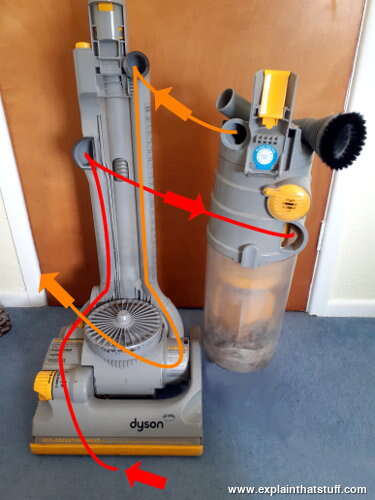
At its core, a Dyson vacuum cleaner creates a stream of moving air. This air carries dust, hair, crumbs, and other debris from the floor into the machine. The vacuum then separates the debris from the air before releasing cleaner air through its filters.
The process follows a simple path:
- The cleaning head loosens dirt from the floor.
- The motor creates suction by moving air through the machine.
- Air and debris travel through the intake tube.
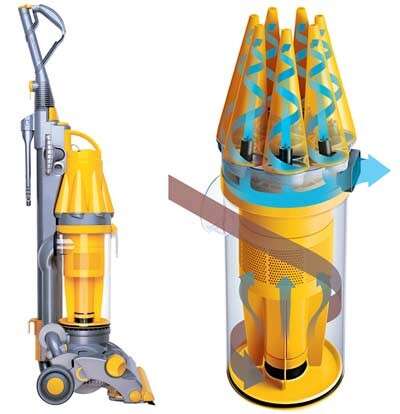
- Cyclones spin the air at high speed.
- Larger particles fall into the dust bin.
- Filters capture smaller particles.
- Cleaner air exits the vacuum.
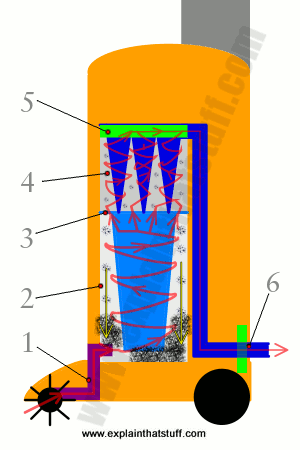
A useful way to picture this system is to imagine a tiny tornado inside the dust bin. The spinning air pushes heavier particles outward, while the air continues toward the filters.
The exact design varies by model. Dyson upright, canister, cordless stick, and handheld vacuums do not all use the same motor, battery, cleaner head, or filtration layout. However, the main idea remains the same: create airflow, separate dirt, and filter the exhaust.
The Dyson Digital Motor and Suction System
The motor is the power source behind a Dyson vacuum cleaner. Many modern Dyson cordless models use a compact digital motor that spins at a very high speed. This motor drives an impeller, which pulls air into the machine and pushes it through the cyclone and filter system.
Suction is not simply “power” in the usual sense. It depends on several factors:
• Motor speed
• Airflow design
• Seals around the air path
• Cleaner head design
• Filter condition
• Battery charge on cordless models
A strong motor cannot make up for a blocked filter or a cracked hose. The vacuum needs a sealed air path so that air enters through the cleaning head rather than through unwanted gaps.
Dyson measures motor and machine performance in different ways, including air watts, airflow, and suction pressure. These numbers should not be compared without context. A vacuum may have high suction at the inlet but perform differently once a cleaner head, wand, and filter are attached.
In hands-on use, the most noticeable change often occurs when the bin or filter needs attention. A vacuum can sound normal but collect less dirt because restricted airflow prevents the motor from moving enough air.
Why Dyson suction changes between modes
Many Dyson cordless vacuums offer modes such as Eco, Auto, and Boost. Eco mode uses less power and is useful for long cleaning sessions. Boost mode increases cleaning force but drains the battery much faster.
Auto mode uses sensors on some models to detect surface resistance or dust levels. The vacuum can then adjust motor power as needed. This helps balance cleaning performance and battery life, although the feature is not available in every Dyson model.
How Dyson Cyclone Technology Separates Dirt
Cyclone technology is one of the most important parts of how a Dyson vacuum cleaner works. Inside the machine, air and debris move through cone-shaped chambers. These chambers force the air to spin rapidly.
The spinning motion creates centrifugal force. Heavier dust and dirt move toward the outer wall of the cyclone. They then drop into the dust bin. Lighter air stays closer to the center and continues toward the filters.
Older or less efficient vacuum designs may rely heavily on a bag or a single filter to catch dust. Dyson’s cyclone system aims to remove much of that debris before it reaches the filters. This can help maintain airflow during cleaning.
Dyson uses different cyclone layouts across its product lines. Some models have many small cyclones, while others use a larger central cyclone system. The names and designs may change, but the principle is similar: fast-spinning air separates particles from the main airflow.
Cyclone separation works best when the air path is clear. A full bin, blocked inlet, or tangled brush bar can reduce the amount of air moving through the cyclones. This is why emptying the bin and removing blockages are important parts of regular care.
Does cyclone technology remove every particle?
No. Cyclones are very effective at separating many particles, but they do not remove everything. Very fine dust and microscopic particles can remain in the airflow, which is why Dyson vacuums also use pre-motor and post-motor filters.
Cyclones also do not replace good cleaning technique. Moving the vacuum too quickly can leave debris behind, especially on carpets. Slow, steady passes usually give the cleaner head more time to lift dirt.

The Role of the Cleaner Head and Brush Bar
The cleaner head is the part that touches the floor. It controls how air enters the vacuum and helps loosen dirt from carpets, rugs, and hard floors.
Many Dyson models use a motorized brush bar. The brush bar spins as the vacuum operates. Its bristles reach into carpet fibers and lift embedded dust, hair, and crumbs so the airflow can carry them away.
Different floor types need different cleaner head designs:
• Carpet heads use bristles and strong agitation to lift trapped dirt.
• Hard-floor heads often use soft rollers to collect fine dust without scratching many sealed surfaces.
• Combination heads adjust or expose different brush settings for carpet and hard floors.
• Hair-focused heads use special anti-tangle features to reduce wrapped hair.
The brush bar is not just a spinning brush. Its shape, bristle pattern, seals, and contact with the floor all affect cleaning performance. If it sits too far above the surface, fine dust may remain behind. If it presses too firmly, the vacuum may become harder to push.
Why the brush bar can stop spinning
A Dyson brush bar may stop when hair or thread becomes wrapped around it. Some models also stop the brush bar automatically when they detect a jam. This protects the motor and reduces the chance of damage.
Turn off and unplug a corded vacuum before checking the brush bar. For a cordless model, switch it off and remove the wand or cleaner head when the design allows. Clear wrapped hair with scissors carefully, and follow the model’s owner’s guide.
A common mistake is forcing the brush bar to spin while it is blocked. That can place extra stress on the belt, motor, or electrical parts. Clearing the blockage first is safer.
How the Dust Bin and Filtration System Work
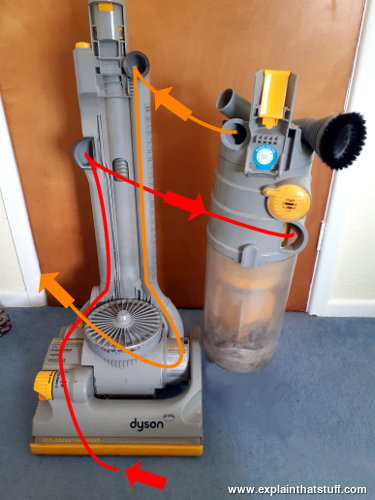
After the cyclones separate larger debris, the dirt collects in the dust bin. Dyson dust bins are usually transparent, so you can see when the vacuum needs emptying. This is convenient, but the bin still needs regular cleaning.
A dust bin that is too full can restrict airflow. It can also allow debris to reach areas that are harder to clean. Empty the bin before the dirt reaches the maximum line, especially when vacuuming fine powder, pet hair, or large amounts of debris.
The filtration system catches particles that pass through the cyclone stage. Most Dyson vacuums use more than one filter:
- The pre-motor filter helps protect the motor from fine dust.
- The post-motor filter captures remaining particles before air leaves the machine.
Some Dyson models use fully sealed filtration systems. When maintained correctly, these systems can reduce the amount of fine dust released into the room. However, performance depends on the specific model, filter condition, seals, and correct use.
Filters do not last forever. Washable filters should be rinsed according to the manufacturer’s instructions and allowed to dry completely before installation. Putting a damp filter back into the vacuum can cause odor, motor problems, or electrical risk.
How often should Dyson filters be washed?
The correct schedule varies by model and household use. Many Dyson cordless vacuums recommend washing filters about once a month, but the owner’s guide should take priority.
Homes with pets, renovation dust, allergies, or heavy daily use may need more frequent checks. A filter that looks gray, smells dusty, or causes weak suction needs attention even if the calendar says it is not due yet.

How Cordless Dyson Vacuums Use Battery Power
A cordless Dyson vacuum replaces the wall outlet with a rechargeable lithium-ion battery. The battery supplies power to the motor, sensors, display, and motorized cleaning head.
Battery life depends on several factors:
• Cleaning mode
• Cleaner head type
• Floor resistance
• Battery age
• Temperature
• Blockages and filter condition
Eco mode normally gives the longest run time. Boost mode uses much more energy because the motor operates at a higher level. Using Boost for every task can shorten the cleaning session and may increase battery wear over time.
Some cordless models show an estimated run time on a screen. This number is not fixed. It can change as the vacuum detects more resistance, switches cleaning modes, or uses a powered head.
A practical habit is to use Auto or Medium mode for normal cleaning and reserve Boost for thick carpets, stubborn debris, or small areas. This gives you more useful cleaning time without sacrificing everyday performance.
The battery also has a limited service life. If a fully charged vacuum runs for only a short period, the battery may be aging. In some models, the battery can be replaced by the owner. In others, service may be required.
How Dyson Sensors and Automatic Features Help
Some Dyson vacuums use sensors to adjust performance. These sensors may detect particles, brush bar resistance, air pressure, or floor conditions. The exact features differ between models.
Particle sensors can estimate how much fine dust enters the machine. A display may show particle counts or other information. This can help you see when an area is becoming cleaner, although the display should not be treated as a laboratory measurement.
Floor sensors can help an automatic mode change suction power. For example, the vacuum may use more power on a carpet and less on a hard floor. This approach can improve battery efficiency compared with running the motor at maximum power all the time.
Sensors are useful, but they are not perfect. They can be affected by dust buildup, blockages, lighting conditions, surface type, or software behavior. A sensor feature should support good cleaning habits, not replace them.
What happens when a Dyson detects a blockage?
Many models reduce power, stop the brush bar, or display a warning when airflow becomes restricted. The vacuum may also make a pulsing sound. This happens because the motor cannot maintain normal airflow through the blocked system.
Turn the vacuum off and check the cleaner head, wand, bin inlet, hose, and filters. Do not keep operating it for a long time while it pulses, because continued use can place extra strain on the motor.

How a Dyson Vacuum Cleaner Works on Different Surfaces
A Dyson vacuum cleaner does not clean every surface in exactly the same way. The best method depends on the floor material, debris type, and cleaner head.
Carpet
Carpet cleaning usually requires agitation. The brush bar lifts dirt from between the fibers, while suction pulls it into the vacuum. Use slow passes and allow the cleaner head to make good contact with the carpet.
For thick carpet, pushing too fast can reduce cleaning results. If the head feels difficult to move, use the recommended floor setting rather than forcing it.
Hardwood and other hard floors
Hard floors often need gentle contact and strong fine-dust pickup. A soft roller can collect dust and crumbs across a smooth surface. Turn off a rotating brush bar when the floor type or manufacturer’s instructions require it.
Small grit can scratch some finishes if it is dragged across the floor. Emptying the vacuum often and using the correct head can reduce this risk.
Tile and grout
Tile floors can hold dirt in grout lines. A regular cleaner head may collect surface debris but leave some material in recessed lines. A narrow tool or specialized attachment may work better for edges and grout.
Upholstery and stairs
Small motorized tools can remove hair and dust from furniture, stairs, and car seats. Use lower power where possible and test an attachment on a hidden area first. Some fabrics can snag or mark if the brush is too aggressive.

Dyson Attachments and What They Do
Attachments change the way air and debris enter the vacuum. They also help you clean areas that a standard floor head cannot reach.
Common Dyson tools include:
• Crevice tools for narrow gaps and corners
• Combination tools for shelves and small surfaces
• Dusting brushes for delicate areas
• Mini motorized tools for upholstery and pet hair
• Soft dusting heads for electronics and finished surfaces
• Extension wands for ceilings and high areas
A tool may feel weaker than the main cleaner head because its opening is smaller. However, the narrow opening can increase air speed at the tip and help lift dirt from cracks.
One lesson I often emphasize during vacuum testing is to use the right tool instead of forcing the floor head into a tight space. The correct attachment cleans faster and places less stress on the wand and cleaner head.
Avoid using a vacuum attachment on wet spills unless the model is specifically designed for liquid pickup. Most Dyson dry vacuums are not wet vacuums. Water can damage filters, electronics, and the motor.
Common Reasons a Dyson Vacuum Loses Suction
Weak suction does not always mean the motor has failed. In many cases, the cause is simple and fixable.
Check these areas in order:
- Empty the dust bin if it is near the fill line.
- Inspect the cleaner head for hair, thread, and large debris.
- Check the wand and hose for blockages.
- Clean washable filters as directed.
- Make sure each part is fitted tightly.
- Check for damaged seals, cracks, or loose connections.
- Charge the battery fully if the vacuum is cordless.
A pulsing motor often points to restricted airflow. A burning smell may indicate a jam, electrical fault, or overheated component. Stop using the vacuum if you notice smoke, unusual heat, sparks, or a strong electrical odor.