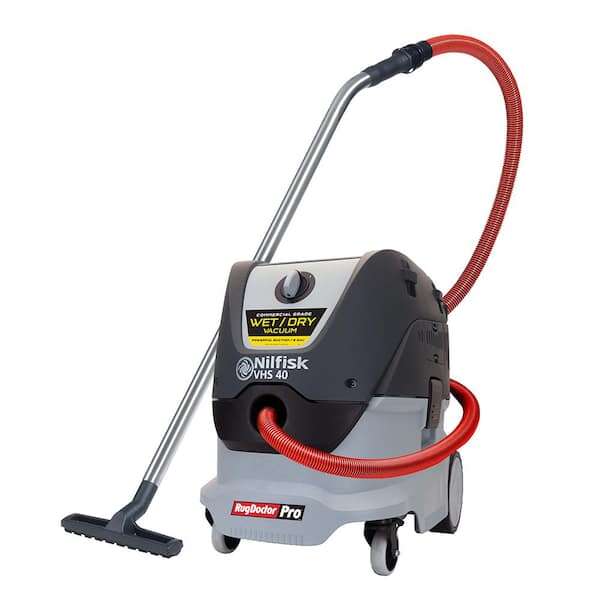

Best Vacuum For Commercial Cleaning: Top Buying Guide
The best vacuum for commercial cleaning combines strong suction, easy handling, durable parts, and low daily operating cost.
A busy office, hotel, school, or cleaning crew can turn a small vacuum problem into a long workday. Hair, grit, dust, crumbs, and fine dirt build up fast, while stairs and tight corners slow down bulky machines. I reviewed these commercial vacuums with real work in mind: carpet care, hard floors, repeated use, bag changes, cord reach, and operator comfort. The right machine should clean well without tiring the user or stopping often.
Oreck Commercial XL Vacuum

The Oreck Commercial XL is a simple, light upright made for long carpet-cleaning shifts. Its low weight makes it easy to push across offices, halls, stores, and other large areas. The bagged design also keeps collected dirt contained during removal. I like this style for crews that need a dependable machine without a long list of complex settings.
The wide cleaning path helps cover open floors with fewer passes. Its flat body can also reach under many desks, tables, and low cabinets. The corded design provides steady power, so the motor does not slow as a battery loses charge. It is a practical pick when speed, low weight, and easy upkeep matter more than specialty tools.
Pros:
- Light body reduces arm and shoulder strain
- Wide cleaning path speeds up open-floor work
- Bagged system helps control dust during disposal
- Strong fit for offices, halls, and carpeted rooms
- Simple controls reduce training time for new staff
- Flat profile helps clean beneath furniture
Cons:
- Upright design is less useful on stairs
- It has fewer built-in tools than a canister vacuum
- Replacement bags add an ongoing supply cost
My Recommendation
I recommend the Oreck Commercial XL to janitorial teams that clean large carpeted spaces and want a light machine. It is also a good match for hotels, churches, schools, and small offices with many open floor areas. If staff carry the vacuum up stairs often, a backpack or canister model may work better. For simple daily carpet care, this remains a strong contender for the best vacuum for commercial cleaning.
Sanitaire SC679K Tradition Upright
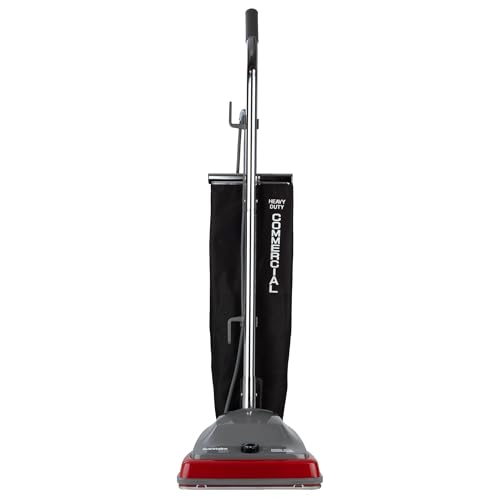
The Sanitaire SC679K Tradition is a classic commercial upright with a bagged dirt system. It is built for routine floor work in offices, classrooms, retail spaces, and public buildings. The red body is easy to spot in a supply room, and the design feels familiar to many professional cleaners. I see it as a workhorse for teams that value straightforward operation.
This vacuum suits medium and large carpet areas where staff need a firm, steady clean. Its commercial frame is made for repeated use, but the operator still needs to use proper technique on stairs and edges. Bag changes are quick when the bag is not overfilled. The machine is less flexible than a canister, yet its focused design can save time on wide carpet runs.
Pros:
- Commercial upright format supports repeated daily use
- Bagged collection keeps loose dirt away from the user
- Good choice for classrooms and office carpet
- Easy controls make it simple to train a cleaning crew
- Upright shape stores neatly in supply closets
- Steady corded power supports long work sessions
Cons:
- It may feel less agile in crowded rooms
- Stairs require extra care and manual handling
- Bag costs should be included in the cleaning budget
My Recommendation
The SC679K is best for schools, offices, retail floors, and cleaning contractors that want a familiar commercial upright. It works well when carpet makes up most of the cleaning route. I would choose it over a lighter home vacuum when durability and daily use matter most. It is a solid best vacuum for commercial cleaning option for teams that prefer a traditional bagged machine.
Bissell Commercial Pro Cup Upright

The Bissell Commercial Pro Cup gives cleaning crews an upright vacuum with a bagless dirt cup and on-board tools. That combination helps when one job includes floors, edges, furniture, and small hard-to-reach spots. I find the clear collection cup useful because the operator can see when it needs attention. This can prevent the loss of airflow that often follows an overfilled container.
The on-board tools add value in offices and shops with baseboards, vents, steps, and upholstery. A bagless system can lower the need for replacement bags, though the cup and filters need regular cleaning. Emptying the cup outdoors is wise when fine dust is present. The Pro Cup is a flexible choice for cleaners who want an upright for floors and quick above-floor work.
Pros:
- Bagless cup lets users see the dirt level
- On-board tools handle edges, stairs, and furniture
- Useful for mixed cleaning routes
- Upright design covers carpet quickly
- Can reduce spending on disposable bags
- Tools stay with the vacuum instead of in a cart
Cons:
- Emptying the cup can release dust if done indoors
- Filters need regular care to protect airflow
- It may be heavier than a compact canister
My Recommendation
I recommend this Bissell to commercial cleaners who need one upright for carpet and small detail jobs. It fits offices, rental properties, retail stores, and clinics with a mix of open floors and tight edges. Choose it if you prefer to avoid routine bag purchases and do not mind cleaning the filters. For flexible daily work, it can serve as the best vacuum for commercial cleaning in a mixed-use building.
Hoover Commercial Shoulder Vac Pro

The Hoover Commercial Shoulder Vac Pro is made for jobs where an upright feels awkward. Its backpack-style body lets the user move through stairs, aisles, seats, and crowded rooms with less pushing. The shoulder design places the machine close to the body, while the hose reaches the floor and nearby surfaces. This format can make a long stair route feel less like a wrestling match.
Its bagged design helps capture debris with less direct contact during disposal. HEPA media filtration is useful in settings where dust control matters, although no vacuum removes every airborne irritant on its own. Users should adjust the straps and keep the hose clear for comfortable work. I see this model as a strong specialist for stairs, theaters, schools, buses, and detailed commercial routes.
Pros:
- Backpack format improves movement on stairs
- Shoulder design avoids pushing an upright
- Bagged system supports cleaner dirt disposal
- HEPA media filtration adds a useful layer of dust control
- Works on carpet and hard floors
- Good access around seats, shelves, and tight spaces
Cons:
- Users need time to adjust the harness correctly
- It is not ideal for very large open floors
- Hose handling may require a short learning period
My Recommendation
This Hoover is best for professional crews that clean stairs, auditoriums, classrooms, hotels, transit areas, and crowded commercial spaces. It is especially useful when mobility matters more than a wide upright head. I would not make it the only vacuum for a huge carpeted warehouse, but it can pair well with one. For stair-heavy routes, it may be the best vacuum for commercial cleaning because it keeps the user nimble.
Hoover Commercial PortaPower Canister

The Hoover PortaPower is a compact canister vacuum for detail work and smaller commercial spaces. Its light body can follow the user around furniture, counters, stairs, and narrow paths. A canister keeps the motor unit away from the cleaning head, which makes it easier to use different attachments. This is a practical design for crews that clean more than just open carpet.
It can handle hard floors, edges, shelves, and other areas where an upright may be too large. The flexible hose helps reach corners, while the portable body is easy to carry between rooms. Canister vacuums do require more hand movement than an upright, so they may take longer on a wide empty floor. Still, the PortaPower earns its place when versatility and portability lead the job.
Pros:
- Compact body fits small storage areas
- Easy to carry between rooms and floors
- Canister design works well with detail tools
- Useful around furniture, stairs, and counters
- Good fit for hard floors and tight corners
- Flexible hose improves reach above the floor
Cons:
- Less efficient than a wide upright on large carpet
- Users must carry or pull the canister
- Hose and attachments need organized storage
My Recommendation
I recommend the PortaPower for offices, hotels, salons, stores, and maintenance teams that need a small detail vacuum. It is also useful as a second machine beside a large upright. Choose it when stairs, corners, shelves, and hard floors fill the cleaning route. For portable detail work, this Hoover can be the best vacuum for commercial cleaning in compact or crowded spaces.
Bissell BigGreen PowerForce Upright

The Bissell BigGreen PowerForce is a lightweight commercial upright with a bagged collection system. It is designed for routine cleaning across carpeted offices, public rooms, and business spaces. The straightforward shape helps new staff learn the machine without much instruction. I like this kind of vacuum for teams that need several units at a sensible operating cost.
A lightweight frame can help reduce fatigue during repeated passes. The bag holds debris away from the room until disposal, which is helpful for cleaners working around guests or staff. As with any upright, it works best when the operator uses slow passes and keeps the brush path clear. This model is not a specialty machine, but it covers the basic needs of many commercial carpet routes.
Pros:
- Lightweight design supports longer cleaning shifts
- Bagged system simplifies contained dirt removal
- Good fit for routine commercial carpet work
- Simple controls shorten staff training
- Useful as a fleet vacuum for cleaning companies
- Upright format stores easily
Cons:
- Not the best choice for high-pile specialty carpet
- Limited flexibility for above-floor cleaning
- Ongoing bag purchases increase operating costs
My Recommendation
The BigGreen PowerForce is best for cleaning contractors, offices, schools, and property managers that need an affordable fleet machine. It makes sense when several workers need simple, light uprights for routine carpet care. I would pair it with a canister or backpack vacuum for stairs and detail work. It offers practical value for buyers seeking the best vacuum for commercial cleaning without paying for extra features they may not use.
Sanitaire Force SC5845D Upright
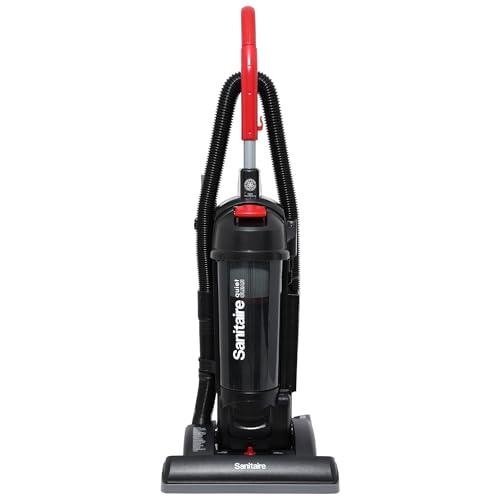
The Sanitaire Force SC5845D is a commercial upright built for steady floor coverage. Its upright form gives the operator a clear path across carpet, halls, and open work areas. The black finish looks professional in customer-facing spaces. I would consider it for businesses that need a capable machine for regular service rather than occasional home use.
This vacuum makes the most sense when staff clean broad carpet areas in a set route. Its corded power supports repeat work without a charging pause. The operator should still check the brush area, belt, filters, and bag or dirt path on a regular schedule. Good maintenance is the difference between a machine that feels strong and one that slowly loses its bite.
Pros:
- Commercial design suits repeated floor cleaning
- Upright layout covers broad carpet areas well
- Steady corded operation avoids battery downtime
- Professional look fits customer-facing locations
- Simple format makes daily use familiar
- Good option for offices and public buildings
Cons:
- It is less nimble around crowded furniture
- Stairs and upholstery need another tool or vacuum
- Its cord limits movement without outlet planning
My Recommendation
I recommend the Sanitaire Force for commercial spaces with mostly open carpet and predictable cleaning routes. It suits offices, hotels, schools, retail areas, and public buildings. Buyers who need stair work or tight detail cleaning should add a backpack or canister unit. As a dependable floor-focused machine, it is a strong best vacuum for commercial cleaning choice for regular route work.
WORKPRO Commercial Backpack Vacuum

The WORKPRO Commercial Backpack Vacuum is designed for workers who need to move freely through stairs, aisles, rooms, and tight spaces. Its backpack shape carries the motor and collection tank on the user’s back. A long power cord helps cover more area before the operator needs another outlet. The large collection capacity also reduces interruptions during demanding jobs.
The listed 1200-watt motor gives this model a useful level of working power for commercial floor care. Backpack vacuums can be easier to steer than uprights in crowded places, but fit matters. I advise every user to adjust the shoulder straps, waist support, and hose position before a full shift. Used correctly, this style can feel like a tool belt for dust and debris.
Pros:
- Backpack design improves movement in tight areas
- Six-quart capacity can reduce emptying breaks
- Long 23-foot cord supports wider coverage
- Useful for stairs, carpet, and hard floors
- 1200-watt motor offers strong working power
- Good choice for schools, offices, and event venues
Cons:
- Back and shoulder fit must be adjusted carefully
- It may feel tiring for users not used to backpacks
- Corded operation still requires outlet planning
My Recommendation
The WORKPRO is best for cleaning crews that spend much of the day in crowded rooms, on stairs, or around fixed seating. It suits schools, hotels, theaters, offices, and commercial buildings with many obstacles. I would choose it when movement and capacity matter more than a wide upright head. For high-mobility work, it deserves serious attention as the best vacuum for commercial cleaning.
Shop-Vac Commercial Backpack Vacuum
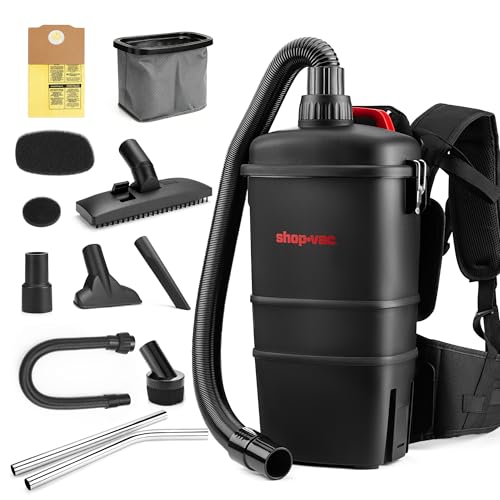
The Shop-Vac Commercial Backpack Vacuum brings a familiar wet-and-dry vacuum brand into a portable backpack format. Its 1.5-gallon capacity gives the user more room than many small handheld cleaners. The 4.5 peak horsepower rating suggests useful pickup for everyday commercial debris, though peak horsepower is not the same as measured suction at the floor. I judge this model mainly by its portable design and broad cleaning role.
This vacuum can help with stairs, entry areas, carpet, and hard floors where a large machine is awkward. Its corded motor provides steady operation during a shift. The user should empty the tank before it becomes heavy and keep filters in good shape. It is a practical option for crews that already trust the Shop-Vac name and want backpack mobility.
Pros:
- Backpack form improves access in busy spaces
- Large 1.5-gallon capacity limits frequent stops
- Useful for stairs, carpet, and hard floors
- Corded motor supports long cleaning sessions
- Familiar brand may simplify staff acceptance
- Portable design reduces the need to push a canister
Cons:
- Peak horsepower does not show full floor performance
- Backpack weight may challenge some users
- Filter and tank care remain important for airflow
My Recommendation
The Shop-Vac backpack model is best for commercial users who want a roomy portable vacuum for mixed debris and floor types. It fits maintenance teams, schools, offices, and event spaces that need to move quickly. I would select it when tank capacity is a key concern. It is a useful best vacuum for commercial cleaning for buyers who value mobility and a larger collection space.
Eureka 3670M Lightweight Canister

The Eureka 3670M is a lightweight canister vacuum that works across carpet and hard floors. Its small body is easy to carry, while the hose gives the operator a useful reach around furniture and edges. The package includes bags, which lets a buyer begin work without an immediate accessory order. I see it as a compact helper for commercial spaces that need flexible cleaning.
This model is especially handy for stairs, upholstery, corners, and small rooms. It will not cover a large hotel hallway as quickly as a commercial upright, but it can reach places that an upright misses. The user should pull it gently and avoid dragging it by the hose. For light commercial duty, detail work, and spot cleaning, its low weight can be a real advantage.
Pros:
- Lightweight body is easy to carry
- Works on both carpets and hard floors
- Canister shape reaches stairs and tight corners
- Included bags support quick setup
- Useful around furniture and upholstery
- Compact size stores well in small closets
Cons:
- Small design is slower on large open floors
- It is not built for the hardest industrial debris
- Users must keep bags and filters available
My Recommendation
I recommend the Eureka 3670M for small offices, apartments, hotels, salons, and detail teams that need a light canister. It is also a smart backup for stairs and furniture when the main machine is an upright. Choose another model for heavy daily warehouse cleaning or very large carpet areas. For light, portable tasks, it can be the best vacuum for commercial cleaning at a modest size and cost.
How to Choose a Commercial Vacuum
Choosing the best vacuum for commercial cleaning starts with the floor plan, not the motor label. A machine that excels in a hotel hallway may feel clumsy in a theater or office full of desks. I first identify the main surface, the amount of daily use, the number of stairs, and the amount of dust or debris. Then I compare comfort, service needs, and long-term cost.
Match the Vacuum to the Floor
Commercial carpet usually favors an upright with a wide cleaning head. A wide head can reduce the number of passes across open rooms. Hard floors and edges often favor a canister or backpack unit with a hose and detail tools. If a building has both surfaces, a flexible machine or two-machine setup may save time.
Do not judge cleaning power by wattage alone. Airflow, brush action, head design, filtration, and a clear hose path all affect pickup. A high number on a box does not guarantee better results on every carpet. I look for a design that matches the dirt, surface, and work method.
Upright, Canister, or Backpack?
Upright vacuums are often the fastest choice for large carpet areas. They stand on their own and guide in a straight path, which helps new staff work with a steady rhythm. Their limits show up on stairs, shelves, furniture, and narrow spaces.
Canister vacuums offer more reach and tool choice. They work well for stairs, hard floors, furniture, and detail cleaning. The tradeoff is that the user must pull or carry the canister while guiding the hose.
Backpack vacuums shine in crowded rooms and stairwells. They let the user walk naturally instead of pushing a machine. However, fit and training matter because a poor strap setup can create back or shoulder strain. The best vacuum for commercial cleaning is the one workers can use safely for the full route.
Bagged Versus Bagless Collection
Bagged vacuums keep dirt in a sealed container until the bag is removed. This can help reduce contact with dust during disposal. They are often a good fit for schools, offices, hotels, and health-sensitive spaces, though users must keep replacement bags on hand.
Bagless vacuums can reduce bag purchases and show the fill level at a glance. They require more direct contact with the dirt cup and often need regular filter cleaning. Staff should empty the cup in a suitable area and follow the maker's care instructions.
Neither system wins every job. A bagged machine may suit a high-volume cleaning contract, while a bagless unit may appeal to a small business that wants fewer supplies. I always include disposal time and filter care in the real cost.
Filtration and Indoor Air
Filtration matters when a building has fine dust, pets, fabric debris, or sensitive occupants. A HEPA label can be useful, but buyers should check what the full vacuum system claims. A filter alone cannot fix a leaking bag, loose seal, or clogged hose.
The Environmental Protection Agency has long advised source control and proper cleaning as part of indoor air care. The Centers for Disease Control and Prevention also stresses routine cleaning for reducing dirt and germs on surfaces. A vacuum supports that work, but staff still need correct dust disposal, surface-safe products, and good ventilation.
For fine dust, empty the vacuum before it becomes packed. Check filters on the schedule in the manual. A clean filter can protect airflow and help the machine maintain its expected performance.
Comfort and Worker Safety
A commercial vacuum may run for hours each day. Weight, handle height, strap design, noise, cord placement, and steering all affect the worker. Small comfort problems can become major complaints after weeks of use.
I recommend a short test with the actual staff before buying several units. Have the user clean a room, turn around furniture, cross a doorway, and carry the vacuum up a few safe steps. Watch for awkward bending, cable snags, and hand strain.
The Occupational Safety and Health Administration recommends reducing ergonomic risks through better work methods and equipment. Staff should change hand positions, keep cords away from walkways, and avoid lifting a heavy full tank. Training is not extra polish; it is part of the cleaning plan.
Cord Length and Outlet Planning
Corded vacuums provide steady power and do not need charging. They are often a better fit for long commercial shifts. The cord can also become a trip risk if the user does not manage it well.
A long cord helps, but it does not remove the need for planning. Use safe commercial extension cords only when the manufacturer permits them. Keep cords visible and out of doors, wet areas, and public paths.
Cordless models can improve speed in some buildings, but battery run time, charge time, and replacement battery cost matter. For many commercial teams in 2026, a corded vacuum remains the simpler choice for full-shift floor care.
Maintenance and Total Cost
The purchase price is only one part of the budget. Include bags, filters, belts, brush rolls, hoses, batteries, repairs, and staff time. A cheaper unit may cost more if it needs frequent downtime.
A basic care routine should include checking the floor head, clearing the hose, inspecting the cord, and emptying the collection system. Do not wait for a burning smell or loud change in sound. Early care often prevents a small blockage from becoming a motor problem.
Keep a service log for each vacuum. Record bag changes, filter cleaning, belt replacement, and repairs. This simple habit helps managers see which units earn their place and which ones drain time.
Best Uses for Each Vacuum
The table below gives a quick way to match each machine to a common commercial need. It does not replace a hands-on test, but it makes the buying choice easier.
| Best for | Why |
|---|---|
| Large carpeted offices and halls | Light uprights such as the Oreck XL, Sanitaire Tradition, Bissell PowerForce, and Sanitaire Force cover broad floor areas with simple forward passes. |
| Stairs, seats, and crowded rooms | The Hoover Shoulder Vac Pro, WORKPRO, and Shop-Vac backpack models improve movement where an upright may be hard to push. |
| Detail work and mixed floor types | The Hoover PortaPower, Bissell Pro Cup, and Eureka 3670M offer useful reach for edges, furniture, stairs, and hard floors. |
Commercial Vacuum Buying Tips for 2026
Buy for the Cleaning Route
A cleaning route tells you more than a product label. Count the carpeted rooms, hard-floor areas, stairs, elevators, furniture groups, and average shift length. A machine can look perfect online yet feel wrong after one full building route.
For a large open office, start with an upright. For a hotel with stairs and room edges, consider a canister or backpack. For a school, a mixed fleet may work best because classrooms, stairs, halls, and offices each create different demands.
Check Parts Before Ordering
Commercial equipment earns value when parts remain available. Check the cost and supply of bags, filters, belts, brush rolls, hoses, and floor tools. A common part is often easier to find than a special part made for one model.
I also look for a clear manual and a simple service path. Staff should know how to remove a blockage and replace a bag without guessing. If the cleaning company cannot maintain the unit, even a strong motor will not stay strong.
Consider Noise
Noise matters in offices, hotels, schools, clinics, and public areas. A loud vacuum may interrupt meetings, wake guests, or make communication harder. Always check the manufacturer's noise information when it is available.
Schedule loud cleaning after business hours when possible. In occupied spaces, use slower passes and clear signs to protect people near the route. A quieter machine may improve the user experience even if it takes a little longer.
Do Not Ignore Storage
Measure the supply closet before ordering. Check the height of an upright, the width of a canister, and the space needed for hoses and tools. A vacuum that blocks doors or sits in a damp corner will not age well.
Store equipment dry and with the cord loose enough to avoid sharp bends. Keep bags, filters, and tools in one labeled area. Good storage saves small amounts of time every day, and those minutes add up across a year.
Use a Small Test Group
If I were buying for a cleaning company, I would test two or three styles before placing a large order. Give each vacuum to the people who will use it most. Ask about grip, balance, sound, cord reach, emptying, and performance on the actual floors.
A short trial can expose problems that product photos hide. It also helps workers feel heard, which can improve care and adoption. The smartest commercial purchase is often the one that fits the team, not the one with the longest feature list.
FAQs Of best vacuum for commercial cleaning
What type of vacuum is best for commercial cleaning?
An upright is often best for large carpeted areas. A backpack or canister vacuum is better for stairs, edges, furniture, and crowded rooms. Many professional teams use more than one style.
Is a bagged vacuum better for business use?
A bagged vacuum can make dirt disposal cleaner and simpler. It also requires regular bag purchases. A bagless model may lower supply costs, but staff must empty the cup and clean the filters carefully.
Are backpack vacuums good for commercial work?
Yes. Backpack vacuums work well in stairwells, theaters, schools, hotels, and rooms with many obstacles. Proper strap adjustment and user training are important for comfort and safe use.
How often should a commercial vacuum filter be cleaned?
Follow the manual because schedules vary by model and dust level. Check the filter often, especially when suction drops or the motor sounds strained. Replace damaged or worn filters instead of washing them unless the manufacturer allows washing.
Can one vacuum clean carpet and hard floors?
Some canister, backpack, and multi-surface upright vacuums can handle both. Check the floor head and tool design before buying. A machine made mainly for carpet may not clean hard floors as gently or easily as a canister model.
Final Verdict: Which Should You Buy?
The Oreck Commercial XL is my top pick for most large carpeted commercial spaces because it is light, simple, and quick to use. For stairs and tight rooms, choose the Hoover Shoulder Vac Pro or WORKPRO backpack model.
The best vacuum for commercial cleaning depends on your route, floor type, staff, and service plan. Match the machine to the work, maintain it on schedule, and it should deliver dependable value through 2026 and beyond.

Liora Pennings is a seasoned chef and kitchen enthusiast with a passion for turning everyday cooking into an effortless experience. With years of hands-on culinary expertise, she specializes in practical techniques, ingredient know-how, and smart kitchen solutions that help home cooks elevate their meals. At KitchFlair.com, Liora shares her best tips, time-saving tricks, and honest product reviews to guide readers toward a more efficient, enjoyable, and inspired cooking routine. Whether you’re a beginner or a seasoned home chef, Liora’s friendly, knowledge-packed insights make every visit to the kitchen a little easier—and a lot more delicious.