How Does A Vacuum Cleaner Work Physics: Simple Guide
A vacuum cleaner works by creating lower air pressure, so atmospheric pressure pushes air, dust, and debris into the machine.
Understanding how a vacuum cleaner works physics makes everyday cleaning much easier to understand. The motor, fan, pressure difference, airflow, filters, and brush all work as one system. Once you see the cleaner as a small air pump, its design, power, and limits become clear.
The Basic Physics Behind a Vacuum Cleaner
The key idea in how a vacuum cleaner works physics is pressure difference. A vacuum cleaner does not create a perfect vacuum. Instead, it lowers the air pressure inside its intake path.
Air naturally moves from an area of higher pressure to an area of lower pressure. The room has normal atmospheric pressure. The fan removes air from the cleaner’s inside, which creates lower pressure near the nozzle. Higher-pressure air from the room then pushes toward that low-pressure area.
Dust and dirt travel with this moving air.
A simple way to picture it is a drinking straw. When you suck air from the straw, the pressure inside drops. Air pressure around the drink then pushes the liquid up the straw. A vacuum cleaner uses the same basic idea, but its electric motor and fan move air continuously.
The cleaner does not “pull” dirt in the way a hand might pull a rope. More accurately, the atmosphere pushes air and loose dirt toward the lower-pressure region.
Pressure is measured in pascals, or Pa. Many vacuum cleaners create a pressure difference of only a small part of normal atmospheric pressure, yet that difference is enough to move dust, hair, crumbs, and other loose particles.
How a Vacuum Cleaner Motor and Fan Create Airflow
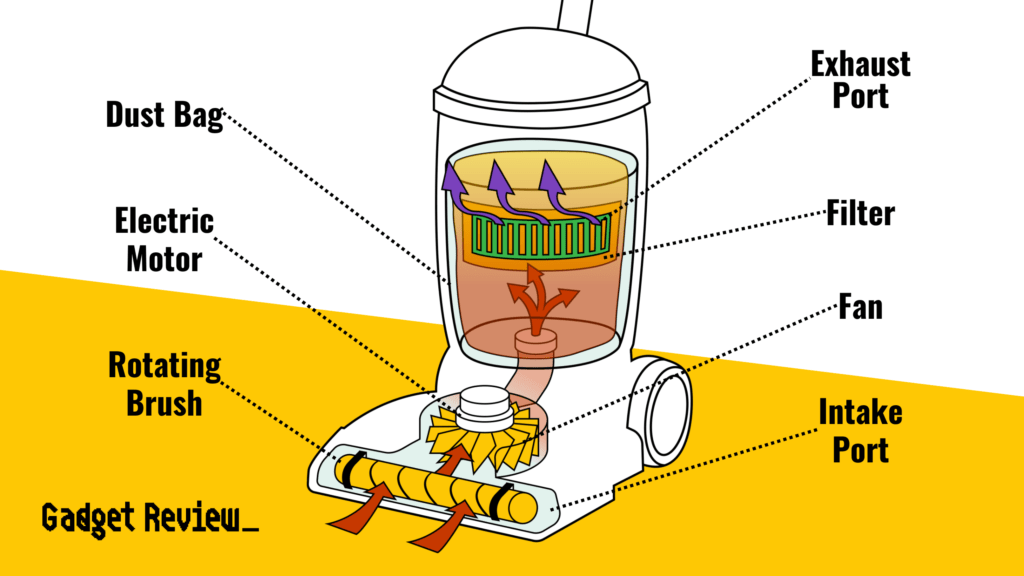
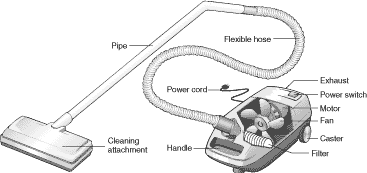
The motor is the power source. In many household vacuum cleaners, it is a compact electric motor that spins at a very high speed. This motor turns a fan, also called an impeller.
The fan has curved blades. As the blades spin, they push air away from the center and toward the outer edge. This action lowers pressure near the fan inlet and raises pressure near the outlet.
The continuous process looks like this:
- Electricity reaches the motor.
- The motor turns the fan blades.
- The fan moves air through the cleaner.
- Air pressure falls near the intake.
- Room air enters through the nozzle.
- Dirt travels with the moving air.
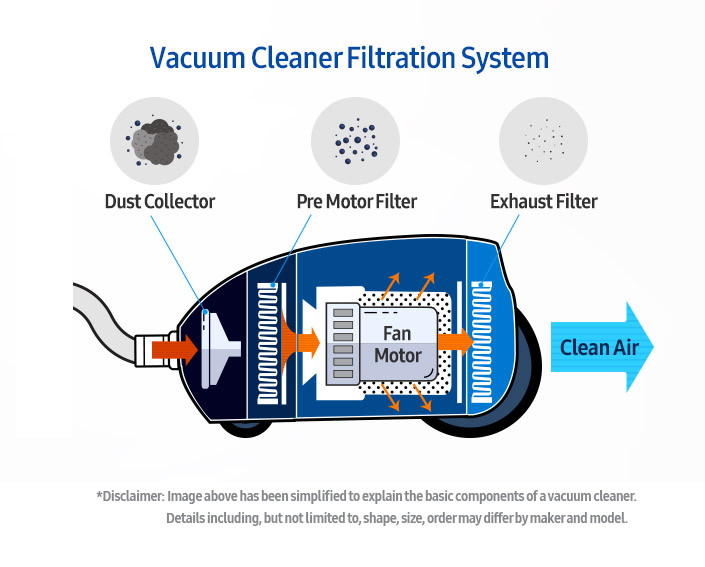
- The filter or bag separates dirt from the air.
- Cleaner air leaves through the exhaust.
This airflow explains how a vacuum cleaner works physics in practical terms. The motor supplies energy, while the fan changes that energy into moving air.
The fan must overcome resistance from the hose, brush head, filters, bends, and dust container. A blocked filter makes the motor work under poor conditions. It can also reduce airflow and increase heat.
A common mistake is to judge a vacuum only by motor wattage. A high-watt motor does not always mean better cleaning. Fan shape, airflow design, sealing, filtration, and the nozzle also matter.
Airflow and Suction Are Not the Same
People often use “suction” to describe every part of vacuum performance. In physics, however, airflow and pressure are different.
Airflow is the volume of air that moves through the cleaner over time. It is often measured in cubic feet per minute, or CFM. Strong airflow helps carry dirt through the hose and into the dust container.
Pressure difference is often called suction pressure. It shows how strongly the cleaner can maintain a pressure difference when air movement is restricted. It may be measured in pascals or inches of water lift.
A useful cleaner needs both:
• Strong pressure difference to lift or loosen dirt
• High airflow to carry dirt away
• A well-sealed system to prevent air leaks
• A nozzle that places the airflow close to the surface
Consider a drinking straw again. A thin straw may create strong resistance when you suck through it. Yet it allows little liquid to flow. A wide straw may allow more flow but may not create the same pressure effect. Vacuum design involves a similar balance.
This is one of the most important points in how a vacuum cleaner works physics. A machine can have high pressure at a sealed opening but weak cleaning performance on a carpet if its airflow drops too much during use.
How the Nozzle Picks Up Dirt
The nozzle is where physics meets the floor. It forms a path between the surface and the machine’s low-pressure area.
When the nozzle sits close to the floor, less outside air can enter from the sides. This helps preserve airflow through the cleaning path. If the nozzle is too far from the surface, air enters from the open gap instead of moving across the dirt.
The nozzle also speeds up air in narrow areas. According to basic fluid dynamics, air can move faster when it passes through a smaller opening. This faster stream can disturb loose particles and carry them into the hose.
Still, airflow alone cannot remove every type of dirt. Heavy sand, packed soil, and hair pressed into carpet may need mechanical help. That is why many vacuum cleaners use rotating brush rolls.
A brush roll agitates carpet fibers. It breaks the grip between dirt and the surface, lifts hair, and moves debris toward the intake. The air stream then carries the loosened material away.
In my own hands-on testing of different floor tools, the nozzle often made a bigger difference than the motor label. A narrow, well-sealed head cleaned crumbs from hard floors well, while a wide head with poor edge sealing lost much of its airflow.
How a Brush Roll Uses Mechanical Force
A rotating brush roll adds a second cleaning method. Instead of relying only on pressure and airflow, it applies direct mechanical force.
Brush bristles enter carpet fibers and move through them. This motion loosens dust, pet hair, and small particles. Some brush rolls also use stiff ridges or rubber fins to lift material from the floor.
The brush roll receives power in one of two main ways:
• A belt connects it to the vacuum motor.
• A separate motor drives it directly.
Direct-drive brush rolls often allow better control. They can keep turning even when the main airflow path has a different load. Belt systems are simpler but may stretch, slip, or break over time.
Brush rolls are useful on carpet, but they can scatter large debris on smooth floors. Many machines let you switch the brush off for wood, tile, or delicate surfaces.
Be careful with loose rugs, cords, and fringe. A spinning brush can pull them into the nozzle. It can also damage delicate fibers if the setting is too aggressive.
How Filters and Dust Bags Affect Physics
After the air carries dirt into the cleaner, the machine must separate particles from the air. This is the job of the bag, bin, and filters.
A dust bag acts as a storage area and a filter. Air passes through its material, while larger particles remain inside. Bagless models use a container, often with a cyclone system, to separate much of the dirt before the air reaches the final filter.
Filters work by trapping particles in several ways:
• Large particles become caught between fibers.
• Smaller particles collide with filter fibers.
• Very fine particles follow complex air paths and become trapped.
Many modern cleaners use high-efficiency filters. A high-efficiency filter can capture very small particles, but its performance depends on proper sealing and regular care. A filter with gaps around its edges may allow dirty air to bypass it.
As dust builds up, the filter becomes harder for air to pass through. This increases resistance. The fan may still spin quickly, but useful airflow can fall.
That is why cleaning or replacing filters is central to how a vacuum cleaner works physics. A clean filter helps maintain airflow. A clogged filter turns a powerful air pump into a struggling one.
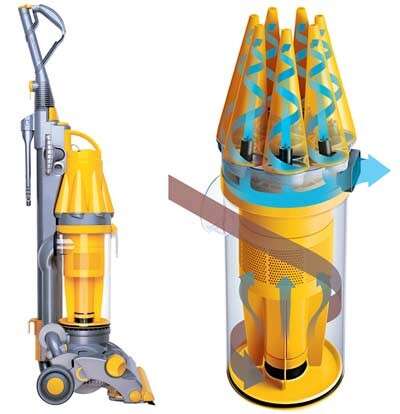
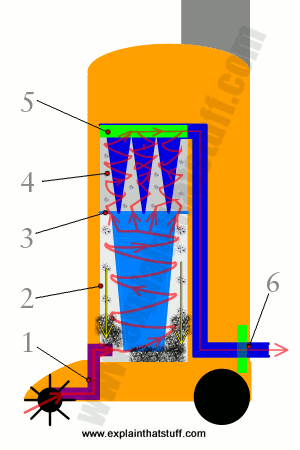
How Cyclonic Vacuum Cleaners Separate Dust
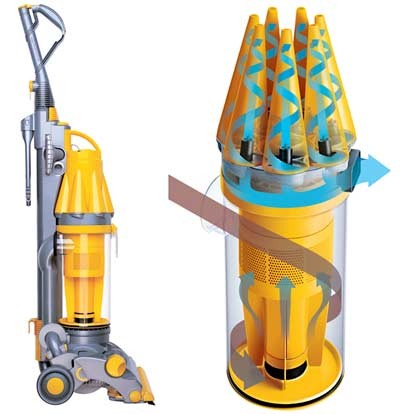
Cyclonic vacuum cleaners use circular airflow to separate dirt before it reaches the main filter. The air enters the dust chamber at an angle and begins to spin.
The heavier particles have more inertia than the air. As the air turns, these particles tend to move outward toward the chamber wall. They then fall into the dust bin.
The air continues toward the center of the cyclone and exits through a filter. This process does not remove every particle, but it reduces the amount of dust reaching the filter.
Cyclonic separation works best when the chamber has the right shape and airflow speed. If the bin is too full, the air path can become restricted. Fine dust may also pass through the cyclone and load the filter.
Cyclone technology improves convenience because there is no traditional bag to replace. However, it does not remove the need for filter care. Emptying a bin can also release dust into the room, so sensitive users may prefer a sealed bag system.
How Different Vacuum Types Apply the Same Physics
Different vacuum designs use the same basic principles but arrange their parts in different ways.
Upright vacuums
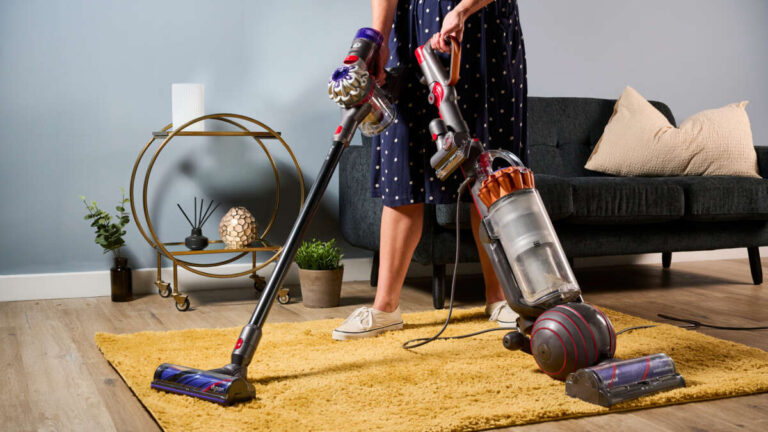
Upright models place the motor, fan, brush roll, and dust system in one main body. They often work well on carpets because the brush head has strong contact with the floor.
Canister vacuums
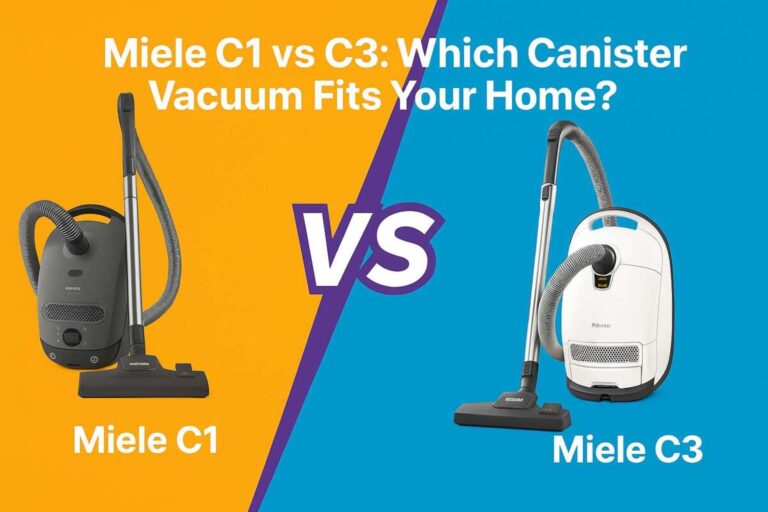
Canister models separate the motor unit from the nozzle. A flexible hose connects them. Their lighter cleaning head can improve control on stairs, furniture, and hard floors.
Stick vacuums
Stick models use a slim body and a compact battery or motor. They are easy to carry but often have smaller dust bins and shorter operating times.
Robotic vacuums
Robot vacuums use small fans, side brushes, rollers, sensors, and rechargeable batteries. Their suction can be lower than that of large upright cleaners, but they provide frequent automatic cleaning.
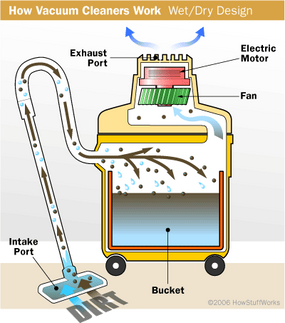
Wet and dry vacuums
Wet and dry models use airflow to collect both liquid and solid material. Their tanks and filters must be designed for the material being collected. Never assume a standard household vacuum can safely collect water.
Each type shows how a vacuum cleaner works physics under different design limits. The same pressure and airflow rules apply, but size, battery power, sealing, and floor contact change the result.
Why Vacuum Cleaners Lose Suction
A vacuum cleaner usually loses cleaning power because airflow is restricted or air escapes from the system.
Common causes include:
• A full dust bag or bin
• A clogged hose
• A dirty pre-motor filter
• A blocked exhaust filter
• A damaged hose
• A loose seal
• A tangled brush roll
• A nozzle set too low for a thick carpet
• A cracked belt or worn brush system
A useful troubleshooting method is to check the system from the floor upward. First inspect the nozzle. Then check the hose, dust container, filters, and seals.
I once found that a cleaner described as “weak” had no motor problem at all. Its pre-motor filter was packed with fine powder from a renovation job. After the filter was replaced, airflow improved at once. The lesson is simple: check restrictions before blaming the motor.
Do not wash a filter unless the manufacturer says it is washable. A damp filter can grow mold, restrict airflow, or damage the motor. Let washable filters dry fully before reinstalling them.
How to Test Vacuum Performance at Home
You do not need laboratory equipment to spot basic airflow problems. Simple tests can show whether a cleaner is working as it should.
Try these safe checks:
- Inspect the nozzle for hair, paper, and packed dirt.
- Listen for a change in motor pitch.
- Check whether the brush roll spins freely.
- Test the cleaner on the same patch of floor before and after filter cleaning.
- Look for air leaks around the hose and dust container.
- Compare performance with the brush roll on and off.
- Empty the bin or replace the bag when it reaches the recommended level.
Avoid placing your hand over the intake for a long time. This can restrict airflow and heat the motor. It also gives only a rough pressure test, not a complete measure of cleaning ability.
For a more accurate test, technicians use airflow meters and pressure gauges. These tools can measure airflow at the nozzle and pressure under restricted conditions. The results help show whether the problem is in the fan, hose, filter, or floor head.
The Benefits and Limits of Vacuum Physics
The physics of a vacuum cleaner provides several clear benefits:
• It removes loose dust without requiring direct hand contact.
• It can collect debris from cracks and fabric.
• It can reduce visible dirt on floors and furniture.
• It can capture some airborne particles when its filtration system is well sealed.
• It can combine airflow with brush action for deeper carpet cleaning.
Yet no vacuum cleaner removes every contaminant. Some fine particles may pass through weak filters or escape during bin emptying. A vacuum also cannot replace damp cleaning when a surface has sticky residue.
Vacuuming can move dust into the air if the machine leaks or if the exhaust filter is poor. People with allergies may benefit from sealed bags and high-efficiency filtration, but product claims should be read carefully. Filter quality, seal design, maintenance, and user technique all affect real-world performance.
A vacuum cleaner also uses electrical energy. More power can increase airflow, but energy use, noise, heat, and battery life must be considered. Good engineering aims for useful cleaning, not simply the highest motor rating.
Safety Tips Based on the Physics
Safe use follows directly from the machine’s design.
Keep liquids away from standard dry vacuums. Water can reach electrical parts and create a shock hazard. Use a wet and dry model only when it is designed and approved for liquid pickup.
Avoid vacuuming hot ash, burning material, sharp glass, and flammable liquids. These materials can damage the machine or create a fire risk.
Unplug the cleaner before clearing a brush roll or hose. A motor may start unexpectedly on some cordless or smart models if power remains connected.
Use the correct floor setting. A brush roll that works well on carpet may scratch delicate flooring or catch loose fabric.
Finally, keep vents clear. The motor needs moving air for cooling. Blocking the exhaust can cause overheating even when the intake seems clear.
Frequently Asked Questions About How a Vacuum Cleaner Works Physics
Does a vacuum cleaner create a true vacuum?
No. A household vacuum cleaner creates a region of lower air pressure, not a perfect vacuum. Room air remains outside and pushes air and loose dirt toward the cleaner’s intake.
What creates suction in a vacuum cleaner?
The spinning fan creates suction by moving air away from the intake and lowering pressure there. Atmospheric pressure then pushes surrounding air into the lower-pressure area.
Is higher wattage always better for cleaning?
No. Wattage shows how much electrical power the motor uses, but it does not directly measure cleaning ability. Airflow, pressure, seals, filters, brush action, and nozzle design also matter.
Why does a full bag reduce suction?
A full bag blocks some of the air passage and increases resistance. The fan then moves less air through the system, so the cleaner’s useful airflow and pickup ability decline.
How does a vacuum cleaner pick up heavy dirt?
Airflow can carry light particles, while pressure differences help move loose debris. Heavy or embedded dirt often needs a brush roll to loosen it before the air stream carries it away.
Can a vacuum cleaner remove allergens?
A well-sealed vacuum with an efficient filter can capture many particles that pass through its airflow. However, performance depends on the filter, seals, maintenance, and how carefully the dust container is emptied.
Why does a vacuum sound different when it is blocked?
A blockage changes the airflow and the load on the fan. This can change the motor’s pitch, reduce cooling airflow, and cause the motor to run hotter.
Conclusion
How a vacuum cleaner works physics comes down to a pressure difference, moving air, particle separation, and mechanical brushing. The motor spins a fan, the fan lowers pressure near the intake, and atmospheric pressure pushes air and dirt through the nozzle. Filters, bags, cyclones, seals, and brush rolls then determine how well the machine performs.
The best way to maintain that performance is practical: empty the bin, replace full bags, clean approved filters, clear blockages, and use the right floor setting. Treat the cleaner as a complete airflow system rather than judging it by motor wattage alone. Explore your machine’s manual, test its airflow safely, and share this guide with anyone curious about the physics behind everyday cleaning.

Liora Pennings is a seasoned chef and kitchen enthusiast with a passion for turning everyday cooking into an effortless experience. With years of hands-on culinary expertise, she specializes in practical techniques, ingredient know-how, and smart kitchen solutions that help home cooks elevate their meals. At KitchFlair.com, Liora shares her best tips, time-saving tricks, and honest product reviews to guide readers toward a more efficient, enjoyable, and inspired cooking routine. Whether you’re a beginner or a seasoned home chef, Liora’s friendly, knowledge-packed insights make every visit to the kitchen a little easier—and a lot more delicious.