Does Vacuum Cleaner Remove Dog Hair: Best Ways To Know
Yes, a vacuum cleaner can remove dog hair when it has strong suction and the right brush attachments.
Dog hair can cling to carpets, sofas, rugs, and clothing like tiny hooks. So, does vacuum cleaner remove dog hair completely? In most homes, yes—but results depend on the vacuum type, floor surface, brush roll, and cleaning routine. This guide explains what works, what fails, and how to choose and use a vacuum for less pet hair.
Does vacuum cleaner remove dog hair?
Yes, a vacuum cleaner can remove dog hair from most household surfaces. A vacuum creates suction that pulls loose hair into its dustbin or bag. Its brush roll also lifts hair that has become trapped in carpet fibers.
However, not every vacuum handles dog hair well. A basic model may collect loose hair from hard floors but leave embedded fur behind. A pet vacuum usually performs better because it combines strong suction with a motorized brush, sealed filtration, and tools made for upholstery and corners.
The best results usually come from matching the vacuum to the surface:
• Hard floors: Use a soft floor head or a vacuum setting that turns off the brush roll.
• Carpets: Use a rotating brush roll to lift hair from deep fibers.
• Sofas and chairs: Use a motorized upholstery tool or rubber pet-hair tool.
• Stairs: Use a compact handheld vacuum with strong suction.
• Car interiors: Use a crevice tool and a powered mini brush.
In hands-on vacuum testing, one common mistake is moving the cleaner too fast. Dog hair needs time to loosen and enter the airflow. Slow, steady passes often remove more hair than repeated quick strokes.
How vacuum cleaners pick up dog hair
A vacuum removes dog hair through three main actions: agitation, suction, and filtration.
Agitation lifts trapped hair
Agitation means brushing or loosening hair from a surface. A rotating brush roll works like a small rake. It reaches into carpet fibers and lifts hair so the suction path can collect it.
This step matters because dog hair often becomes woven into fabric. A smooth suction head may glide over the top while leaving hair below. A powered brush roll is more useful for thick rugs and carpets.
Some vacuums use rubber fins instead of traditional bristles. These fins can work well on pet hair because rubber creates friction and gathers fur into clumps.
Suction moves hair into the vacuum
After the brush loosens the hair, suction pulls it through the nozzle and hose. Strong suction helps, but airflow also matters. A vacuum with high suction but a blocked filter may still perform poorly.
Airflow can drop when:
• The dustbin is full.
• The filter is dirty.
• The hose is clogged.
• Hair is wrapped around the brush roll.
• The vacuum head does not sit properly on the floor.
This is why does vacuum cleaner remove dog hair is not only a question of motor strength. Maintenance has a direct effect on cleaning power.
Filtration keeps fine particles contained
Dog hair may carry dust, dander, pollen, and outdoor debris. A good filter traps these particles instead of sending them back into the room.
A sealed vacuum with a high-efficiency filter can help improve indoor air quality. It does not remove every allergy risk, but it can reduce airborne dust when used and maintained correctly.
Which vacuum type is best for dog hair?
Different vacuum designs suit different homes. The best choice depends on your dog, floor type, shedding level, and cleaning habits.
Upright vacuums
Upright vacuums are often strong choices for homes with wall-to-wall carpet. They usually have wide cleaning heads, powered brush rolls, and large dustbins.
Choose an upright model if:
• Your home has lots of carpet.
• Your dog sheds heavily.
• You want to clean large areas quickly.
• You prefer strong floor cleaning over a lightweight design.
Their main drawback is weight. Some upright vacuums are difficult to carry up stairs or use on furniture.
Canister vacuums
Canister vacuums offer strong suction and flexible tools. Their separate hose makes it easier to clean stairs, sofas, baseboards, and hard-to-reach areas.
They can be excellent for mixed flooring. Still, the body may feel less convenient when you need to move quickly from room to room.
Stick vacuums
Stick vacuums are light and easy to grab for daily cleaning. Many cordless models include motorized floor heads that work well on short carpet and hard floors.
They are useful for homes with moderate shedding. A small dustbin may require frequent emptying, especially during shedding season.
Robot vacuums
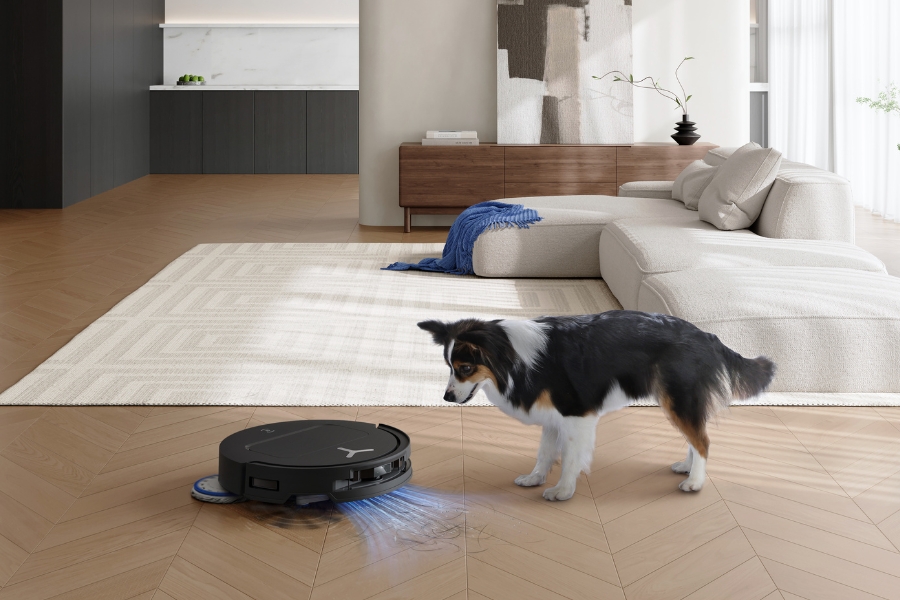
Robot vacuums can collect loose dog hair from floors on a regular schedule. They are helpful for daily maintenance, but they may struggle with corners, stairs, thick rugs, and hair stuck to furniture.
A robot vacuum works best as part of a cleaning plan. It should not replace a full-size vacuum for deep cleaning.
Handheld vacuums
Handheld models are useful for sofas, pet beds, stairs, and cars. Look for a motorized brush or rubber nozzle rather than a plain suction opening.
A handheld vacuum may not be suitable for cleaning an entire home, but it can quickly remove the hair that people notice most.
What features help remove dog hair?
When comparing vacuums, focus on features that address real pet-hair problems. Marketing terms can sound impressive, but practical design matters more.
A powered brush roll
A motorized brush roll is one of the most important features for carpeted floors. It lifts hair that suction alone may miss.
Look for a brush roll that can be removed without special tools. This makes it easier to cut away wrapped hair and keep the cleaner working well.
Strong, steady airflow
The motor should provide steady airflow from the cleaning head to the dustbin. A vacuum that loses power quickly may have a weak filter system or a narrow, clog-prone passage.
Do not judge performance by motor wattage alone. Motor power does not always predict how well a vacuum removes dog hair from a particular floor.
Tangle-resistant design
Long dog hair can wrap around a brush roll. Some models use an anti-tangle comb, rubber fins, or an automatic cutting system.
These features reduce maintenance, but they do not remove the need for inspection. Even a tangle-resistant brush can collect hair over time.
A sealed filtration system
A sealed system helps prevent dust and dander from escaping around the vacuum body. A high-efficiency filter is helpful, especially in homes with allergy concerns.
Check whether the filter is washable or replaceable. Follow the care instructions because a wet filter can damage the motor if installed too soon.
Useful pet tools
Helpful attachments include:
• A motorized mini brush for furniture.
• A rubber tool for upholstery.
• A crevice tool for baseboards and gaps.
• A dusting brush for shelves and vents.
• A flexible hose for stairs and car seats.
The right tool can make the difference between removing hair and simply pushing it around.

How to vacuum dog hair from different surfaces
The correct technique changes with the surface. Using one setting everywhere can reduce results or even damage delicate materials.
Carpet
Start with the highest practical brush setting. Move slowly in two directions, such as north to south and then east to west.
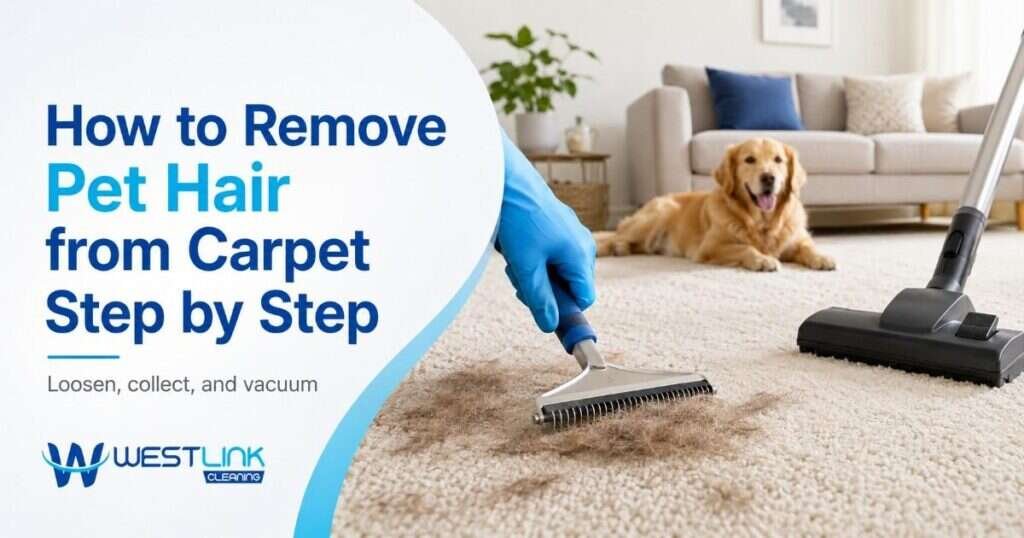
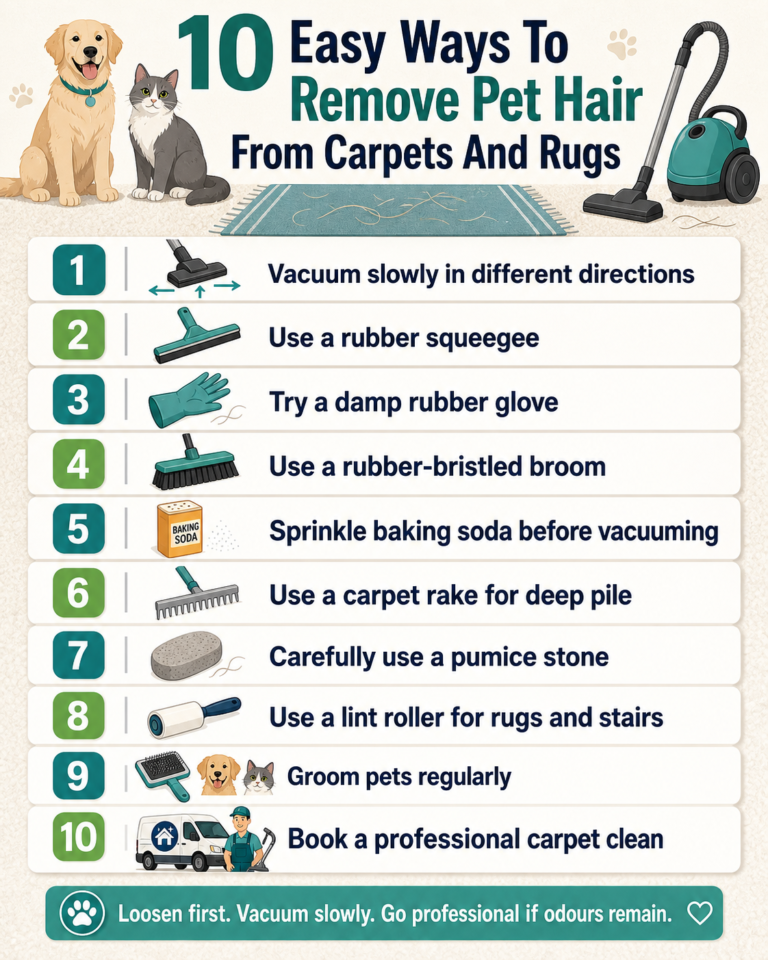
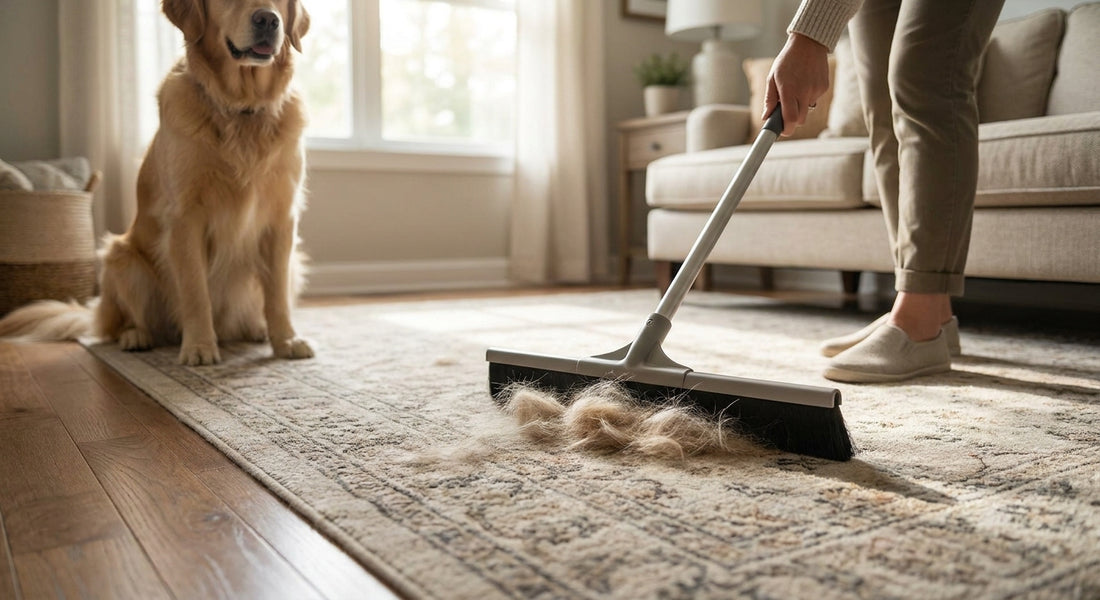
For stubborn hair, lightly mist a rubber broom or use a rubber pet-hair brush before vacuuming. Do not soak the carpet. Excess moisture can cause odors and may damage some carpet backing.
Hardwood and tile
Use a soft floor head or turn off the rotating brush if the manufacturer recommends it. A stiff brush roll can scatter hair or mark some surfaces.
Vacuum along wall edges and under furniture. Dog hair often gathers in these areas because air movement pushes it into corners.
Upholstery
Check the fabric care label first. Use a low or medium setting on delicate materials, and test an unseen area.
Move the upholstery tool in short strokes. For hair stuck to the fabric, a rubber glove or rubber squeegee can gather it before vacuuming.
Rugs
Shake out small rugs outdoors when practical, then vacuum both sides if the material allows it. Use a brush roll on durable rugs and a gentler setting on delicate designs.
Watch for fringe. Loose fringe can become tangled in a powered head.
Pet beds
Remove the cover if it is washable. Wash it according to the label, then vacuum the bed insert with an upholstery tool.
A vacuum can remove surface hair, but washing is often needed to remove oils, odor, and fine dander.
Cars
Use a crevice tool along seat seams and a motorized mini brush on fabric seats. Work from the top down so loosened hair falls toward the floor.
A small rubber brush can gather hair from mats before the vacuum collects it.