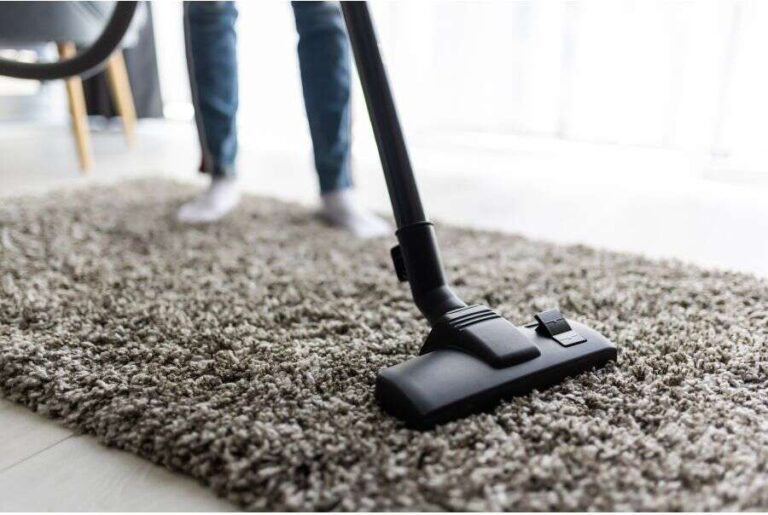
Can You Plug A Vacuum Cleaner Into An Extension Cord: Yes?
Yes, you can plug a vacuum cleaner into an extension cord if the cord is properly rated and undamaged.
Knowing whether you can plug a vacuum cleaner into an extension cord is more than a simple yes-or-no question. Cord length, wire size, motor power, outlet safety, and signs of overheating all matter. This guide explains how to choose the right cord, avoid common mistakes, and clean safely.
Can You Plug a Vacuum Cleaner Into an Extension Cord?
Yes, most household vacuum cleaners can use an extension cord. The cord must handle the vacuum’s electrical load and be suitable for the distance you need to cover.
A vacuum cleaner often draws between 5 and 12 amps. Some heavy-duty shop vacuums draw more. Check the label on the vacuum, its manual, or the plug for the amp rating before choosing an extension cord.
A short, heavy-duty cord is usually safer than a long, thin one. Think of electricity like water moving through a pipe. A thin wire makes it harder for power to flow, which can create heat.

When Is It Safe to Use an Extension Cord With a Vacuum?
It is safe to use an extension cord with a vacuum when all parts of the setup are in good condition. The cord should have a current rating equal to or higher than the vacuum’s rating.
Follow these basic rules:
• Use a cord with the correct wire gauge.
• Choose the shortest cord that will reach.
• Inspect the cord before every use.
• Plug the cord directly into a wall outlet.
• Keep the cord away from heat, water, sharp edges, and moving parts.
• Unplug the vacuum before clearing a jam or removing a brush roll.
• Stop using the cord if the plug, socket, or wire feels hot.
A properly sized extension cord should stay cool during normal use. Slight warmth may occur, but noticeable heat, a burning smell, buzzing, or discoloration signals a problem.

How to Choose the Right Extension Cord for a Vacuum Cleaner
Choosing the right extension cord begins with three details: the vacuum’s amperage, the cord’s wire gauge, and the cord’s length.
Check the Vacuum’s Amp Rating
Look for a label on the vacuum body or power cord. It may show amps, watts, or volts. Most US household vacuums use 120 volts.
You can estimate amps with this formula:
Amps = watts ÷ volts
For example, a 1,200-watt vacuum using 120 volts draws about 10 amps. The motor may briefly draw more power when it starts, so do not choose a cord that barely meets the listed rating.
Understand Extension Cord Wire Gauge
Wire gauge describes the thickness of the wire. A lower number means a thicker wire.
For many household vacuum cleaners:
• 16-gauge cords work for lighter vacuums and shorter runs.
• 14-gauge cords offer more capacity and are a good general choice.
• 12-gauge cords are best for powerful shop vacuums, long runs, or demanding jobs.
Always check the rating printed on the cord. Gauge alone does not tell the entire story because length and cord construction also affect performance.
Match the Cord Length to the Job
Longer cords create more voltage drop. This can make a motor run less efficiently and produce extra heat.
Use a 25-foot cord when possible. A 50-foot, 14-gauge cord may suit many standard vacuums. For a 100-foot run, a 12-gauge cord is often a better choice, especially for a shop vacuum.
These are general examples, not universal limits. The cord label and manufacturer instructions should always take priority.

What Extension Cord Gauge Do You Need?
The right extension cord gauge depends on the vacuum’s amps and the cord’s length. A thicker cord is usually the safer choice when you are unsure.
A simple guide looks like this:
| Vacuum use | Suggested cord |
|---|---|
| Small household vacuum, short distance | 16-gauge cord |
| Standard upright vacuum, up to about 50 feet | 14-gauge cord |
| High-power vacuum or shop vac | 12-gauge cord |
| Long run or frequent heavy use | 12-gauge cord |
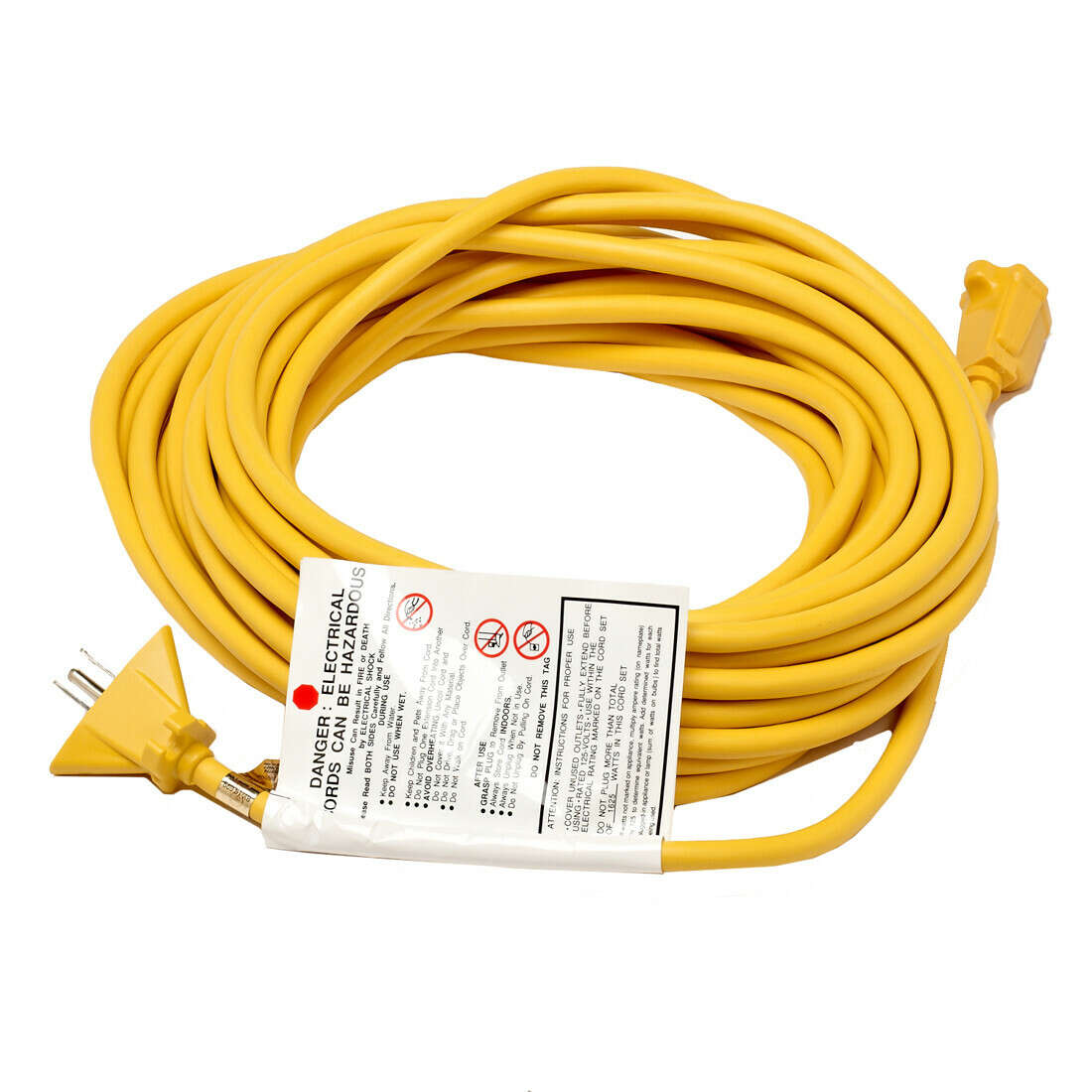
Do not rely only on the words “heavy duty” on the package. Look for the actual amp rating. A cord marked for outdoor use may be stronger, but it still needs the right electrical capacity.
Three-prong grounded cords are the normal choice for vacuums with grounded plugs. Never remove the ground pin to make a plug fit a two-slot outlet.
Why Extension Cord Length and Thickness Matter
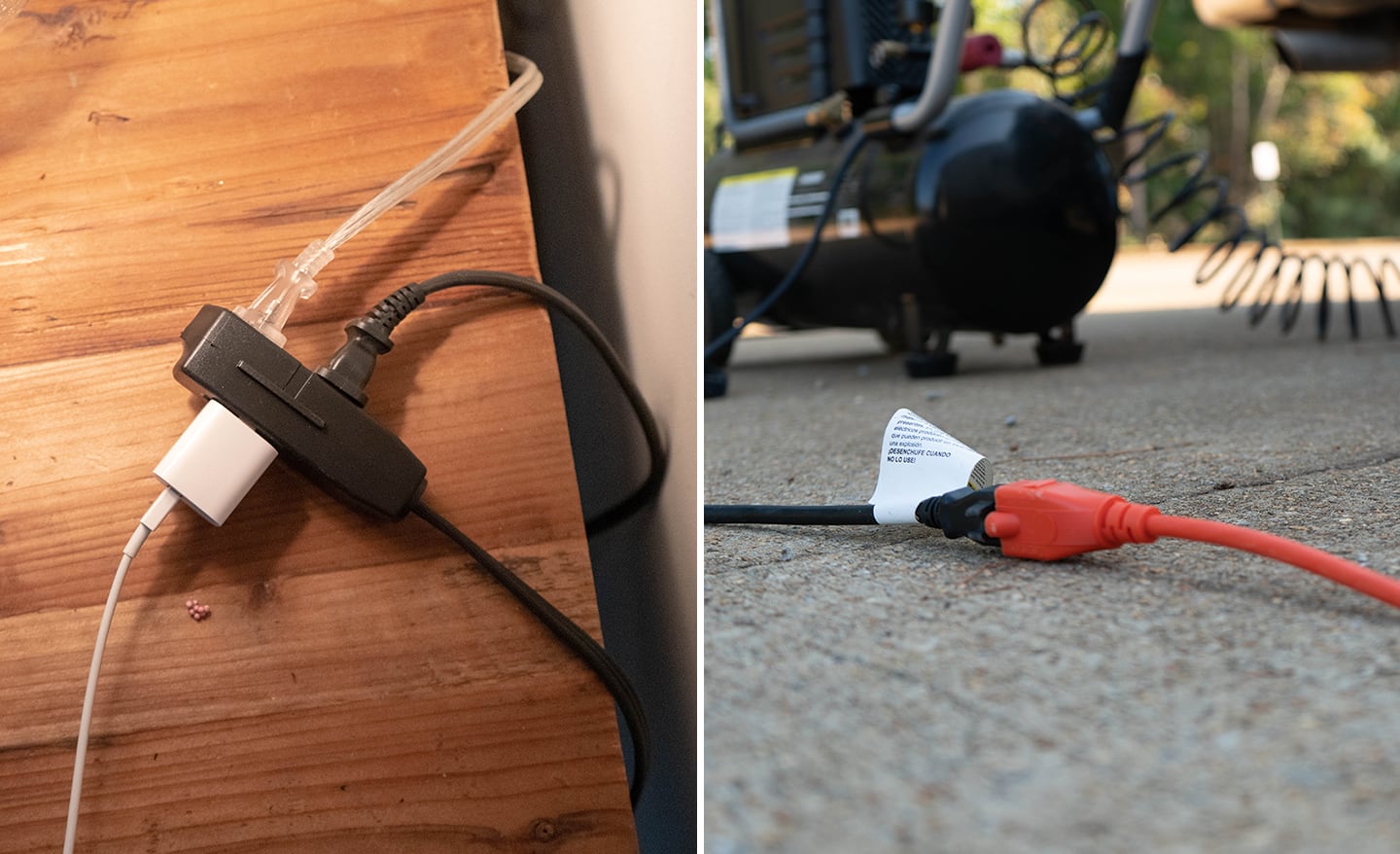
A long, thin cord can cause voltage drop. Voltage drop means the vacuum receives less voltage than it needs while operating.
The vacuum may still run, but its motor can work harder. Over time, this may lead to poor suction, excess heat, nuisance breaker trips, or reduced motor life.
I have seen this happen when someone uses a lightweight 100-foot cord for a powerful shop vacuum. The vacuum sounded strained, and the cord became warm. Replacing it with a shorter, thicker cord solved the issue and made the motor sound normal again.
The lesson is simple: do not treat an extension cord as invisible plumbing. It is part of the electrical circuit, and its size affects how safely the vacuum operates.

Can You Plug a Vacuum Into a Power Strip?
You generally should not plug a high-powered vacuum into a basic power strip. Many power strips are designed for low-power electronics, such as lamps, chargers, and computers.
A vacuum motor can draw a strong starting current. That demand may overheat a low-quality power strip or trip its built-in breaker.
Use a wall outlet whenever possible. If you need extra reach, use one properly rated extension cord instead of combining a power strip with an extension cord.
Avoid plugging a vacuum into:
• A damaged power strip
• A low-cost strip with no clear rating
• A surge protector not rated for motor loads
• A power strip already running several appliances
A power strip with a circuit breaker is not automatically suitable for a vacuum. The strip must still have the correct amp rating and wire size.

Can You Use Multiple Extension Cords With a Vacuum?
Do not connect multiple extension cords together unless the manufacturer specifically permits it. Connecting cords end to end is called daisy chaining.
Daisy chaining increases total length and resistance. It also creates more plug connections that can loosen, collect dust, or become exposed to moisture.
If one cord is too short, replace it with a single longer cord of the correct gauge. This is safer and easier to inspect.
Keep all connections fully seated. Never cover a connection with a rug, blanket, or pile of clothing. Covered connections can trap heat and create a fire risk.
Are Indoor and Outdoor Vacuum Extension Cords Different?
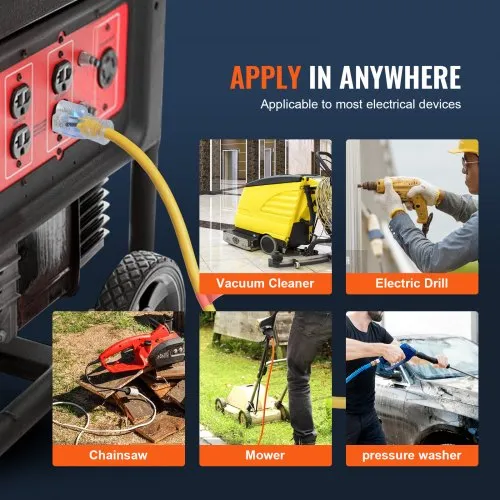
An outdoor-rated extension cord is built to resist moisture, sunlight, and rough use. It may be useful for a wet-dry vacuum or outdoor cleaning job, but it does not automatically make indoor use safer.
For indoor vacuuming, a listed indoor cord with the right rating is usually enough. For outdoor work, select a cord marked for outdoor use and protect every connection from rain and standing water.
Never use a regular indoor extension cord outdoors. Its jacket may not withstand weather, and moisture can increase the chance of shock.
Even with an outdoor-rated cord, keep the plug connection dry. An outdoor-rated cord is not permission to vacuum through puddles unless the vacuum itself is designed for that task.
Extension Cord Safety Tips for Vacuum Cleaners
Safe vacuuming depends on more than choosing the correct gauge. How you place and use the cord matters too.
Inspect the Cord
Before plugging in the vacuum, look for:
• Cuts, cracks, or exposed wire
• Flattened areas
• Loose plugs
• Bent grounding pins
• Burn marks
• Frayed ends
Replace damaged cords. Electrical tape is not a reliable repair for a damaged extension cord.
Keep the Cord Visible
Do not run the cord under rugs or furniture. Avoid closing it in doors or windows. A trapped cord can suffer hidden damage and overheat.
Move the cord behind you as you clean. Keep it away from the vacuum brush, wheels, and sharp furniture edges.
Avoid Water
Never use a standard vacuum to pick up water. A wet-dry vacuum is designed for that purpose, but it still needs proper electrical protection.
Do not handle the plug with wet hands. Do not use an extension cord near a sink, bathtub, wet basement, or outdoor puddle unless the equipment and outlet are designed for that environment.
Check for Heat
After several minutes, touch the plug and cord carefully. They should not feel hot. A hot cord or plug means the setup may be overloaded, damaged, or poorly connected.
Unplug it and find the cause before using the vacuum again.
Should You Use a GFCI Outlet With a Vacuum?
A ground-fault circuit interrupter, or GFCI, helps protect people from electric shock. It monitors the flow of electricity and can shut off power when current leaks from the circuit.
GFCI protection is especially important in garages, basements, kitchens, laundry areas, bathrooms, and outdoor locations. Many US electrical safety rules require GFCI protection in damp or wet areas.
A GFCI does not replace a properly rated extension cord. It also does not protect against every overload, damaged wire, or motor failure.
If a GFCI trips repeatedly, stop using the vacuum and investigate. Do not keep resetting it without finding the problem.
Common Mistakes to Avoid
Many extension cord problems come from small choices that seem harmless. The most common mistakes include:
• Using a thin indoor cord with a powerful shop vacuum
• Choosing a cord only because it is long
• Connecting two or more cords together
• Plugging the vacuum into a crowded power strip
• Running the cord under a rug
• Using a damaged or repaired cord
• Removing the ground pin
• Using an indoor cord outside
• Ignoring a hot plug or burning smell
• Leaving the cord tightly coiled while the vacuum runs
A tightly coiled cord may hold heat. Uncoil the extension cord fully before using a vacuum, especially when the vacuum draws several amps or runs for a long time.
A Safe Setup Example
Suppose you have a 10-amp upright vacuum and need to clean a room 30 feet from the outlet. A sound setup would use a single 25- or 50-foot extension cord with a clear rating above 10 amps.
A 14-gauge cord would give you a comfortable safety margin. Plug it directly into the wall, uncoil it, and keep it in clear view as you move.
Now imagine a 12-amp shop vacuum used 75 feet from the outlet. A short, lightweight 16-gauge cord would be a poor choice. A single 12-gauge cord rated for the distance would be more appropriate.
These examples show why the answer to “can you plug a vacuum cleaner into an extension cord” depends on the full setup, not just the vacuum.
What I Learned From Using Vacuum Extension Cords
The biggest practical mistake is choosing a cord based on reach alone. It is tempting to buy the longest, cheapest cord, but that choice can create resistance and heat.
A shorter cord with thicker wire has worked better in every demanding cleaning setup I have tested. The vacuum starts more smoothly, the cord stays cooler, and there is less trouble with breaker trips.
I also recommend marking the cord for its intended use. Keep one cord for light indoor appliances and another heavy-duty cord for a shop vacuum or garage work. This simple habit prevents guesswork.
If a vacuum suddenly sounds louder, loses power, or makes the extension cord warm, stop. Those signs deserve attention rather than another cleaning pass.
When Should You Avoid an Extension Cord?
Avoid using an extension cord when the vacuum manufacturer says not to use one. Some commercial, central, cordless, or specialized machines may have different requirements.
You should also avoid the setup when:
• The outlet is loose or damaged
• The cord rating is unclear
• The cord cannot reach without tension
• The vacuum trips the breaker
• The plug or cord becomes hot
• You are cleaning a wet area with equipment not rated for it
• The extension cord must pass through a doorway or under a rug
If the outlet is too far away, installing a properly located outlet is a better long-term solution. A licensed electrician can assess the circuit, outlet, and grounding.
Frequently Asked Questions About Can You Plug a Vacuum Cleaner Into an Extension Cord
Can you plug a vacuum cleaner into any extension cord?
No. The extension cord must have a suitable amp rating, wire gauge, and length. A thin or damaged cord may overheat while the vacuum runs.
Is a 16-gauge extension cord safe for a vacuum?
A 16-gauge cord can be safe for a small vacuum over a short distance if its rating meets the vacuum’s amp demand. For a powerful vacuum or a long run, choose a thicker 14- or 12-gauge cord.
Can you plug a vacuum cleaner into a 100-foot extension cord?
You can, but a 100-foot cord needs a suitable gauge and rating. A 12-gauge cord is often a better choice for high-power vacuums because long, thin cords can cause voltage drop and heat.
Can a vacuum cleaner trip a circuit breaker when using an extension cord?
Yes. The vacuum may overload the circuit, or the extension cord may be too small for the load. A damaged vacuum, crowded circuit, or motor problem can also trip the breaker.
Is it safe to use a vacuum with an extension cord under a rug?
No. Do not place an extension cord under a rug. Heat can build up, and walking over the cord may damage its insulation.
Can you plug a shop vacuum into an extension cord?
Yes, but shop vacuums often draw more power than household vacuums. Use one short, heavy-duty cord with a rating that meets or exceeds the shop vacuum’s amp requirement.
Should a vacuum extension cord be fully uncoiled?
Yes. Fully uncoil the cord before use, especially for long cleaning sessions or powerful vacuums. A coiled cord can hold heat and may become unsafe.
Conclusion
You can plug a vacuum cleaner into an extension cord when the cord is rated for the vacuum, sized for its length, and free from damage. Use one cord instead of daisy-chaining, connect it directly to a wall outlet, keep it dry and visible, and stop immediately if it becomes hot.
For most household jobs, a short 14-gauge cord is a practical choice. Powerful shop vacuums and long runs may need a 12-gauge cord. Check the labels, follow the manufacturer’s instructions, and make safety part of every cleaning routine.
Have a question about your vacuum or extension cord setup? Share the model, amp rating, and cord length in the comments, or explore more home electrical safety guides before your next cleaning job.

Liora Pennings is a seasoned chef and kitchen enthusiast with a passion for turning everyday cooking into an effortless experience. With years of hands-on culinary expertise, she specializes in practical techniques, ingredient know-how, and smart kitchen solutions that help home cooks elevate their meals. At KitchFlair.com, Liora shares her best tips, time-saving tricks, and honest product reviews to guide readers toward a more efficient, enjoyable, and inspired cooking routine. Whether you’re a beginner or a seasoned home chef, Liora’s friendly, knowledge-packed insights make every visit to the kitchen a little easier—and a lot more delicious.