Can You Peel Butternut Squash With A Potato Peeler: Yes
Yes, you can peel butternut squash with a potato peeler, especially after trimming it securely.
Butternut squash has firm, thick skin, so peeling it can feel like a chore. A sharp potato peeler works well when you use the right method. This guide explains how to peel butternut squash safely, which peelers work best, common mistakes to avoid, and when another method may be easier.
Can You Peel Butternut Squash With a Potato Peeler?
Yes, you can peel butternut squash with a potato peeler. A sharp, sturdy peeler can remove the skin in thin strips without wasting much of the soft flesh underneath.
The key is to make the squash stable first. Whole butternut squash is round, hard, and easy to slip on. Cutting off both ends creates flat surfaces, which makes peeling safer and gives you better control.
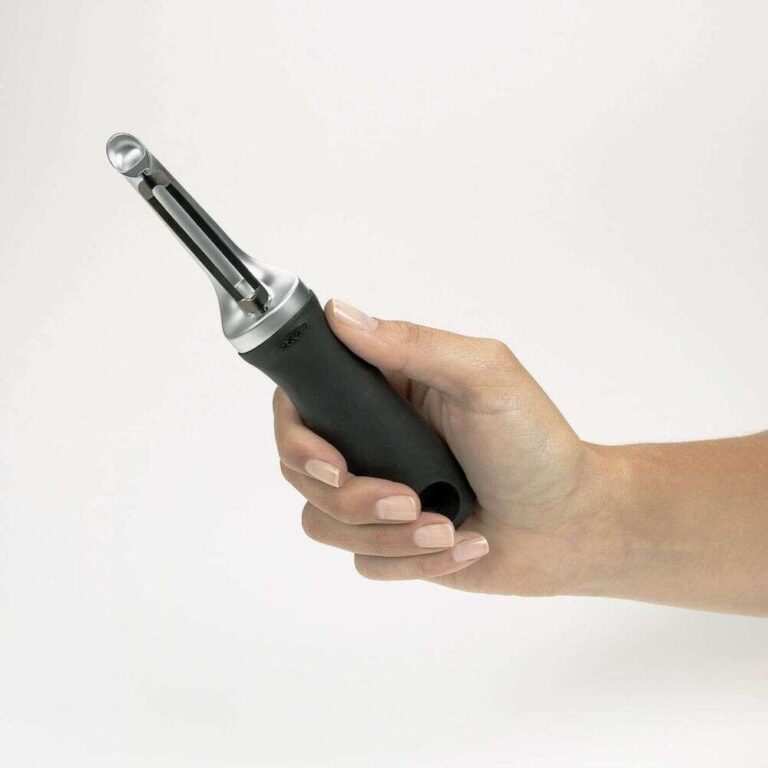
A standard straight peeler works well for a fresh squash. A Y shaped peeler may feel more comfortable because it lets you use short strokes and keep your hand behind the blade.
When you peel butternut squash with a potato peeler, expect to make several passes. The skin may be tough in spots, especially near the ridges. You do not need to remove every pale mark, but the final surface should feel smooth.

The Best Way to Peel Butternut Squash With a Potato Peeler
Follow these steps for a safer and cleaner process.
1. Wash and dry the squash
Rinse the squash under cool running water. Use a clean vegetable brush if the skin has soil on it.
Dry it well with a towel. A dry squash is less likely to slip while you cut or peel it.
2. Trim both ends
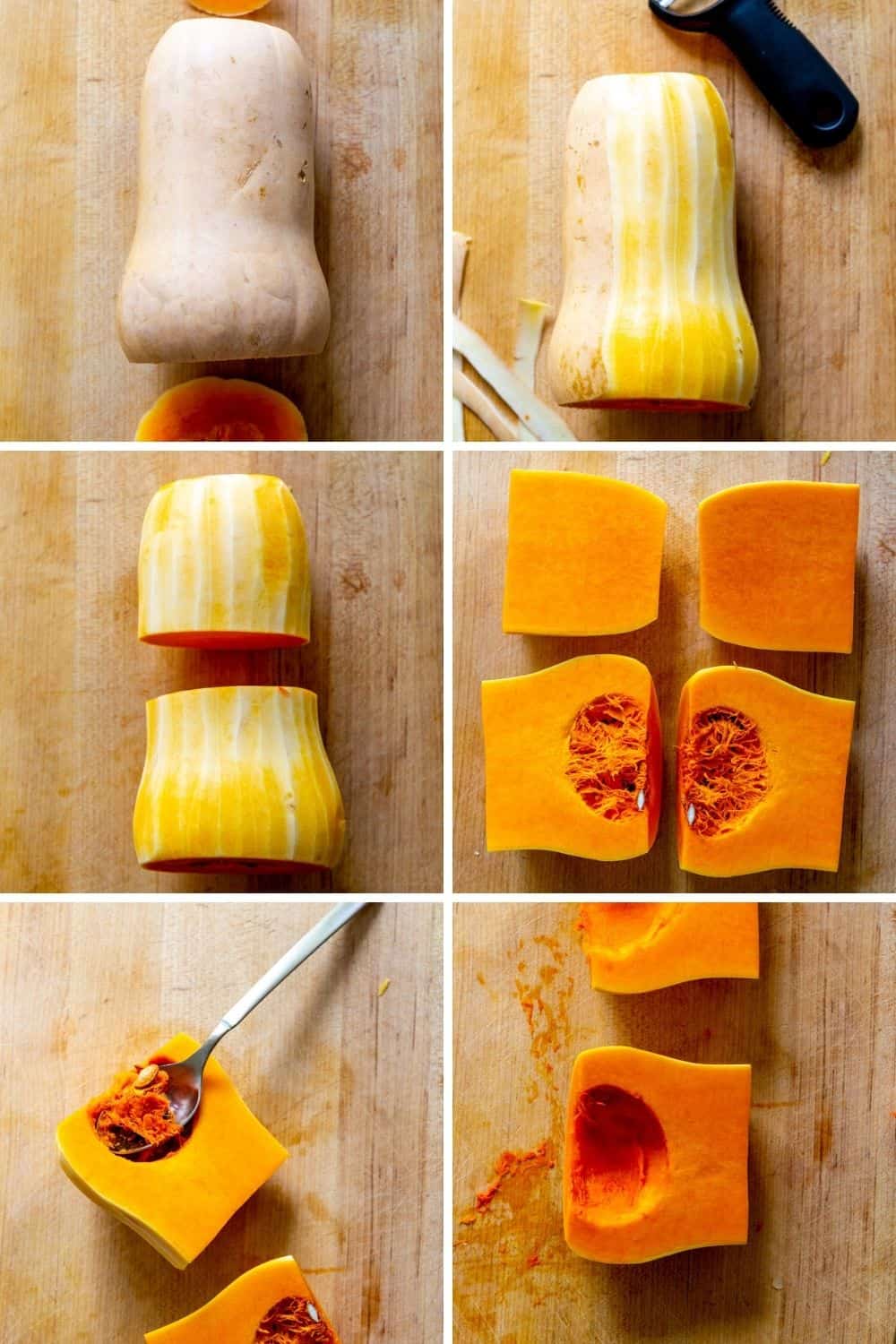
Place the squash on a stable cutting board. Hold it firmly, then cut off the stem end and the rounded base.
Remove only a small slice from each end. The goal is to create two flat surfaces, not to waste the squash.
3. Cut the squash in half
Stand the squash upright on its wider flat end. Carefully cut down through the center with a sharp chef’s knife.
If the squash feels too hard, do not force the knife. Microwave the whole squash for about two minutes, let it cool briefly, and then try again. This can soften the skin slightly, although the squash may become warmer and more slippery.
4. Scoop out the seeds
Use a sturdy spoon to remove the seeds and stringy pulp. You can save the seeds for roasting if they are clean and fresh.
Removing the seeds before peeling makes each half lighter and easier to hold.
5. Peel in short strokes
Hold one half on its side with the cut surface facing down. Use the potato peeler in short strokes away from your fingers.
Start at the narrow neck, where the skin is often easier to remove. Then work around the wider bulb. Turn the squash as needed instead of twisting your wrist.
6. Check for remaining skin
Run your fingers over the squash. If you feel a rough or waxy patch, peel that area again.
A few thin patches may soften during cooking, but thick skin can remain chewy. Remove any areas that look tough or greenish.
Why a Potato Peeler Works for Butternut Squash
A potato peeler removes only a thin layer of skin at a time. That makes it more precise than a knife and reduces the amount of edible flesh you lose.
The long neck of a butternut squash is especially easy to peel with a potato peeler. Its shape is smooth and fairly straight, much like a large vegetable. The rounded bottom takes more care because it has curves and ridges.
Peeling also helps the squash cook more evenly. Without the skin, cubes can brown and soften on all sides. This is useful for roasted squash, soup, curry, pasta sauce, and mashed squash.
The skin is technically edible after long cooking, but many people find it too firm. For a smooth soup or creamy mash, removing the skin gives a better texture.
Which Potato Peeler Is Best?
Not every peeler handles hard winter squash well. A weak or dull peeler may bend, catch, or make the task harder.
Look for these features:
• A sharp stainless steel blade that cuts cleanly
• A firm handle that does not flex
• A comfortable grip that stays secure when wet
• A wide blade for covering more surface
• A Y shaped design if you prefer short, controlled strokes
A swivel peeler can work well because its blade follows the curve of the squash. A serrated peeler may grip firm skin better, though it can leave a rougher surface.
Avoid using a tiny vegetable peeler with a narrow blade if the squash is very hard. It may still work, but you will need more strokes and more pressure.
Test the peeler on a small section first. If it glides through the skin, continue. If it skips or requires force, sharpen it or choose a stronger tool.

Safety Tips for Peeling Butternut Squash
The main risk is not the peeler. It is the unstable squash and the pressure needed to cut or peel it.
Use these safety habits:
• Work on a sturdy cutting board
• Place a damp kitchen towel under the board
• Dry the squash before handling it
• Use a sharp knife for trimming and cutting
• Keep your fingers behind the peeler blade
• Peel away from your body
• Stop when the squash begins to slide
• Do not hold the squash in your palm while peeling
A dull peeler can be more dangerous than a sharp one. It forces you to push harder, which makes slips more likely.
If your hands feel tired, pause for a moment. Cooking should not feel like a contest. A short break often gives you better control and a cleaner result.

When a Potato Peeler May Not Be the Best Choice
You can peel butternut squash with a potato peeler, but it is not the only method. Some squash are unusually large, dry, or ridged. In those cases, a knife may be faster.
A knife works best when you cut the squash into manageable sections first. Slice off the ends, cut the squash into two or three pieces, stand each piece upright, and slice the skin away from top to bottom.
This method removes more flesh than a peeler, so use a controlled hand. Keep the flat side on the board whenever possible.
You can also cook the squash with the skin on. Cut it in half, remove the seeds, and roast it cut side down. Once tender, the flesh usually separates from the skin with a spoon.
This is often the easiest option for mashed squash, soup, and purée. It also avoids the need to handle a hard raw squash.
Choose the method based on the recipe:
• Use a potato peeler for raw cubes or thin slices
• Use a knife for very tough or uneven skin
• Roast with the skin on for mash or soup
• Use a microwave briefly when cutting feels difficult

Common Mistakes to Avoid
Many peeling problems come from rushing. Butternut squash needs steady pressure, not force.
Using a dull peeler
A dull blade tears the skin instead of slicing it. It may also leave deep grooves in the flesh.
Replace the peeler if the blade feels rough or skips across soft vegetables. A sharp tool saves time and improves safety.
Peeling the whole squash while it is upright
An upright squash can wobble. If it falls, the peeler may move toward your hand.
Cut the squash first and lay each piece on a flat surface. This simple change gives you much more control.
Taking off too much flesh
The orange flesh is the part you want to eat. Keep the peeler close to the skin and use light pressure.
Do not chase every tiny pale line. Check the texture instead. Remove sections that feel hard or waxy.
Ignoring the neck and base differences
The neck is straight and easy to peel with long strokes. The rounded base needs shorter strokes and more turning.
Treating both sections the same can lead to slips. Slow down around the bulb and ridges.
Trying to peel a wet squash
Water makes the surface slick. Dry the squash before cutting and peeling.
If the board becomes wet, wipe it clean. A dry work area makes a noticeable difference.

My Practical Experience With Peeling Butternut Squash
In my kitchen tests, the most reliable approach was to trim the squash, cut it in half, and peel each half on its side. Trying to peel a whole squash at once felt awkward and required too much pressure.
My first mistake was using a small, dull peeler. It removed the skin in thin, broken strips and left my hand tired. Switching to a wide Y shaped peeler made the work much smoother.
I also learned not to over peel the rounded base. The curves make it easy to remove more flesh than needed. Short strokes and frequent turns give a cleaner result.