Can A Stainless Steel Mixing Bowl Go In The Oven: Yes?
Yes, a stainless steel mixing bowl can go in the oven if it is all metal and labeled oven-safe.
The real answer depends on the bowl’s design, handles, coating, and heat limit. I have used stainless steel bowls for roasting, baking, and warming food, and the safest results came from checking the maker’s instructions first. This guide explains how to use one without damaging the bowl or creating a safety risk.
Can a stainless steel mixing bowl go in the oven?
In most cases, a stainless steel mixing bowl can go in the oven. Stainless steel is a strong metal that handles normal baking temperatures well. Many cooks use metal bowls to hold batter, roast small foods, or create a double boiler.
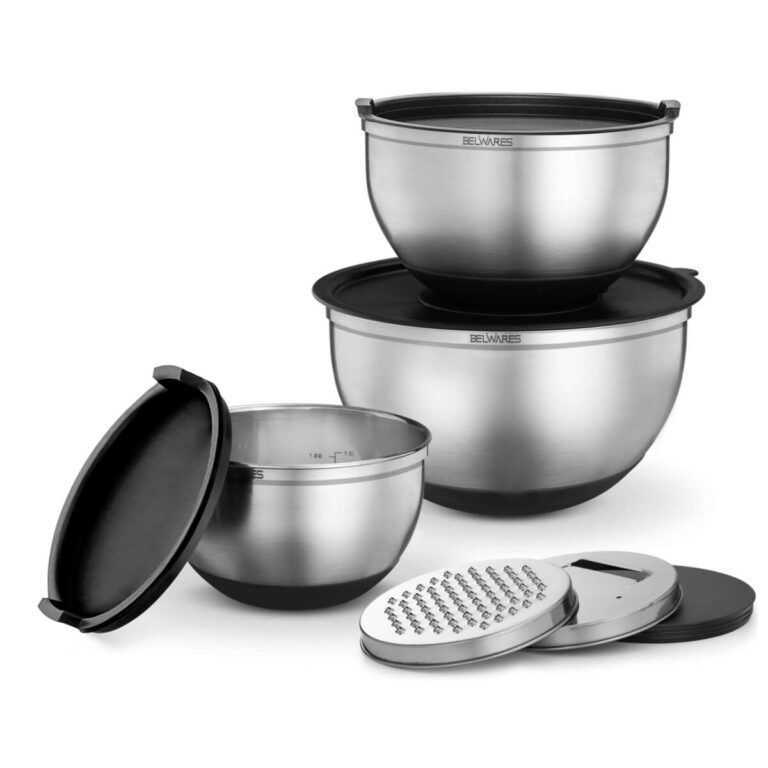
However, not every stainless steel mixing bowl is made for oven use. Some have plastic bases, silicone grips, painted surfaces, glued parts, or thin walls that may warp under high heat.
Before using the bowl, check these points:
• The bowl is made entirely of metal.
• The manufacturer lists an oven-safe temperature.
• The bowl has no plastic, rubber, wood, or silicone parts.
• The bowl has no nonstick coating that could break down.
• The bowl is stable and large enough for the food inside.
If the product label says “not for oven use,” follow that warning even if the bowl looks like plain steel. The label reflects the full design, not just the metal surface.

Why stainless steel works well in the oven
Stainless steel is an iron-based alloy that includes chromium. The chromium helps form a thin protective layer on the surface. This layer gives stainless steel its resistance to rust and stains.
The metal also has a high melting point compared with common household oven temperatures. A home oven often reaches 350°F to 500°F, while stainless steel melts at a much higher temperature. Still, melting is not the only concern.
A bowl can become unsafe or damaged long before the steel melts. Heat can affect:
• Welded seams
• Handles and attachments
• Decorative coatings
• Glued parts
• Bowl shape and balance
• Food residue stuck to the surface
Stainless steel also conducts heat differently from glass or ceramic. It may heat quickly in some areas and stay cooler in others. This can lead to uneven cooking, especially when the bowl is thick, deep, or placed close to an oven heating element.
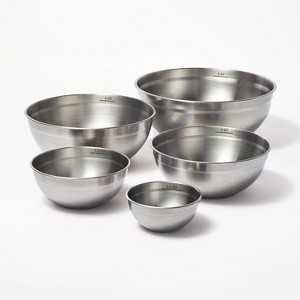
When a stainless steel mixing bowl is oven-safe
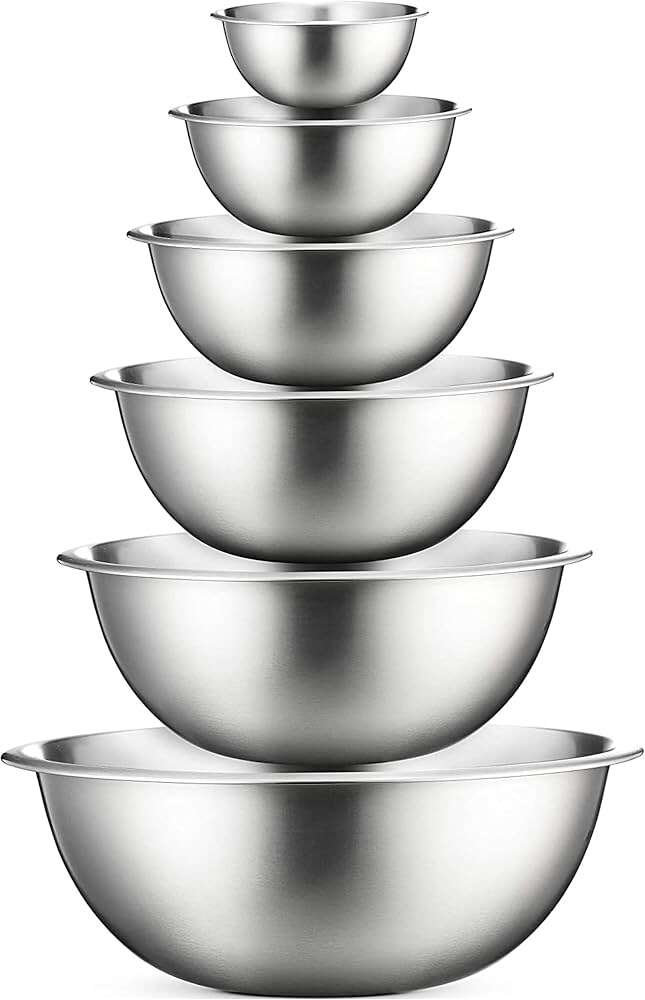
A stainless steel mixing bowl is usually suitable for oven use when it meets a few basic conditions. The safest bowls are made from food-grade stainless steel with a simple, all-metal design.
Look for the following signs:
• An oven-safe symbol on the packaging or bowl
• A temperature rating in the care guide
• A product description that mentions baking or oven use
• A plain stainless steel body with no attached parts
• A sturdy rim and well-finished seams
Some manufacturers rate their bowls for temperatures around 400°F to 500°F. Others allow higher temperatures. Never assume that one brand’s rating applies to another brand.
The phrase “stainless steel” only describes the main material. It does not confirm that every part of the product can handle oven heat. A bowl with a silicone base may be oven-safe at one temperature but unsafe at a higher setting.

When you should not put a stainless steel bowl in the oven
Do not put a stainless steel bowl in the oven if you cannot confirm that it is designed for heat. This is especially important for inexpensive bowls with unknown construction.
Avoid oven use when the bowl has:
• Plastic or rubber handles
• A silicone grip or non-slip base
• A painted, colored, or decorative finish
• A glued-on label or accessory
• A nonstick coating without a clear temperature rating
• A sealed double wall
• A warped, cracked, or badly scratched surface
You should also avoid using a thin mixing bowl under a broiler. The broiler sends intense, direct heat from above. That heat can cause discoloration, warping, or damage much faster than normal baking.
A stainless steel bowl is not a replacement for a roasting pan. Its round shape may make food slide, spill, or cook unevenly. A bowl can also tip when you remove it from the oven.
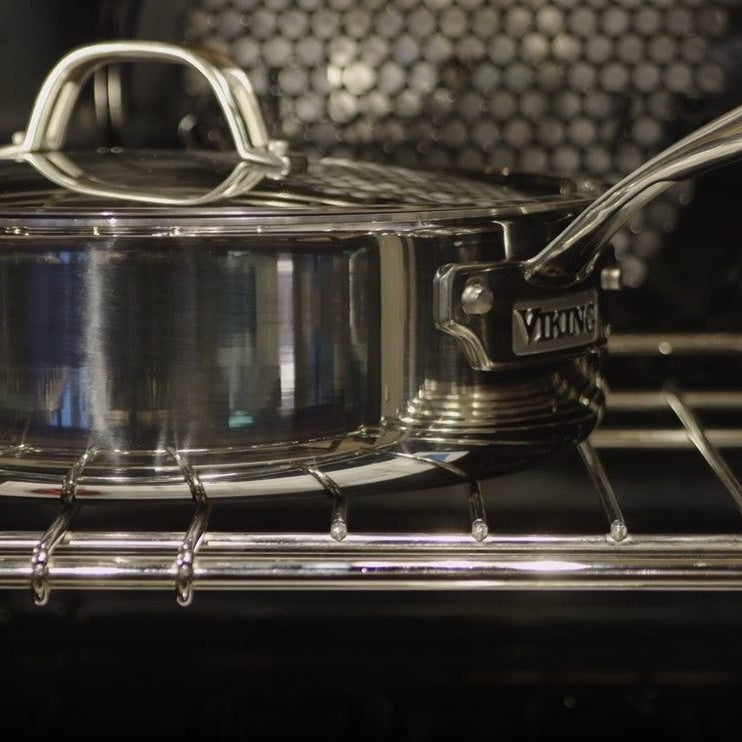
Can a stainless steel bowl go in a hot oven?
A stainless steel bowl can often go in a hot oven, but you should follow its temperature rating. A bowl rated for 400°F should not be used at 500°F simply because the metal itself can withstand more heat.
High heat may cause:
• Yellow, blue, or brown heat marks
• Warping
• Hard-to-remove baked-on grease
• Loose handles or attachments
• Uneven cooking
Heat marks usually do not mean the steel is toxic or ruined. They are often caused by oxidation on the surface. Many can be reduced with a stainless steel cleaner or a paste made from baking soda and water.
Still, visible warping is a warning sign. A warped bowl may rock on the counter or become difficult to handle. Replace it if the metal has sharp edges, a split seam, or a loose part.

How to use a stainless steel mixing bowl in the oven safely
Using a stainless steel mixing bowl in the oven is simple when you prepare it properly. These steps reduce the chance of burns, spills, and damage.
-
Check the manufacturer’s instructions. Look for the oven-safe symbol and maximum temperature.
-
Inspect the bowl. Make sure there are no plastic parts, cracks, loose seams, or damaged coatings.
-
Choose a stable oven rack. Place the bowl on the center rack when possible.
-
Use a baking sheet underneath. This gives the bowl a flat base and catches spills.
-
Leave room at the top. Food can bubble and expand during baking.
-
Wear dry oven mitts. Stainless steel becomes very hot and stays hot for a while.
-
Remove the bowl with both hands. Use a firm grip and keep your face away from steam.
-
Place it on a heat-safe surface. Do not set a hot bowl on a cold glass table or wet counter.
-
Let it cool before washing. Sudden temperature changes can stress the metal and cause burns from steam.
A baking sheet is one of the best safety tools for this job. It acts like a tray under a round bowl and makes the bowl easier to move.

Avoid thermal shock and sudden temperature changes
Thermal shock happens when a material changes temperature too quickly. Stainless steel is less likely to crack than glass or ceramic, but sudden heat changes can still cause problems.
For example, do not move a bowl directly from the refrigerator into a very hot oven unless the manufacturer allows it. Do not pour cold water into a hot bowl, either. The rapid change can distort the metal or create a burst of steam.
Use this safer process:
• Let a cold bowl warm slightly at room temperature.
• Place the bowl in a cool or preheated oven according to the product instructions.
• Cool the bowl on a dry, heat-safe mat.
• Wait until it is warm, not hot, before washing.
I once saw a thin steel bowl lose its flat shape after it went from a hot oven straight into a sink of cold water. The bowl was still usable, but it rocked badly. That small mistake taught me to treat metal cookware with the same care as glass cookware.