Introduction
In a typical U.S. home at sea level, a kettle heats water to about 212°F (100°C) before the water boils. The exact temperature changes with altitude, air pressure, and the kettle’s settings.
That answer applies to the water, not every part of the kettle. The heating element may be much hotter, while the handle and some insulated outer walls may stay cooler. Even so, steam, hot water, the lid, and metal parts can cause serious burns.
How hot does the water in a kettle get?
Water in a standard kettle usually reaches about 212°F at sea level. This is the boiling point of water under normal atmospheric pressure in much of the United States.


Once water begins to boil, added heat mostly changes liquid water into steam. It does not make the liquid much hotter under normal conditions. That is why boiling water in an open kettle stays close to 212°F rather than continuing to rise to 250°F or 300°F.
A kettle may switch off just before or just after the first signs of boiling. The shutoff point depends on the model and how its thermostat senses steam or temperature. Some kettles stop when steam reaches a sensor. Others use a temperature sensor near the heating plate.
Typical kettle temperatures
| Kettle part or setting | Approximate temperature |
|---|---|
| Cold tap water | About 45–75°F |
| Warm water setting | Often 120–170°F |
| Green tea setting | Often 160–180°F |
| Coffee or black tea setting | Often 185–205°F |
| Boiling water at sea level | About 212°F |
| Boiling water at 5,000 feet | About 202–203°F |
| Steam above boiling water | About 212°F at sea level, but it can burn badly |
| Heating element | May be hotter than the water; exact temperature varies |
These are useful ranges, not universal specifications. A kettle with temperature control may use different preset values. Check the manual for the exact settings of a particular model.
Why the water does not keep getting hotter
At normal pressure, boiling water and the steam above it are near the same temperature. Energy from the kettle goes into the phase change from liquid water to gas.
A covered or pressurized system is different. Pressure raises the boiling point. A pressure cooker, for example, can heat water above 212°F because it traps steam and increases pressure. A normal household kettle is not designed to work that way.
Does altitude change a kettle’s temperature?
Yes. Water boils at a lower temperature as elevation increases because the air pressure is lower.
For example, water in Denver, Colorado, which sits about 5,280 feet above sea level, boils at roughly 202°F (94°C). At higher elevations, the boiling point drops further.
Approximate boiling temperatures are:
| Elevation | Approximate boiling point |
|---|---|
| Sea level | 212°F / 100°C |
| 2,000 feet | 208°F / 98°C |
| 5,000 feet | 202°F / 94°C |
| 7,500 feet | 198°F / 92°C |
| 10,000 feet | 194°F / 90°C |
Weather also affects air pressure, so these values can shift slightly. For most cooking and drink-making tasks, the difference is small but still useful to understand.
What altitude changes in practice
At high elevation, a kettle may switch off while the water is below 212°F. This is normal and does not mean the kettle is faulty.
The lower temperature can affect:


- Brewing coffee and tea
- Cooking pasta, rice, and grains
- Dissolving some foods
- The time needed to reach a boil
- The final texture of certain recipes
The kettle may also take longer to boil because the water begins at a lower pressure-dependent boiling point but still must absorb heat from its starting temperature.

How hot does the outside of a kettle get?
The outside temperature depends on the material, shape, insulation, water level, and heating cycle. A stainless steel kettle may become very hot to the touch. A plastic kettle may feel cooler, but its lid, spout, base, or internal parts can still be hot.
There is no single safe temperature for every kettle surface. A surface above about 113°F (45°C) can hurt with longer contact, while hotter surfaces can cause a burn quickly. The U.S. Consumer Product Safety Commission warns that hot liquids and steam can cause serious scald injuries.
Common hot areas include:
- The metal body
- The lid
- The spout
- The area near the heating plate
- The steam vent
- The metal base or connector
- Water left inside after the kettle switches off
A cool-touch handle does not mean the kettle is cool. It only means that one designed grip area transfers less heat than the rest of the appliance.
Why steam can burn more than hot water
Steam can cause severe burns because it releases additional heat when it turns back into liquid on the skin. The burn risk is not limited to the visible stream from the spout.
Steam may escape when you:
- Open the lid
- Pour too soon
- Look into the top
- Fill the kettle above its maximum line
- Use a kettle with a blocked vent
- Carry the kettle while it is still boiling
Keep your face, hands, and arms away from the lid and spout during and just after boiling.
How hot do electric and stovetop kettles get?
Both types can heat water to its local boiling point, but their parts behave differently.
Electric kettles
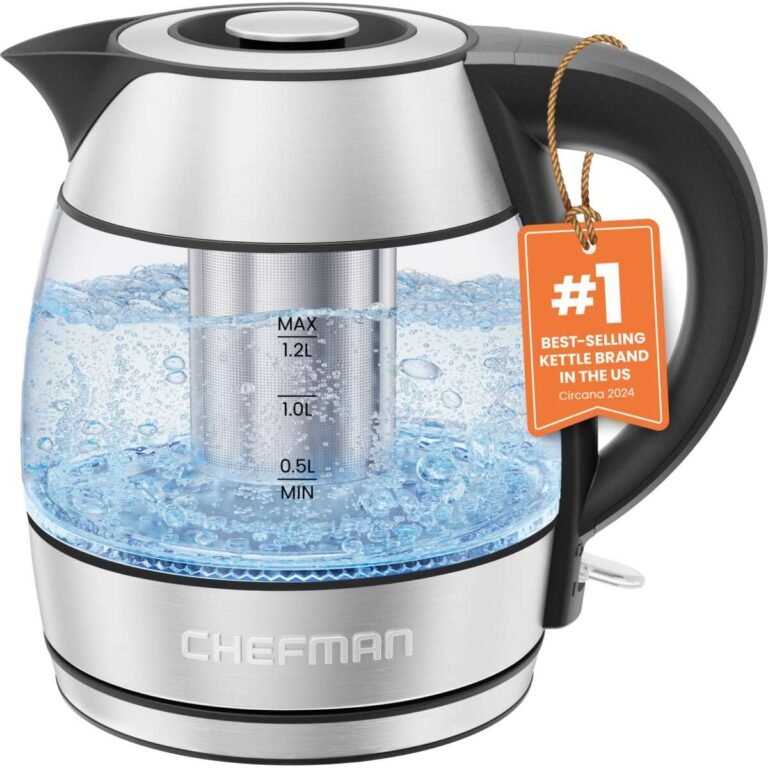
Most electric kettles heat water with a concealed element under a metal plate. The water usually reaches its boiling point, and an automatic switch turns the unit off.
An electric kettle may have:
- A single boil setting
- Several preset temperatures
- A keep-warm function
- A concealed heating plate
- A steam-based automatic shutoff
- A dry-boil safety switch
The heating plate can be much hotter than the water touching it for short periods. That is one reason you should not operate an electric kettle empty.
Stovetop kettles
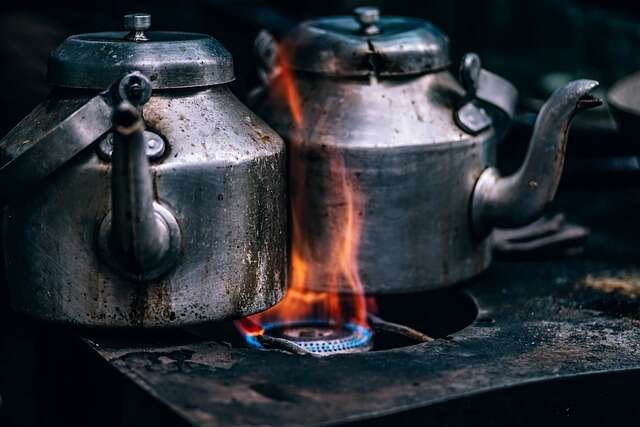
A stovetop kettle receives heat from a burner. The bottom and sides can become very hot, even if the handle is made from heat-resistant plastic.
A stovetop kettle may continue heating after the water reaches a boil if the burner remains on. Some models whistle, but a whistle does not always mean the kettle has shut off or that all water has boiled away.


Turn off the burner or remove the kettle from the heat when boiling is complete. Use an oven mitt or dry pot holder if the handle is hot.
Temperature-control kettles
A variable-temperature kettle lets you choose a lower target. This can help with delicate drinks and reduce the need to cool boiling water.
Common target ranges include:
- Around 160–175°F for some green teas
- Around 180–195°F for some coffee and herbal drinks
- Around 200–212°F for boiling water
These are preparation guidelines, not fixed rules. Tea type, coffee method, grind, and personal taste all affect the best temperature. Follow the directions for the drink or food you are preparing.

How can you check how hot your kettle gets?
The safest way to check the water temperature is to measure a sample after the kettle switches off. Do not place a thermometer into an energized kettle unless the manufacturer specifically says it is safe.
Use this simple method:
- Fill the kettle with a normal amount of water.
- Heat it using the setting you want to check.
- Let it switch off normally.
- Pour a small amount into a heat-safe cup.
- Measure the water with a kitchen thermometer.
- Read it promptly because the sample cools as soon as it leaves the kettle.
For a fair comparison, use the same starting water temperature, water volume, and room conditions each time.
A thermometer reading may be lower than the water’s peak temperature because:
- The kettle has already switched off
- The water cooled during pouring
- The thermometer probe was near the surface
- The kettle was not at a full boil
- The thermometer is not calibrated
Do not test the exterior by touching it. Use an infrared thermometer only if you understand its limits. Shiny metal can give inaccurate infrared readings because it reflects heat from nearby surfaces.
What affects a kettle’s heating temperature?
Several factors change the temperature you see in real use.
Altitude and air pressure
Higher elevation lowers the boiling point. This is the biggest reason boiling water may be below 212°F in parts of the United States.
Kettle design
A kettle may sense steam, plate temperature, or water temperature. Different designs can switch off at slightly different times.
Water volume
A full kettle takes longer to heat than a small amount. A small amount may heat quickly but can expose the heating element if the water level falls too low.
Starting temperature
Cold water needs more energy and more time than room-temperature water. Water from a refrigerator will take longer to boil than water from a warm tap.


Lid position
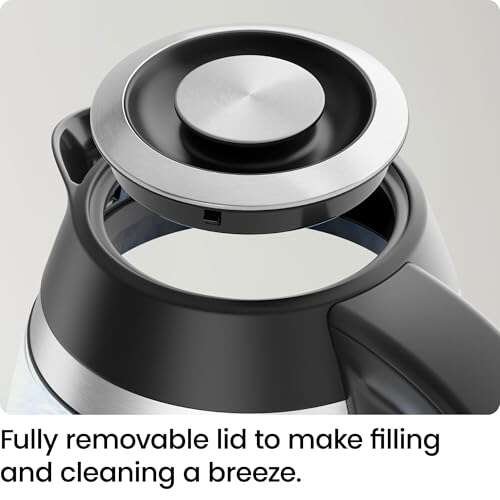
A closed lid helps retain heat and lets steam reach the shutoff sensor. An open or poorly fitted lid may delay automatic shutoff or allow steam to escape in an unusual direction.
Mineral buildup
Limescale or mineral deposits can reduce heat transfer and affect the sound and speed of boiling. They can also interfere with some sensors. Follow the manufacturer’s cleaning instructions.
Voltage and power
A kettle designed for the U.S. electrical system may not perform correctly on a different voltage. Do not use a travel adapter as a substitute for a proper voltage converter when the appliance requires one.
Is a kettle hotter than boiling water?
Some parts of a kettle can be hotter than the water, especially the heating element and the surface directly above it. The water itself generally stays near its local boiling point in an ordinary open kettle.
A kettle can also feel hotter after it shuts off because hot metal continues to transfer heat. The outside may remain hot even when the water is no longer bubbling.
Do not assume that a lack of visible bubbling means the water is safe to touch. Water below boiling can still cause a serious scald. Even hot water around 140°F can injure skin, especially after extended contact.
Common kettle mistakes to avoid
Avoid these habits to reduce burn, fire, and appliance risks:
- Do not overfill the kettle. Follow the maximum fill line so boiling water does not spill from the spout.
- Do not run it empty. Dry operation can damage the heating element or trigger a safety cutoff.
- Do not immerse an electric kettle or base in water. Clean it as the manual directs.
- Do not touch the body during or after boiling. Use the intended handle.
- Do not open the lid over your hand or face. Steam may escape suddenly.
- Do not leave a stovetop kettle unattended. Water can boil away.
- Do not pour over children or pets. Keep the cord and kettle away from edges.
- Do not assume the automatic shutoff always works. Stop using a kettle that keeps heating, leaks, smells of burning, or shows damaged wiring.
- Do not use a damaged power cord or plug. Replace the appliance or have it checked by a qualified service professional.
If hot water spills on skin, cool the area under clean, cool running water for at least 20 minutes. Remove jewelry or clothing near the burn if it is not stuck to the skin. Seek medical care for large, deep, blistering, or facial burns, and for burns involving a child or vulnerable adult. In the United States, call 911 for a serious emergency.

Key takeaways
- A kettle heats water to about 212°F (100°C) at sea level.
- At higher elevations, water boils at a lower temperature.
- The heating element and metal body can be hotter than the water.
- Steam can cause severe burns, even when it is hard to see.
- Temperature-control kettles may stop at lower settings, such as 160°F or 180°F.
- Never run an electric kettle empty or touch its hot body.
- Use a kitchen thermometer to measure the water safely after the kettle switches off.
Frequently asked questions
Does a kettle always reach 212°F?
No. It reaches the local boiling point, which is about 212°F at sea level but lower at higher elevations. A temperature-control kettle may stop before boiling.
Can boiling water be hotter than 212°F?
Liquid water in a normal open kettle generally stays close to 212°F at sea level. Water can exceed that temperature in a pressurized container, but a standard kettle is not a pressure vessel.
Is kettle water hot enough to make coffee?
Yes. Boiling water is hot enough for many coffee methods, although some brewing instructions call for water below boiling. A temperature-control kettle can make it easier to use a specific target temperature.
How long does kettle water stay hot?
It depends on the volume, lid, kettle insulation, room temperature, and whether the keep-warm function is active. Water begins cooling as soon as heating stops, even if it remains hot enough to burn for several minutes.
Why does my kettle stop before the water looks fully boiled?
The thermostat or steam sensor may shut the kettle off when the water is near its boiling point. At high altitude, the water boils at a lower temperature. Mineral buildup or a faulty sensor can also affect operation.


Conclusion
A normal kettle heats water to roughly 212°F at sea level, but the exact temperature depends on altitude and the selected setting. The water may be near its boiling point while the heating element and outer body are even hotter.
Treat the kettle, lid, spout, steam, and freshly boiled water as burn hazards. Keep the appliance on a stable surface, avoid overfilling and dry operation, and use the manufacturer’s instructions for cleaning and temperature settings.
For additional safety guidance, consult the U.S. Consumer Product Safety Commission and the appliance manufacturer’s manual.
Liora Pennings is a seasoned chef and kitchen enthusiast with a passion for turning everyday cooking into an effortless experience. With years of hands-on culinary expertise, she specializes in practical techniques, ingredient know-how, and smart kitchen solutions that help home cooks elevate their meals. At KitchFlair.com, Liora shares her best tips, time-saving tricks, and honest product reviews to guide readers toward a more efficient, enjoyable, and inspired cooking routine. Whether you’re a beginner or a seasoned home chef, Liora’s friendly, knowledge-packed insights make every visit to the kitchen a little easier—and a lot more delicious.