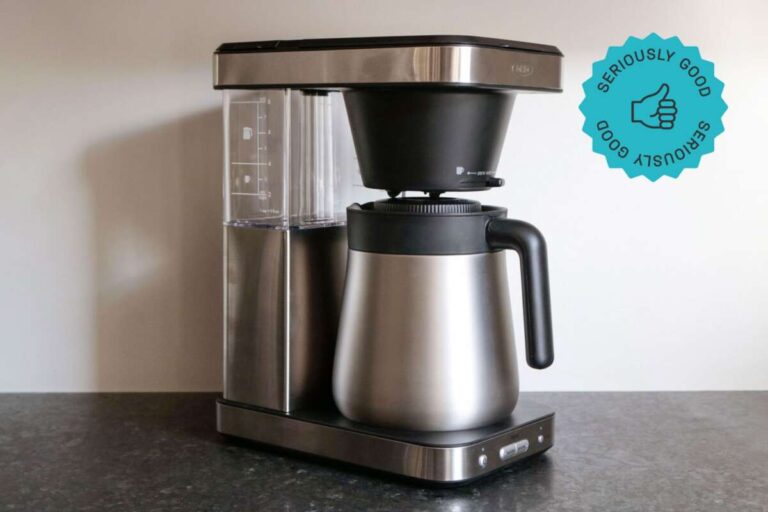
For coffee drinkers in the United States, the best way to clean a Breville coffee maker is to handle daily rinsing, weekly washing, regular cleaning-tablet cycles, and descaling as separate jobs. These steps remove coffee oils, milk residue, mineral scale, and trapped grounds without damaging the machine.
This guide applies mainly to Breville espresso machines, including the Barista Express, Bambino, Barista Touch, Barista Pro, Duo-Temp Pro, and Oracle lines. Some Breville drip coffee makers, such as the Precision Brewer, use different cleaning steps. Always check the manual for your exact model before starting a cleaning cycle.
What You Need Before Cleaning a Breville Coffee Maker
Gather these items before you begin:


- Fresh water
- A clean microfiber cloth
- A soft nylon brush or cleaning brush
- Mild dish soap
- A clean bowl or container
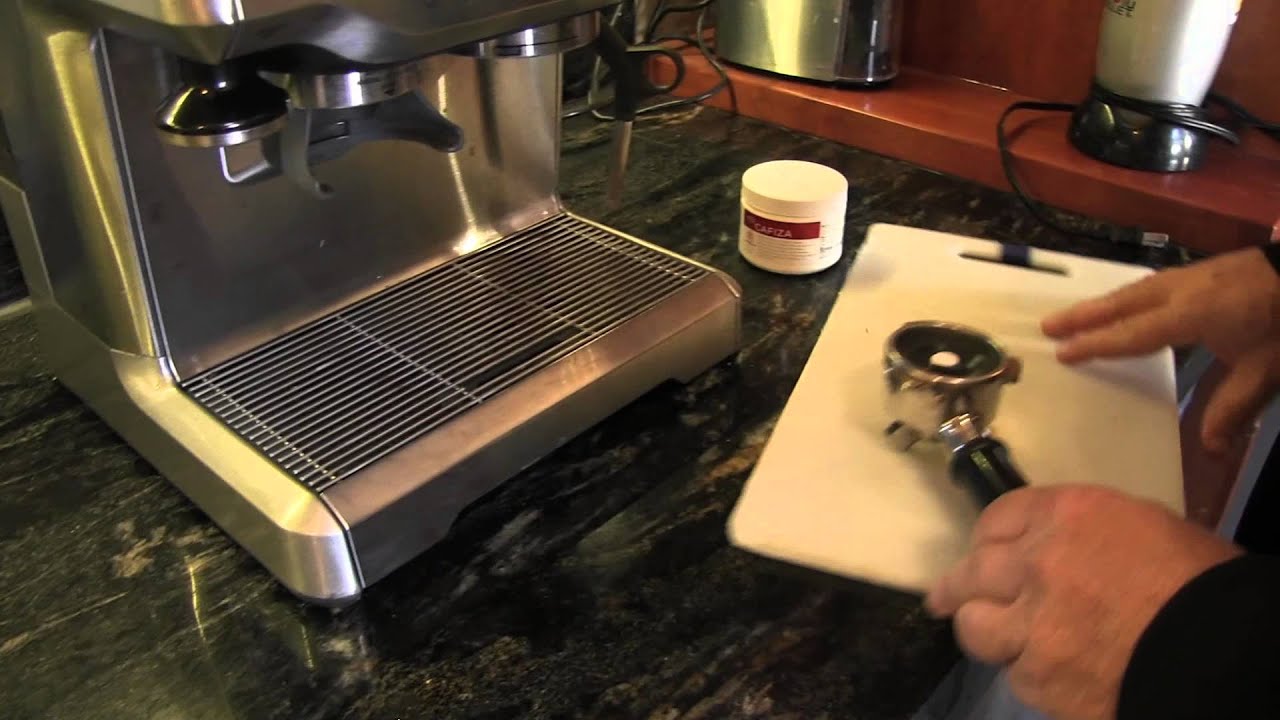
- A Breville cleaning tablet
- Breville descaling solution or a descaler approved for coffee machines
- A clean towel
- The cleaning disc and rubber gasket supplied with your machine, if applicable
Do not confuse a cleaning tablet with descaling solution. A cleaning tablet removes coffee oils from the group head and internal brew path. Descaler removes mineral buildup caused by hard water.
Never use a cleaning tablet to descale the machine. Do not use descaling solution as a substitute for a cleaning tablet.
Safety checks
Before removing parts, turn off the machine and let hot components cool. Unplug the machine if you will clean near electrical parts or wipe the outside.
Never place the main machine body, power cord, or plug in water. Do not use abrasive pads, strong solvents, oven cleaner, or metal tools. These can damage the finish, seals, or internal parts.

How to Clean a Breville Espresso Machine After Every Use
Daily cleaning takes only a few minutes, but it prevents old coffee oils and milk from hardening inside the machine.
1. Purge the group head
After brewing, remove the portafilter and run the brew function for about 5 to 10 seconds. This flushes loose grounds and coffee residue from the shower screen.
Wipe the underside of the group head with a damp cloth. If you see stuck grounds, use the supplied cleaning brush when the machine is cool enough to touch.
2. Rinse the portafilter and basket
Knock out the used coffee puck. Rinse the portafilter and filter basket under warm water.
Use a soft brush to clear coffee from the basket holes. Hold the basket toward a light source to check that the holes are open. Do not use a sharp pin unless the manual for your model specifically recommends it, since a pin can enlarge or damage the holes.
Dry the parts before storing them. A damp portafilter can encourage odors and residue buildup.


3. Clean the steam wand immediately
If you use the steam wand, wipe it with a damp cloth as soon as you finish steaming milk. Then briefly purge steam for a few seconds.
This step pushes milk from the wand tip. If milk dries inside the tip, the steam flow may weaken or stop.
If the tip becomes blocked, turn off the steam function, let the wand cool, and remove the tip only if your model allows it. Soak the removable tip in warm water, clear the openings with the supplied tool, and reinstall it according to the manual.
Never remove a hot steam-wand tip with bare fingers.
4. Empty the drip tray
Check the drip tray each day. Empty it before the liquid reaches the overflow indicator.
Wash the tray with warm water and mild dish soap. Rinse it well and dry it before replacing it. Coffee residue left in the tray can produce a sour smell.
5. Wipe the machine
Wipe the front, cup tray, and control area with a soft, damp cloth. Follow with a dry cloth to prevent water marks.
Keep water away from buttons, screens, openings, and the power connection.

How to Run the Breville Cleaning Cycle With a Tablet
Run the cleaning cycle when the machine displays a “CLEAN ME” message or when the manual recommends it. A cleaning cycle usually uses a tablet, a cleaning disc, and the supplied rubber gasket.
The exact button sequence differs by model, so use the instructions for your machine. The general process is as follows.
1. Prepare the machine
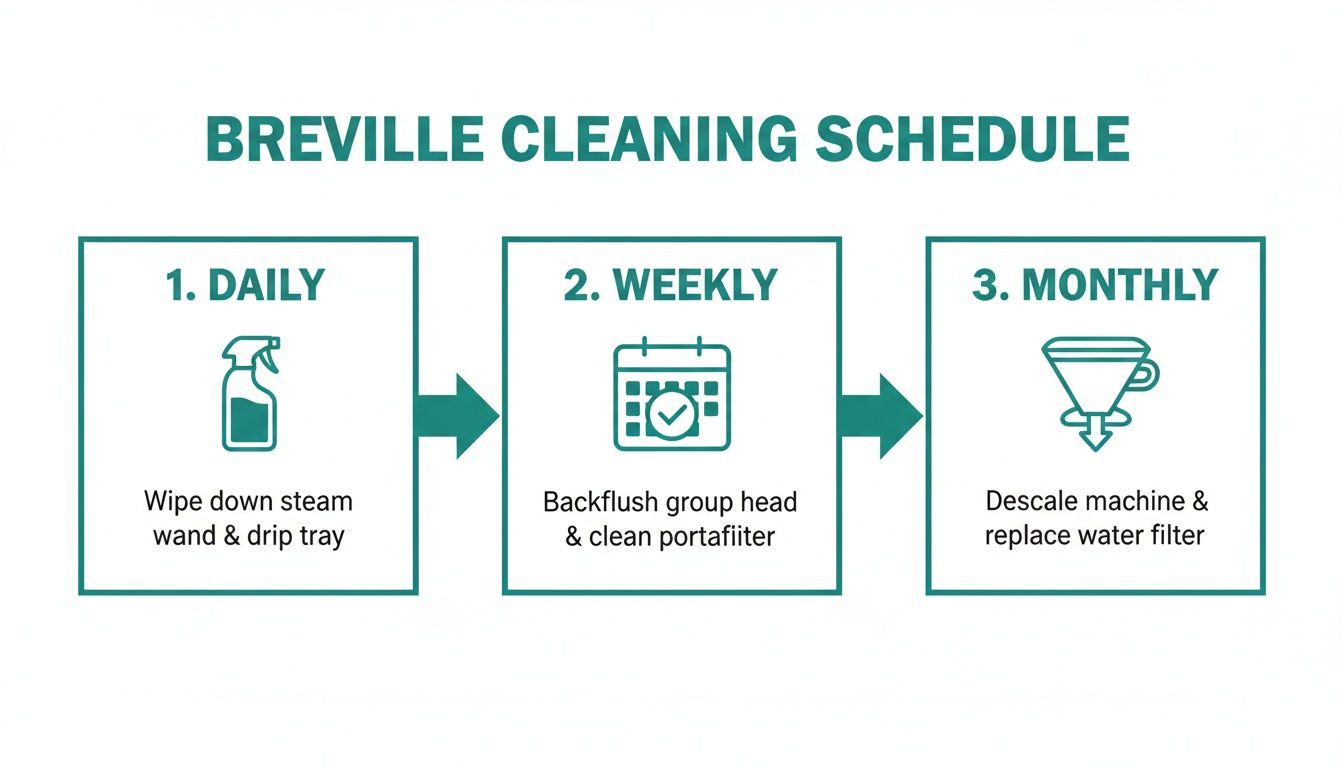
Remove the portafilter basket and rinse it. Place the cleaning disc into the portafilter.
Put one Breville cleaning tablet on top of the disc. Do not add coffee grounds.
2. Lock in the portafilter
Insert the portafilter into the group head and turn it until it locks into position. Place a large container under the coffee outlets.
Make sure the water tank has enough water. Empty the drip tray if needed.


3. Start the cleaning program
Select the cleaning cycle shown in your manual. On some Breville machines, you hold specific buttons together. On others, you use a control panel or touchscreen menu.
The machine will usually pump water in short bursts. It may pause between bursts. This is normal.
Do not turn the machine off during the programmed cycle unless the manual tells you to do so.
4. Rinse the group head
When the cycle ends, remove the portafilter and discard the tablet. Rinse the portafilter and cleaning disc thoroughly.
Run one or two plain-water flushes through the group head. This removes any remaining cleaning solution.
5. Check for success
The cleaning message should clear on models that display one. Water should flow evenly from the group head, and the machine should not leave a chemical smell.
If the message remains, repeat the cycle only as directed in the manual. If it still does not clear, the machine may need a service check or a more specific reset procedure.

How to Descale a Breville Coffee Maker
Descaling removes mineral deposits from the water system. Hard water can leave calcium buildup inside the heater, pipes, valves, and outlets.
Descale when the machine displays a descale warning, when the manual calls for it, or when you notice slower flow, unusual noise, weak steam, or reduced water volume.
General descaling steps
- Remove the water filter from the water tank if your model uses one.
- Empty the water tank and drip tray.
- Mix the approved descaling solution with water as directed on its label and in the Breville manual.
- Pour the mixture into the water tank.
- Place a large container under the group head, hot-water outlet, and steam wand as needed.
- Start the machine’s descale program.
- Let the full program finish without interruption.
- Empty the container and rinse it.
- Rinse the water tank several times.
- Fill the tank with fresh water.
- Run the required rinse cycle until no descaler odor remains.
- Wash and replace the water filter if the manual calls for a new one.
The machine may release liquid in stages. It may also pause during the process. These pauses are part of the program.
How often should you descale?
There is no single schedule for every US household. The right interval depends on water hardness, machine use, and whether you use a water filter.
Use the machine’s warning system and manual as your main guide. If your home has hard tap water, you may need to descale more often. Filtered water may reduce mineral deposits, but it does not eliminate the need to descale.
Do not assume bottled water is always better. Some bottled waters contain enough minerals to contribute to scale, while distilled water may not be suitable for every machine because the manufacturer may specify a particular mineral range.
Can you use vinegar?
Do not use vinegar unless the instructions for your exact Breville model allow it. Vinegar can leave a strong odor, may not remove all scale effectively, and can create a difficult rinse process.


A product designed for coffee-machine descaling is the safer default when the manual does not approve vinegar.

How to Clean the Breville Water Tank and Filter
Clean the water tank regularly, even if you use filtered water.
Remove the tank and empty any remaining water. Wash it with warm water and mild dish soap. Rinse it several times so no soap remains.
Do not scrub the tank with a rough pad. Avoid putting it in the dishwasher unless the manual specifically says it is dishwasher-safe.
If your Breville machine has a water filter, replace it on the schedule printed in the filter instructions or machine manual. A filter does not remove coffee oils, clean the steam system, or replace descaling.
Check the filter holder for slime, odor, or dark residue. Wash the holder and rinse it fully before installing a new filter.
Never leave old water in the tank for long periods. If you will not use the machine for several days, empty the tank, rinse it, and allow it to dry.

How to Clean the Breville Steam Wand
A steam wand needs special care because milk can dry inside its narrow passages.
After each milk drink
- Wipe the wand with a damp cloth.
- Point the wand toward the drip tray or a safe container.
- Purge steam for a few seconds.
- Wipe the wand again.
- Check that the steam holes remain open.
Keep your fingers away from the wand and steam tip. Steam can cause serious burns.
If the steam wand is blocked
Turn off the steam function and allow the wand to cool completely. Remove the steam tip only if your model’s instructions permit removal.
Soak the tip in warm water. Use the supplied cleaning tool to clear the holes. Do not force a large needle or drill bit into the openings.
Reattach the tip securely. Then test the steam function with clean water before steaming milk again.
If the wand still has poor steam
A blocked tip is only one possible cause. Other causes include:


- Mineral buildup inside the steam system
- A water tank that is not seated correctly
- Low water in the tank
- The machine needing a full heat-up period
- A worn seal or internal fault
If cleaning and descaling do not restore steam, stop forcing the machine to work. Contact Breville support or a qualified appliance technician.
How to Clean the Breville Grinder and Bean Hopper
This section applies to Breville espresso machines with an integrated grinder, such as many Barista Express, Barista Pro, Barista Touch, and Oracle models.
Unplug the machine before cleaning the grinder.
Clean the bean hopper
- Run the grinder until as few beans as possible remain.
- Remove the hopper according to the manual.
- Empty the remaining beans.
- Wipe the inside with a dry cloth.
- Wash only the parts that the manual identifies as washable.
- Let every washable part dry fully before reassembly.
Do not put water into the grinder burr chamber unless the manual specifically instructs you to do so.
Clean the burrs and chute
Use the supplied brush to remove loose grounds from the burr area and outlet chute. A handheld vacuum can help remove dry grounds, but keep the nozzle from striking delicate parts.
Do not use rice to clean the grinder. Rice can create dust and may place stress on grinder components.
If old grounds are stuck in the chute, clean them gently. Do not use a wet brush inside the grinder.
When to clean the grinder
Clean the grinder when you change beans, notice stale flavors, see clumped grounds, or find that the dose has become inconsistent.
Dark, oily beans often leave more residue than dry, lightly roasted beans. That does not mean one roast is universally better or worse; it means the cleaning needs can differ.

How to Clean Breville Removable Parts
Many Breville machines have removable parts that need routine washing:
- Portafilter
- Filter baskets
- Drip tray
- Drip-tray cover
- Water tank
- Water-filter holder
- Bean hopper
- Steam-wand tip
- Milk jug
Wash removable parts with warm water and mild dish soap unless the manual gives different instructions.
Rinse each part well. Soap left in a portafilter or milk jug can affect flavor and produce foam that breaks down quickly.
Dry parts before reassembly. Pay close attention to rubber seals, basket edges, and narrow openings where water can remain trapped.
Dishwasher use varies by model and part. Do not assume that a removable part is dishwasher-safe simply because it comes off the machine.
Breville Coffee Maker Cleaning Schedule
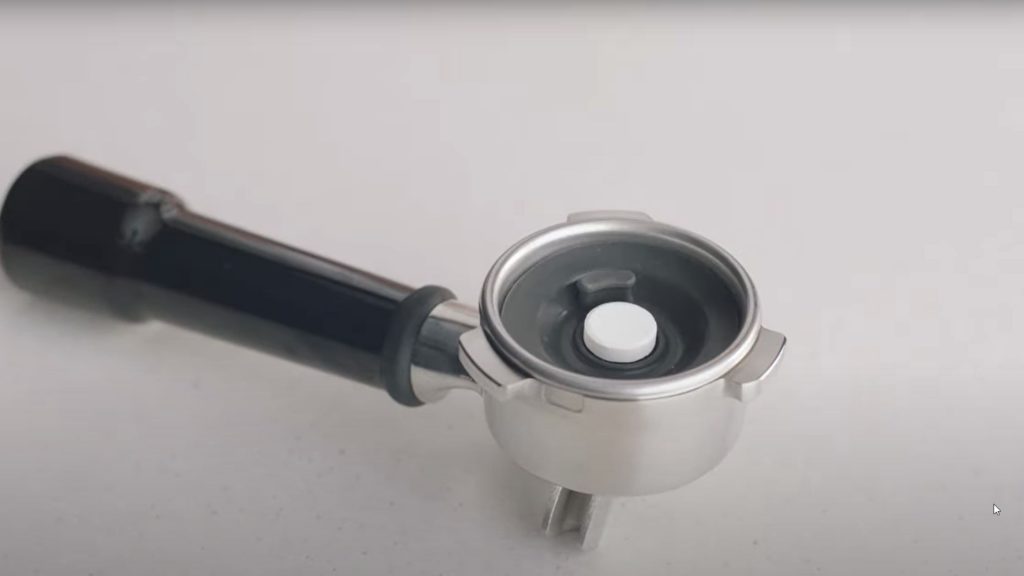
Use this schedule as a practical starting point, then adjust it to your model and usage.
| Part or task | Suggested timing | Main purpose |
|---|---|---|
| Purge the group head | After each espresso | Removes loose grounds and coffee residue |
| Rinse portafilter and basket | After each espresso | Prevents old oils from affecting flavor |
| Wipe and purge steam wand | After every milk drink | Prevents dried milk and blocked holes |
| Empty and wash drip tray | Daily or when full | Controls odor and residue |
| Wash water tank | Weekly | Removes stale water and buildup |
| Clean grinder and chute | Every 1–2 weeks or as needed | Removes old grounds and bean residue |
| Run cleaning-tablet cycle | When prompted or as directed | Removes coffee oils inside the brew path |
| Descale | When prompted or as directed | Removes mineral scale |
| Replace water filter | On the filter schedule | Helps manage water impurities and scale |
These time frames are not a replacement for the instructions for your exact Breville model. Heavy use, hard water, and frequent milk drinks can shorten the cleaning intervals.

Breville Cleaning Problems and Fixes
Cleaning does not always solve the problem immediately. Use the symptom to guide the next safe check.
The machine still says “CLEAN ME”
Possible causes include:
- The cleaning cycle did not finish
- The wrong button sequence was used
- The tablet did not dissolve fully
- The machine requires a reset procedure
- The cleaning cycle was run on a different setting
Run the correct cycle from the manual. Do not keep adding tablets. If the warning remains after a complete cycle, contact Breville support.
Water flows slowly
Check the following in order:
- Confirm that the water tank contains water and is seated correctly.
- Rinse the filter basket.
- Clean the group-head screen.
- Clean the steam-wand tip if steam is also weak.
- Consider whether the machine needs descaling.
- Check the grind setting and coffee dose.
Very fine coffee or excessive tamping can also restrict espresso flow. Cleaning will not fix a coffee puck that is packed too tightly.
Espresso tastes bitter or stale
Old coffee oils may be trapped in the basket, group head, portafilter, or grinder chute. Wash the removable parts and run the correct cleaning cycle.
A bitter taste can also come from coffee that is over-extracted, too dark for your preference, or brewed with water that is too hot. Cleaning is one check, not the only possible cause.
The steam wand has a sour smell
Clean the outside, purge the wand, and wash the removable steam tip if your model permits it. If the smell remains, the wand may have dried milk inside it or may need a deeper service clean.
Do not continue steaming milk if the wand cannot be cleaned properly.
Water leaks from the portafilter
Check that the basket is seated correctly and that the portafilter is locked in fully. Clean coffee grounds from the group-head seal and portafilter rim.
A worn gasket can also cause leaks. If cleaning does not help, the seal may need replacement.
The pump sounds loud
Make sure the water tank is full and correctly positioned. Air in the water system, an empty tank, mineral scale, or a blocked path can increase noise.
If the machine makes a loud noise and produces little or no water, stop the cycle and follow the model-specific troubleshooting steps.

Common Mistakes to Avoid
Avoid these cleaning errors:
- Using a cleaning tablet for descaling: These products perform different jobs.
- Using vinegar without checking the manual: It may not be approved for your model.
- Leaving milk on the steam wand: Dried milk is harder to remove and can block the tip.
- Soaking the machine body: Water can damage electrical parts.
- Using abrasive cleaners: They can scratch metal, plastic, and coatings.
- Forcing blocked parts: A tool can damage a basket, seal, steam tip, or valve.
- Running a cycle without a container: Cleaning and descaling programs release water.
- Ignoring the water filter: A filter still needs regular replacement and cleaning.
- Reassembling wet parts: Trapped moisture can cause odors.
- Cleaning only the outside: The group head, basket, steam wand, and water system also need care.

When to Contact Breville Support
Contact Breville or a qualified appliance technician if:
- The machine trips a circuit breaker
- The power cord or plug is damaged
- Water enters the electrical controls
- The machine leaks from the body
- A cleaning or descale warning will not clear
- The pump runs but no water comes out after safe checks
- The steam system remains blocked after cleaning and descaling
- You smell burning or see smoke
- The machine repeatedly loses pressure
Do not open the housing unless you are trained to repair espresso machines and the warranty permits it. Internal components may hold heat, pressure, or electrical charge.

Key Takeaways
- Rinse the group head, portafilter, and basket after each espresso.
- Wipe and purge the steam wand after every milk drink.
- Use a Breville cleaning tablet for coffee oils.
- Use approved descaler for mineral buildup.
- Clean the water tank, drip tray, and grinder on a regular schedule.
- Follow the manual for your exact model, especially for button sequences and dishwasher use.
- Stop and seek service when the machine leaks, smells burned, or remains blocked after safe cleaning.
Frequently Asked Questions
How often should I clean my Breville coffee maker?
Clean the portafilter, basket, group head, and steam wand after each use. Wash removable parts at least weekly. Run the cleaning-tablet cycle and descale when the machine prompts you or the manual recommends it.
Can I use dish soap on a Breville portafilter?
Yes, mild dish soap is generally suitable for removable parts such as the portafilter and basket. Rinse them very well so soap does not remain. Do not use dish soap inside the machine’s water system unless the manual specifically says to.
Do I need to clean a Breville machine if I use filtered water?
Yes. Filtered water may reduce some mineral buildup, but it does not remove coffee oils, old grounds, or milk residue. You still need daily rinsing, steam-wand cleaning, cleaning-tablet cycles, and periodic descaling.
Why does my Breville coffee taste sour after cleaning?
A sour taste may come from leftover cleaning solution, stale water, old coffee oils, or under-extracted coffee. Run additional fresh-water rinses first. Then check the coffee dose, grind size, water temperature, and extraction time.
Can I leave water in my Breville coffee maker overnight?
It is better to empty the water tank if you will not use the machine for an extended period. At minimum, replace old water with fresh water before brewing. Wash the tank regularly to reduce stale odors and residue.
How do I clean a Breville Precision Brewer?
The Precision Brewer uses its own cleaning process and instructions. Use the cleaning cycle and product recommended for that model rather than following espresso-machine steps for a portafilter, steam wand, or group head. Check the model manual before adding any cleaning solution.
Conclusion
The safest way to clean a Breville coffee maker is to match the cleaner to the residue. Rinse coffee parts after every use, clean milk from the steam wand at once, use a tablet for coffee oils, and use approved descaler for mineral scale.
If the machine still has weak flow, poor steam, leaks, or warning messages after the correct cleaning steps, stop forcing it. Check the exact Breville manual and contact support before attempting internal repairs.

Liora Pennings is a seasoned chef and kitchen enthusiast with a passion for turning everyday cooking into an effortless experience. With years of hands-on culinary expertise, she specializes in practical techniques, ingredient know-how, and smart kitchen solutions that help home cooks elevate their meals. At KitchFlair.com, Liora shares her best tips, time-saving tricks, and honest product reviews to guide readers toward a more efficient, enjoyable, and inspired cooking routine. Whether you’re a beginner or a seasoned home chef, Liora’s friendly, knowledge-packed insights make every visit to the kitchen a little easier—and a lot more delicious.