Yes. An electric kettle usually boils water faster than a pot on a standard U.S. gas or electric stove. It heats a small amount of water with a dedicated heating element, transfers heat directly into the water, and loses less heat to the air.
A kettle may not always win. An induction cooktop can heat water very quickly, and a wide pot with a tight lid may beat a low-powered kettle. The result depends on the water volume, starting temperature, appliance power, and how much heat reaches the water.
This guide explains the differences so you can choose the fastest and most efficient method for your kitchen.
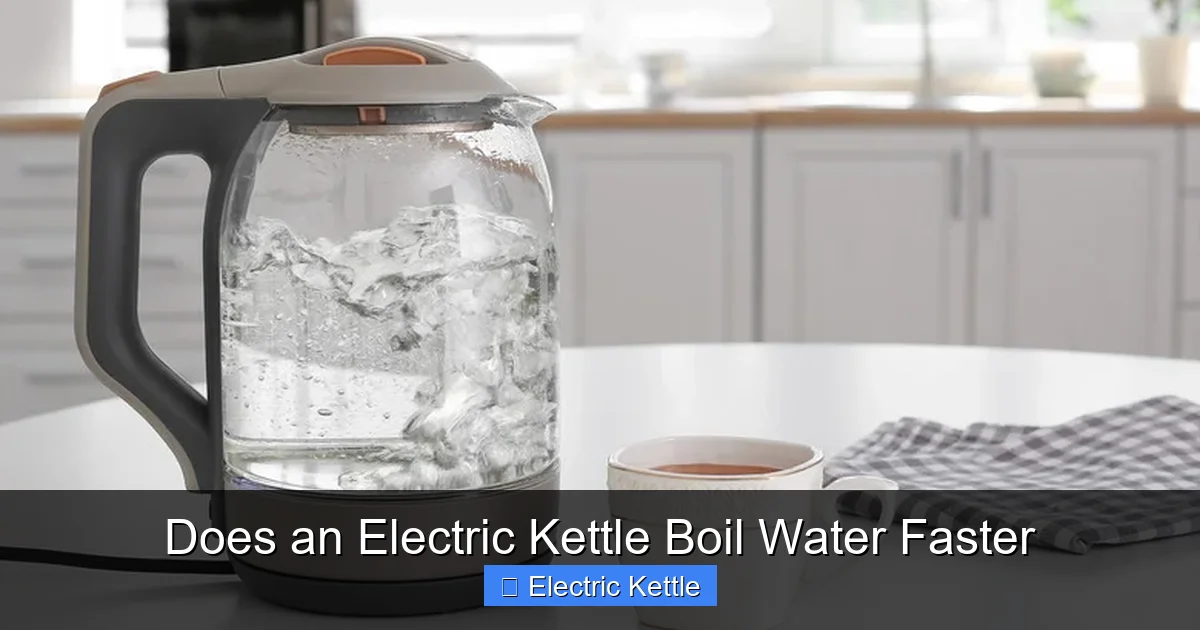
Why an electric kettle usually boils water faster
An electric kettle is fast because its heating element sits close to the water. Most of the heat moves straight into the water instead of passing through a burner, pan, or large area of air.
A kettle also has a narrow body and a lid. These features reduce heat loss while the water warms. Many models switch off when the water reaches a full boil, so they do not keep heating the water after it is ready.
A stovetop pot has more heat loss. Some energy warms the bottom and sides of the pot. More heat escapes around the lid or rises into the room. On a gas stove, flames can also move around the pot rather than heating only the water.
The U.S. Department of Energy explains that appliance efficiency depends on how much input energy becomes useful heat. For boiling water, the useful heat is the heat that enters the water. An electric kettle is often effective because its design sends much of its electrical energy directly to the water.
What “boils faster” really means
Water boils when its temperature reaches the boiling point for the local air pressure. At sea level, that point is about 212°F (100°C). At higher elevations, water boils at a lower temperature.
Boiling speed is not the same as heating speed. A kettle may heat water quickly but still take longer when:
- You fill it with more water than needed.
- The water starts very cold.
- The kettle has a low-wattage heating element.
- The lid is open.
- You are at high altitude and compare results without using the same endpoint.
Once water reaches a full boil, adding more heat does not make it much hotter. The extra energy mainly turns liquid water into steam.
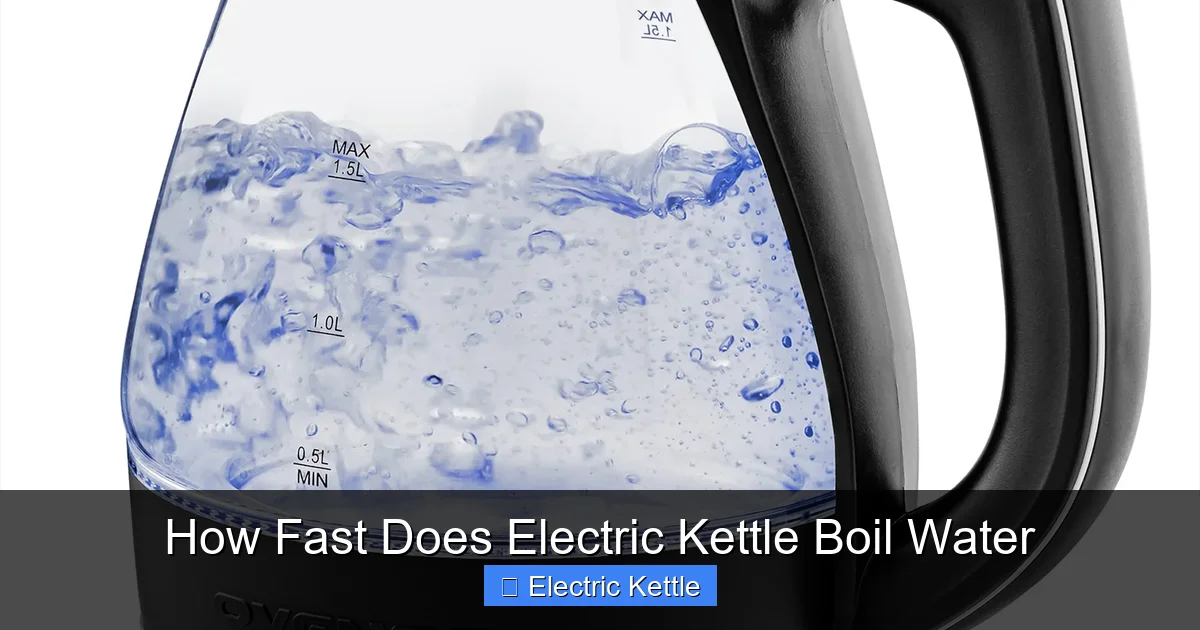
Electric kettle vs. stovetop pot
For most U.S. kitchens, an electric kettle is faster than a standard pot on a gas or conventional electric stove. The gap is usually greatest when you heat one to four cups of water.
The table below compares the main options. It describes typical behavior, not a test of every appliance.
| Method | Usual speed for small amounts | Heat transfer | Main advantage | Main limitation |
|---|---|---|---|---|
| Electric kettle | Fast | Direct electric element | Efficient and simple | Limited capacity and power |
| Gas stove | Moderate | Flame heats pot | Works with any suitable pot | Heat escapes around the pot |
| Conventional electric coil or radiant stove | Moderate to slow | Burner heats pot | Common in U.S. homes | Heat passes through the cookware |
| Induction cooktop | Fast | Magnetic field heats compatible pan | Very direct pan heating | Requires compatible cookware |
| Microwave | Variable | Water absorbs microwave energy | Convenient for one cup | Uneven heating and safety concerns |
An electric kettle can be especially useful for tea, instant oatmeal, pour-over coffee, pasta water, and cooking tasks that need hot water before the main cooking step.
Why a lid changes the result
A lid can make a large difference on the stove. It traps warm air and steam, which reduces heat loss. A covered pot may approach the speed of a kettle when you heat a larger amount of water on a strong burner.
Without a lid, a pot often loses enough heat to noticeably slow the process. If you use the stove, choose a pot that matches the burner size and keep the lid on while the water heats.
Does induction beat an electric kettle?
Sometimes. An induction cooktop creates a magnetic field that heats a compatible metal pot directly. This avoids much of the heat loss found with gas flames and traditional electric burners.
A powerful induction burner with a flat, covered pot can boil water as fast as, or faster than, some electric kettles. However, performance varies by:
- Induction burner wattage
- Pan size and material
- Amount of water
- Whether the pan has a lid
- Power limits in the cooktop or circuit
The practical answer is simple: a good electric kettle is usually faster than gas or conventional electric cooking, while induction is a close competitor.

Kettle boiling speed: the key factors
The appliance matters, but your setup matters too. These factors can change the result more than the label on the appliance.
1. Water volume
More water needs more energy. If you boil twice as much water, the heating time will usually be close to twice as long under the same conditions.
Only heat what you need. Filling a kettle to its maximum line for one mug wastes time and energy.
2. Starting temperature
Cold tap water takes longer to boil than water that starts warm. For example, water at 50°F needs more heat than water at 70°F before it reaches the boiling point.
Do not use hot tap water for drinking or cooking unless your local guidance says it is safe. Hot water can sit in a water heater and may pick up more metals from plumbing. Use cold water and heat it in the kettle when water quality matters.
3. Appliance power
Power is measured in watts. A higher-wattage heater can add energy faster, but it does not guarantee a faster boil if the appliance has poor heat transfer or if you use much more water.
Many U.S. electric kettles operate within household circuit limits, but the exact wattage varies. Check the rating label or manual. Do not use a damaged cord, loose plug, or overloaded outlet.
4. Lid position
Keep the kettle lid fully closed while it heats. An open lid allows more heat to escape and may interfere with the auto-shutoff system on some models.
On a stove, use a tight-fitting lid that is designed for the pot. Do not seal a pot completely; steam needs a safe way to escape.
5. Mineral buildup
Scale from hard water can coat the heating element or the inside of the kettle. This buildup can reduce heat transfer and make the appliance take longer to boil.
Clean the kettle according to its manual. Some manufacturers recommend a descaling solution or a diluted food-safe acid such as vinegar. Rinse well afterward, and never mix cleaning chemicals.
6. Elevation
At high elevations, water boils at a lower temperature because air pressure is lower. This can make the water appear to boil sooner, but the water is not as hot as boiling water at sea level.
This matters when cooking food. Pasta, beans, and other foods may need more time at altitude even though the water reaches a visible boil sooner.

How much faster is a kettle?
There is no single time that applies to every kettle. A useful estimate comes from the energy needed to raise the water temperature.
The basic relationship is:
Energy needed = water mass × specific heat × temperature increase
For water, heating 1 liter from 68°F to 212°F requires roughly 334 kilojoules of heat under sea-level conditions. A hypothetical 1,500-watt kettle would need at least:
334,000 joules ÷ 1,500 joules per second = about 223 seconds
That is about 3.7 minutes in an ideal calculation. Real boiling takes longer because the kettle loses some heat and may reduce power near the end.
For a smaller amount, such as about 16 fluid ounces, the ideal energy need is roughly half as much. This is why one mug of water can boil quickly while a full kettle takes much longer.
A practical comparison
Imagine the same 1 liter of water starts at the same temperature:
- A 1,500-watt electric kettle transfers heat directly to the water.
- A gas burner heats the pot, the pot heats the water, and some flame energy moves around the pot.
- A conventional electric burner heats a surface, which heats the pot, which heats the water.
- An induction burner heats the compatible pot directly, reducing some of those steps.
The kettle and induction burner may use similar input power, but their design limits heat loss. A weak burner or uncovered pot can take much longer.
Do not compare only the advertised wattage. Compare the complete setup: volume, lid, pan, power, and starting temperature.

Which method uses less energy?
An electric kettle often uses less energy than a stovetop burner for small amounts of water because it loses less heat. Faster heating and lower energy use often occur together, but they are not exactly the same measure.
A kettle can still waste energy when you:
- Fill it to the top for one serving.
- Reboil water several times.
- Leave it plugged in with a warming feature active.
- Keep heating water after it has already boiled.
- Use a kettle with heavy mineral scale.
The most efficient method is usually the one that heats the right amount of water with the least wasted heat. For one or two cups, that often means an electric kettle. For a large pot of water that you will cook in, using the same pot on the stove may be more practical.
Is boiling water in a microwave faster?
A microwave can be fast for a single cup, but results vary. Microwave ovens heat water in a container rather than heating the container from below. The water may heat unevenly, and the surface may not show strong bubbling even when parts of the water are very hot.
The U.S. Food and Drug Administration warns that water heated in a microwave can become superheated. This means it may be hotter than its normal boiling point without visibly boiling. Sudden movement, such as adding coffee, sugar, or a tea bag, can cause a rapid eruption of hot water.
To reduce the risk:
- Use a microwave-safe, open container.
- Do not overheat the water.
- Follow the microwave manual for heating times.
- Let the container stand briefly before moving it.
- Handle it with care, since the container and water may be very hot.
For predictable heating, an electric kettle is often easier to control.

How to boil water as fast as possible
Use these steps when speed matters:
- Measure the water first. Add only the amount you need.
- Use cold, fresh water. This is the safer default for drinking and cooking.
- Close the kettle lid. Make sure it is fully latched if the model requires that.
- Place the kettle on its base correctly. The base should sit on a dry, stable surface.
- Use the highest normal heating setting. Do not bypass the thermostat or safety controls.
- Start the timer when heating begins. Stop when the kettle switches off or the water reaches the needed temperature.
- Pour carefully. Steam and hot water can cause serious burns.
If you use a stovetop:
- Choose a burner that matches the pot base.
- Use a lid.
- Avoid a pot that is much wider than the burner.
- Keep the handle turned away from the edge.
- Use a stable pot and do not leave the stove unattended.
If the kettle seems slow, check the water level, lid, power cord, outlet, and mineral scale. If it smells hot, makes unusual electrical sounds, leaks, or shows damage, unplug it and stop using it.

Common mistakes that make boiling slower
Filling the kettle too far
The maximum fill line is not a target. It is a safety limit. For faster boiling, fill to the amount needed for your cups or recipe.
Leaving the lid open
An open lid releases heat and steam. It can also prevent some kettles from sensing the boil correctly.
Using a small burner with a large pot
A large pot spreads heat over a wider area. If the burner does not cover the base well, the pot may heat slowly.
Ignoring scale
A chalky white layer inside the kettle is often mineral scale. It can lengthen heating time and make the kettle noisier.
Assuming a rolling boil is always needed
Tea, coffee, baby formula, and some foods need different water temperatures or preparation steps. Boiling water is not automatically the best choice for every drink.
For delicate green tea, for example, water below the boiling point may produce a better taste. Follow the instructions for the drink or food rather than boiling by habit.
Using a kettle for anything other than water
Most electric kettles are designed for water only. Milk, soup, coffee, and other liquids can foam, burn, leave residue, or damage the heating system. Use a saucepan or appliance designed for those liquids.
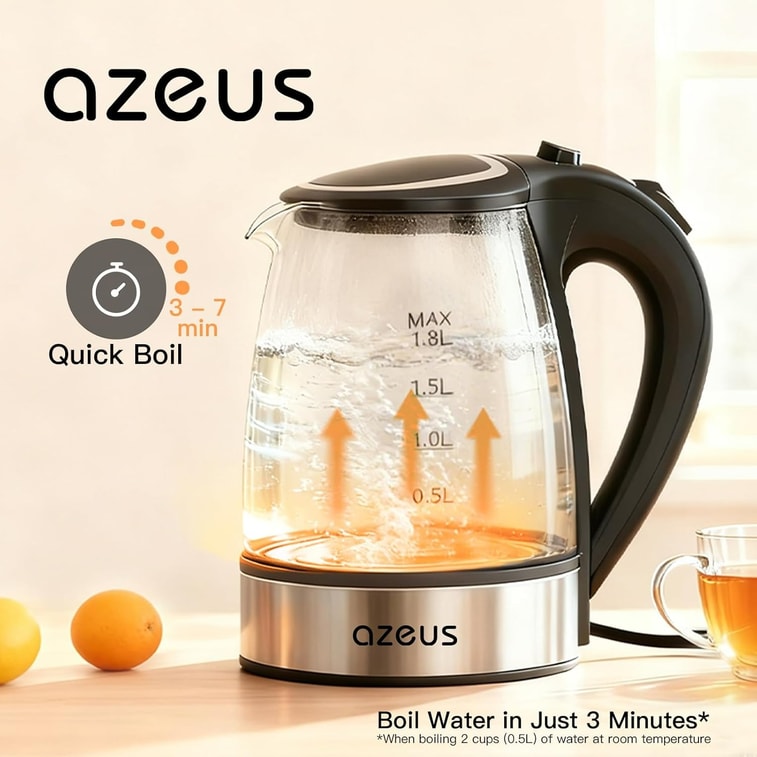
Is an electric kettle worth using in a U.S. kitchen?
An electric kettle is most useful when you often heat small or medium amounts of water. It can save time for tea, coffee, instant meals, and cooking preparation.
It may add less value if you already have a strong induction cooktop, rarely drink hot beverages, or need to heat large quantities directly in a cooking pot.
When choosing one, focus on:
- Heating power
- Minimum and maximum fill lines
- Automatic shutoff
- Boil-dry protection
- A stable base
- A comfortable handle
- Easy cleaning
- A cord and plug in good condition
- A voltage rating made for the U.S. electrical system
Avoid importing a kettle made only for another country’s voltage. A device designed for 220–240 volts may perform poorly or become unsafe on a standard U.S. 120-volt outlet. A plug adapter does not change voltage.

Frequently asked questions
Does a kettle boil water faster than a gas stove?
Usually, yes. An electric kettle generally transfers heat to water more directly than a gas burner transfers heat through a pot. A strong gas burner with a covered pot may be competitive, especially for larger amounts.
Is an electric kettle faster than an induction stove?
Not always. A high-power induction burner with a suitable covered pot can match or beat an electric kettle. A kettle may still be more convenient for one or two cups because it measures and heats the water in one container.
Does putting a lid on a pot make it boil faster?
Yes. A lid reduces heat loss and usually shortens the time needed to reach a boil. Use a stable lid that allows safe steam release, and keep the pot attended.
Is it cheaper to boil water in a kettle or on the stove?
An electric kettle is often cheaper for small amounts because it wastes less heat. The exact cost depends on local electricity and gas prices, appliance efficiency, power level, and the amount of water.
Should I boil water more than once?
You can reboil water, but repeated boiling can affect taste and wastes energy. For the best results, heat the amount you need and avoid leaving unused water in a warm-hold mode.
Bottom line
An electric kettle usually boils water faster than a gas or conventional electric stove in the United States, especially for one to four cups. A covered pot on an induction cooktop can be just as fast or faster.
For the quickest result, use the correct amount of water, keep the lid closed, remove mineral scale, and use an appliance designed for U.S. voltage. Choose the kettle for small amounts and convenience; choose the stovetop when you need to heat a large volume in the same pot used for cooking.

Liora Pennings is a seasoned chef and kitchen enthusiast with a passion for turning everyday cooking into an effortless experience. With years of hands-on culinary expertise, she specializes in practical techniques, ingredient know-how, and smart kitchen solutions that help home cooks elevate their meals. At KitchFlair.com, Liora shares her best tips, time-saving tricks, and honest product reviews to guide readers toward a more efficient, enjoyable, and inspired cooking routine. Whether you’re a beginner or a seasoned home chef, Liora’s friendly, knowledge-packed insights make every visit to the kitchen a little easier—and a lot more delicious.