You can change a belt on many Miele vacuum cleaners at home, but the exact steps depend on the model. In the United States, Miele machines may use different powerheads, brush rolls, and belt systems. First, find the model number on the vacuum or powerhead and use the matching Miele USA manual or parts list.
A belt is usually found in a motorized floorhead or upright vacuum. A basic Miele canister with a suction-only floor tool may not have a belt at all.

Does Your Miele Vacuum Cleaner Have a Belt?
A motorized brush roll usually uses a belt. The belt transfers power from the brush motor to the rotating roller. If the belt breaks, the vacuum may still produce suction, but the brush will stop turning.
Check these common Miele setups:
| Miele setup | Belt likely? | Typical clue |
|---|---|---|
| Suction-only canister floor tool | No | No powered brush roll |
| Miele electrobrush or powerhead | Yes | Brush roll is powered by a motor |
| Miele upright vacuum | Usually | A rotating brush roll sits under the base |
| Turbo brush driven by air flow | Often no motor belt | The air stream turns the brush |
| Hard-floor tool | No | No rotating brush roll |
Do not order a belt by the vacuum brand alone. Miele belts are not universal. The correct part depends on the powerhead or upright model, not only the canister name.
Find the model number
Look for a label:
- Under the vacuum body
- On the back or underside of the powerhead
- Near the cord or dust-bag compartment
- On the owner’s manual
- On the original parts packaging
Common Miele product families include the Complete C3, Classic C1, Compact C1, Triflex, and Dynamic U1. These names are not enough to identify the correct belt. The floorhead model and full product number matter.
Signs of a worn or broken belt
A belt may need replacement if:
- The brush roll does not spin.
- The brush stops when it touches the floor.
- You smell hot rubber.
- The brush makes a squealing sound.
- The belt looks cracked, stretched, shiny, or loose.
- Threads or hair have caused the brush roll to jam.
- The vacuum shuts off soon after the brush starts.
A stopped brush does not always mean a bad belt. Hair, string, a blocked brush roll, a faulty switch, or a motor problem can cause the same symptom.

What You Need Before Starting
Prepare the correct replacement belt, a clean work surface, and a few simple tools. Most repairs need a Phillips screwdriver, but some Miele powerheads use latches or screws with a different head.
Supplies and tools
- Correct Miele replacement belt
- Phillips screwdriver, if required
- Small flat screwdriver, only if the manual allows it
- Scissors or a seam ripper
- Soft brush or dry cloth
- Flashlight
- Small container for screws
Use a genuine Miele belt or a replacement that clearly lists your exact powerhead or upright model. A belt that is too short can overload the motor. A belt that is too loose may slip and fail to turn the brush.
Safety steps
1. Turn the vacuum off.
2. Unplug it from the wall outlet.
3. Disconnect the powerhead from the wand or hose if practical.
4. Let the motor and brush cool.
5. Work on a dry, stable surface.
6. Keep fingers away from sharp brush-roll ends and belt tension.
7. Never test the brush with the cover removed.
Do not wash the powerhead or place it under running water. A damp cloth may be used on suitable exterior parts, but moisture must not enter the motor or electrical connections.
How to Change the Belt on a Miele Powerhead
These steps apply to many Miele motorized floorheads, such as electrobrush-style heads. The cover design varies, so stop if your manual shows a different method.
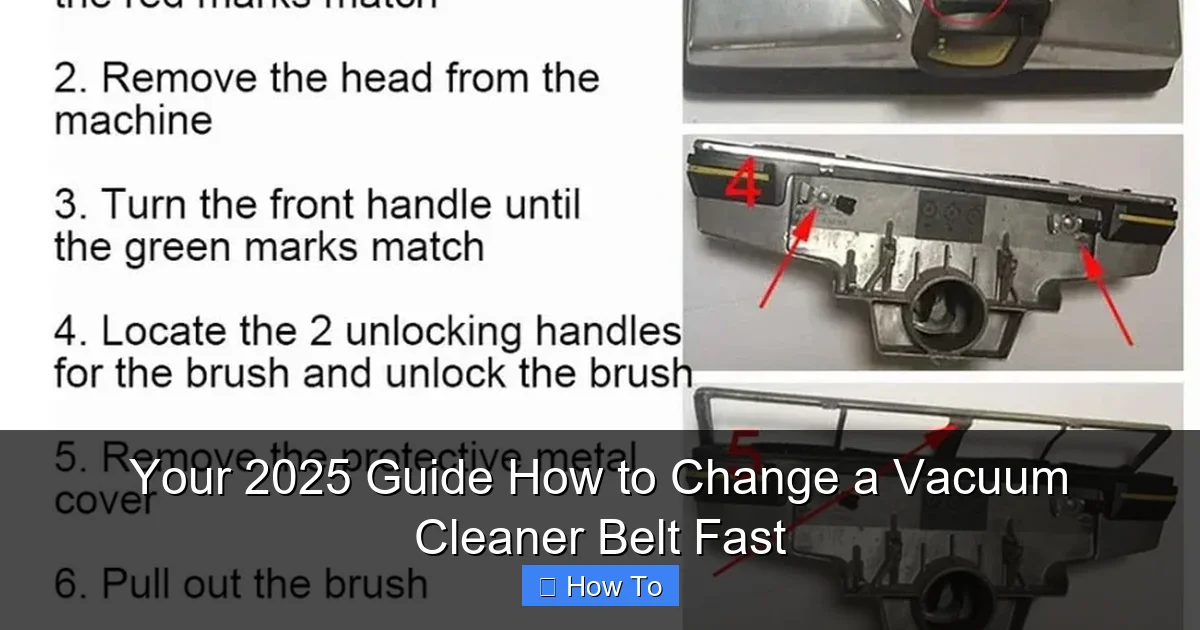
1. Remove the powerhead
Disconnect the powerhead from the wand. Turn the head upside down and place it on a towel. The towel helps protect the housing from scratches.
2. Open the brush-roll cover
Look for screws, clips, or release points around the underside. Remove only the fasteners that hold the lower cover in place.
Keep the screws in order. Some covers use screws of different lengths. Mixing them can damage the plastic housing when you reassemble the head.
If the cover does not lift after all visible screws are removed, do not force it. Check for a hidden screw or latch in the model-specific manual.
3. Remove hair and debris
Before removing the belt, inspect the brush roll. Cut away hair, thread, carpet fibers, and pet fur with scissors. Pull the debris away from your fingers and avoid cutting the brush bristles.
Check both brush-roll ends. Debris often collects around the end bearings. If either end is packed with hair, the new belt may fail quickly.
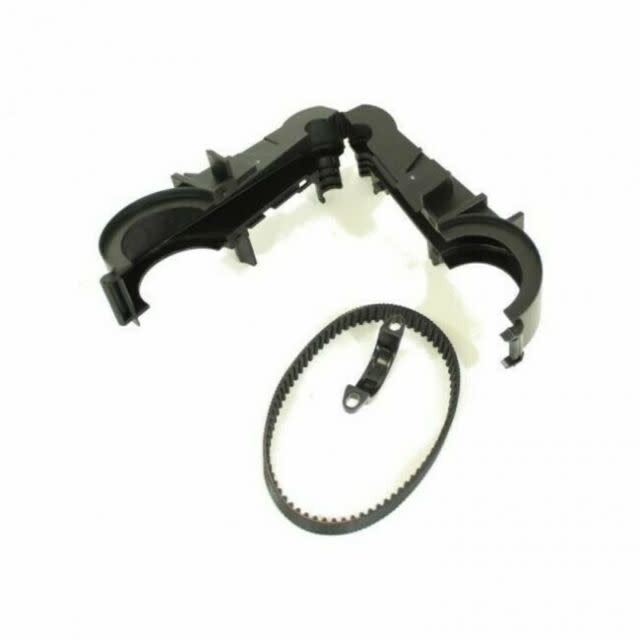
4. Remove the old belt
Take a photo of the belt path before removal. This gives you a useful reference.
Slip the belt off the motor pulley and then off the brush roll. If the belt is broken, remove every piece from the housing. Do not leave rubber fragments near the motor pulley.
5. Inspect the brush roll and pulley
Turn the brush roll by hand. It should move smoothly, with some normal resistance from the belt system. It should not grind, wobble, or remain stuck.
Also check the motor pulley:
- It should be secure.
- It should not wobble.
- It should not have melted rubber around it.
- It should turn as designed without unusual noise.
A seized brush roll can destroy a new belt. If the roll will not turn after cleaning, repair or replace the brush roll before installing a belt.
6. Install the new belt
Fit the new belt around the brush-roll pulley first, then stretch it over the motor pulley. Use the same path shown in your photo or manual.
The belt should sit flat. It must not twist unless the model’s manual specifically shows a twisted belt path. Do not use a screwdriver to pry hard against the belt. Sharp tools can cut or weaken it.
7. Refit the brush roll
Place the brush roll back into its end supports. Make sure the belt stays centered in its groove and does not sit on the brush bristles.
Turn the brush roll by hand several times. The belt should track in one place. If it walks sideways, remove it and check the alignment.
8. Reinstall the cover
Replace the lower cover and reinstall the screws. Tighten them until snug. Do not overtighten plastic housings.
Check that the cover sits level and that no wire is trapped under it. A pinched wire can create an electrical hazard or stop the brush motor.
9. Test the powerhead
Reconnect the powerhead and plug in the vacuum. Start it for a few seconds while watching for:
- Smooth brush rotation
- No rubber smell
- No squealing
- No scraping
- No unusual vibration
- No immediate shutoff
Then test it briefly on a low-pile surface. If the brush stops as soon as it touches the floor, switch the vacuum off and inspect the belt path, brush roll, and height setting.
How to Change the Belt on a Miele Upright Vacuum
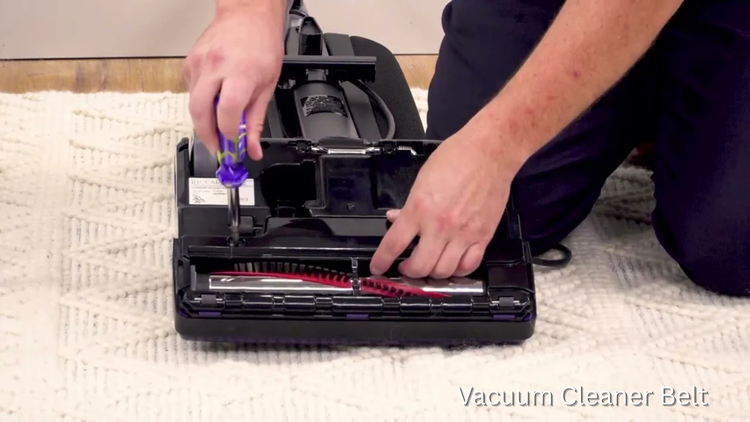
Miele upright models have a different layout from Miele canister vacuums. The brush roll and belt are normally accessed from the underside of the base.
1. Prepare the upright
Turn off and unplug the vacuum. Lower the handle if the manual recommends that position. Lay the machine back or place it in the position shown in the owner’s guide.
Do not work on the upright while it is connected to power.
2. Remove the base plate
Release the base plate using the screws, clips, or locking system provided on your model. Remove the plate carefully. Some upright bases may have edge tabs that can crack if lifted from the wrong side.
3. Lift out the brush roll
Remove the brush roll from its supports. Note the direction of the brush roll and the location of any end caps or washers.
Clean away hair and debris. Pay close attention to the ends because clogged bearings create extra load on the belt.
4. Replace the belt
Remove the old belt from the motor shaft. Install the new belt on the motor shaft and brush-roll pulley. The belt should match the original route and sit straight.
You may need to stretch the belt slightly to fit the brush roll. Some tension is normal. Excessive force suggests that the belt may be the wrong part.
5. Reinstall and test
Return the brush roll to its supports. Confirm that it turns by hand and that the belt remains aligned. Refit the base plate, tighten the fasteners, and run a short test.
If the upright has a brush-roll indicator, check that it shows normal operation. A warning light may indicate a jam, belt issue, or motor fault rather than a simple belt problem.
What to Check If the New Belt Does Not Work
If the brush still does not rotate, check the simplest causes first. Unplug the vacuum before opening the powerhead again.
| Symptom | Possible cause | Safe check |
|---|---|---|
| Brush does not move at all | Belt is off, broken, or incorrectly routed | Recheck the belt path |
| Brush turns by hand but stops on carpet | Brush roll is jammed or belt is wrong | Clean the ends and verify the part |
| Strong rubber smell | Belt is slipping or motor is overloaded | Stop using it and inspect alignment |
| Squealing sound | Belt is misaligned or pulley is damaged | Check that the belt sits in its groove |
| Scraping sound | Brush roll or cover is not seated | Refit the roll and cover |
| Vacuum shuts off | Blockage, jam, or thermal protection | Unplug, clear the jam, and allow cooling |
| Brush does not turn after a correct belt change | Motor, switch, wiring, or control fault | Arrange service |
The belt keeps coming off
A belt that repeatedly comes off usually points to a larger problem. Possible causes include:
- Incorrect belt size
- Bent brush roll
- Worn brush-roll bearing
- Loose motor pulley
- Damaged belt guide
- Cover installed incorrectly
- Debris blocking the brush roll
Installing another belt without finding the cause may damage the new part and the motor.
The belt breaks soon after installation
A new belt that breaks quickly may be overloaded. Check the brush roll by hand and inspect both ends for packed hair. Also verify that the belt matches the exact Miele floorhead.
Do not operate the powerhead on a thick rug for a long time if the brush cannot turn freely. Some carpet types can create heavy resistance, especially when the height setting is too low.
There is no belt to replace
Some Miele floor tools do not use a belt. A suction-only tool, air-driven turbo brush, or certain newer brush designs may use a different drive system.
If you cannot find a belt cover, do not pry open the housing. Confirm the floorhead model and read the matching Miele manual first.
When to Use a Miele Service Center
A belt replacement is a reasonable home repair when the belt and brush roll are easy to access and the manual supports user service. Professional help is the safer choice when:
- The powerhead has damaged wiring.
- The motor smells burnt.
- The housing is cracked.
- The brush roll will not turn after cleaning.
- The belt breaks more than once.
- The vacuum trips a breaker or sparks.
- You cannot identify the correct replacement belt.
- The model requires sealed electrical disassembly.
- The machine may still be under warranty.
A belt is a wear part, but a repeated belt failure is usually a symptom rather than the root problem. A technician can check the motor pulley, bearings, wiring, and control system.

How to Keep the New Belt Working Longer
Good brush-roll care reduces belt strain.
- Cut away hair before it wraps tightly around the roller.
- Check the brush roll when suction drops or the brush slows.
- Empty the dust bag or dust container when needed.
- Replace clogged filters according to the Miele manual.
- Use the correct floor setting for the surface.
- Do not pull large objects into the powerhead.
- Stop the vacuum if you smell hot rubber.
- Store the powerhead without bending or crushing the belt area.
The belt should transfer motion, not compensate for a jammed roller. A clean, freely turning brush roll is the best protection for the replacement belt.

Frequently Asked Questions
Can I change a Miele vacuum belt without a service call?
Often, yes. Many Miele powerheads and uprights allow belt access through the underside. However, the repair is model-specific. Use the correct manual and stop if the housing or wiring is not designed for user access.
How often should a Miele vacuum belt be replaced?
Miele belts do not have one universal replacement interval. Replace the belt when it is damaged, stretched, slipping, noisy, or unable to turn the brush roll. Regular cleaning can extend its service life.
Why does my Miele vacuum have suction but the brush does not spin?
The brush drive may have a broken belt, a jammed roller, a faulty motor, a blocked airway, or a brush-roll switch problem. Suction can remain normal because the suction motor and brush motor are separate systems.
Can I use a generic vacuum belt?
Only if the belt maker clearly lists the exact Miele model or powerhead. A belt that looks similar may have the wrong length, width, or profile. The wrong belt can slip, overheat, or damage the drive system.
Should the belt feel tight?
A new belt should have firm tension, but you should still be able to install it using the normal method shown in the manual. If it requires extreme force or cannot sit flat, verify the part number and belt route.
Why does the brush stop when I place the vacuum on carpet?
The brush may be blocked, the belt may be slipping, or the height setting may create too much resistance. Unplug the vacuum, clean the brush roll, and confirm that the new belt is aligned correctly.
Final Check
To change a belt on a Miele vacuum cleaner, identify the exact powerhead or upright model, unplug the machine, open the brush area, remove debris, install the matching belt, and confirm that the brush roll turns freely before testing.
If the belt fails again, do not keep replacing it. Check for a seized brush roll, damaged pulley, worn bearing, or motor fault. When the model is unclear or electrical parts are exposed, use the Miele USA manual or an authorized service provider before continuing.

Liora Pennings is a seasoned chef and kitchen enthusiast with a passion for turning everyday cooking into an effortless experience. With years of hands-on culinary expertise, she specializes in practical techniques, ingredient know-how, and smart kitchen solutions that help home cooks elevate their meals. At KitchFlair.com, Liora shares her best tips, time-saving tricks, and honest product reviews to guide readers toward a more efficient, enjoyable, and inspired cooking routine. Whether you’re a beginner or a seasoned home chef, Liora’s friendly, knowledge-packed insights make every visit to the kitchen a little easier—and a lot more delicious.