Introduction
If your Keurig coffee maker pours slowly, makes less coffee, or shows a “DESCALE” light, mineral buildup may be blocking the water path. You can remove that buildup without vinegar by using a Keurig-approved descaling solution or a citric acid solution.
For most Keurig machines, the process is simple: remove the pod and water filter, add the descaler, run brew cycles, rinse the machine well, and test it with fresh water. Always check your model’s manual first, since button names and descale modes vary across Keurig models sold in the United States.

What to Use Instead of vinegar
The best vinegar-free option is a commercial coffee maker descaling solution. Many of these products use citric acid or another food-safe acid to dissolve mineral scale.


You can also use plain food-grade citric acid mixed with water. Citric acid is the compound that gives many citrus fruits their tart taste. In a coffee maker, its mild acidity can help loosen calcium and magnesium deposits left by hard water.
Your options
| Option | Main benefit | Limitation |
|---|---|---|
| Keurig descaling solution | Designed for Keurig machines and comes with label directions | Costs more than a homemade mix |
| Food-grade citric acid | Low-cost and vinegar-free | The strength and instructions are not universal |
| Lemon juice | Easy to find | Contains pulp, sugars, and oils; less reliable |
| Baking soda | Useful for some odors | It is not an effective acid descaler |
| Bleach | None for this task | Unsafe for the water path and should not be used |
Use the manufacturer’s solution when possible. If you use citric acid, choose a plain food-grade powder with no flavor, dye, sweetener, or added cleaning chemicals.
A practical citric acid mix
A common starting mix is:
- 1 tablespoon of food-grade citric acid
- 1 quart of warm water
Stir until the powder dissolves. This is a general cleaning mix, not a universal Keurig formula. If the citric acid package gives different directions, follow the package. If your Keurig manual warns against homemade descaling mixtures, use the approved commercial solution instead.

What You Need Before You Start
Gather the following items:
- Your Keurig coffee maker
- Commercial descaling solution or food-grade citric acid
- A large ceramic mug or bowl
- Fresh water
- A sink
- A soft, damp cloth
- A paper clip or approved pod-holder cleaning tool, if your model’s manual allows it
Remove any K-Cup pod before you begin. An empty machine is easier to clean and prevents old coffee from mixing with the descaling liquid.
If your Keurig has a water filter in the reservoir, remove the filter holder and cartridge. Acid can affect the filter, and the filter may reduce the strength of the cleaning solution.
Empty the drip tray if it is full. Place the machine near a sink if possible, but keep the electrical plug and outlet dry.
Do not take apart the machine unless the manual tells you to. Internal parts can be difficult to reseal, and opening the brewer may affect its warranty.


How to Descale a Keurig Without Vinegar
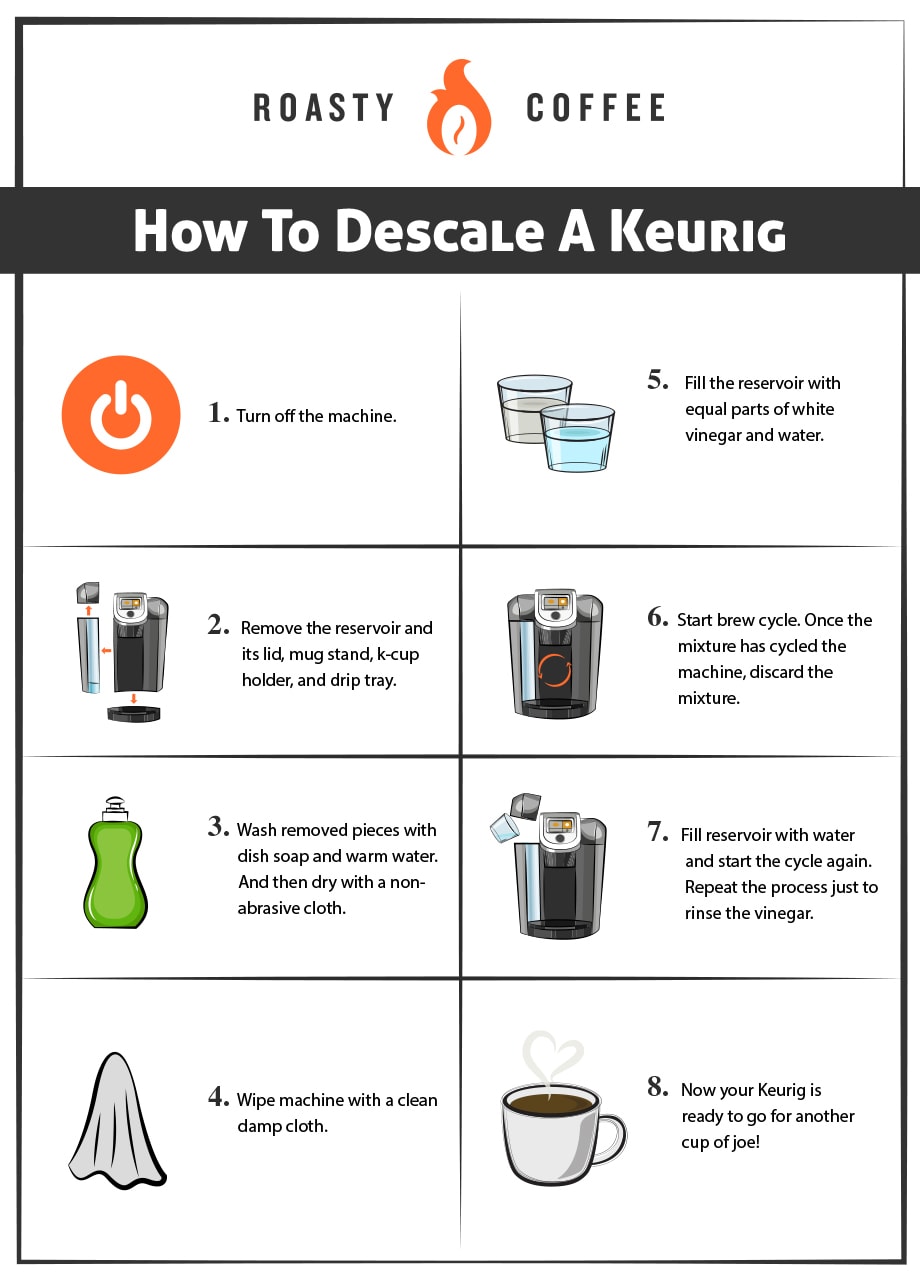
1. Turn off and prepare the machine
Turn off the Keurig and unplug it if your manual recommends unplugging during setup. Remove the K-Cup pod and empty the pod holder.
Take out the water filter and filter holder from the reservoir. Wash the reservoir with warm water if it contains old water or visible debris.
Put the reservoir back in place. Do not add the descaling liquid yet.
2. Add the descaling solution
Pour the Keurig descaling solution into the reservoir. Use the amount listed on the product label.
For a citric acid mix, add the prepared solution to the reservoir. Do not fill above the maximum line. If the reservoir is larger than the amount of solution you made, add fresh water only as needed to stay within the operating range.
Do not mix citric acid with vinegar, bleach, ammonia, dish soap, or another cleaner. Mixing cleaning products can create irritating vapors or leave unwanted residue.
3. Start the descale cycle
Turn the machine on. Place a large mug or bowl under the coffee outlet.
If your Keurig has a dedicated Descale setting, select it and follow the screen prompts. Some models require you to press and hold a button. Others use a sequence of buttons.
If your model has no descale mode, run the largest brew size without a K-Cup pod. Let the liquid drain into the mug. Pour the liquid into the sink and repeat until the reservoir is empty or the machine asks you to add water.
Keep the process slow if the machine pauses. Descaling solution needs time to contact the mineral buildup. Do not force buttons or move the brewer while it is pumping.
4. Let the machine rest if needed
Some Keurig instructions include a short waiting period during descaling. If your manual or solution label says to pause, do so.
A pause gives the acid more contact time with mineral deposits. Do not leave the solution in the machine overnight unless the manufacturer specifically permits it.
5. Empty and rinse the reservoir
When the solution has passed through the machine, remove the reservoir and rinse it well with clean water.
Wipe away any loose residue around the reservoir opening. Refill the reservoir with fresh water.
If the machine has a replaceable water filter, do not install a new filter until the rinse stage is complete.


6. Run fresh-water rinse cycles
Place the mug under the outlet again. Run repeated brew cycles with plain water and no K-Cup pod.
Continue until the reservoir is empty or your machine finishes its programmed rinse cycle. A larger brew size can reduce the number of cycles, but smaller cycles may be easier to control.
Refill the reservoir with fresh water and run more rinse cycles if you notice a sour taste, powdery residue, cloudiness, or an unusual smell.
7. Reinstall the water filter
After rinsing, install a new charcoal water filter if your Keurig uses one. Follow the filter’s soaking and installation instructions.
Run one more water-only cycle after installing the filter. This helps remove loose carbon dust from a new cartridge.
How to Know the Keurig Is Fully Descaled
A successful descale usually improves water flow and reduces the time needed to fill a cup. The machine may also stop displaying its descale warning after the correct cycle is complete.
Check for these signs:
- Water flows at a steady rate.
- The brewer dispenses close to the selected amount.
- The water looks clear.
- There is no sour, sharp, or chemical smell.
- Coffee no longer tastes unusually bitter or acidic.
- The machine no longer pauses because of restricted flow.
Taste is not the only test. A clean-tasting brew does not prove that all mineral deposits are gone. If flow remains weak, the needle, pod holder, screen, or internal water path may still have an obstruction.
Descaling removes mineral scale. It does not fully clean coffee oils, mold, or debris from every surface. Wash the removable parts separately according to the Keurig manual.

What to Do If Descaling Does Not Work
If the Keurig still runs slowly, check the easiest and safest causes first.
The water flow is still weak
Turn off the machine and allow it to cool. Remove the pod holder if the manual permits it. Clean the exit needle and entrance needle with the approved cleaning tool or a straightened paper clip, used carefully.
Never put your fingers near a needle while the machine is plugged in. Do not push debris deeper into the brewer.
Run another water-only rinse cycle after cleaning the needles. If the flow remains poor, repeat the descaling process once with a fresh solution rather than using a stronger mixture.


The descale light remains on
Some Keurig models clear the light only after a programmed descale cycle and a full rinse. A few models require a specific button sequence.
Check the manual for your exact model. Do not assume that a brew cycle is the same as the model’s official descale mode.
If the light remains on after following the instructions, unplug the machine for a short period only if the manual allows it. Persistent warnings may indicate a sensor, pump, or control problem.
The machine stops pumping
A nearly empty reservoir, an incorrectly seated reservoir, or an air pocket can interrupt water flow. Fill the reservoir with fresh water and make sure it sits firmly on the base.
Run a water-only cycle. If the pump makes noise but no water comes out, stop the process. Repeated dry pumping can stress the pump.
The coffee tastes strange after descaling
Run several more water-only cycles. Wash the reservoir and drip tray with warm water and mild dish soap, then rinse them fully.
Do not add soap to the water reservoir unless the manual specifically says it is allowed. Soap residue can enter the water path and affect taste.
If the taste does not improve, replace the charcoal filter and inspect the machine for old coffee residue.
Water leaks from the machine
Stop using the Keurig if water leaks from the base, power cord area, or inside the housing. Unplug it only when your hands and the surrounding area are dry.
Do not open the machine to search for a leak. Contact Keurig support or a qualified appliance technician if the leak continues.

How Often Should You Descale a Keurig?
Keurig commonly recommends descaling when the machine shows a warning or when performance declines. The exact schedule depends on water hardness, use, and the model.
A home that uses hard water may need more frequent descaling than a home using softened or filtered water. Frequent users also add mineral deposits faster because more water passes through the brewer.
Use this schedule as a practical guide, not a fixed rule:
- Hard water or daily use: Check performance about every 1 to 3 months.
- Moderate water hardness: Descale about every 3 to 6 months.
- Soft water or occasional use: Descale when the manual recommends it or when flow changes.
A water filter can reduce some water impurities, but it does not make descaling unnecessary. Charcoal filters are not a substitute for removing mineral scale from the machine.


How to Prevent Mineral Buildup
You can slow scale buildup with a few simple habits:
- Empty old water if the machine will sit unused for several days.
- Refill the reservoir with fresh water.
- Clean the reservoir and drip tray regularly.
- Replace the charcoal filter on the schedule listed for your model.
- Descale when the machine shows a warning.
- Use filtered water if it is suitable for your brewer and household water system.
- Avoid using distilled water unless the manual says it is acceptable.
Distilled water contains very few minerals, but some coffee makers use water-conductivity sensors. A Keurig may not operate as expected with certain low-mineral waters. Check the manual before making distilled water your regular choice.
Bottled water is not automatically scale-free. Mineral water can contain enough calcium and magnesium to create buildup.

Vinegar-Free Descaling Mistakes to Avoid
Avoid these common shortcuts:
- Do not use bleach. It can leave harmful residue and damage parts.
- Do not use dish soap in the reservoir. Soap is hard to rinse from internal tubing.
- Do not use baking soda as the main descaler. It is alkaline, while mineral scale responds better to an appropriate acid cleaner.
- Do not use undiluted lemon juice. Pulp, sugar, and oils can create new residue.
- Do not combine cleaning products. Use one descaling agent at a time.
- Do not exceed the product label’s concentration. A stronger mix is not automatically better.
- Do not brew coffee during the process. Run the machine empty.
- Do not skip the rinse. Residual acid can affect taste and may irritate the mouth.
- Do not ignore electrical leaks. A leaking brewer needs service, not another cleaning cycle.
If your Keurig manual prohibits citric acid or homemade solutions, use the approved commercial descaler instead.
Frequently Asked Questions
Can I use citric acid to descale a Keurig?
Usually, citric acid can be used as a vinegar-free descaling option, but the machine manual takes priority. Use plain food-grade citric acid, follow the product directions, and rinse the brewer thoroughly.
Is lemon juice safe for descaling a Keurig?
Lemon juice is not the best choice. It contains more than citric acid, including pulp, sugars, and natural oils. Those substances can leave residue or affect taste. A commercial descaler or plain citric acid is more predictable.
Can I use CLR to descale a Keurig?
Do not use CLR unless both the CLR label and the Keurig manual specifically approve that use. Many household cleaners are not intended for appliances that dispense drinking water. A coffee-machine descaler is the safer choice for this task.
How many times should I rinse a Keurig after descaling?
Run the complete rinse cycle required by your model or descaling product. If you still notice a smell, sharp taste, cloudiness, or residue, refill the reservoir and run additional water-only cycles.
Why does my Keurig still say “DESCALE” after cleaning?
The warning may require the machine’s programmed descale mode rather than ordinary brew cycles. Check the instructions for your exact model. If the light stays on after the official cycle and rinse, the machine may have a sensor or control issue.
Sources and Model-Specific Guidance
Use the documentation for your exact Keurig model as the primary source for button sequences, filter replacement, water type, and approved cleaning products.
Useful references include:
- Keurig Support
- Keurig Help Center
- The owner’s manual supplied with your brewer
- The label and safety directions on the descaling product
Manufacturer instructions can differ between K-Mini, K-Compact, K-Classic, K-Elite, K-Supreme, K-Supreme Plus, and other models. A general method can explain the process, but the manual determines the correct controls and limits for your machine.

Conclusion
The best way to descale a Keurig without vinegar is to use a Keurig-approved descaling solution. Food-grade citric acid is another practical option when the manual permits it.
Remove the pod and water filter, run the solution through the machine, rinse with several reservoirs of fresh water, and check the flow and taste. If the brewer still runs slowly, inspect the needles and follow the model-specific troubleshooting instructions before trying a stronger cleaner.

Liora Pennings is a seasoned chef and kitchen enthusiast with a passion for turning everyday cooking into an effortless experience. With years of hands-on culinary expertise, she specializes in practical techniques, ingredient know-how, and smart kitchen solutions that help home cooks elevate their meals. At KitchFlair.com, Liora shares her best tips, time-saving tricks, and honest product reviews to guide readers toward a more efficient, enjoyable, and inspired cooking routine. Whether you’re a beginner or a seasoned home chef, Liora’s friendly, knowledge-packed insights make every visit to the kitchen a little easier—and a lot more delicious.