What Does Descale Mean On A Coffee Maker: Easy Guide
Descale on a coffee maker means removing mineral buildup from the water system so the machine can brew properly.
If you have seen a “descale” light and wondered what does descale mean on a coffee maker, you are not alone. The message does not mean that your machine is dirty in the usual sense. It means hard-water minerals, mainly calcium and magnesium, have built up inside the heating system and water lines. This guide explains how descaling works, when to do it, which products are safe, and how to avoid common mistakes.
What Does Descale Mean on a Coffee Maker?
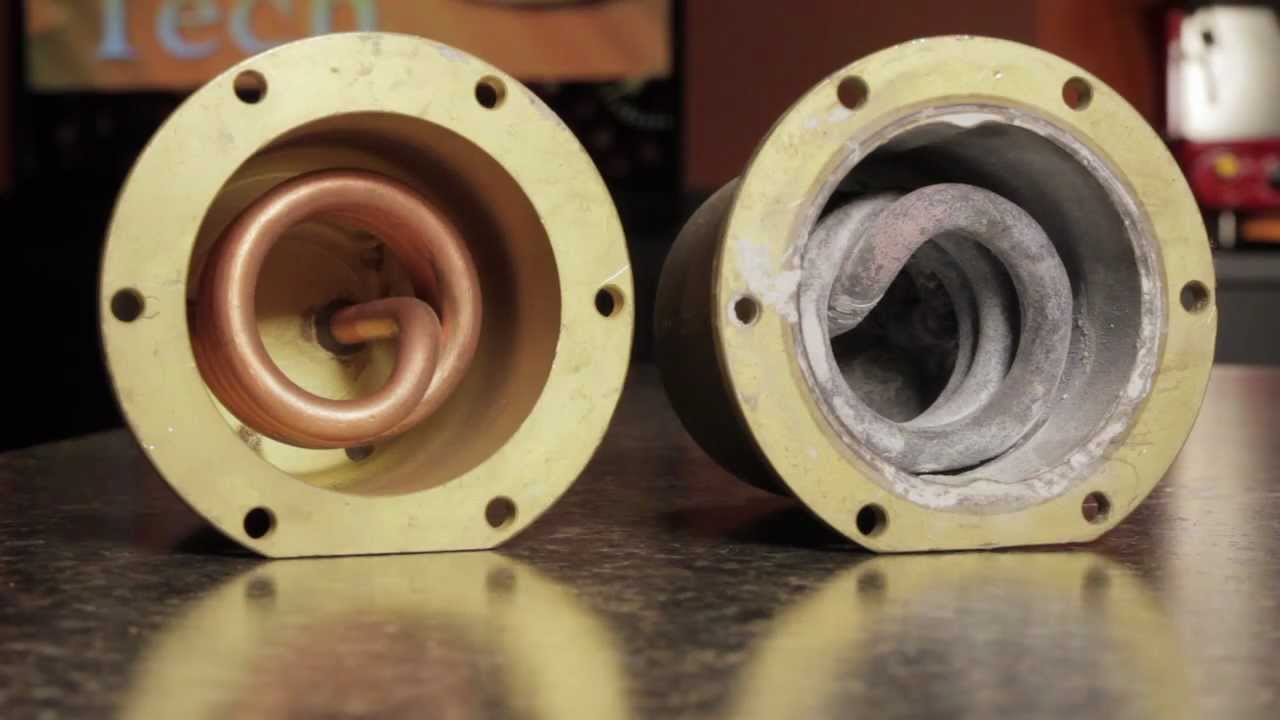
To descale a coffee maker means to remove limescale from its internal parts. Limescale is a hard, chalky deposit left behind when water is heated. It can collect in the water tank, heating element, pipes, valves, and coffee outlet.
When a coffee maker heats water, dissolved minerals can separate from the water. Over time, these minerals stick to the inside of the machine. Think of limescale as a thin layer of stone forming inside a water pipe.
A descale cycle uses a mild acid to dissolve this buildup. The machine then flushes the loosened minerals away with clean water. This process helps restore water flow and heating performance.
Descaling is not the same as wiping the outside of the coffee maker or washing the carafe. Regular cleaning removes coffee oils and residue. Descaling targets mineral deposits hidden inside the machine.
Why Does a Coffee Maker Need Descaling?
A coffee maker needs descaling because tap water often contains natural minerals. The harder your water is, the faster mineral deposits can form.
Hard water is common in many parts of the United States. Water hardness varies by region, water source, and local treatment methods. Even clear water can leave mineral deposits after repeated heating.
Here is what can happen when you ignore a descale warning:
• The coffee maker may brew more slowly.
• The water may not reach the correct brewing temperature.
• Coffee may taste bitter, flat, or unusually metallic.
• The machine may make louder humming or clicking sounds.
• The water flow may become weak or uneven.
• The coffee maker may stop before the brew cycle ends.
• The heating element may work harder than normal.
A layer of limescale acts like insulation around the heating element. This can make it harder for the machine to heat water efficiently. In severe cases, buildup can block narrow tubes and damage pumps or valves.
In my experience testing and maintaining coffee makers, slow brewing is often the first clear warning. Many people assume the pump is failing, but a descale cycle can solve the problem when mineral buildup is the real cause.

What Is the Difference Between Descaling and Cleaning?
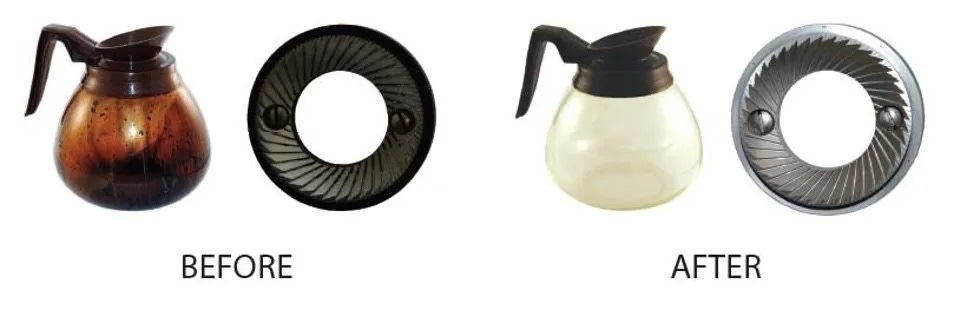
Cleaning removes coffee residue. Descaling removes mineral deposits. Most coffee makers need both tasks.
Coffee grounds and oils can collect in the filter basket, brew head, carafe, and drip area. These residues can turn stale and affect the taste of your coffee. Washing these parts with warm water and mild dish soap usually handles normal coffee residue.
Descaling works inside the water path. It reaches areas that you cannot safely scrub by hand, such as the heating chamber and internal tubes.
A simple comparison helps:
• Cleaning is like washing a dirty cup.
• Descaling is like clearing mineral buildup from a plumbing pipe.
• Cleaning improves taste and hygiene.
• Descaling improves water flow, heating, and machine performance.
You may clean your coffee maker every day or every few uses. You usually descale less often, based on water hardness, machine use, and the manufacturer’s instructions.
Cleaning alone will not remove limescale. Descaling alone will not remove thick coffee oils. For the best results, do both.
How to Descale a Coffee Maker
The exact process varies by brand and model, so always check the user manual first. Some machines have a dedicated descale button, while others use a manual process.
The following steps work for many standard drip coffee makers.
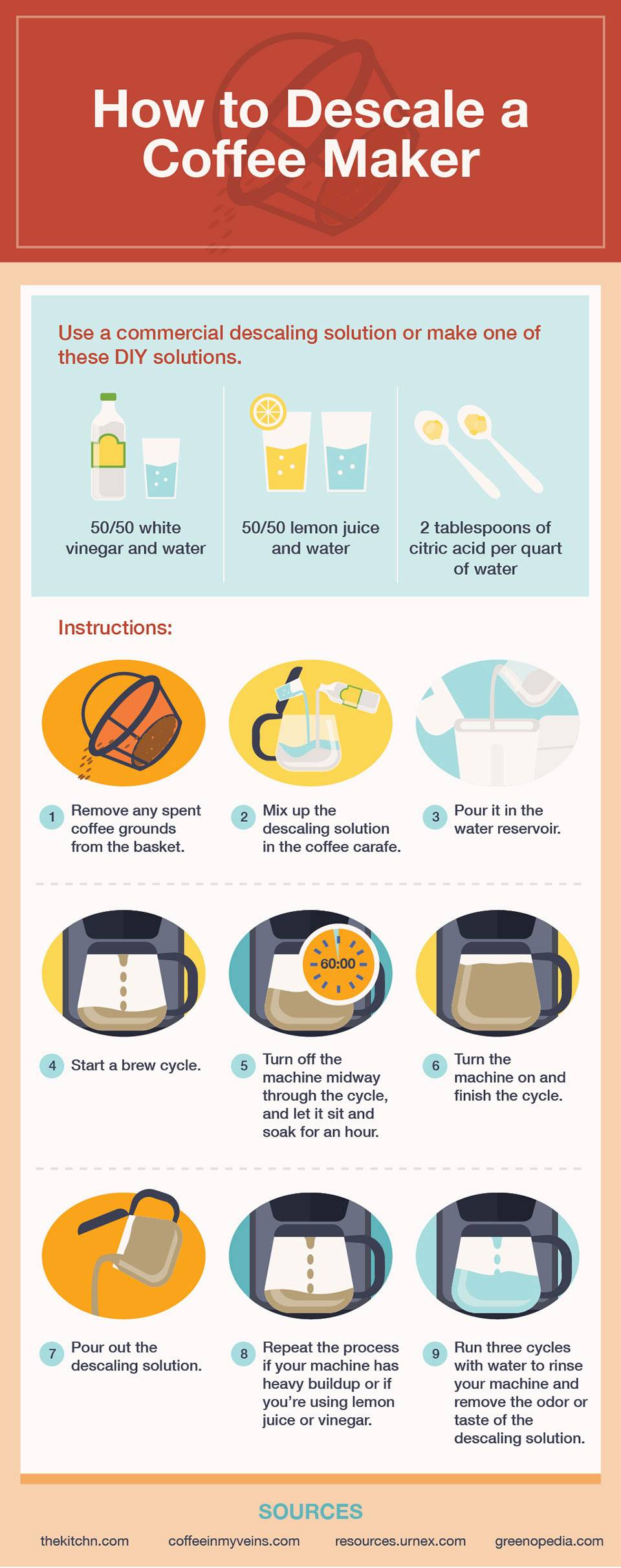
1. Empty the coffee maker
Remove any coffee grounds, paper filter, and leftover coffee. Empty the water tank and rinse it if needed.
2. Prepare the descaling solution
Use a commercial coffee machine descaler or the product recommended by the manufacturer. Mix it with water as directed on the label.
Do not guess the concentration. A solution that is too weak may not remove the buildup. A solution that is too strong may harm seals, metal parts, or internal coatings.
3. Run the descale cycle
Place a large container under the coffee outlet. Start the descale setting if your machine has one. If it does not, run the solution through as if you were brewing a full pot.
Some coffee makers work best when you pause the cycle halfway. This gives the solution time to soften thick mineral deposits. Only pause the machine if the manual allows it.
4. Discard the used solution
The liquid may contain loosened minerals and should not be used for drinking. Empty the container and rinse it well.
5. Flush the machine
Fill the water tank with fresh water. Run at least two full rinse cycles, or follow the number stated in the manual.
The water should look clear and smell normal before you brew coffee again. If you still notice a sour smell, run another rinse cycle.
6. Wash removable parts
Clean the carafe, filter basket, lid, and water tank with warm water. Let all parts dry fully before reassembling the machine.
If you are asking what does descale mean on a coffee maker because the warning light stays on, the light may need to be reset. Some models reset automatically after a complete cycle. Others require you to press and hold a button.
Which Descaling Solution Should You Use?
The safest choice is usually a descaling product made for coffee makers and approved for your model. These products often contain acids such as citric acid or lactic acid. They are designed to dissolve mineral deposits without being overly harsh on machine parts.
Many manufacturers recommend their own formula. It may cost more than a homemade mixture, but it can reduce the risk of damage and may be required for warranty support.
Common options include:
• Manufacturer-approved liquid descaler
• Coffee machine descaling tablets
• Citric acid solution, if the manual permits it
• A compatible powder descaler mixed with water
Can You Use White Vinegar?
Some coffee maker manuals allow diluted white vinegar. Others advise against it. Vinegar can help dissolve mineral deposits, but it may leave a strong smell or taste if the machine is not rinsed well.
Vinegar can also be less effective than a purpose-made descaler for heavy buildup. Certain manufacturers warn that vinegar may affect rubber seals or internal components over time.
My practical advice is simple: use the product listed in your manual first. Use vinegar only when the manufacturer clearly says it is safe. Never mix vinegar with bleach or another cleaning chemical.
:max_bytes(150000):strip_icc()/Web_1500-sea-how-clean-coffee-maker-jesse-raub-01-2cedcabc538b4b47ac125ec12147b6bf.jpg)
How Often Should You Descale a Coffee Maker?
There is no single schedule that suits every coffee maker. The right frequency depends on water hardness and how often you use the machine.
As a general guide:
• Soft water: descale about every three to six months.
• Moderately hard water: descale about every two to three months.
• Hard water: descale about once a month or as the manual recommends.
• Daily use: descale more often than occasional use.
A built-in descale light is usually the best guide for automatic machines. Some models measure water volume. Others estimate buildup based on use. The light is helpful, but it may not detect every performance problem.
You may need to descale sooner if:
• The machine brews more slowly.
• The pump sounds different.
• The coffee tastes unusual.
• The water flow becomes weak.
• You see white flakes in the water.
• The coffee maker has not been serviced for many months.
Using filtered water may reduce mineral buildup, but it does not always eliminate it. A filter can improve taste and lower some impurities, yet many filters do not remove all calcium and magnesium.

What Happens If You Do Not Descale?
Skipping descaling will not always damage a coffee maker right away. However, mineral buildup usually becomes thicker with continued use.
At first, you may notice only a slower brew. Later, the machine may struggle to push water through the system. The heating element may also run longer, which can increase stress on internal parts.
In some cases, the machine may produce lukewarm coffee. Proper brewing depends on water reaching a suitable temperature and passing through the grounds at a steady rate. A blocked or coated water path can interfere with both steps.
Severe buildup can lead to:
• Incomplete brew cycles
• Leaking around valves or seals
• A clogged water outlet
• Repeated descale warnings
• Pump failure
• Permanent damage that cleaning cannot fix
A descale cycle cannot repair every problem. If the machine still leaks, fails to heat, or makes a grinding sound after descaling, unplug it and contact the manufacturer or a qualified repair service.

Common Descaling Mistakes to Avoid
Descaling is simple, but a few mistakes can reduce its effectiveness or damage the machine.
Ignoring the user manual
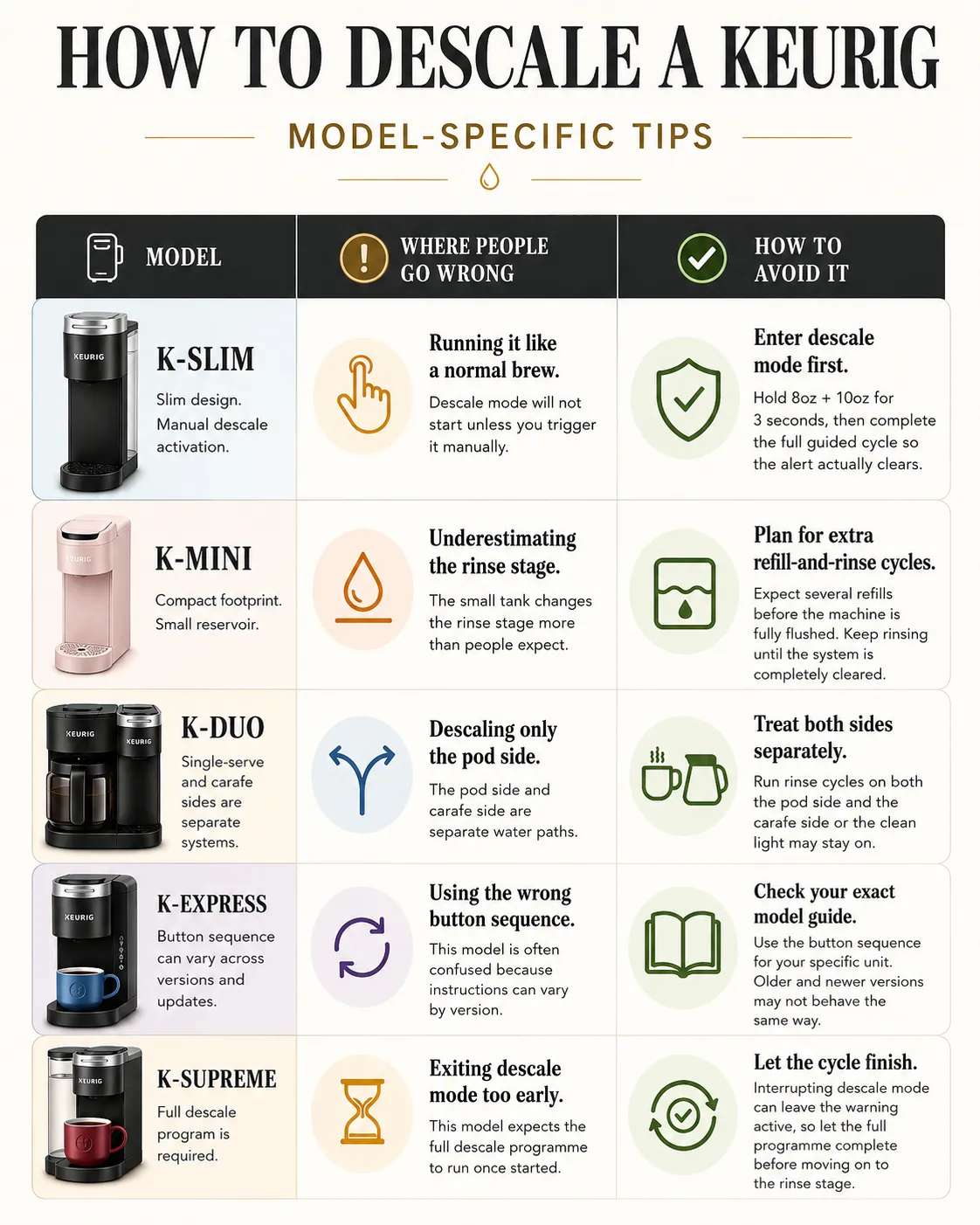
Coffee makers do not all use the same process. A pod machine, espresso machine, and drip coffee maker may require different solutions and cycle settings.
Using too little water
The solution must pass through the full water path. Follow the product instructions and never run a concentrated solution unless the manual specifically says to do so.
Stopping after one rinse
A single rinse may not remove all traces of descaler. Run the recommended rinse cycles. If you can smell or taste the solution, rinse again.
Using baking soda
Baking soda is useful for some household cleaning jobs, but it does not dissolve limescale as effectively as an appropriate acid-based descaler. It may also leave residue inside the machine.
Mixing cleaning products
Never mix descaler with bleach, ammonia, or another cleaning chemical. Chemical mixtures can create dangerous fumes or damage the coffee maker.
Forgetting the filter basket
A descale cycle does not remove old coffee oils from the filter basket or carafe. Wash removable parts separately for a complete clean.
How to Prevent Mineral Buildup
You cannot prevent all limescale, but you can slow its growth.
Use fresh water each time you brew. Water that sits in the tank for days can develop odors and may leave more residue. Empty the tank when you will not use the machine for a while.
A water filter may also help. Check the filter instructions and replace it on time. An old filter can lose effectiveness and may even affect the taste of your coffee.
Helpful habits include:
• Use filtered water when suitable for your machine.
• Do not leave water in the tank for long periods.
• Empty and rinse the water tank regularly.
• Clean the carafe and filter basket often.
• Follow the descale alert instead of ignoring it.
• Keep a simple maintenance record.
One lesson I learned early is that prevention is easier than recovery. A five-minute rinse and a regular descale schedule are much easier than trying to revive a machine with a badly blocked water path.
Descaling Different Types of Coffee Makers
The meaning of descale is similar across coffee makers, but the procedure can differ.
Drip coffee makers
Drip machines usually allow you to add a descaling solution to the water tank and run a full brew cycle. Some models require a pause during the cycle so the solution can work on heavy buildup.
Single-serve pod machines
Pod machines often have a dedicated descale mode. The process may take longer because the solution must move through a narrow needle, pump, and internal water line.
Remove any coffee pod before starting. Afterward, run several fresh-water cycles to remove the solution.
Espresso machines
Espresso machines often need more careful maintenance. Their internal water paths, boilers, pumps, and steam systems can collect mineral deposits.
Use only a product approved for espresso machines. Follow the instructions closely, especially if the machine has a separate steam wand or hot-water outlet.
Super-automatic coffee machines
These machines may display a descale message automatically. The screen may guide you through each step. Do not interrupt the process unless the manual tells you to do so.
If you are still unsure what does descale mean on a coffee maker, remember that the goal remains the same: remove mineral deposits from the internal water system without harming the machine.
Frequently Asked Questions About What Does Descale Mean on a Coffee Maker
Does descaling mean cleaning a coffee maker?
Descaling means removing mineral deposits from the internal water system. It is different from normal cleaning, which removes coffee grounds, oils, and residue from removable parts.
Can I make coffee while the descale light is on?
You can often brew coffee, but it is better to run the descale cycle soon. Continued use may allow mineral buildup to become thicker and may reduce brewing performance.
How long does it take to descale a coffee maker?
Most descale cycles take about 20 to 45 minutes, including rinsing. Some espresso and automatic machines may take longer because they use several guided stages.
Is descaling safe for every coffee maker?
Descaling is generally safe when you use the correct product and follow the manual. Do not assume that vinegar or a homemade mixture is safe for every model.
Why does the descale light stay on after descaling?
The light may stay on if the machine did not complete the full cycle or if it needs a manual reset. Run the process again according to the manual, then use the required button or setting to reset the alert.
Can filtered water stop limescale?
Filtered water can reduce some minerals and may slow buildup, but it usually does not stop limescale completely. You should still follow the manufacturer’s descaling schedule.
Conclusion
Descale on a coffee maker means removing limescale from the machine’s internal water path. This buildup can slow brewing, affect coffee flavor, reduce heating performance, and eventually damage the machine.
Use a manufacturer-approved descaler, follow the correct cycle, and rinse the machine well afterward. Clean removable parts separately, use suitable water, and treat the descale warning as useful maintenance rather than an emergency.
Check your coffee maker’s manual today, note your water hardness, and set a simple reminder for the next descale cycle. Share your experience or explore your machine’s care guide to keep every cup tasting fresh.

Liora Pennings is a seasoned chef and kitchen enthusiast with a passion for turning everyday cooking into an effortless experience. With years of hands-on culinary expertise, she specializes in practical techniques, ingredient know-how, and smart kitchen solutions that help home cooks elevate their meals. At KitchFlair.com, Liora shares her best tips, time-saving tricks, and honest product reviews to guide readers toward a more efficient, enjoyable, and inspired cooking routine. Whether you’re a beginner or a seasoned home chef, Liora’s friendly, knowledge-packed insights make every visit to the kitchen a little easier—and a lot more delicious.