Can You Cook In A Stainless Steel Mixing Bowl: Is It Safe?
Yes, you can cook in a stainless steel mixing bowl when it is oven safe and used with proper heat care.
As someone who has tested stainless steel bowls for baking, steaming, mixing, and stovetop tasks, I know they can be useful kitchen tools. However, not every mixing bowl can handle high heat. The key is checking the bowl’s design, knowing which cooking method is safe, and avoiding direct contact with strong heat unless the manufacturer allows it.
Can You Cook in a Stainless Steel Mixing Bowl?
Yes, you can cook in a stainless steel mixing bowl, but the safest method depends on the bowl’s construction and the heat source. Many stainless steel bowls are suitable for oven use, steaming, double boilers, and water baths. Some can also sit over a pot, but they should not go directly on a burner unless they are specifically designed for stovetop cooking.
Stainless steel is a strong metal that does not crack easily. It also resists rust, absorbs no food odors, and does not react much with most foods. These qualities make it popular for mixing, baking, and heat-based cooking.
Still, a mixing bowl is not always the same as a cooking pot. A thin bowl may heat fast, develop hot spots, or become unstable. Always inspect the label, product guide, or manufacturer’s instructions before using it with heat.
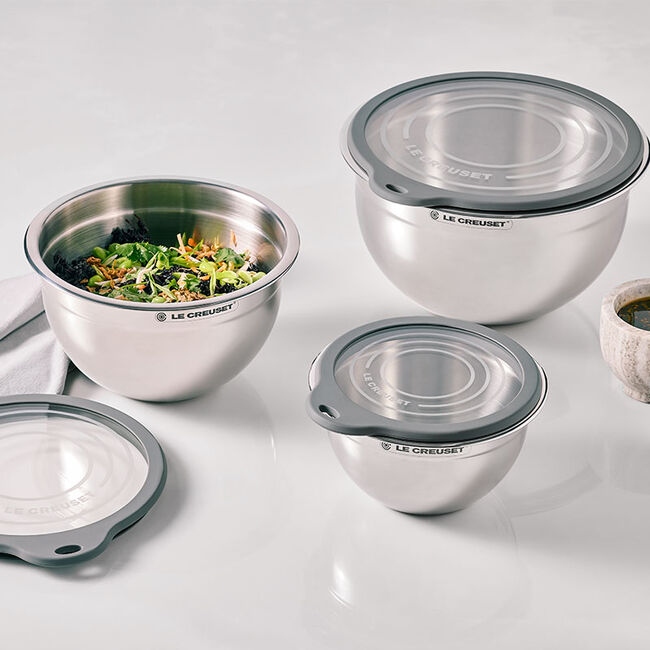
When Is a Stainless Steel Mixing Bowl Safe for Cooking?
A stainless steel mixing bowl is generally safe for cooking when it meets a few basic conditions. The bowl should be made from food-grade stainless steel and should have a heat-safe design. It should also be free from plastic coatings, rubber parts, glued handles, or decorative finishes that can melt.
Look for these signs:
• The bowl is labeled oven safe or heat safe.
• The bowl is made from food-grade stainless steel, such as 18/8 or 18/10 steel.
• The bowl has no plastic, silicone, painted, or wooden parts.
• The manufacturer gives a maximum temperature.
• The bowl sits firmly on a pot, baking tray, or stable surface.
The numbers 18/8 and 18/10 describe the approximate chromium and nickel content. Chromium helps stainless steel resist corrosion, while nickel supports shine and durability. These grades are common in quality kitchen equipment.
If the bowl has no care instructions, use it for indirect heat only. A water bath, steamer, or double boiler is much safer than placing the bowl directly over a flame.

Best Ways to Cook in a Stainless Steel Mixing Bowl
There are several safe and useful ways to cook in a stainless steel mixing bowl. Indirect heat is usually the best choice because it spreads heat more gently and lowers the risk of scorching.
Using a stainless steel bowl in the oven
You can cook in a stainless steel mixing bowl in the oven if the bowl is labeled oven safe. This works well for cakes, bread, baked custards, roasted ingredients, and dishes that need a deep container.
Before using the bowl:
-
Check its temperature limit.
-
Remove any plastic or rubber parts.
-
Place the bowl on a baking sheet for support.
-
Leave space around the bowl for air flow.
-
Use oven mitts when removing it.
A rounded mixing bowl may need extra baking time. Its shape can make the center of a cake cook more slowly than the edges. A shallow stainless steel bowl often cooks food more evenly than a deep one.
Do not assume that all stainless steel bowls are broiler safe. The broiler produces intense, direct heat that can discolor the steel, burn food, or damage a thin bowl.
Using a bowl as a double boiler
A double boiler is one of the best ways to cook in a stainless steel mixing bowl. Place the bowl over a saucepan filled with a small amount of simmering water. The bottom of the bowl should sit above the water rather than touch it.
This gentle heat works well for:
• Melting chocolate
• Making custard
• Heating sauces
• Preparing hollandaise
• Melting butter
• Making lemon curd
The bowl should fit securely over the saucepan. Steam should not escape around a large gap, and the water should remain at a gentle simmer. Boiling water can create too much heat and may cause chocolate or egg mixtures to seize.
Using a bowl for steaming
A stainless steel bowl can sometimes be used for steaming food. Set it on a rack above simmering water, or use it as an insert inside a larger pot. The bowl must be stable and should not block all steam flow.
This method can work for steamed puddings, dumplings, vegetables, and some rice dishes. Cover the pot with a lid that fits well, and use care when lifting the bowl because trapped steam can cause serious burns.
Using a bowl for a water bath
A water bath gives delicate foods soft, even heat. Place the stainless steel mixing bowl inside a larger roasting pan, then add hot water around it. Keep the water below the rim of the bowl.
This method is useful for:
• Cheesecake
• Baked custard
• Flan
• Bread pudding
• Egg-based dishes
A water bath acts like a cushion between the oven and the food. It slows temperature changes and helps prevent curdling, cracking, or dry edges.

Can You Put a Stainless Steel Mixing Bowl on the Stove?
In most cases, you should not put a standard stainless steel mixing bowl directly on a stovetop. The curved base may not sit flat, which can make the bowl tip or heat unevenly. A thin bowl may also warp or cause food to burn.
Direct stovetop use is safer only when the bowl is clearly designed for it. Some professional kitchen bowls have a flat base and a thick, layered structure. These models may be suitable for induction or gas cooking, but the product instructions must confirm this.
Avoid placing a regular mixing bowl directly over:
• A gas flame
• An electric coil
• A glass cooktop burner
• A high-powered induction zone
• A campfire or grill
Direct heat can create hot spots. It may also make the rim extremely hot while the center stays cooler. This uneven heating is one reason a saucepan is usually a better choice for stovetop cooking.
What about induction cooktops?
Most stainless steel mixing bowls do not work on induction cooktops. Induction requires a magnetic base that can transfer energy from the cooktop. A thin stainless steel bowl may not contain enough magnetic material.
You can test the bowl with a magnet. If the magnet sticks firmly to the bottom, the bowl may be compatible, but this test is not a complete guarantee. The bowl must also have a flat, stable base and manufacturer approval for induction use.

Advantages of Cooking in a Stainless Steel Mixing Bowl
Cooking in a stainless steel mixing bowl offers several benefits. It can be a practical choice when you need one container for mixing and cooking.
Strong and durable
Stainless steel does not chip like ceramic or shatter like glass. A good bowl can last for many years with basic care. It is also light enough to move easily from the counter to an oven tray.
Resistant to stains and odors
Stainless steel usually does not hold strong smells from garlic, onions, spices, or sauces. It also resists staining better than many plastic bowls. This makes it useful for both sweet and savory cooking.
Helpful for baking
A stainless steel bowl can support many baking tasks. It is useful for warming ingredients, melting butter, making a water bath, and baking certain cakes or puddings. The bowl’s smooth surface also makes cleanup simple.
Useful for temperature control
Metal transfers heat faster than glass or ceramic. This can be helpful when warming ingredients gently or cooling a mixture over ice. It can also be a disadvantage if the bowl becomes too hot too quickly, so temperature control matters.
Easy to clean
Most stainless steel bowls can be washed with warm water and dish soap. For stuck food, soak the bowl before scrubbing. A paste made from baking soda and water can help remove residue without harsh scraping.
Limitations and Risks to Know
The answer to “can you cook in a stainless steel mixing bowl” is yes, but there are important limits. The bowl’s shape and thickness can affect cooking results and safety.
Uneven heating
Thin stainless steel heats quickly. Food may cook faster near the sides than in the center. Stirring helps with sauces and custards, but it cannot fix every problem.
Food may stick
Stainless steel has no natural nonstick coating. Eggs, cheese, sugar, and thick sauces may cling to the surface. Use enough fat when appropriate, and control the heat carefully.
The bowl can become very hot
A stainless steel bowl may look cool even when it is hot enough to burn skin. The rim and side walls can be especially dangerous. Always use dry oven mitts, and warn others before moving the bowl.
The bowl may warp
Sudden temperature changes can bend thin metal. Do not place a hot bowl in cold water. Let it cool first, especially if it has a thin wall or a bonded base.
Acidic foods need care
Food-grade stainless steel is generally suitable for normal cooking, including many acidic foods. However, long contact with very salty or acidic mixtures may cause pitting or a metallic taste in low-quality steel. Avoid storing tomato sauce, vinegar marinades, or salty brines in the bowl for long periods.
Scratches can affect the finish
Metal scrubbers can leave scratches. These marks do not always make the bowl unsafe, but they can trap residue and make cleaning harder. Use a soft sponge or nylon brush when possible.

Foods You Can Cook in a Stainless Steel Mixing Bowl
You can cook many foods in a stainless steel mixing bowl, especially with indirect heat. The best choices are foods that do not need intense, direct browning.
Good options include: