How Does Wet Vacuum Cleaner Work: Simple Guide
A wet vacuum cleaner pulls liquid and dirt into a tank using controlled airflow and suction.
Understanding how does wet vacuum cleaner work helps you choose the right machine, use it safely, and avoid costly mistakes. These cleaners combine suction, airflow, filters, and a collection tank to lift both dry debris and liquid from floors, carpets, upholstery, and other surfaces. This guide explains the process in simple terms, with practical tips based on common cleaning situations and manufacturer safety practices.
What Is a Wet Vacuum Cleaner?
A wet vacuum cleaner is a cleaning machine designed to collect liquids as well as dry dirt. Unlike a standard household vacuum, it has a sealed collection tank that can safely hold water, spills, mud, and other moisture.
Many models are called wet-dry vacuums because they handle both jobs. You can use one to pick up cereal from a kitchen floor, remove water from a clogged sink area, or clean a damp car mat.
The main parts usually include:
• An electric motor that powers the suction system
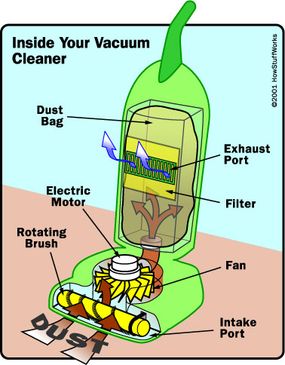
• A fan that moves air through the machine
• A collection tank for dirt and liquid
• A hose, wand, or floor tool
• A filter system
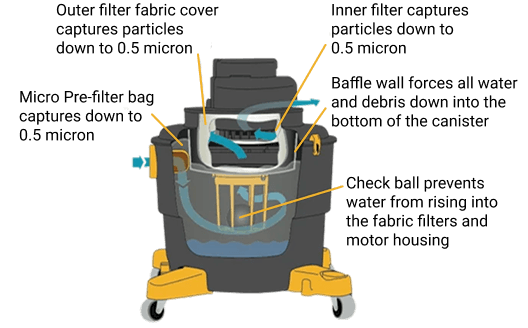
• A float shut-off device that helps protect the motor
The key difference is the collection system. A regular vacuum often uses a paper bag or dry dust container. A wet vacuum uses a tank that separates collected liquid from the motor area.
How Does Wet Vacuum Cleaner Work?
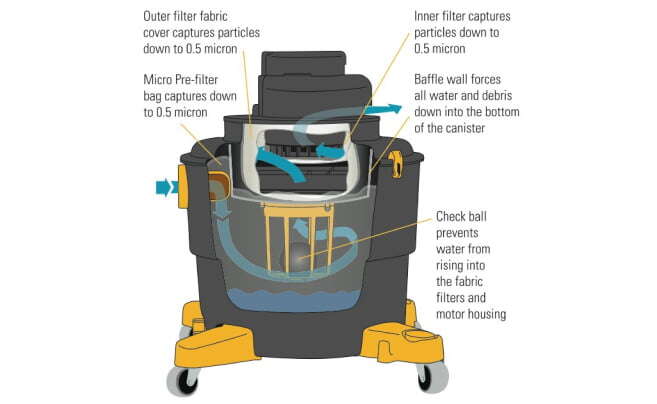
The simplest way to understand how does wet vacuum cleaner work is to picture a controlled air tunnel. The motor spins a fan, and the fan lowers the air pressure inside the hose. Higher air pressure outside the hose then pushes air, dirt, and liquid toward the machine.
Here is the process step by step:
-
The motor powers the fan.
-
The fan creates lower air pressure inside the hose.
-
Air outside the hose rushes toward the lower-pressure area.
-
That moving air carries dust, debris, and liquid through the cleaning tool.
-
The mixture enters the collection tank.
-
The tank slows the airflow and allows heavier dirt and water to drop out.
-
A filter catches fine particles before air leaves the machine.
-
The cleaned air passes through the exhaust outlet.
This process is similar to drinking through a straw. When you create lower pressure inside the straw, outside air pressure helps move the drink upward. A wet vacuum uses the same basic pressure idea, but with a motor and fan doing the work.
The machine does not truly “suck” liquid like a hand pulling water. Instead, it moves air quickly. That moving air carries the liquid into the tank.

How Liquid Moves Through a Wet Vacuum
Liquid pickup depends on strong airflow, a tight seal, and the right cleaning attachment. When the floor nozzle touches a puddle, the motor creates pressure inside the hose. Air above the liquid moves toward the hose opening and carries water with it.
Inside the tank, the airflow changes direction and slows down. Water is heavier than air, so gravity causes it to fall into the bottom of the tank. Larger debris drops out at the same time.
The air then moves toward the motor area. Before it exits, the filter removes smaller particles. In many wet-dry models, the filter is designed to tolerate moisture, but the exact design differs by model.
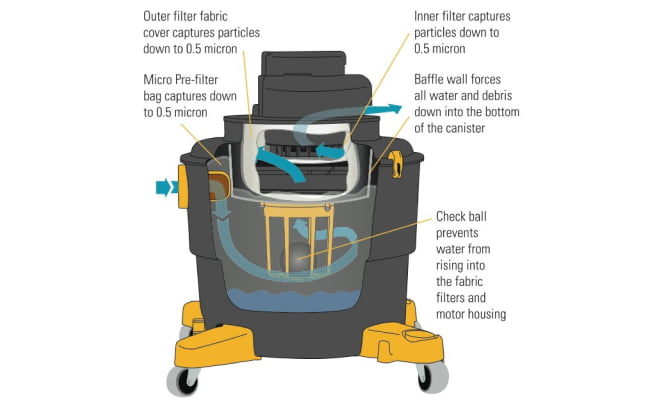
A float valve or float shut-off is an important safety part. As the tank fills, the float rises. When the liquid reaches a certain level, the float blocks the air path or changes the sound of the machine. This warns you to turn off the vacuum before water reaches the motor.
Never assume every wet vacuum can collect unlimited water. The tank has a fixed capacity, and the float shut-off is a backup feature, not a reason to ignore the fill level.
Main Parts That Make a Wet Vacuum Work
Motor and fan
The motor provides the power. It spins the fan at high speed, which creates the airflow needed to move dirt and liquid.
A powerful motor alone does not guarantee strong cleaning. Hose size, filter condition, tank design, and nozzle shape also affect performance.
Collection tank
The collection tank stores water, dirt, and larger debris. Many tanks are made from tough plastic or metal and have a wide opening for easy emptying.
A larger tank lets you clean for longer. However, it also makes the machine heavier when full. For home use, a medium tank often provides a practical balance.
Hose and attachments
The hose carries air and debris to the tank. A wide hose is useful for leaves, wood chips, and larger pieces. A narrower hose may provide better control for small spills and tight areas.
Common attachments include:
• A wide floor nozzle for hard floors
• A squeegee-style tool for liquid pickup
• A crevice tool for narrow gaps
• A utility nozzle for general cleaning
• A brush tool for upholstery and fabric
Filters
Filters protect the motor and reduce the amount of dust sent back into the room. Some models use foam filters for wet pickup and pleated filters for dry dust.
The correct filter matters. Using a dry paper filter during wet pickup can damage it. Using no filter during dry pickup may allow fine dust to reach the motor or return to the room.
Always follow the filter instructions for your exact model.
Float shut-off
The float shut-off helps stop liquid from entering the motor area. It may be a plastic ball, a movable cage, or another automatic valve.
If the vacuum suddenly makes a higher-pitched sound or loses suction while collecting water, the tank may be full. Turn it off at once and empty it.
How to Use a Wet Vacuum Cleaner Safely
Learning how does wet vacuum cleaner work is only part of safe operation. You also need to know what the machine can and cannot collect.
Use this basic method:
-
Read the manual before the first use.
-
Check that the tank is empty and correctly attached.
-
Install the filter recommended for wet or dry cleaning.
-
Connect the hose and choose the correct nozzle.
-
Remove large sharp objects by hand.
-
Plug the machine into a suitable grounded outlet.
-
Turn on the vacuum before placing the nozzle over the spill.
-
Move the tool slowly across the wet area.
-
Watch the tank level and listen for changes in sound.
-
Turn off and unplug the machine before emptying it.
Do not use a wet vacuum to collect gasoline, paint thinner, solvents, hot ashes, or other flammable materials unless the manufacturer specifically approves it. Electrical sparks, heat, or motor components can create serious danger.
Avoid picking up very hot liquids. Most household wet vacuums are designed for cool or room-temperature spills, not boiling water.
Do not use a wet vacuum on energized electrical equipment. Unplug appliances and disconnect power before cleaning around them.

Can a Wet Vacuum Pick Up Dry Dirt?
Most wet-dry vacuum cleaners can pick up dry dirt, but the setup may change. You may need to install a pleated cartridge filter, a dust bag, or another dry-use filter.
Dry pickup works in a similar way. Air carries dust and debris through the hose, while the filter traps fine particles. Heavier pieces fall into the tank or bag.
Before switching from wet pickup to dry pickup:
• Empty and rinse the tank
• Let the tank dry fully
• Clean or replace the wet-use filter
• Install the dry filter listed in the manual
Moisture left in the tank can turn dry dust into sticky mud. That mud may clog the hose and create unpleasant odors.
A wet-dry vacuum is useful in garages, workshops, basements, vehicles, and homes. Still, it may be louder and less refined than a standard indoor vacuum.
Wet Vacuum Cleaner Versus Regular Vacuum
A regular vacuum is mainly built for dry floors, rugs, and carpets. It often uses a dust bag or a dry dust bin, and its filters may not be designed for liquid.
A wet vacuum cleaner is built with a sealed tank and moisture-resistant parts. It is better for spills, flooding, muddy shoes, workshop debris, and heavy cleaning jobs.
Here is a simple comparison:
• Wet vacuum: Handles liquid and dry debris
• Regular vacuum: Designed mainly for dry debris
• Wet vacuum: Usually has a larger tank
• Regular vacuum: Often has better indoor filtration and quieter operation
• Wet vacuum: Works well in garages and workshops
• Regular vacuum: Usually offers better everyday carpet comfort
Do not use a regular vacuum to collect water. Liquid can damage the motor and create an electrical hazard.
A wet vacuum also does not always wash a carpet. Some machines only remove water. A carpet extractor sprays cleaning solution, agitates the fibers, and removes dirty water. Those are different functions.
How Does a Wet Vacuum Cleaner Work on Carpet?
On carpet, how does wet vacuum cleaner work depends on the machine type. A basic wet-dry vacuum can remove spilled water from carpet fibers, but it may not scrub deep stains.
First, remove excess liquid with slow passes. Then use a suitable carpet tool if the manufacturer allows it. Keep the nozzle flat so it creates a good seal without crushing the carpet.
For a large carpet cleaning job, a carpet extractor is usually more effective. It sprays water or cleaning solution into the carpet and then pulls the dirty liquid back into a separate tank.
Avoid soaking carpet unnecessarily. Too much moisture can reach the carpet pad and subfloor, where it may dry slowly. Slow drying can lead to odors, mildew, or material damage.
After wet carpet cleaning, improve airflow with fans and open windows when weather allows. The carpet should dry fully, not just feel dry on the surface.
Common Uses for a Wet Vacuum Cleaner
A wet vacuum can help with many household and work-related tasks:
• Picking up spilled drinks
• Removing water from a basement floor
• Cleaning muddy vehicle mats
• Clearing water from a clogged sink area
• Collecting sawdust and small workshop debris
• Cleaning leaves from a garage
• Removing water after a washing machine leak
• Drying hard floors after mopping
• Cleaning pet accidents from suitable surfaces
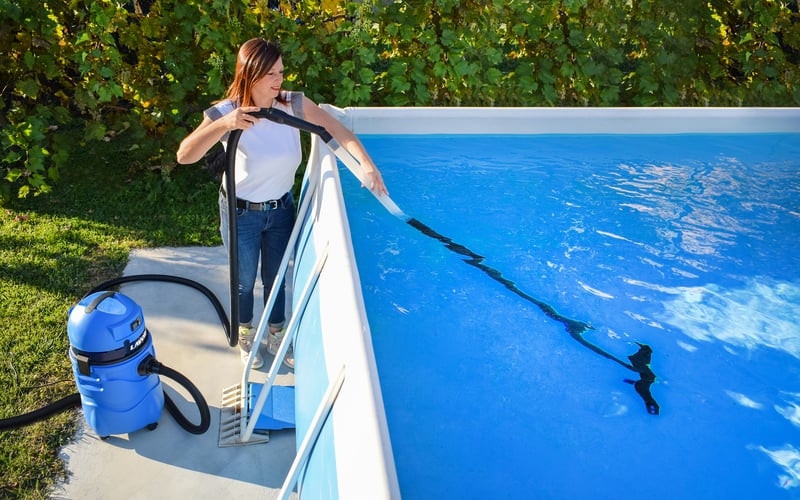
• Recovering water from a shallow outdoor puddle
For example, after a small appliance leak, a wet vacuum can remove standing water faster than towels. However, you should still find and repair the source of the leak. Vacuuming the water solves the immediate problem, not the underlying cause.
For pet accidents, clean and disinfect the surface after liquid removal. The vacuum collects moisture, but it does not automatically remove bacteria, allergens, or odor-causing compounds.
Benefits and Limitations of Wet Vacuum Cleaners
Wet vacuum cleaners offer clear benefits, but they are not perfect for every task.
Benefits
• They collect both liquid and dry debris.
• They remove spills faster than towels.
• They work well in garages, basements, and workshops.
• They can handle larger debris than many household vacuums.
• They help remove water from carpets and vehicle interiors.
• They are useful after small leaks and home repairs.
Limitations
• They can be loud.
• They may be heavy when the tank is full.
• They do not replace a carpet extractor for deep carpet washing.
• They need cleaning after wet use.
• Filters and hoses may clog if used incorrectly.
• They may not remove stains without a cleaning solution and agitation.
• They cannot safely collect every type of liquid.
One common mistake is choosing a machine only by motor power. Airflow and sealed suction often matter just as much. A clean filter, short hose, and proper nozzle can improve performance more than a higher advertised wattage.
Cleaning and Maintaining a Wet Vacuum
Maintenance keeps suction strong and helps prevent odors. After wet pickup, unplug the machine and empty the tank as soon as possible.
Rinse the tank with clean water if the manufacturer permits it. Wipe away dirt around the lid, float, hose connection, and seals. Leave the tank open until it is fully dry.
Check the hose for blockages. A clog can make the motor sound strained and reduce liquid pickup. Wash reusable filters only when the manual says they are washable, and let them dry fully before reinstalling them.
A useful maintenance routine includes:
• Emptying the tank after every wet job
• Rinsing sticky residue from the tank
• Checking the float shut-off
• Cleaning the floor nozzle
• Inspecting the power cord
• Replacing damaged seals or filters
• Storing the unit in a dry place
One lesson many users learn the hard way is that closing a damp vacuum for several days can create a strong musty smell. Drying the tank takes a few extra minutes but prevents a much bigger cleaning problem.
How to Improve Wet Vacuum Suction
If your wet vacuum is not collecting water well, check the simple causes first.
• Empty the collection tank.
• Remove clogs from the hose and nozzle.
• Check that the lid is sealed.
• Inspect the hose for cracks.
• Clean or replace the filter.
• Confirm that the float is not stuck.
• Use the correct attachment for the surface.
• Keep the nozzle flat and move it slowly.
A wet vacuum needs a sealed path from the nozzle to the tank. Even a small crack or loose connection can reduce suction. This is why a machine may sound powerful but still leave water behind.
Do not press the nozzle too hard against a smooth floor. A tight seal can restrict airflow. Move the tool slowly and allow the machine time to lift the liquid.
If suction remains weak after these checks, the motor, gasket, or internal fan may need professional service.
What to Look for When Buying a Wet Vacuum
Choose a model based on the work you expect to do. A small unit may be enough for occasional spills, while a workshop or flood cleanup may require a larger tank and longer hose.
Consider these features:
• Tank capacity for the size of your usual jobs
• Hose diameter and length
• Wet and dry filter options
• Automatic float shut-off
• Easy tank drainage
• Strong seals and durable construction
• Grounded power protection
• Replacement filters and parts
• Noise level
• Storage for attachments
For car cleaning, portability and a long hose are helpful. For workshop use, a wide hose and durable tank may matter more. For basement cleanup, choose a model with safe drainage and enough capacity.
Look beyond marketing terms such as “maximum horsepower.” Independent airflow and suction tests are more useful when available, but real-world performance still depends on the hose, filter, and nozzle.
Frequently Asked Questions About How Does Wet Vacuum Cleaner Work
How does a wet vacuum cleaner work without damaging the motor?
A wet vacuum separates liquid in a collection tank before air reaches the motor. A float shut-off also helps block the airflow when the tank becomes full, but you should still empty the tank promptly.
Can I use a wet vacuum cleaner on standing water?
Yes, many wet-dry vacuum cleaners can remove shallow standing water from safe, non-energized surfaces. Check the manual, avoid electrical hazards, and stop when the tank reaches its limit.
Do I need a filter when using a wet vacuum for water?
The required filter depends on the model. Some machines use a foam filter for wet pickup, while others allow wet pickup without the standard dry filter, so follow the manufacturer’s instructions.
Can a wet vacuum cleaner remove water from carpet?
Yes, it can remove surface water and help dry a wet carpet. It may not clean deep stains because water removal is different from the spraying and scrubbing process used by a carpet extractor.
Why does my wet vacuum lose suction during use?
A full tank, blocked hose, dirty filter, loose lid, damaged seal, or stuck float can reduce suction. Turn off the machine, unplug it, and inspect these parts before using it again.
Can I pick up hot water with a wet vacuum cleaner?
Most household models are intended for cool or room-temperature liquids. Hot water may damage parts or create a safety risk, so check the manual before attempting it.
Conclusion
A wet vacuum cleaner works by using a motor and fan to create airflow that carries liquid and debris through a hose into a collection tank. Gravity separates the heavier water and dirt, while filters protect the motor and help clean the outgoing air.
The best results come from using the right filter, choosing the correct nozzle, watching the tank level, and drying the machine after each wet job. Treat safety rules seriously, especially around electricity, flammable liquids, and hot materials.
Now that you understand how does wet vacuum cleaner work, you can select and operate one with greater confidence. Compare models carefully, follow the manual, and share your own wet vacuum cleaning tips or questions in the comments.

Liora Pennings is a seasoned chef and kitchen enthusiast with a passion for turning everyday cooking into an effortless experience. With years of hands-on culinary expertise, she specializes in practical techniques, ingredient know-how, and smart kitchen solutions that help home cooks elevate their meals. At KitchFlair.com, Liora shares her best tips, time-saving tricks, and honest product reviews to guide readers toward a more efficient, enjoyable, and inspired cooking routine. Whether you’re a beginner or a seasoned home chef, Liora’s friendly, knowledge-packed insights make every visit to the kitchen a little easier—and a lot more delicious.