Can Spiders Survive In A Vacuum Cleaner: The Surprising Truth
Most spiders do not survive a vacuum cleaner, but a few may remain alive for a short time.
The question “can spiders survive in a vacuum cleaner” has a more complex answer than a simple yes or no. Suction, impact, heat, dehydration, and time inside the machine all affect the result. This guide explains what happens to spiders in vacuums, which types may survive, and how to remove them in a safer, more humane way.

Can spiders survive in a vacuum cleaner?
Yes, some spiders can survive a vacuum cleaner, especially if they are sucked in gently and the vacuum has a large dust chamber. However, most spiders are injured or killed by the process.
A vacuum cleaner creates fast-moving air. That air pulls the spider through a narrow hose and into a bag, bin, or filter. During this trip, the spider may hit the hose wall, fan, dust, or other debris.
The spider may also face:
• Strong pressure changes
• Repeated impacts
• Dry air
• Heat from the motor
• Lack of water
• Trapped dust and fibers
A large, healthy spider may survive the first few seconds. Survival becomes less likely as the spider stays inside the machine. A spider that survives suction may still die later from dehydration, injury, or lack of food.
So, can spiders survive in a vacuum cleaner? They can, but survival is not common and often does not last long.
What happens to a spider inside a vacuum?
A vacuum cleaner does not usually crush a spider at the moment it enters. Instead, the spider is pulled through a high-speed airflow. The exact force depends on the vacuum’s motor, hose size, airflow, and design.
The spider may be thrown against the inside of the hose. It may then land in the dust bin or bag. If the vacuum contains soft dust, the spider may have a slightly better chance than if it hits sharp dirt, hair, or small objects.
A spider’s body is also delicate. Its legs can break or become stuck in dust. Fine dust may block its breathing openings, called spiracles. Spiders do not breathe like humans, but they still need clean air to exchange oxygen.
Some spiders can slow their activity when conditions are poor. This may make them appear dead when they are only still. A spider can sometimes move again after several minutes, especially if it has not suffered major injury.
Still, movement does not prove that it will recover. A spider may be alive but badly hurt.
Why suction causes damage
The main dangers include:
• Sudden acceleration through the hose
• Collisions with the hose and internal parts
• Loss of moisture
• Dust entering the body openings
• Heat from the motor
• Long periods without food or water
The vacuum is like a violent tunnel from the spider’s point of view. Even a strong insect may not tolerate the trip.

Which spiders are most likely to survive?
Spider survival depends on size, body structure, health, and the type of vacuum. There is no single survival rate that applies to every spider or every machine.
Small house spiders may be pulled into the airflow with less impact than large spiders. However, their small bodies may also be more easily damaged by dust and heat.
Large spiders can have stronger bodies, but they may hit the hose or fan with greater force. Their size can also make it harder for them to move through the system.
Spiders with sturdy bodies may have a better chance than fragile spiders. A healthy adult may also survive longer than a weak or injured spider.
The most important factors are:
• Vacuum power: Strong suction can cause more violent movement.
• Vacuum design: Bagless models may expose spiders to dust, while bagged models may trap them in a sealed space.
• Hose length: A longer hose gives the spider more time to hit the sides.
• Dust level: Dirt, hair, and grit can cause more injury.
• Time inside the vacuum: A short stay is less harmful than hours or days.
• Temperature: A warm motor and closed bin can increase stress.
So, can spiders survive in a vacuum cleaner if they are large and strong? Sometimes, but size alone does not guarantee survival.
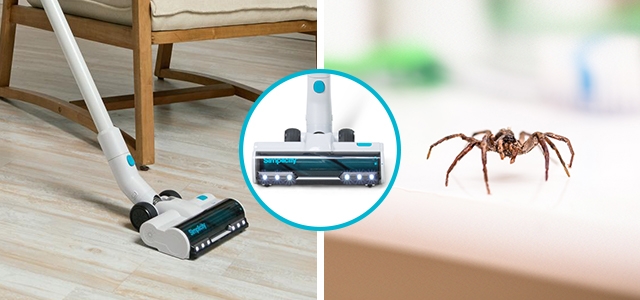
Can spiders survive in bagless and bagged vacuums?
The vacuum type makes a major difference. Bagless and bagged machines both create serious risks, but the spider’s surroundings after suction can vary.
Bagless vacuums
In a bagless vacuum, the spider usually falls into a clear plastic dust container. It may land on dust, hair, or other debris. Some spiders can remain alive in the bin for several hours.
A bagless canister may also allow a surviving spider to climb out if the lid is open. Yet many spiders cannot climb smooth plastic walls. They may remain trapped until the bin is emptied.
The filter can be another danger. A spider may become caught in the filter or covered in fine dust. This often causes injury or death.
Bagged vacuums
A bagged vacuum traps the spider inside a fabric or paper bag. The bag may reduce movement, but it also limits escape.
A spider might survive for a short time in a bag. It can use small air spaces at first, but the bag offers no reliable food or water. Over time, dehydration becomes a major problem.
A sealed bag can also create a dark, dry environment with little room to move. If the vacuum stays in a warm closet, the heat may speed up the spider’s decline.
Can spiders survive in a vacuum cleaner bag? A few may survive briefly, but long-term survival is unlikely.
How long can a spider live in a vacuum cleaner?
There is no fixed answer. A spider may die within seconds, or it may remain alive for hours or even longer under favorable conditions.
The vacuum’s power and the spider’s condition matter at the start. The storage conditions matter afterward. A cool, lightly used dust bin may give a spider more time than a hot machine with a full bag.
Most spiders cannot live indefinitely inside a vacuum. They need moisture and energy. Many also need prey, such as flies or small insects, to remain healthy.
A spider that looks still may be dead, stunned, or resting. Do not touch it with bare hands. Use gloves or a tool when checking the dust bin.
Signs that a spider may still be alive include:
• Slow leg movement
• Body movement after gentle disturbance
• Attempts to grip the container
• Curling and uncurling legs
• Movement toward light or an opening
If you want to give the spider a chance, empty the vacuum outdoors soon after use. Do not leave it inside for days.

How to remove a spider without vacuuming it
The safest method is to capture the spider with a glass and a piece of stiff paper. This method works well for many common house spiders.
Follow these steps:
-
Place a clear glass or plastic container over the spider.
-
Slide a piece of cardboard or firm paper under the rim.
-
Keep the paper flat against the container.
-
Lift the container while holding the paper in place.
-
Carry the spider outside.
-
Release it near shelter, such as leaves, a wall, or a garden plant.
Move slowly. Fast movements can cause the spider to run or hide. Wearing gloves can also make the task feel less stressful.
If the spider is large or you cannot identify it, keep your distance. In areas where medically important spiders occur, contact local pest control or wildlife professionals.
This method is better than vacuuming because it avoids the question of can spiders survive in a vacuum cleaner. It also reduces unnecessary harm and keeps the spider from returning to the same indoor area.