Is There A Left Handed Potato Peeler: Best Options
Yes, there are left-handed potato peelers, including reversible, swivel, and ambidextrous designs.
If you have ever struggled to peel potatoes with a standard tool, you are not alone. The blade angle, handle shape, and direction of motion can make a big difference for left-handed users. This guide explains how left-handed potato peelers work, which styles are easiest to use, what features matter, and how to choose one with confidence.

Is there a left-handed potato peeler?
Yes, a left-handed potato peeler is available from many kitchenware brands and retailers. Some peelers are made specifically for left-handed use, while others have a reversible blade that works well in either hand.
The key difference is the direction in which the blade cuts. A right-handed peeler often works best when pulled toward the user with the right hand. A left-handed model places the cutting edge in the opposite position, so the tool feels natural when used in the left hand.
Many modern peelers are also ambidextrous. These models usually have a swivel blade that adjusts to the direction of movement. They can be useful in homes where more than one person cooks.
Common types include:
- Left-handed straight peelers with a fixed blade
- Reversible peelers with two cutting edges
- Swivel peelers that move from side to side
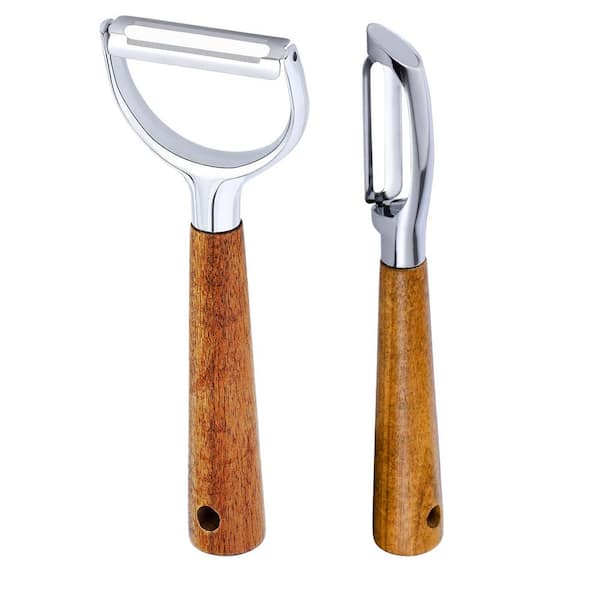
- Y-shaped peelers designed for either hand
- Ergonomic peelers with handles shaped for left-handed comfort
A left-handed potato peeler does not always have “left-handed” printed on the package. Look closely at the blade position, handle design, and product description before buying.

How does a left-handed potato peeler work?
A peeler removes a thin layer of skin through a sharp blade held at a set angle. When that angle matches your hand and peeling direction, the tool glides over the food. When it does not, the blade may catch, skip, or remove too much flesh.
A left-handed potato peeler is usually designed with the cutting edge facing the opposite way from a traditional right-handed model. This lets a left-handed cook pull or push the peeler without twisting the wrist.
The difference may seem small, but it affects control. A poorly matched peeler can feel like trying to write with a pen held backward. You may still get the job done, but the process feels slow and uncomfortable.
Look for these design details:
- The cutting edge should face the direction of your stroke.
- The handle should sit securely in your left palm.
- The blade should move smoothly without excessive force.
- The grip should not force your wrist into an awkward bend.
- The peeler should allow clear control around curves and small areas.
Some peelers work in both directions because the blade is centered between two supports. Others use a rotating blade that follows the angle of the food. These designs are often the easiest choice for mixed-hand households.

Types of left-handed potato peelers
Not every peeler offers the same experience. Choosing the right style depends on your grip, cooking habits, and the foods you prepare most often.
Straight peelers
A straight peeler looks similar to a small knife with a blade across the top. It is often light and easy to store.
A left-handed potato peeler in this style may have a blade angled for left-hand use. It can provide good control, but it may not be comfortable for someone with wrist pain or limited hand strength.
Straight peelers are useful for:
- Potatoes
- Carrots
- Apples
- Cucumbers
- Firm squash
Y-shaped peelers
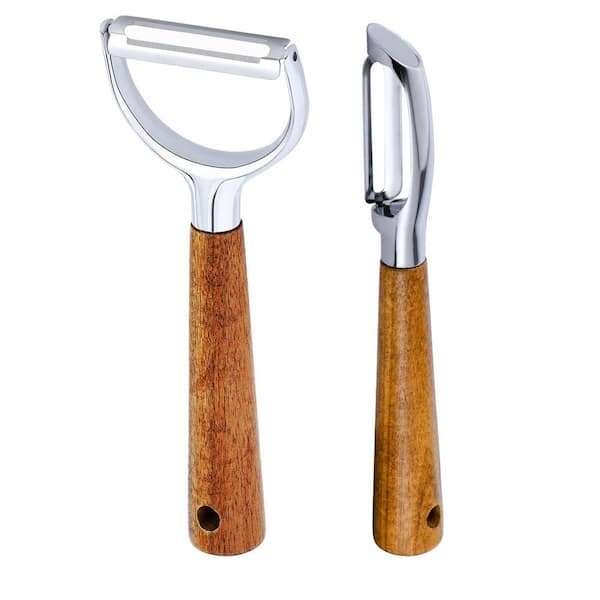
A Y-peeler has a horizontal blade above a handle. Many people find this design comfortable because the hand stays behind the blade.
A good Y-peeler may work equally well in either hand. Its broad shape can also make it easier to peel long vegetables with steady strokes.
This style is often a strong choice if you want one tool for the whole household. It may also reduce wrist turning because you can peel straight toward your body or away from it.
Swivel peelers
A swivel peeler has a blade that pivots as it moves across the food. This gives the blade more freedom to follow curves.
Swivel models are often a practical left-handed potato peeler choice because they can adapt to either hand. They are especially helpful when peeling round potatoes, kiwi fruit, or uneven vegetables.
The main limitation is that a loose or low-quality swivel can wobble. Check that the blade moves smoothly but does not feel unstable.
Reversible peelers
A reversible peeler has a blade that can be flipped or adjusted. It may include settings for right-handed and left-handed use.
These peelers are useful if you share a kitchen with right-handed cooks. However, the blade must be locked firmly after adjustment. A loose blade can make peeling unsafe and uneven.
Electric peelers
Electric peelers are less common but may help people with arthritis, weak grip, or limited wrist movement. They can peel some foods with little hand pressure.
Still, electric models often cost more and may not work well with every potato shape. They also need cleaning around moving parts. For most home cooks, a sharp manual left-handed potato peeler is simpler and more reliable.
Why a standard peeler may feel wrong for left-handed users
Many kitchen tools are designed around right-handed use. Manufacturers often place the blade and handle based on the motion most common among right-handed users.
When a left-handed person uses that tool, several problems can appear:
- The blade may face away from the natural cutting motion.
- The wrist may twist to keep the blade flat.
- The peeler may skip across the potato skin.
- The user may press harder than needed.
- The tool may remove thick strips instead of thin skin.
- Fatigue may develop after only a few potatoes.
This does not mean every right-handed peeler is unusable in the left hand. Some tools have symmetrical designs. The issue is that labels such as “standard” or “classic” do not always mean “comfortable for everyone.”
A simple test can help. Hold the peeler in your left hand and place it against a potato. Move it in the direction you normally would. If the blade catches, scrapes, or forces your wrist to bend, try a reversible or swivel model instead.

Benefits of using a left-handed potato peeler
The right tool can make food preparation faster, safer, and more comfortable. It may also improve the quality of the finished food because the blade removes a thinner and more even layer.
Better wrist comfort
A properly aligned blade reduces the need to bend or rotate the wrist. This matters during large cooking tasks, such as preparing mashed potatoes for a family meal.
More control
A left-handed potato peeler can give you better control around eyes, curves, and rough patches. You can use smaller strokes instead of forcing the tool across the surface.
Less waste
A sharp, correctly positioned blade removes the skin without taking large pieces of potato flesh. This can reduce waste and produce more even slices for roasting or boiling.
Improved safety
When the blade works with your natural motion, you are less likely to slip or suddenly apply extra pressure. Good technique still matters, but the tool should support your grip rather than fight it.
Easier cooking for people with limited mobility
An ergonomic peeler may help people with arthritis, hand weakness, or reduced range of motion. Look for a wide handle, a non-slip surface, and a sharp blade that needs little pressure.

How to choose the best left-handed potato peeler
The best left-handed potato peeler is not always the most expensive model. Focus on fit, blade quality, comfort, and ease of cleaning.
Check the blade direction
Read the package carefully. Terms such as “left-handed,” “reversible,” “ambidextrous,” and “swivel” can help, but inspect product photos when possible.
If you shop in person, hold the peeler in your left hand. Confirm that the cutting edge meets the potato in a natural position.
Choose a comfortable handle
A handle should feel secure without making you squeeze tightly. Rubber or textured grips can help when your hands are wet.
Avoid very thin handles if you often peel large amounts of food. A wider handle may spread pressure across your palm and reduce fatigue.
Look for a sharp, durable blade
Stainless steel is common because it resists rust and is easy to clean. A sharp blade should glide through the skin with light pressure.
A dull blade is not safer. It often causes more slipping because the user must push harder. Replace a damaged peeler rather than trying to sharpen a small blade yourself.
Consider a swivel blade
A swivel blade can be helpful for left-handed and right-handed users. It follows the shape of the food and may reduce wrist strain.
However, the swivel should not feel loose. Move it gently before buying and check whether the blade returns smoothly to its position.
Think about cleaning
Food can collect near the blade supports and handle joints. A dishwasher-safe design may be convenient, but always follow the care instructions.
Hand washing is often best for maintaining a sharp edge. Dry the peeler soon after washing to reduce water spots and protect the handle.
Check the safety features
Some peelers include a cover for storage. Others have a pointed end for removing potato eyes.
A protective cover can help prevent cuts in a crowded utensil drawer. Store the tool where children cannot reach it.

How to use a left-handed potato peeler safely
Even the best left-handed potato peeler requires good technique. Start with a firm cutting board and a clean potato.
- Wash the potato under cool running water and remove visible dirt.
- Hold the potato in your right hand or place it on a stable cutting board.
- Grip the peeler with your left hand.
- Keep your fingers away from the blade path.
- Use short, controlled strokes.
- Turn the potato slowly instead of forcing the peeler around it.
- Remove small eyes with the pointed tip, if the tool has one.
- Rinse the peeled potato and clean the peeler after use.
Do not peel toward your fingers. If the potato is small or slippery, cut it in half first. A stable food surface is safer than trying to hold a tiny item in midair.
Keep the blade clean and dry. If the peeler begins to drag, inspect it for food buildup or damage. A blade that catches repeatedly should be replaced.

Common mistakes to avoid
Buying the first peeler labeled “ergonomic” can lead to disappointment. Ergonomic does not always mean left-hand friendly. It simply means the design aims to improve comfort or control.
Avoid these common mistakes:
- Assuming every swivel peeler is equally effective
- Ignoring the direction of the blade
- Choosing a very cheap model with a loose blade
- Using a dull peeler for hard vegetables
- Holding the food in an unstable position
- Pressing too hard when the blade is not cutting
- Storing the peeler loose in a crowded drawer
- Failing to check whether the handle suits your hand size
One practical lesson is simple: test the motion before judging the tool. A peeler may look excellent but feel wrong once you hold it. If shopping online, review images of the blade from both sides and read comments from left-handed users.
A second lesson is to avoid one-size-fits-all claims. Hand size, grip strength, wrist flexibility, and personal technique all affect comfort. A reversible model may be ideal for one cook but less stable for another.

Left-handed potato peeler alternatives
If you cannot find a dedicated left-handed potato peeler, several alternatives may work well.
A Y-shaped peeler is often the easiest substitute because many versions are symmetrical. A reversible peeler can also solve the problem by changing the blade position.
You may also consider:
- A dual-edge vegetable peeler
- A swivel peeler with a centered blade
- A wide-grip ergonomic peeler
- A paring knife used with careful control
- An electric peeler for limited hand strength
A paring knife requires more skill and creates a greater risk of slipping. Keep the blade sharp, cut away from your body, and use a stable surface.
Do not use a vegetable peeler for tasks it was not designed to handle. Hard squash, large root vegetables, and very tough skins may require a stronger tool or a different preparation method.
Are left-handed potato peelers worth buying?
For many cooks, yes. A left-handed potato peeler can improve comfort and control, especially if a standard model causes wrist strain or uneven peeling.
The value depends on how often you cook. If you peel potatoes and vegetables every week, a well-designed tool can save time and reduce frustration. If you rarely peel food, a reversible model may offer better value than a specialized left-handed design.
Consider the total experience, not just the price. A low-cost peeler that slips or causes pain may cost more in frustration than a slightly better tool that lasts for years.
The most useful choice is often an ambidextrous peeler with: