
How To Make Viet Coffee: Easy Vietnamese Recipe
Brew Vietnamese coffee with a phin filter, robusta grounds, sweetened condensed milk, and slow, steady drips.
Learning how to make viet coffee is simple, but small details shape the final cup. The Vietnamese phin filter, dark coffee, and creamy condensed milk work together to create a drink that is bold, sweet, and deeply aromatic. This guide explains the classic method, useful tools, common mistakes, and easy ways to adjust the recipe at home.
What Is Vietnamese Coffee?
Vietnamese coffee usually refers to strong coffee brewed through a small metal phin filter. The coffee drips slowly into a glass or cup, often over sweetened condensed milk. Once mixed, the result is known as cà phê sữa đá when served over ice.
Vietnam grows a large amount of robusta coffee. Robusta beans tend to have more caffeine, a heavier body, and a stronger earthy taste than arabica beans. That bold flavor works well with condensed milk, which adds sweetness and a smooth texture.
There is no single way to make viet coffee. Families and cafés may use different coffee blends, grind sizes, or milk amounts. Still, the phin method remains the classic approach.

Ingredients for Vietnamese Coffee
You only need a few ingredients to make viet coffee. Good ingredients matter, but technique matters just as much.
Classic hot Vietnamese coffee
For one serving, gather:
- 2 to 3 tablespoons Vietnamese-style ground coffee
- 2 to 3 tablespoons sweetened condensed milk
- 4 to 6 ounces hot water
- One phin filter
- One heatproof glass or cup
Choose a dark roast made with robusta beans, or use a blend of robusta and arabica. Coffee labeled Vietnamese coffee often has a dark roast profile with notes of chocolate, nuts, caramel, or spice.
Iced Vietnamese coffee
For cà phê sữa đá, use:
- 2 to 3 tablespoons sweetened condensed milk
- 2 to 3 tablespoons ground coffee
- 4 to 6 ounces hot water
- A tall glass filled with ice
Use fresh ice made with clean, good-tasting water. Weak or cloudy ice can dull the flavor of the coffee.
Coffee without milk
To make black Vietnamese coffee, leave out the condensed milk. Serve the coffee hot, or pour it over ice for a strong iced coffee. You can add sugar, simple syrup, or a small amount of regular milk if you prefer.

How to Make Viet Coffee With a Phin Filter
The phin is a small metal brewer with four main parts: a brewing chamber, a perforated insert, a press, and a lid. It sits on top of your glass and lets water pass through the grounds at a slow pace.
Follow these steps for a balanced cup.
1. Add condensed milk
Place 2 to 3 tablespoons of sweetened condensed milk in the bottom of your glass. Add less if you prefer a more bitter drink, or add more for a dessert-like cup.
Putting the milk in first lets the hot coffee blend with it as it drips. It also gives you a clear view of the coffee as the brew develops.
2. Warm the phin
Rinse the phin with hot water. This warms the metal and helps keep the brewing temperature more stable. It also removes dust left from storage.
Place the phin on top of the glass that contains the condensed milk.
3. Add the coffee grounds
Add 2 to 3 tablespoons of medium-coarse coffee grounds to the phin chamber. Gently shake the chamber so the grounds form an even bed.
Avoid using espresso-fine coffee. Fine grounds may clog the filter and create a bitter, muddy cup. Very coarse grounds may let water flow too fast and produce weak coffee.
4. Place the press
Set the small press on top of the grounds. Do not press hard. The insert should touch the grounds lightly without packing them tightly.
This step is one of the most important parts of how to make viet coffee. Too much pressure slows the brew too much. Too little pressure can cause fast, uneven dripping.
5. Bloom the coffee
Pour about 0.5 to 1 ounce of hot water over the grounds. Wait 30 to 45 seconds.
This short bloom gives the coffee time to release trapped carbon dioxide. It also helps the grounds absorb water before the main pour.
6. Add the remaining water
Pour 3 to 5 ounces of hot water into the phin. Put the lid on the brewer and let the coffee drip.
A typical brew takes about 4 to 6 minutes. The drip should be slow and steady, not a fast stream and not a complete stop.
7. Stir and serve
When the dripping ends, remove the phin. Stir the coffee and condensed milk until smooth.
Serve the drink hot, or add ice for Vietnamese iced coffee. If the coffee tastes too intense, add a little water. If it tastes too sweet, use less condensed milk next time.

The Best Coffee, Water, and Temperature
The ingredients used in how to make viet coffee can change the flavor more than many people expect.
Coffee beans and grind
Robusta gives Vietnamese coffee its famous strength. It can taste earthy, woody, nutty, or chocolate-like. Arabica adds a softer aroma and more fruit or floral notes.
Try these options:
- 100 percent robusta for a powerful, traditional-style cup
- A robusta and arabica blend for balance
- Dark-roasted arabica for a smoother, less bitter drink
- A pre-ground Vietnamese blend for convenience
Use a medium-coarse grind. The grounds should feel a little finer than coffee used in a French press but much coarser than espresso.
Water quality
Coffee is mostly water, so poor water can ruin an otherwise good recipe. Use filtered water when possible. Avoid strongly chlorinated water or water with a heavy mineral taste.
Fresh water also helps the coffee taste cleaner. Reheated water may produce a flat flavor.
Water temperature
Aim for about 195 to 205°F. If you do not have a thermometer, bring the water to a boil and let it sit for about 30 to 60 seconds.
Water that is too cool may create weak, sour coffee. Water that is too hot can pull harsh flavors from a dark roast.
How Long Should Vietnamese Coffee Drip?
The ideal phin brew usually takes 4 to 6 minutes. The exact time depends on the coffee grind, dose, press position, filter design, and water amount.
A drip that finishes in less than 3 minutes may taste thin or sour. A brew that takes more than 7 minutes may taste bitter or overly heavy.
When testing how to make viet coffee, change one thing at a time. Adjust the grind before changing the water temperature. This makes it easier to understand what improves the cup.
My most useful practical lesson is to watch the drip during the first brew. If the coffee rushes through, use a slightly finer grind or apply gentle pressure to the insert. If it barely moves, use a coarser grind or loosen the press.

Common Mistakes and How to Fix Them
Even a simple recipe can go wrong. These fixes solve most problems.
The coffee tastes weak
Possible causes include:
- Too little coffee
- A grind that is too coarse
- Water that passes through too quickly
- Too much water
- Old or poorly stored coffee
Use fresh grounds, add a little more coffee, or choose a slightly finer grind. Make sure the press rests evenly on the grounds.
The coffee tastes bitter
Bitter coffee may come from water that is too hot, a brew that is too slow, or an overly dark roast. Try a slightly coarser grind and shorten the brewing time.
Condensed milk can hide some bitterness, but it should not be used to cover badly extracted coffee.
The coffee drips too slowly
The grounds may be too fine, or the press may be pushed down too firmly. Remove the press and gently stir the grounds with a clean spoon if the filter is clogged.
Clean the phin after each use. Coffee oils can build up and block the holes.
The drink tastes too sweet
Start with 1 tablespoon of condensed milk instead of 3. You can always add more after tasting the brewed coffee.
For a lighter drink, replace part of the condensed milk with regular milk or unsweetened oat milk. The flavor will not be traditional, but it can be more balanced.
The coffee has a burnt flavor
A very dark roast, stale grounds, or boiling water can create a burnt taste. Use fresh coffee and let boiling water cool briefly before brewing.

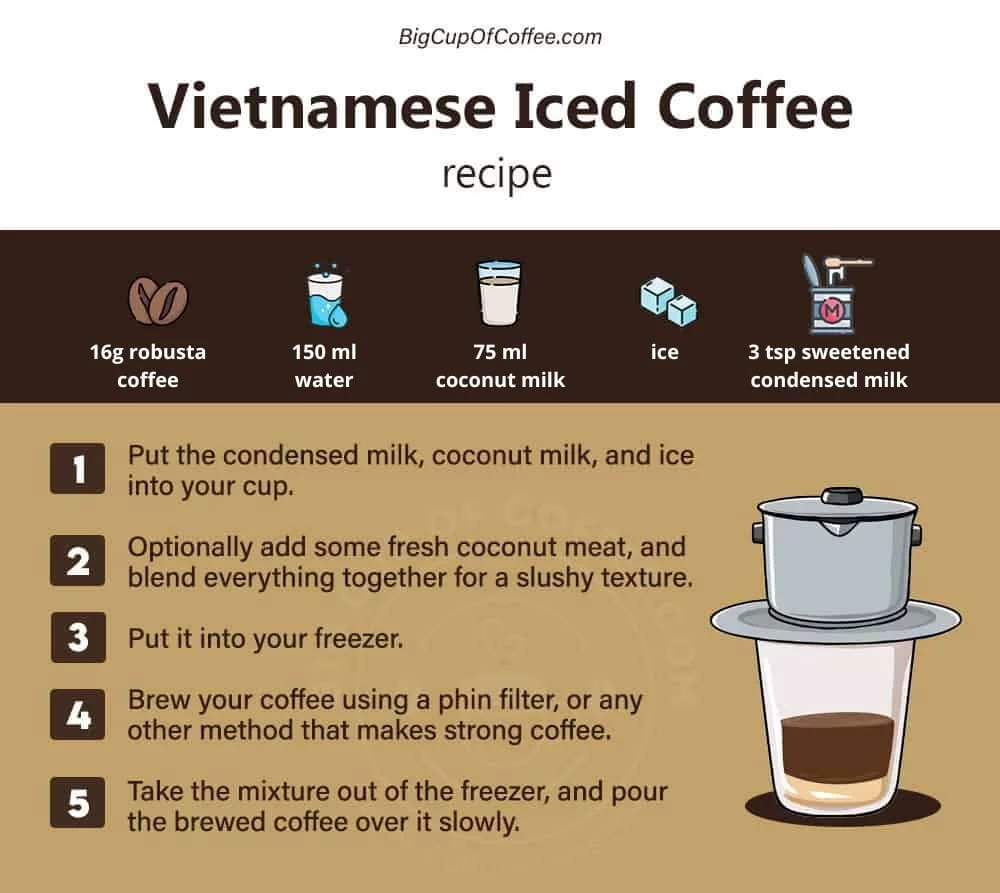
Vietnamese Iced Coffee Variations
Once you understand how to make viet coffee, you can create several popular variations.
Cà phê sữa đá
This is the classic iced version. Brew strong coffee over condensed milk, stir well, and pour it over a glass filled with ice.
The ice melts slightly and softens the coffee. Use a strong brew because too much melting can make the drink watery.
Black iced Vietnamese coffee
Brew the coffee without condensed milk and pour it over ice. Add sugar syrup if desired.
This version lets you taste the coffee more clearly. It works especially well with a smooth robusta and arabica blend.
Coconut Vietnamese coffee
Mix strong brewed coffee with coconut milk or coconut cream. Serve it over ice.
Coconut adds a mild, rich flavor. For a thicker drink, blend coconut milk with ice before adding the coffee.
Egg coffee
Vietnamese egg coffee, or cà phê trứng, uses whipped egg yolk, sugar, and condensed milk. The mixture becomes creamy and custard-like, then sits on top of strong coffee.
Use pasteurized eggs when possible, and keep the drink cold or serve it immediately. This variation is rich, so a small serving is often enough.
Salt coffee
A small pinch of salt can reduce the sharp edge of bitter coffee. Some recipes combine salted cream with strong Vietnamese coffee.
Use very little salt. The goal is to round out the flavor, not make the drink taste salty.

How to Store Coffee and Clean a Phin
Store ground coffee in an airtight container away from heat, light, and moisture. A cool cabinet is usually better than a warm shelf near the stove.
For the best flavor, buy whole beans and grind them shortly before brewing. If you use pre-ground coffee, purchase a small amount and use it within a few weeks.
Clean the phin after every use:
- Remove the lid, press, and brewing chamber.
- Rinse each part with warm water.
- Wipe away trapped grounds.
- Let the pieces dry fully before storing them.
Avoid strong scented soap unless the manufacturer recommends it. Metal can hold soap odors, which may affect the next cup.

Caffeine and Serving Considerations
Vietnamese coffee can contain more caffeine than a standard cup because robusta beans often have higher caffeine levels than arabica beans. The final amount depends on the bean type, serving size, roast, and brewing method.
A strong phin serving may feel intense, especially for people who rarely drink coffee. Start with a smaller serving if you are sensitive to caffeine.
Health organizations commonly advise most healthy adults to keep daily caffeine intake at or below about 400 milligrams. Pregnant people, children, and people with certain health conditions may need less. If caffeine affects your sleep, heart rate, or anxiety, speak with a qualified health professional.