How To Make Cheese Popcorn: Easy Homemade Recipe
Toss fresh popcorn with melted butter and cheddar powder for crisp, savory cheese popcorn in minutes.
Learning how to make cheese popcorn is simple, but small details matter. The popcorn must be warm, the coating must be light, and the cheese powder must spread evenly. This guide shares a reliable method, useful flavor tips, common mistakes, and safe storage advice so you can make movie theater style cheese popcorn at home.
What Makes Cheese Popcorn Taste So Good
Cheese popcorn combines three key elements: crisp popcorn, rich fat, and salty cheese flavor. Popcorn has a dry surface, so melted butter or oil helps the cheese powder stick to each piece.
The best cheese popcorn is not wet or greasy. It has a thin coating that feels light but still delivers a strong cheddar taste. Think of the butter as the glue and the cheese powder as the seasoning.
For the most even flavor, use freshly popped popcorn while it is still warm. Heat helps the butter spread and gives the cheese powder a better chance to cling to the kernels.

Ingredients for Homemade Cheese Popcorn
You only need a few ingredients to make cheese popcorn. Choose fresh products for the best flavor and texture.
Basic ingredients
• 10 cups plain popped popcorn
• 2 tablespoons unsalted butter or refined coconut oil
• 3 to 4 tablespoons cheddar cheese powder
• ¼ teaspoon fine salt, or more to taste
Cheddar cheese powder works better than shredded cheese for this recipe. Shredded cheese contains moisture, and it can make popcorn soft or cause uneven clumps.
You can find cheese powder in some grocery stores, baking aisles, bulk food sections, and online shops. A powdered cheese product made for popcorn, snacks, or macaroni and cheese usually works well.
Optional flavor additions
• ¼ teaspoon garlic powder
• ¼ teaspoon onion powder
• A pinch of smoked paprika
• A small pinch of cayenne pepper
• 1 tablespoon nutritional yeast for a deeper savory note
• A little black pepper
Start with a small amount of each extra seasoning. Cheese powder often contains salt, so adding too much salt at the start can make the finished popcorn overly salty.

How to Make Cheese Popcorn Step by Step
This method works with air popped popcorn or popcorn made in a pot. The key is to season the popcorn in stages instead of pouring all the butter and cheese over it at once.
1. Pop the popcorn
Pop enough kernels to make about 10 cups of popcorn. Remove any unpopped kernels before adding the toppings. A few hard kernels can be unpleasant and may even hurt a tooth.
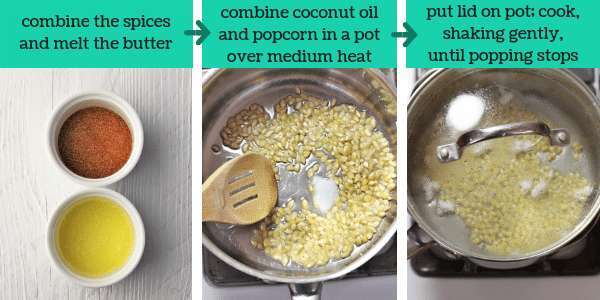
If you use a pot, add 2 to 3 tablespoons of neutral oil, such as canola or avocado oil. Heat the oil over medium heat, add the kernels, cover the pot, and shake it gently as the kernels pop.
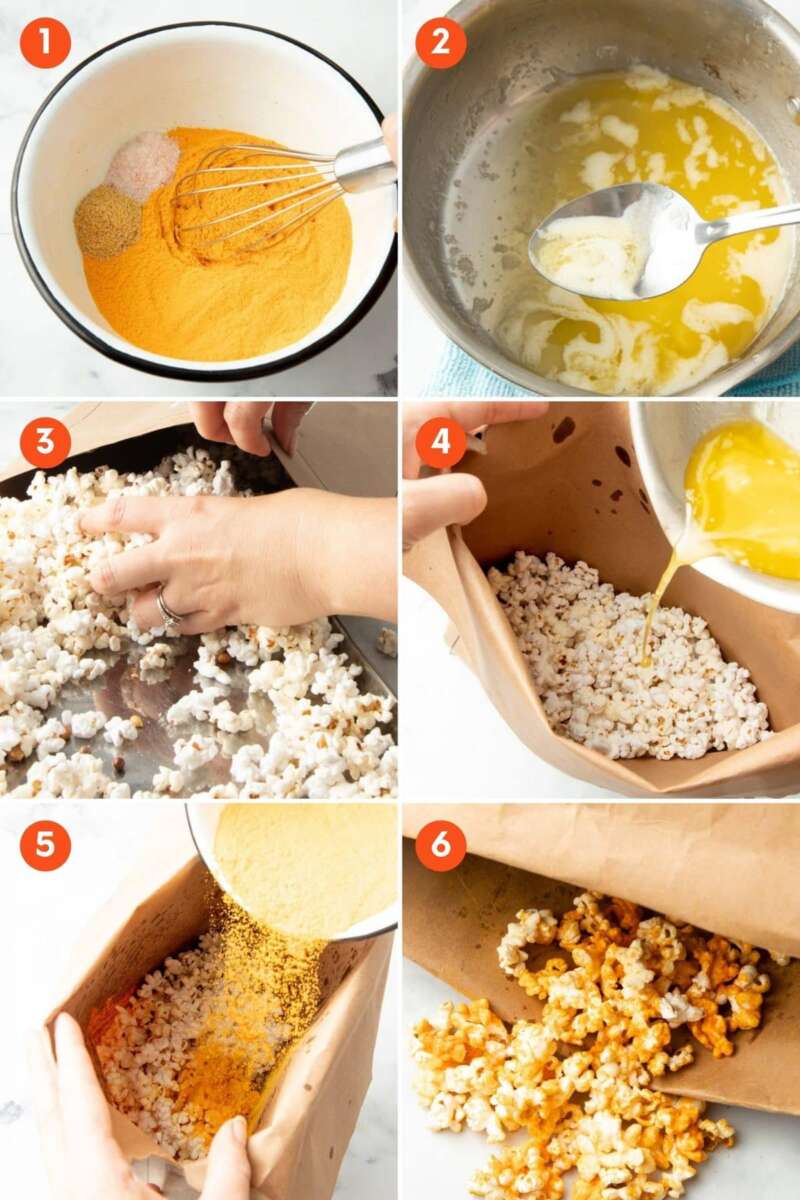
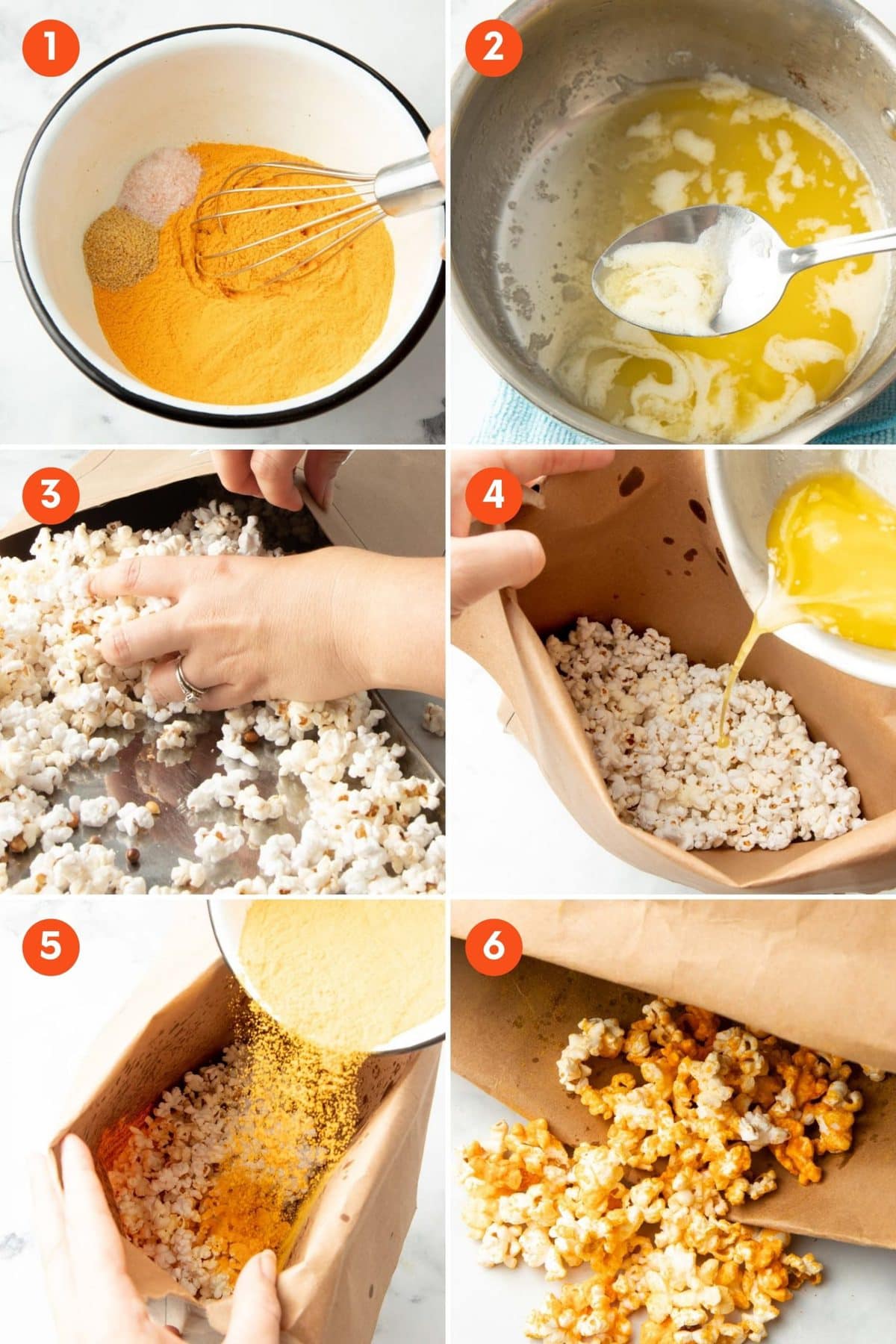
2. Melt the butter
Melt the butter in a small saucepan or microwave safe bowl. Use short heating bursts if you use a microwave. Stop as soon as the butter melts.
For a crisper coating, let the melted butter sit for a moment and use mostly the clear liquid portion. Milk solids in butter add flavor, but too much moisture can make popcorn lose its crunch.
3. Place the popcorn in a large bowl
Use a bowl that gives you plenty of room to toss. Crowding the popcorn makes it harder to distribute the cheese.
If the popcorn is very hot, wait about 30 seconds after popping. It should remain warm, but a short rest lets excess steam escape.
4. Add the butter slowly
Drizzle about one third of the butter over the popcorn. Toss gently with a large spoon or shake the bowl while holding it securely.
Repeat two more times. Slow coating prevents some pieces from becoming soaked while others stay dry.
5. Add the cheese powder
Sprinkle one third of the cheddar powder over the buttered popcorn. Toss well, then repeat until all the cheese powder is used.
Taste the popcorn before adding more salt. The cheese may already provide enough salt and tang.
6. Let it rest briefly
Allow the cheese popcorn to rest for two or three minutes. This gives the seasoning time to settle on the surface.
Serve it right away for the best crunch. If you want to keep it for later, spread it on a baking sheet and let it cool fully before storing it.
The Best Method for Extra Crispy Cheese Popcorn
If your cheese popcorn turns soft, moisture is usually the reason. Butter contains water, and steam from freshly popped corn can also soften the coating.
For extra crisp results, use one of these approaches:
• Use a small amount of melted butter and add more only if needed.
• Choose clarified butter or ghee, which contains less water.
• Mix cheese powder with a teaspoon of neutral oil instead of using a large amount of butter.
• Spread the finished popcorn on a baking sheet for a few minutes before serving.
• Do not cover warm popcorn, because trapped steam can make it chewy.
For a more durable coating, warm the seasoned popcorn in a 250°F oven for 10 to 15 minutes. Stir it once during heating, then let it cool before eating.
This gentle heat helps remove some moisture without burning the cheese. Watch it closely because cheese powder can darken quickly.

How to Make Cheese Popcorn Without Butter
You can make cheese popcorn without butter by using oil, ghee, or a light cooking spray. The goal is still the same: create a thin layer that helps the cheese powder stick.
A neutral oil gives the cleanest taste. Coconut oil adds a mild movie theater style flavor, while olive oil creates a more noticeable savory taste.
To make cheese popcorn without butter:
- Pop 10 cups of plain popcorn.
- Drizzle 1 to 2 tablespoons of oil over the warm popcorn.
- Toss the popcorn until it has a very light coating.
- Add 3 tablespoons of cheddar powder in small amounts.
- Toss again and taste before adding more seasoning.
Avoid pouring oil in one place. A slow drizzle gives you better control and reduces greasy pieces.

Flavor Variations to Try
Once you know how to make cheese popcorn with a basic cheddar coating, you can create several flavors.
Spicy cheddar popcorn
Add a pinch of cayenne pepper, chili powder, or crushed red pepper. Use a small amount first, since heat can become stronger as the popcorn sits.
Ranch cheese popcorn
Mix cheddar powder with a little dried dill, onion powder, garlic powder, and black pepper. This creates a tangy snack that works well for parties and game nights.
Parmesan herb popcorn
Combine cheddar powder with finely grated Parmesan, dried parsley, and a small amount of Italian seasoning. Use finely grated cheese so it does not weigh down the popcorn.
Smoky cheese popcorn
Add smoked paprika and a tiny amount of ground cumin. This version pairs well with burgers, grilled food, or roasted vegetables.
Sweet and savory popcorn
Add a very small pinch of sugar to the cheese mixture. The sugar will not make the popcorn sweet, but it can soften sharp cheese flavors and create a balanced snack.
Common Mistakes When Making Cheese Popcorn
Even a simple snack can go wrong. These are the most common problems I have seen when testing cheese popcorn at home.
Using wet cheese
Fresh shredded cheese does not coat popcorn well. It melts into small clumps and adds moisture, which can make the popcorn limp.
Use dry cheese powder for a smooth, even coating. If you want real cheese flavor, combine a little finely grated Parmesan with cheddar powder.
Adding too much butter
More butter does not always mean better flavor. Excess butter can create heavy pieces and prevent the cheese powder from spreading evenly.
Start with less than you think you need. You can always add another teaspoon, but you cannot easily remove excess butter.
Seasoning only the top
If you pour the toppings over the popcorn and do not toss it, the top layer gets most of the flavor. The popcorn at the bottom may taste plain.
Add the coating in small stages. Toss after each addition for a more even result.
Using coarse salt
Large salt crystals may fall to the bottom of the bowl. Fine salt blends better with cheese powder and sticks more easily.
If you only have coarse salt, pulse it briefly in a spice grinder or crush it with the back of a spoon.
Covering popcorn while it is warm
A lid or sealed container traps steam. That steam softens the popcorn and can make the cheese coating sticky.
Let the popcorn cool before storing it. This small step makes a major difference.

How to Store Homemade Cheese Popcorn
Homemade cheese popcorn tastes best on the day you make it. Still, you can store leftovers if you protect them from air and moisture.
Place completely cooled popcorn in an airtight container or resealable bag. Keep it at room temperature in a dry cupboard. Do not refrigerate it, because the cold, humid environment can affect its texture.
For the best quality, eat it within two or three days. If the popcorn smells stale, feels damp, or shows any unusual growth, discard it.
When serving stored popcorn, spread it on a tray and warm it in a low oven for a few minutes. Let it cool before eating so the texture can firm up again.

Nutrition and Food Safety Considerations
Cheese popcorn can fit into a balanced diet, but its calories, fat, and sodium depend on the ingredients and portion size. Butter, oil, cheese powder, and extra salt all add energy and sodium.
A practical serving is about 2 to 3 cups. If you are watching sodium, choose unsalted popcorn and use a low sodium cheese powder. You can also add garlic, paprika, herbs, or nutritional yeast to build flavor without relying only on salt.
Always remove unpopped kernels before serving children. Young children may also need close supervision while eating popcorn because popcorn can be a choking hazard. Follow age and safety guidance from pediatric health professionals.
Check the label of packaged cheese powder if you have a milk allergy or food intolerance. Some products may contain milk, whey, lactose, artificial colors, or other ingredients.

Expert Tips for Better Results
After making cheese popcorn many times, I find that the biggest improvement comes from controlling moisture. Warm popcorn helps the coating stick, but trapped steam works against you.
A wide bowl is better than a deep, narrow bowl. It gives the popcorn space to move, so each piece receives a small amount of butter and cheese.
I also recommend tasting as you go. Cheese powders vary in saltiness and sharpness, so a fixed amount may not work for every brand. Start with three tablespoons of cheese powder, then add more in one tablespoon increments.
For parties, prepare the popcorn close to serving time. If you need to make it early, use clarified butter, cool the popcorn fully, and store it in an airtight container.
Frequently Asked Questions About How to Make Cheese Popcorn
Can I use shredded cheddar cheese to make cheese popcorn?
Shredded cheddar is not the best choice because it contains moisture and may form sticky clumps. Use cheddar cheese powder for a dry, even coating, or bake shredded cheese separately until crisp before adding small pieces to the popcorn.
How do I get cheese powder to stick to popcorn?
Toss the warm popcorn with a small amount of melted butter, oil, or cooking spray. Add cheese powder in several stages and toss after each addition.
Why does my cheese popcorn become soggy?
Soggy popcorn usually has too much butter, trapped steam, or moisture from fresh cheese. Use less liquid coating, let steam escape, and cool the popcorn before storing it.