How To Clean Hamilton Beach Coffee Maker: Easy Guide
Clean a Hamilton Beach coffee maker by washing removable parts, flushing the system, and descaling it with vinegar or approved cleaner.
A clean coffee maker brews better coffee, runs more smoothly, and helps prevent stale oils, mineral scale, and hidden mold. After cleaning many Hamilton Beach models, I have found that the best method is simple: clean the removable parts after use, then descale the machine on a regular schedule. This guide explains how to clean Hamilton Beach coffee maker models safely, including drip, programmable, and single-serve machines.
Why You Should Clean a Hamilton Beach Coffee Maker
Coffee leaves behind natural oils and fine grounds. Over time, these build up in the brew basket, carafe, lid, and filter area. Hard water also creates mineral scale inside the water tank and heating system.
A dirty coffee maker may produce:
• Bitter or stale-tasting coffee
• Slow brewing
• Weak coffee
• Cloudy water
• A sour or musty smell
• Extra noise during brewing
• Incomplete brewing cycles
Learning how to clean Hamilton Beach coffee maker parts helps protect flavor and machine performance. Regular cleaning also supports better hygiene, although cleaning cannot replace safe water use or proper storage.
Hamilton Beach models differ. Some use paper filters, while others have reusable filters or a single-serve side. Always check your model’s manual before using a cleaning cycle or descaling product.

What You Need Before Cleaning
Gather these basic supplies before you begin:
• Warm water
• Mild dish soap
• A soft sponge or cloth
• A soft bottle brush or small nylon brush
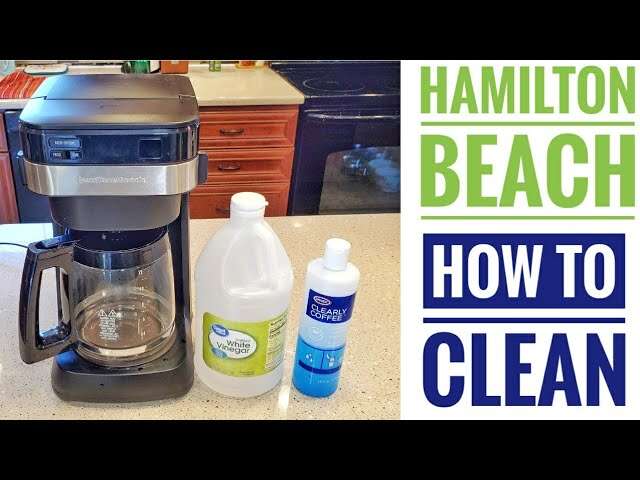
• White vinegar or a coffee maker descaling solution
• A clean towel
• Fresh water for rinsing
Avoid steel wool, harsh scouring pads, bleach, and abrasive cleaners. These can scratch plastic or leave harmful residue.
Before you clean a Hamilton Beach coffee maker, unplug it and let it cool. Never place the main electrical unit in water. The base, control panel, cord, and plug should stay dry.
If your model has a removable water filter or charcoal filter, remove it first. Vinegar can affect some filter materials, and a used filter can hold odors and mineral residue.
How to Clean Hamilton Beach Coffee Maker Parts
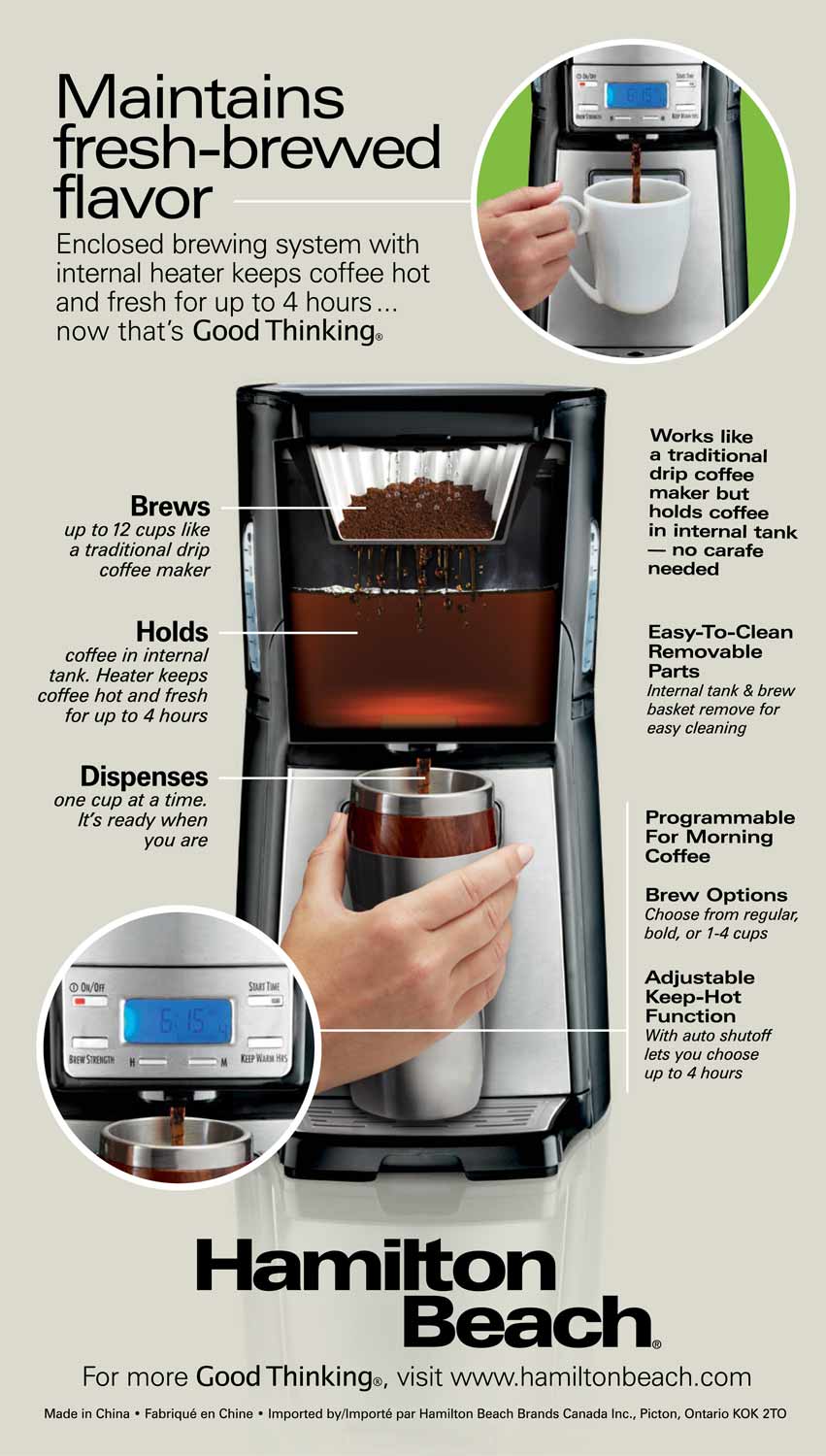
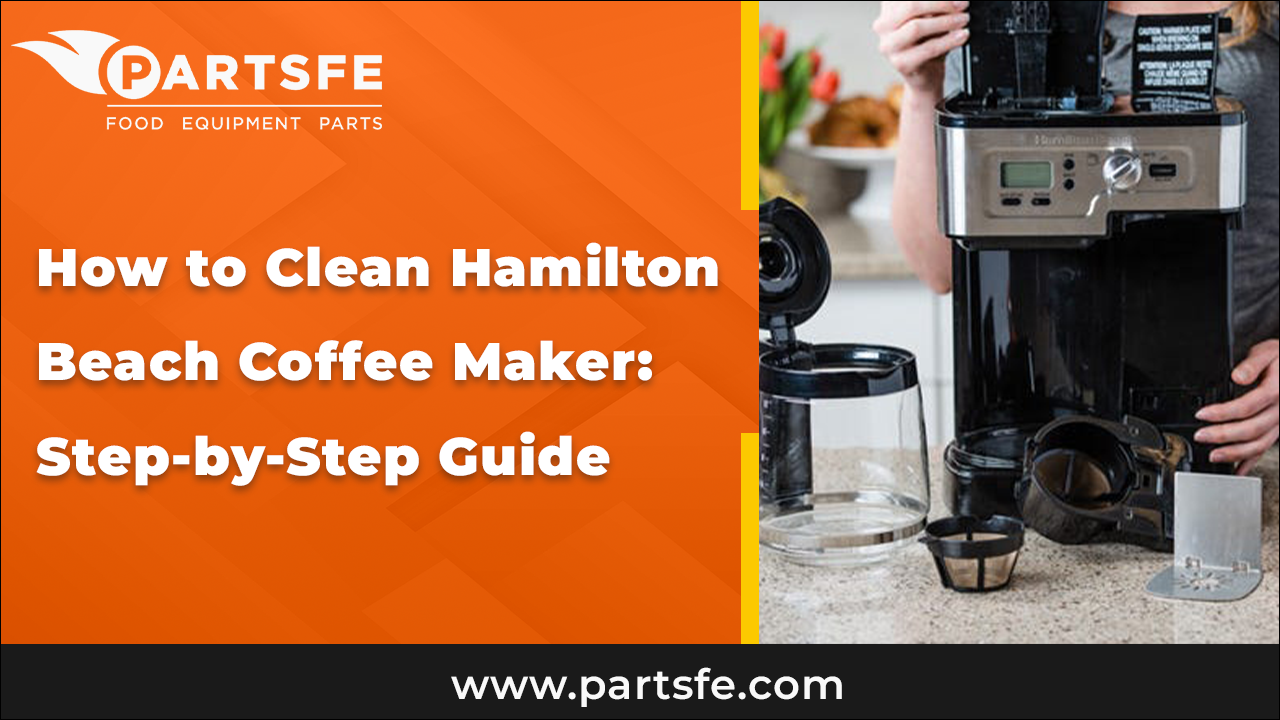
Cleaning the removable parts is the best daily or weekly habit. It takes only a few minutes but prevents old coffee oils from becoming hard and sticky.
1. Remove the removable parts
Take out the:
• Brew basket
• Permanent filter
• Carafe lid
• Water reservoir, if removable
• Single-serve basket, if included
• Drip tray on compatible models
Check the manual if a part does not lift out easily. Do not force it.
2. Wash with warm, soapy water
Wash each part with warm water and mild dish soap. Use a soft sponge for the carafe and a small brush for narrow openings.
Pay close attention to the underside of the brew basket. Coffee oils often collect there. If the basket has a fine mesh filter, brush it gently so you do not bend or damage it.
3. Rinse and dry completely
Rinse every part well. Soap left in the brew basket can affect the next pot of coffee.
Place the parts upside down on a clean towel. Let them air-dry before putting them back. A damp, closed carafe or filter basket can develop a stale smell.
4. Wipe the coffee maker base
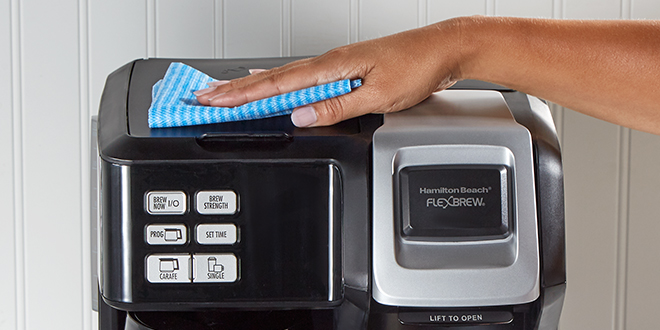
Use a slightly damp cloth to wipe the outside, warming plate, control panel, and area around the water tank. Do not spray cleaner directly onto the machine.
For stuck coffee stains on the warming plate, use a damp cloth with a small amount of dish soap. Wipe again with clean water, then dry the surface.
This basic routine is a key part of how to clean Hamilton Beach coffee maker machines without damaging their electrical parts.

How to Descale a Hamilton Beach Coffee Maker
Descaling removes mineral buildup inside the water path. This buildup is common in areas with hard tap water.
Vinegar method
Use this method only if your model’s instructions allow vinegar.
- Remove the coffee grounds, paper filter, and water filter.
- Fill the water reservoir with a mixture of half white vinegar and half water.
- Place the empty carafe on the warming plate.
- Start a normal brew cycle.
- Stop the cycle halfway if your model allows it.
- Let the solution sit for about 30 minutes.
- Finish the brew cycle.
- Empty the carafe and discard the used solution.
- Run two or three full cycles with fresh water.
The final rinse is important. Vinegar has a strong taste and smell. If you can still smell vinegar, run another fresh-water cycle.
Descaling solution method
A commercial coffee maker descaler may be a better choice for some machines. Follow the product label and your Hamilton Beach manual. Do not mix descaling products with vinegar or other cleaners.
Some models have a clean or descaling light. If yours does, start the cleaning program as described in the manual. The light may not turn off until the machine completes a full cleaning and rinse process.
Descaling is one of the most important parts of how to clean Hamilton Beach coffee maker systems because mineral scale can restrict water flow and affect brewing temperature.
How to Clean a Hamilton Beach Single-Serve Coffee Maker
Single-serve Hamilton Beach models need special care because coffee pods can leave grounds and oils in small openings.
Follow these steps:
- Unplug the machine and let it cool.
- Remove the pod holder and brew basket.
- Empty any used pod or loose grounds.
- Wash the removable parts with warm, soapy water.
- Rinse the parts well.
- Wipe the pod area with a damp cloth.
- Check the needle or puncture area for trapped grounds.
- Use a soft brush to remove loose debris.
- Run a water-only cycle to flush the system.
Do not push a sharp metal object into the needle unless the manual specifically recommends it. A sharp tool can damage the part or push grounds deeper into the machine.
If the single-serve side brews slowly, mineral scale may be the cause. Use the approved descaling method for your model, then run several water-only cycles.
How Often to Clean a Hamilton Beach Coffee Maker
The right schedule depends on how often you brew and how hard your water is.
A practical schedule looks like this:
• After every use: Empty grounds, rinse the brew basket, and rinse the carafe.
• Once a week: Wash removable parts with warm, soapy water.
• Every month: Descale the machine if you use it often or have hard water.
• Every two to three months: Descale if you use filtered or soft water.
• When needed: Clean sooner if coffee tastes bitter, brewing slows, or the machine smells odd.
Do not wait for visible scale. Mineral buildup can form inside the machine before you see white flakes.
In my experience, people often clean the carafe but forget the lid and brew basket. Those small parts can hold more old coffee residue than expected. A quick weekly wash often makes a noticeable difference in flavor.
Common Mistakes to Avoid
Knowing what not to do is just as important as knowing how to clean Hamilton Beach coffee maker machines.
Avoid these mistakes:
• Do not immerse the coffee maker base in water.
• Do not use bleach inside the water reservoir.
• Do not mix vinegar with other cleaning chemicals.
• Do not run coffee grounds through the machine.
• Do not use a dishwasher unless the manual says a part is dishwasher-safe.
• Do not scrub glass or plastic parts with abrasive pads.
• Do not leave wet grounds in the filter basket overnight.
• Do not store the machine with a sealed, damp reservoir.
• Do not force removable parts that seem stuck.
One common mistake is using too much vinegar. More vinegar does not always mean better cleaning. It can leave a strong odor and may be unsuitable for certain materials or models. Use the method listed in your manual when possible.

How to Keep Your Coffee Maker Cleaner for Longer
Good habits reduce the need for deep cleaning.
Use fresh, cold water each time you brew. If your tap water is hard, use filtered water that is suitable for drinking. Avoid leaving water in the reservoir for several days.
Empty the brew basket soon after brewing. Rinse the carafe rather than letting old coffee sit on the warming plate. Wipe spills as soon as they happen.
Keep the lid open slightly while removable parts dry. This allows air to move through the machine and reduces stale smells.
A reusable filter can save money, but it needs careful washing. Fine coffee oils can collect in the mesh and make coffee taste flat or bitter. If the filter remains stained or smells bad after washing, replacing it may be the best option.
When Cleaning Does Not Fix the Problem
Cleaning can solve many performance issues, but not all of them. If the machine still leaks, fails to heat, shuts off early, or will not power on, it may have an electrical or mechanical fault.
Stop using the coffee maker if you notice:
• A damaged cord or plug
• Burning smells
• Sparks
• Water entering the control panel
• Cracks in the reservoir or carafe
• Repeated electrical shutoffs
Do not open the machine unless you are qualified to repair small appliances. Contact Hamilton Beach customer support or a qualified appliance technician. A cleaning routine cannot safely repair damaged wiring or failed heating parts.
Also remember that vinegar may not remove every type of residue. Heavy scale, mold-like growth caused by long-term damp storage, or damaged plastic may require replacement of a part.
How to Check Whether Your Coffee Maker Is Clean
After cleaning, inspect the machine before brewing coffee.
The water should flow at a steady rate. The carafe should not have a sour smell. The brew basket should look clear, with no dark oily film or trapped grounds.
Run one water-only cycle and check the result. If the water looks clear and smells neutral, brew a small test pot. If the coffee still tastes like vinegar, soap, or old grounds, run another rinse cycle.
A clean Hamilton Beach coffee maker should brew at a normal speed and produce coffee with a clean aroma. Taste is a useful final check, but it should not replace regular cleaning.
Frequently Asked Questions
Can I use vinegar to clean a Hamilton Beach coffee maker?
Many Hamilton Beach models can be cleaned with a diluted white vinegar solution, but model instructions vary. Check the manual first, and always run two or more fresh-water rinse cycles afterward.
How much vinegar should I use in a Hamilton Beach coffee maker?
A common method is to use equal parts white vinegar and water. However, some models or manuals recommend a different ratio, so follow the instructions for your specific machine when available.
How often should I descale my Hamilton Beach coffee maker?
Descale about once a month if you brew daily or use hard water. With filtered or soft water and lighter use, descaling every two to three months may be enough.
Can I put Hamilton Beach coffee maker parts in the dishwasher?
Some removable parts may be dishwasher-safe, but not all models use the same materials. Check the manual before placing the brew basket, carafe lid, filter, or reservoir in a dishwasher.
Why does my Hamilton Beach coffee maker brew slowly?
Mineral scale, a clogged filter basket, or trapped coffee grounds can slow brewing. Clean the removable parts first, then run the correct descaling process for your model.
How do I remove a vinegar smell from my coffee maker?
Run two or three complete cycles with fresh water and no coffee or filter. If the smell remains, wash the removable parts with mild dish soap, rinse them well, and run another water-only cycle.
Can I use baking soda to clean a Hamilton Beach coffee maker?
Baking soda can help remove odors from washable parts, but it is not the best choice for flushing the internal water path. Use an approved descaler or the vinegar method listed in your model’s instructions.
Conclusion
Cleaning a Hamilton Beach coffee maker is simple when you divide the job into two tasks: wash the removable parts often and descale the internal system on a regular schedule. Use mild soap for baskets, filters, lids, and carafes, and use only an approved descaling method for the water path.