How Does A Pool Vacuum Cleaner Work: Explained
A pool vacuum cleaner removes dirt by using suction, pressure, or brushes to move debris into a filter.
Understanding how does a pool vacuum cleaner work helps you choose the right cleaner, use it safely, and keep your water clear. Each type follows a slightly different path, but all pool vacuums collect leaves, sand, algae, and fine dust before those particles can cloud the water or strain the filtration system. This guide explains the parts, cleaning cycles, setup steps, common problems, and practical tips that make pool vacuuming easier.
How Does a Pool Vacuum Cleaner Work?
A pool vacuum cleaner works by creating water movement across the pool floor and walls. That moving water carries dirt into a filter bag, the pool’s main filter, or a built-in filter inside the cleaner.
The basic process has four steps:
- The cleaner contacts the pool surface.
- A pump or motor moves water through the cleaner.
- Brushes loosen stuck dirt and algae.
- The cleaner traps debris in a filter or sends it to the pool filtration system.
The exact process depends on the cleaner type. A suction-side model uses the pool pump. A pressure-side model uses return-line water. A robotic cleaner uses its own electric motor and filter.
Think of the cleaner as a small underwater vacuum. The vacuum does not “eat” dirt on its own. Water flow pulls dirt from the surface and carries it away.
The Main Types of Pool Vacuum cleaners
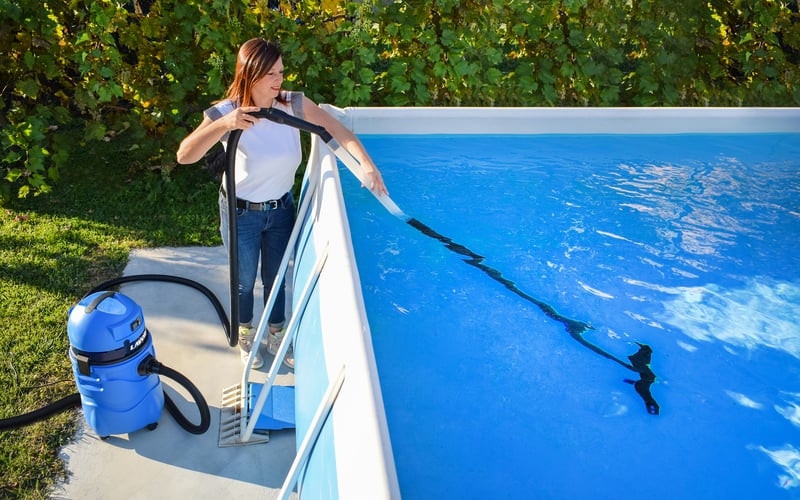
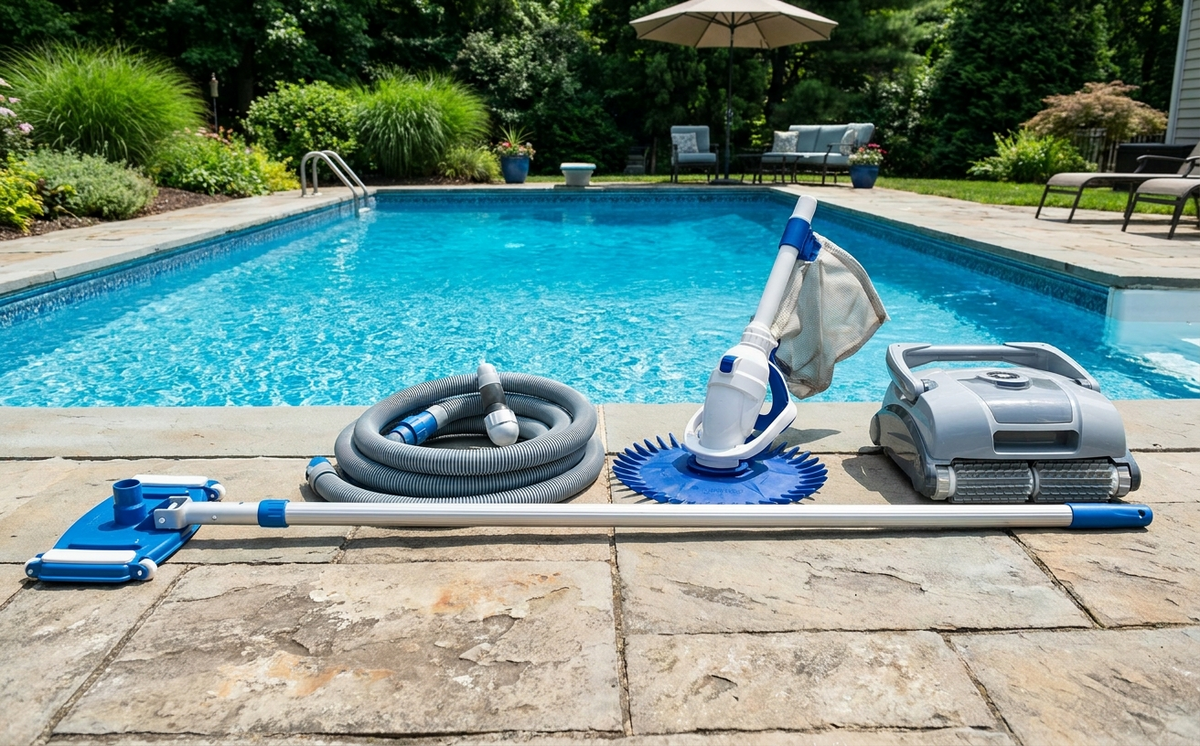
Pool vacuum cleaners come in three main forms. Each one has a different power source, cleaning method, and cost.
Suction-side pool cleaners
A suction-side cleaner connects to the pool skimmer or a dedicated vacuum port. The pool pump creates suction, which pulls water and dirt through the cleaner.
Inside the cleaner, a diaphragm or turbine controls water flow. This action helps the cleaner move in small, repeated steps across the pool. Dirt then travels through the hose and reaches the pool filter.
Suction-side cleaners work well for:
• Sand and small particles
• Dust and light leaves
• Regular weekly cleaning
• Pools with a strong pump and good circulation
They usually cost less than robotic cleaners. However, they place extra demand on the pool pump and can reduce skimming action while they run.
Pressure-side pool cleaners
A pressure-side cleaner connects to a return jet or a dedicated pressure line. Pressurized water moves through the cleaner and powers its wheels, jets, or internal parts.
Most pressure-side cleaners collect debris in a separate filter bag. This design keeps large leaves and insects out of the pool’s main filter.
Pressure-side cleaners are useful for:
• Leaves and larger debris
• Pools surrounded by trees
• Regular automatic cleaning
• Reducing strain on the main filter
Some models need a booster pump. A booster pump provides extra water pressure and helps the cleaner move with greater force.
Robotic pool cleaners
A robotic pool cleaner has its own electric motor, drive system, brushes, and filter basket. It does not need the pool pump or filter to create suction.
The robot moves along the pool floor and may climb walls. Its brushes scrub the surface, while the motor pulls dirty water through a built-in filter.
Robotic cleaners often provide strong cleaning with lower strain on the pool’s circulation system. They also tend to offer programmable cycles, smart navigation, and waterline cleaning.
Their main limits are a higher purchase price, the need to remove the unit after use, and the need to keep electrical connections dry and safe.
src="https://www.discountsaltpool.com/assets/images/pool-cleaning-robot-work.png"
alt="The Main Types of Pool Vacuum cleaners”
style=”max-width: 100%; height: auto; border: 2px solid black; border-radius: 10px; display: block; margin: 0 auto;”
loading=”lazy”
/>
How a Suction Pool Vacuum Cleaner Works
To understand how does a pool vacuum cleaner work in a suction system, start with the pool pump. The pump pulls water through the skimmer, filter, heater, and return lines.
When you attach a suction cleaner, the cleaner becomes part of that water path. The pump pulls water through the cleaner head and hose. This flow creates suction at the cleaner’s intake opening.
A typical suction cleaner has these parts:
• Cleaner head
• Flexible vacuum hose
• Diaphragm, turbine, or internal valve
• Skimmer connection
• Pool pump and filter
The internal valve often opens and closes in a steady rhythm. This creates small pulses of suction. Those pulses help the cleaner move across the surface instead of staying in one spot.
The cleaner may move randomly, but that does not mean it cleans poorly. Over time, its path can cover much of the pool. Some cleaners use directional wheels or programmed movement to improve coverage.
Why the hose length matters
The hose must reach the farthest point in the pool, plus a small amount of extra length. A hose that is too short leaves areas untouched. A hose that is too long can tangle, float, or reduce suction.
Before connecting the hose, fill it with water. Hold one end near a return jet until bubbles stop coming from the other end. This prevents air from entering the pump and helps the cleaner start correctly.
What happens to the dirt?
Dirt pulled into a suction cleaner travels through the hose. It then enters the pool’s filter system.
A sand filter traps dirt between layers of sand. A cartridge filter catches particles in pleated material. A diatomaceous earth filter uses a fine powder to capture very small particles.
Because the debris reaches the main filter, you may need to clean or backwash that filter more often when using a suction-side cleaner.
How a Pressure Pool Vacuum Cleaner Works
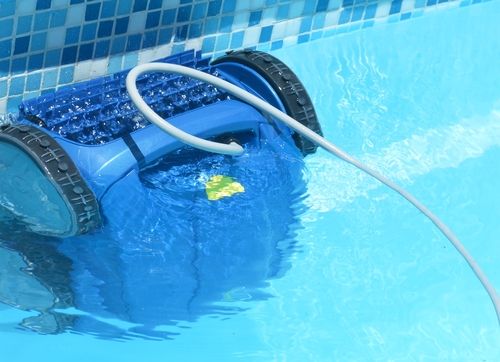
A pressure-side cleaner uses water pushed from the pool’s return line. The pressure drives the cleaner forward and helps lift debris from the pool surface.
The cleaner usually has a feed hose, a debris bag, wheels, and one or more water jets. Pressurized water may also create a venturi effect. This effect pulls debris into the cleaner and stores it in the attached bag.
The cleaning cycle usually works like this:
- Return-line water enters the cleaner.
- Water powers the wheels or turbine.
- Jets loosen dirt from the pool surface.
- The water flow pulls debris into the filter bag.
- Cleaner movement spreads the collected water across the pool.
A pressure-side cleaner can remove larger debris better than many suction models. The separate bag also protects the pool’s main filter from leaves and heavy dirt.
However, the cleaner needs enough pressure to move properly. A blocked bag, clogged screen, dirty pump basket, or weak booster pump can cause slow movement.
Empty the debris bag before it becomes full. A full bag reduces water flow and can make the cleaner stop moving.
How a Robotic Pool Vacuum Cleaner Works
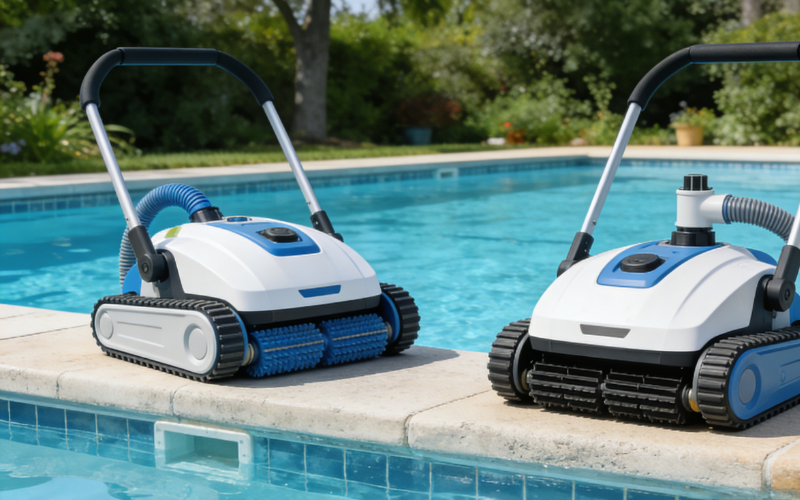
A robotic pool vacuum cleaner operates as an independent cleaning machine. Its power supply sends electricity through a low-voltage cable to the underwater motor.
The motor turns the wheels or tracks. Another motor creates suction and pulls water through the cleaner. Brushes scrub the pool surface as the unit moves.
A robotic cleaner normally includes:
• Electric drive motor
• Water pump motor
• Scrubbing brushes
• Filter basket or cartridge
• Sensors for movement and navigation
• Floating power cable
• External power supply
Many modern robots use sensors to detect walls, drains, and changes in direction. Some models use software to map the pool. Others follow a programmed movement pattern.
When the robot reaches a wall, it may climb based on the model’s motor power and brush design. Wall climbing can become difficult when the surface is slippery, covered with algae, or coated with calcium scale.
Robotic cleaners usually provide consistent results because they do not depend on the pool pump’s suction or return pressure. They also use their own filter, so they can capture fine dirt without sending all of it through the main pool filter.
Do not leave most robotic cleaners in the pool all the time. Remove the unit after its cycle, rinse it with fresh water, and store it in a shaded place. This protects the cable, plastic parts, and seals.

What Parts Help a Pool Vacuum Cleaner Clean?
The answer to how does a pool vacuum cleaner work becomes clearer when you understand its main parts.
Brushes
Brushes loosen dirt, algae, and fine film from the pool surface. Soft brushes suit vinyl liners and delicate finishes. Stronger brushes may work better on concrete or plaster pools.
Brushes do not replace proper water chemistry. If algae keeps returning, check sanitizer levels, circulation, and water balance.
Suction opening
The suction opening pulls water and loose debris into the cleaner. A blocked opening can reduce cleaning power or stop the unit.
Check the opening before each use. Remove hair, leaves, stones, or other debris by hand.
Wheels or tracks
Wheels help the cleaner travel across the pool. Tracks can provide better grip on some surfaces, especially when the cleaner climbs walls.
Worn wheels may cause the unit to spin, move slowly, or miss sections of the pool.
Hose or power cable
Suction and pressure cleaners use hoses. Robotic cleaners use power cables.
A hose must stay full of water during use. A robotic cable should remain untangled and free from sharp bends.
Filter bag or basket
A filter bag catches leaves and large debris in pressure cleaners. A robotic cleaner uses a basket or cartridge to trap dirt.
Empty the basket or bag after each cycle. Fine dust can harden when it dries, which makes later cleaning harder.
Pump and filtration system
Suction and pressure cleaners depend on the pool circulation system. A dirty pump basket, clogged filter, or blocked skimmer can weaken performance.
A robotic cleaner works separately, but it still needs clear pool water and a clean filter for proper results.
How to Use a Pool Vacuum Cleaner Correctly
Using the cleaner correctly improves coverage and protects the equipment. The following method works for most pool vacuum systems.
Prepare the pool
Remove large branches, toys, and heavy leaves by hand. Large objects can block the cleaner or fill the filter too quickly.
Check the water level. A low water level can allow the skimmer to draw air. Air in the pump system may reduce suction and cause damage.
Check water chemistry
Test the water before cleaning. The Centers for Disease Control and Prevention recommends maintaining safe disinfectant and pH levels in pools. Balanced water also helps prevent scale, cloudy water, and surface damage.
If the pool has heavy algae, brush the walls first. Let loose debris settle before starting the vacuum.
Connect the cleaner
For a suction cleaner, fill the hose with water and attach it to the correct skimmer adapter or vacuum port. Follow the manufacturer’s instructions for valve settings.
For a pressure cleaner, connect the feed hose and check the booster pump if the model uses one.
For a robotic cleaner, place the unit in the water before turning on the power supply. Keep the power connection away from standing water.
Run the correct cleaning cycle
Most pools need routine cleaning for one to three hours, but the ideal time depends on dirt levels and the cleaner type. Follow the instructions for your exact model.
Do not run a suction cleaner with a closed valve or restricted flow. Do not run a robotic cleaner with an empty or incorrectly installed filter basket.