How Do You Make A Popcorn Stitch In Crochet: Easy Guide
To make a popcorn stitch in crochet, work five double crochets, join them, and secure the raised puff.
Learning how do you make a popcorn stitch in crochet opens the door to textured blankets, hats, scarves, bags, and sweaters. This guide explains the standard US method, shows how to avoid loose or flat popcorns, and shares practical tips that make the stitch neat and easy to repeat.
What Is a Popcorn Stitch in Crochet?
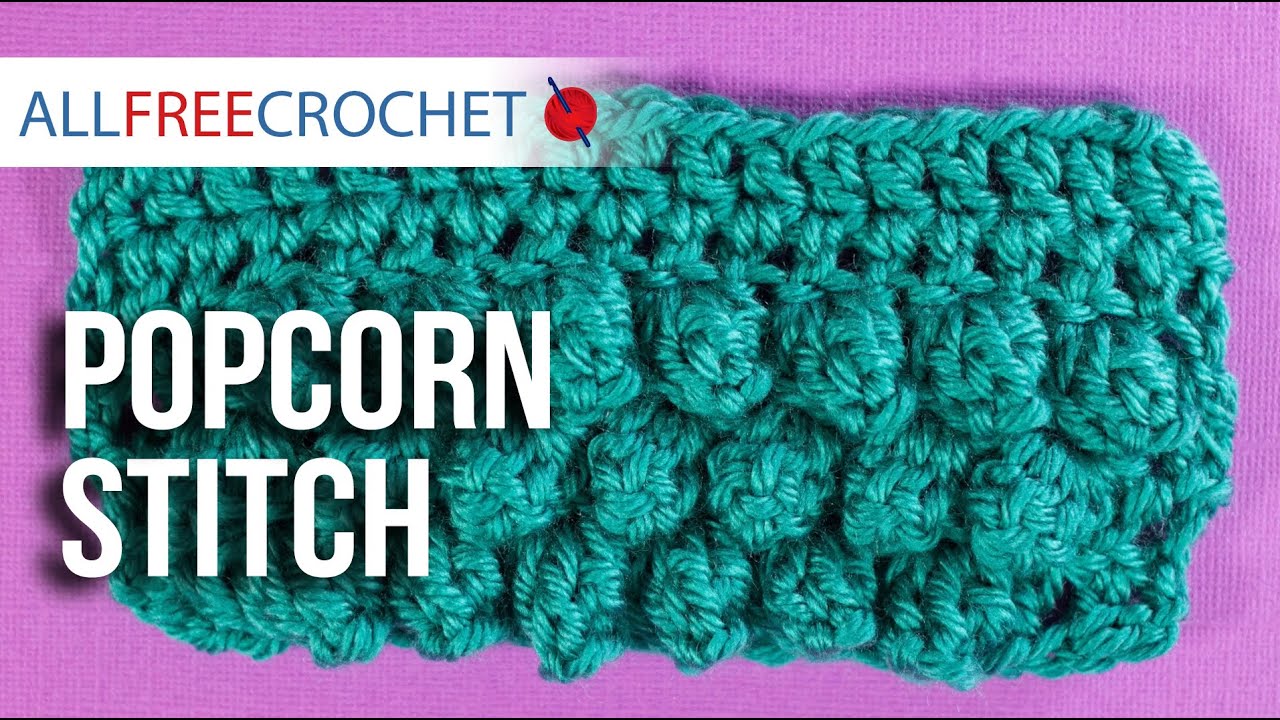
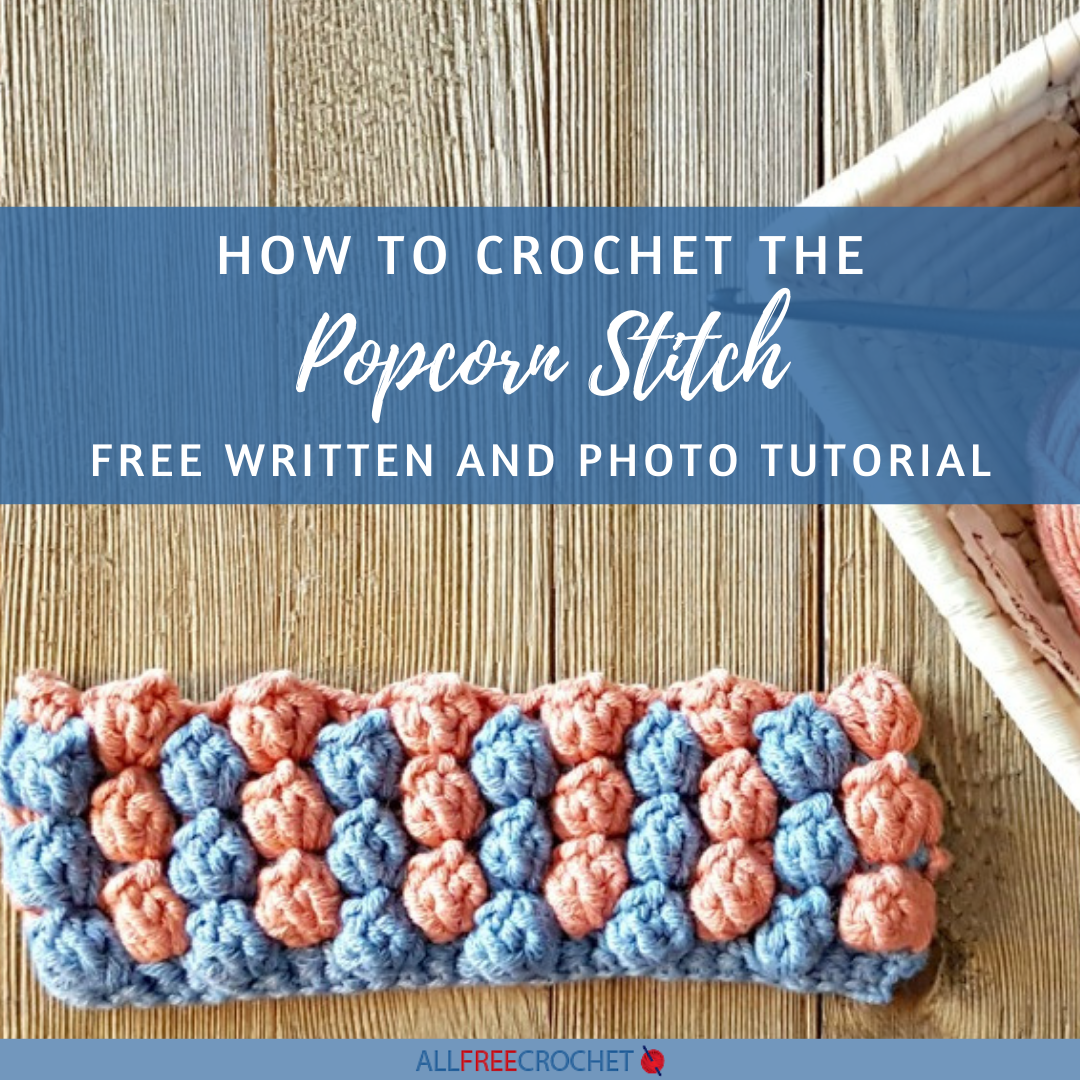
A popcorn stitch is a group of completed crochet stitches worked into one base stitch. The group is joined at the top to create a rounded, raised texture that looks like a small popcorn kernel.
The most common version uses five double crochet stitches. Some patterns use four or six stitches, so always check the pattern instructions before you begin.
A popcorn stitch differs from a bobble stitch and a cluster stitch:
• A popcorn stitch uses fully completed stitches joined at the top.
• A bobble stitch uses partial stitches that are closed together.
• A cluster stitch usually groups partial stitches into one shared top.
The popcorn stitch often appears on the right side of the fabric. It creates a firm, three-dimensional bump, so it can add warmth and visual interest without changing the whole pattern.
How Do You Make a Popcorn Stitch in Crochet?
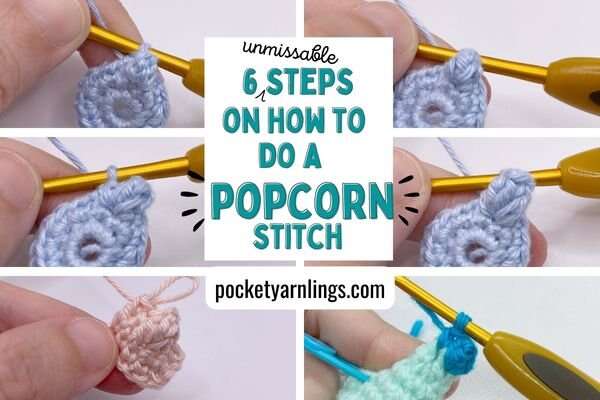
For the standard US popcorn stitch, work five double crochets into the same stitch or space. Then remove the hook, insert it into the first double crochet, catch the loose loop from the last double crochet, and pull that loop through the first stitch.
Here is the full process:
-
Yarn over and insert your hook into the next stitch.
-
Yarn over and pull up a loop. You should have three loops on your hook.
-
Yarn over and pull through two loops.
-
Yarn over and pull through the last two loops. This completes one double crochet.
-
Repeat these steps four more times in the same stitch. You now have five double crochets.
-
Remove your hook from the active loop of the last double crochet. Keep the loop open with your finger so it does not unravel.
-
Insert the hook from front to back through the top of the first double crochet.
-
Pick up the loose loop from the last double crochet.
-
Pull the last loop through the first double crochet.
-
Tighten the loop gently.
Many patterns ask you to chain one after closing the popcorn. That chain helps secure the stitch and may count as the next step in the pattern. Other patterns say to skip the chain, so follow the written instructions.
The key idea behind how do you make a popcorn stitch in crochet is simple: make a group of full stitches, then connect the first and last stitches at the top.

Popcorn Stitch Crochet Abbreviations
Crochet patterns use short terms to save space. Knowing the common abbreviations makes popcorn instructions easier to read.
• PC: Popcorn stitch
• dc: Double crochet in US terminology
• st: Stitch
• sl st: Slip stitch
• ch: Chain
• rep: Repeat
A pattern may write the stitch in a longer form, such as “5 dc in next st, remove hook, insert hook in first dc, pull loop through.” This means the same thing as a standard five-double-crochet popcorn.
Be careful with US and UK crochet terms. A US double crochet is called a treble crochet in UK patterns. If you use the wrong stitch height, your popcorns may look too short or too tall.
When in doubt, read the pattern’s abbreviation list. It takes a few seconds and can prevent an entire row from needing to be undone.

How Do You Make a Popcorn Stitch in Crochet Step by Step?
The basic method becomes easier when you divide it into three stages: build, release, and join.
Stage 1: Build the popcorn
Work the required number of double crochets into one stitch. Keep your tension relaxed enough to fit all the stitches into the same space.
Do not pull each double crochet too tightly. The stitches need room to spread before you close them.
Stage 2: Release the active loop
After the final double crochet, remove the hook from the loop. This can feel risky at first, but the loop will stay safe if you hold it with your finger.
If the loop slips, insert your hook into it again before it pulls out. A locking stitch marker can also hold the loop while you learn.
Stage 3: Join the ends
Insert your hook into the top of the first double crochet. Pick up the loop from the last double crochet and pull it through.
Give the loop a gentle tug, but do not yank it. A tight pull can flatten the popcorn or make the next stitch difficult to work.
This three-stage method is the clearest answer to how do you make a popcorn stitch in crochet because it shows exactly where the texture comes from and how the top is closed.
:max_bytes(150000):strip_icc()/PopcornStitch10-2ece9774346c4eb6a67584fd0f682e81.jpg)
Popcorn Stitch Crochet Pattern Example
Here is a simple practice row using standard US terms:
Ch 16.
Row 1: Dc in 4th ch from hook and in each ch across.
Row 2: Ch 3, turn. Dc in first 2 sts, popcorn in next st, dc in next 3 sts, popcorn in next st, dc in each remaining st.
For each popcorn in this example, work five double crochets into the stated stitch. Close each group by joining the last double crochet to the first one.
This practice row helps you see how popcorns sit between ordinary double crochets. It also lets you test your tension before using the stitch in a large blanket or garment.
For a denser texture, place popcorns in a checkerboard layout. For a softer effect, space them several stitches apart. The more popcorns you add, the more yarn and time the project will use.

Tips for Making Neat Popcorn Stitches
Small changes in tension can make a big difference. These tips help create even, rounded stitches.
• Use the same yarn and hook size throughout the project. Changes in tools can create uneven popcorns.
• Keep your double crochet loops similar in height. Uneven loops make the popcorn lean to one side.
• Do not overcrowd the base stitch. If five double crochets feel impossible, check that you are inserting the hook into the correct stitch.
• Close the popcorn firmly but gently. Too much force can flatten the bump.
• Push the finished popcorn toward the front of the fabric. This makes the raised texture more visible.
• Count every double crochet. It is easy to make four or six by mistake when working quickly.
• Practice on a small swatch. A sample reveals tension problems before they affect the full project.
In my experience, the most common mistake is pulling the last loop too tightly. The first few popcorns may look a little loose, but that is usually better than creating a stiff, flat bump. After the project is finished, light blocking can help the stitches settle.
Common Popcorn Stitch Mistakes
Working into different stitches
All five double crochets must go into the same stitch or space unless the pattern says otherwise. If the stitches spread across several spaces, the texture will look more like a cluster.
Joining the wrong stitch
The loop from the last double crochet must pass through the top of the first double crochet. Joining into the second stitch can twist the popcorn or leave an uneven opening.
Using partial double crochets
A popcorn uses completed double crochets. If you leave the stitches unfinished and close them together, you are making a bobble or cluster instead.
Forgetting the pattern’s chain
Some patterns require a chain after the popcorn. Others do not. Adding or skipping that chain can change the stitch count and shape of the row.
Mixing crochet terms
A US double crochet and a UK treble crochet are the same height, but a US single crochet is not the same as a UK single crochet. Confirm the pattern’s terminology before starting.
Making the popcorn on the wrong side
Many patterns place popcorns on the right side. If you work the texture on the back, the raised bump may face inward. Mark the right side of your fabric if the rows look similar.

How Do You Make a Popcorn Stitch in Crochet With Different Stitch Counts?
The classic version uses five double crochets, but designers may change the number. Four double crochets create a smaller bump, while six or more create a larger and fuller texture.
The joining method stays the same:
-
Work the stated number of full stitches into one stitch.
-
Remove the hook from the last active loop.
-
Insert the hook into the first completed stitch.
-
Pull the last loop through the first stitch.
-
Continue with the next instruction.
A larger popcorn may need more room in the pattern. If the fabric feels tight or begins to curl, the designer may have included extra chains or skipped stitches around the popcorns.
Never replace a five-double-crochet popcorn with a six-double-crochet popcorn without checking the pattern. The change may affect the stitch count, width, yarn use, and finished texture.

Choosing Yarn and Hook Size
Smooth, medium-weight yarn is often the easiest choice for learning how do you make a popcorn stitch in crochet. The stitch shape is easy to see, and the yarn does not split as much as some delicate fibers.
Good practice choices include:
• Worsted-weight acrylic yarn
• Smooth cotton yarn
• Light-colored yarn with clear stitch definition
Very fuzzy yarn can hide the popcorn shape. Dark yarn can also make it hard to see the top loops while you are joining the stitch.
Use the hook size suggested on the yarn label as a starting point. For a firm, defined texture, some crocheters use a slightly smaller hook. Test a small swatch first, since a smaller hook may make the fabric stiff.
Fiber also affects the final look. Cotton tends to hold crisp texture, while soft acrylic may create rounder, gentler popcorns. Wool can spring back nicely but may change size during washing.
Where to Use Popcorn Crochet Stitches
Popcorn stitches work well wherever you want raised detail. They can act as small design accents or cover an entire fabric.
Popular project ideas include:
• Baby blankets
• Pillow covers
• Scarves
• Hats
• Headbands
• Tote bags
• Sweaters
• Cardigans
• Crochet flowers
• Textured washcloths
For blankets, place popcorns in rows or a repeating grid. For hats and sweaters, use them sparingly because raised stitches can add bulk and may catch on jewelry or bag straps.
Popcorns also make excellent flower centers. Work several popcorns around a small ring, then add flat petals around them. This creates a bold center without needing a separate sewn piece.
Consider the direction of wear. A popcorn on the outside of a bag may rub against surfaces, while one on a blanket may feel pleasant and soft. Match the stitch placement to the project’s purpose.
Popcorn Stitch vs. Bobble and Puff Stitch
These three textured stitches look similar, but their construction is different.
A popcorn stitch contains several fully completed stitches joined at the top. It usually creates a firm, round bump.
A bobble stitch contains several incomplete stitches worked together. It is often taller and more compact than a popcorn.
A puff stitch is made by drawing up several loops and closing them together. It tends to look soft, pillowy, and less sharply defined.
The best stitch depends on the result you want. Choose popcorns for strong, bead-like texture, bobbles for bold raised shapes, and puffs for soft surface detail.
Understanding these differences helps you follow patterns accurately. A designer may use each stitch to control thickness, drape, and visual rhythm.
How to Make the Popcorn Stitch Face Forward
A popcorn can face the front or back of the fabric. If it appears on the wrong side, turn the work and gently push the bump through.
Some crocheters close the stitch from the front, while others close it from the back. Both methods can work, but the finished direction may differ slightly.
To keep the texture consistent:
• Work every popcorn using the same joining direction.
• Check the first few stitches before continuing the row.
• Place a marker on the front of the fabric.
• Turn the project only when the pattern tells you to turn.
When working in rounds, popcorns usually face the outside naturally if you follow the pattern’s joining instructions. Still, inspect the fabric after each round because turning or reversing the work can change the texture direction.
Care and Blocking for Popcorn Crochet
Popcorn stitches can usually be washed according to the yarn label. Acrylic yarn often tolerates gentle machine washing, while cotton and wool may need different care.
Before washing a finished project, check the fiber label. Water temperature, agitation, and drying method can change the shape of textured crochet.
For light blocking, dampen the fabric and shape it by hand. Gently push each popcorn outward so the bumps look even. Avoid pressing the popcorns flat with a heavy iron or hot tool.
Blocking can improve the overall shape, but it cannot fix every construction mistake. If a popcorn has the wrong number of stitches or is joined incorrectly, it may need to be unraveled and remade.
Frequently Asked Questions About How Do You Make a Popcorn Stitch in Crochet
How many stitches are used for a crochet popcorn stitch?
The standard US popcorn stitch usually uses five completed double crochets in one stitch. Some patterns use four, six, or more, so follow the pattern’s stated number.
Do you chain after making a popcorn stitch?
Many patterns ask you to chain one after closing the popcorn, but not all do. The chain can secure the stitch or help create space for the next part of the pattern.
Is a popcorn stitch the same as a bobble stitch?
No. A popcorn uses completed stitches joined at the top, while a bobble usually uses partial stitches closed together. The two stitches also differ in height and shape.
Why does my popcorn stitch look flat?
A popcorn may look flat if the loops are too tight, the joining loop is pulled too hard, or the stitch is pushed toward the back. Use relaxed tension and gently push the finished bump to the front.
Can beginners make a popcorn stitch?
Yes. The stitch may feel awkward at first because you remove the hook from the active loop. Practice on a small swatch and hold the loose loop with your finger so it does not unravel.
Can I use single crochet instead of double crochet?
You can make a textured group with single crochet, but it will not be the standard popcorn stitch used in most US patterns. The finished bump will be smaller and more compact.
What is the best yarn for practicing popcorn stitches?
Smooth, medium-weight yarn in a light or bright color is usually easiest to see. Worsted-weight acrylic or cotton lets you count stitches and examine the joining point clearly.
Conclusion
A popcorn stitch is made by working a group of full stitches into one base stitch, then joining the first and last stitches at the top. The standard US version uses five double crochets, but pattern instructions may change the stitch count or add a chain.
Keep your tension even, count each stitch, and practice the release-and-join step slowly. Once the motion feels natural, use popcorns to add playful texture to blankets, wearables, bags, and home décor. Try a small swatch today, then share your favorite popcorn stitch project or explore more crochet stitch techniques.

Liora Pennings is a seasoned chef and kitchen enthusiast with a passion for turning everyday cooking into an effortless experience. With years of hands-on culinary expertise, she specializes in practical techniques, ingredient know-how, and smart kitchen solutions that help home cooks elevate their meals. At KitchFlair.com, Liora shares her best tips, time-saving tricks, and honest product reviews to guide readers toward a more efficient, enjoyable, and inspired cooking routine. Whether you’re a beginner or a seasoned home chef, Liora’s friendly, knowledge-packed insights make every visit to the kitchen a little easier—and a lot more delicious.