How Many Watts Is A Coffee Maker: Power Usage Guide
Most coffee makers use 600 to 1,500 watts, while large commercial models may need 2,000 watts or more.
Knowing how many watts is a coffee maker helps you choose the right appliance, estimate energy use, and avoid overloading an outlet or portable power station. The exact number depends on the coffee maker type, brew size, heating method, and warming plate. This guide explains coffee maker wattage in simple terms, with clear examples, energy calculations, and practical tips for home, office, RV, and emergency use.
How Many Watts Is a Coffee Maker?
Most standard coffee makers use between 600 and 1,200 watts while brewing. A single-serve or pod coffee maker often uses 900 to 1,500 watts because it heats water quickly.
Here are common coffee maker wattage ranges:
• Small 4-cup coffee maker: 500 to 750 watts
• Standard 10 to 12-cup drip coffee maker: 750 to 1,200 watts
• Single-serve pod coffee maker: 900 to 1,500 watts
• Espresso machine: 1,000 to 1,500 watts
• Coffee maker with built-in grinder: 1,000 to 1,500 watts
• Travel coffee maker: 100 to 500 watts
• Commercial coffee maker: 1,500 to 3,000 watts or more
A coffee maker does not always use its maximum wattage for the entire brewing cycle. It may draw high power while heating water, then use much less power when only the warming plate is running.
For example, a 1,000-watt drip coffee maker may use full power for several minutes. After brewing, the warming plate may use about 50 to 100 watts. This makes total energy use lower than simply multiplying 1,000 watts by the full time the machine stays plugged in.

Coffee Maker Wattage by Type
The design of a coffee maker has a major effect on its power use. Heating water is the main task, and faster heating usually requires more watts.
Drip coffee makers
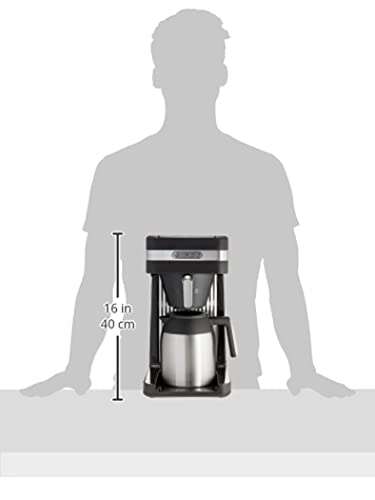
A standard drip coffee maker is one of the most common types in American homes. Most models use 750 to 1,200 watts.
A 12-cup model may use more power than a compact 5-cup machine. However, the difference is not always large. Some small coffee makers still use 900 watts because they are built to heat water quickly.
Drip machines often include a hot plate. This plate keeps coffee warm after brewing and may continue drawing power for hours. Turning the machine off after pouring your coffee can reduce wasted energy.
Single-serve coffee makers
Single-serve machines, including pod-style coffee makers, commonly use 900 to 1,500 watts. They need strong heating power to bring a small amount of water to the correct temperature in a short time.
Even when a single-serve coffee maker has a high wattage rating, it may use less total energy per cup than a large drip machine. The reason is simple: it heats only the amount of water needed for one serving.
Espresso machines
Home espresso machines often use 1,000 to 1,500 watts. Models with dual boilers, steam systems, or built-in grinders may use more.
Espresso machines can draw power for longer periods because they must maintain heat and pressure. A basic espresso machine may use less energy during a short shot, while a machine that stays hot all morning can use much more.
Coffee makers with grinders
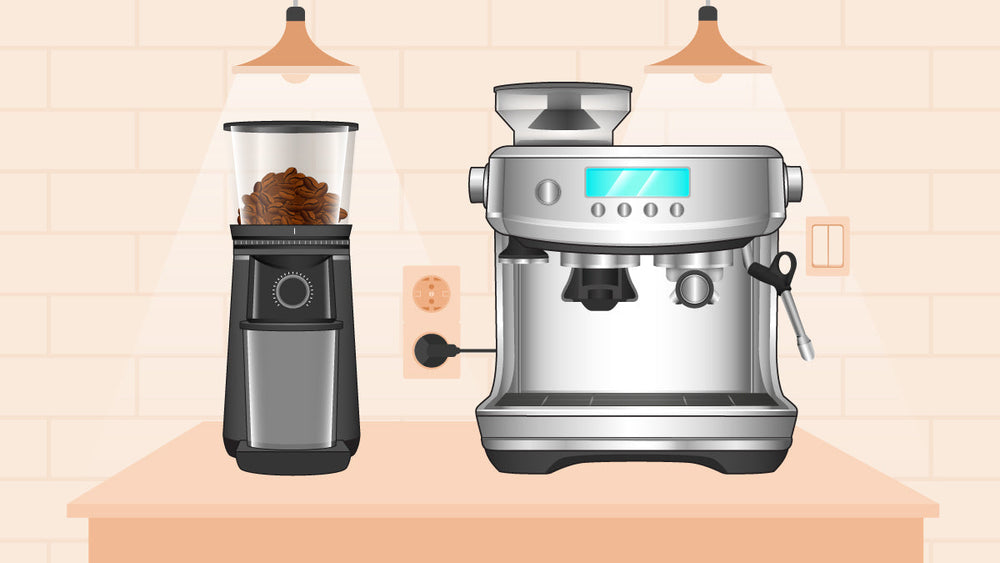
A coffee maker with a built-in grinder usually uses between 1,000 and 1,500 watts. The grinder itself uses relatively little power. The heating element creates most of the electrical demand.
Grinding may add only a small amount to the total energy used per pot. Still, these combination machines need a strong power source because the heater and grinder may operate during the same cycle.
Travel coffee makers
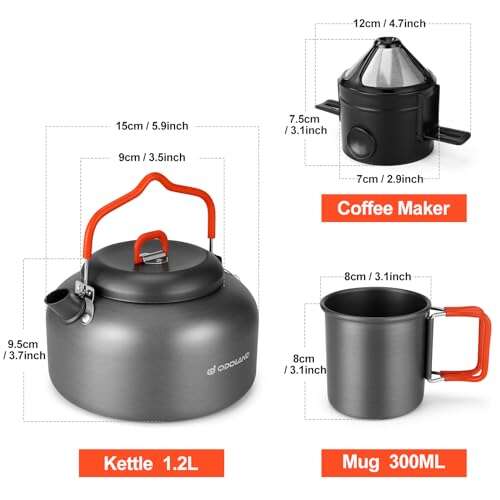
Travel coffee makers are made for cars, campsites, and small living spaces. They may use 100 to 500 watts, depending on the model and power source.
A 12-volt car coffee maker often has a lower wattage than a household model. It also takes longer to heat water. This is a trade-off: lower power helps protect a car battery, but the brewing process may be slower.
Commercial coffee makers
Commercial coffee makers can use 1,500 to 3,000 watts or more. Large restaurant machines may heat several gallons of water and maintain high temperatures throughout the day.
These units often need a dedicated circuit. Always follow the installation instructions and local electrical rules before connecting a commercial coffee maker.
What Determines a Coffee Maker’s Wattage?
Several design features affect how many watts is a coffee maker. The label on the machine gives the most accurate answer, but these factors explain why models vary.
Heating speed
A coffee maker with a powerful heating element can heat water faster. This improves convenience but increases the wattage rating.
Think of wattage as the size of an engine. A larger engine can do more work at once, but it may need more fuel. In the same way, a higher-wattage coffee maker can heat water quickly but draws more electricity while it runs.
Brew volume
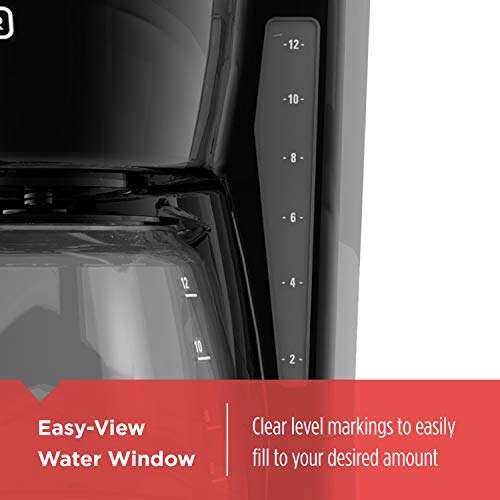
A coffee maker that brews 12 cups usually needs to heat more water than a 4-cup model. However, cup ratings can be confusing because one “coffee cup” often means only 5 to 6 fluid ounces.
A machine labeled as a 12-cup coffee maker may hold about 60 to 72 fluid ounces, not twelve standard 8-ounce mugs. Check the water tank size if you want to compare models fairly.
Warming plates
Warming plates can have a major effect on energy use over time. The heating element may switch on and off to maintain the coffee temperature.
If a coffee maker stays on for four hours, the warming plate can use more energy than the brewing cycle. Many newer models include an automatic shutoff after 30 minutes to four hours.
Built-in features
Extra features can increase power needs. Common examples include:
• Built-in coffee grinders
• Milk frothers
• Hot water dispensers
• Programmable heating systems
• Dual brewing systems
• Large digital displays
• Internal water heaters
The display and controls usually use very little electricity. Heating systems and pumps account for most of the wattage.
Voltage and electrical design
Most household coffee makers in the United States operate at 120 volts. A coffee maker rated at 1,200 watts draws about 10 amps.
You can estimate current with this formula:
Amps = Watts ÷ Volts
For a 1,000-watt coffee maker:
1,000 watts ÷ 120 volts = 8.3 amps
This matters when you use the machine with other appliances on the same circuit.

How to Find the Exact Wattage of Your Coffee Maker
The best way to learn how many watts is a coffee maker is to check its rating label. Do not rely only on the model’s size or appearance.
Look in these places:
• The bottom or back of the coffee maker
• Near the power cord
• The user manual
• The original packaging
• The manufacturer’s product page
The label may show watts, volts, and amps. Some labels list only volts and amps. If so, multiply them:
Watts = Volts × Amps
For example, a coffee maker rated at 120 volts and 8 amps uses:
120 × 8 = 960 watts
The listed number is usually the maximum or operating wattage. Actual use can change during brewing, heating, and standby mode.
A plug-in watt meter can show real-time power use. I find this useful when comparing two coffee makers that have similar features. One may have a higher label rating but use less energy during a normal brew cycle.
This is also a good way to find hidden energy use from a warming plate. A machine that seems small can still use noticeable power if it remains hot for several hours each day.

How Much Electricity Does a Coffee Maker Use?
Wattage tells you the rate of electricity use. Energy consumption depends on both wattage and time.
Use this formula to estimate energy:
Kilowatt-hours = Watts × Hours ÷ 1,000
Suppose a 1,000-watt coffee maker runs for 10 minutes:
1,000 × 0.167 ÷ 1,000 = 0.167 kilowatt-hours
If electricity costs 16 cents per kilowatt-hour, that brew costs about 2.7 cents.
A coffee maker that stays on for four hours is different. Assume the heating plate uses 80 watts after brewing:
80 × 4 ÷ 1,000 = 0.32 kilowatt-hours
At 16 cents per kilowatt-hour, the warming time costs about 5 cents. The total daily cost may be around 8 cents, depending on the heating cycle and electricity rate.
Your actual cost depends on:
• The coffee maker’s wattage
• Brewing time
• Number of pots or cups
• Warming plate use
• Local electricity prices
• Automatic shutoff settings
The most accurate method is to measure the machine with a plug-in energy monitor for one full day or week.

Coffee Maker Wattage and Portable Power Stations
Many people ask how many watts is a coffee maker because they want to run one from a battery station, solar generator, or inverter.
A portable power station must handle two things:
• Continuous output: the power it can provide during normal use
• Surge output: the short burst of power it can handle when needed
Most coffee makers do not have a large motor surge, but their heating elements create a high and steady load. A 1,200-watt coffee maker needs a power station that can safely provide at least 1,200 watts continuously.
For practical use, choose a power station rated at 1,500 watts or more for a 1,200-watt coffee maker. This leaves room for small power changes and prevents the inverter from operating at its limit.
Battery capacity is measured in watt-hours. A 1,000-watt coffee maker running for 10 minutes uses about 167 watt-hours before power losses. An inverter may reduce the usable amount, so plan for roughly 200 watt-hours or more.
I have seen people make one common mistake: they compare battery capacity but ignore inverter output. A battery may store enough energy, yet the power station may not deliver enough watts to start the coffee maker.
Always check both numbers. A large watt-hour rating does not guarantee that the unit can run a high-wattage heating appliance.

Can You Run a Coffee Maker on a Generator?
Yes, you can run many coffee makers on a generator, but the generator must have enough continuous output.
Use these general guidelines:
• 600-watt coffee maker: choose a generator rated above 800 watts
• 1,000-watt coffee maker: choose a generator rated above 1,300 watts
• 1,500-watt coffee maker: choose a generator rated above 2,000 watts
Leave extra capacity for other devices, such as a refrigerator, phone charger, or lamp. Do not run a coffee maker and another high-wattage heater on a small generator at the same time.
A gas generator must be used outdoors in a well-ventilated area. Carbon monoxide can build up indoors, inside garages, or near open windows. An outdoor-rated extension cord should also match the generator’s load and length requirements.
For camping, a lower-wattage travel coffee maker may be a safer choice. It can reduce fuel use and place less demand on a small inverter.

How to Use Less Energy With a Coffee Maker
You do not need to give up your morning coffee to reduce electricity use. Small habits can make a clear difference.
• Brew only the amount you plan to drink.
• Turn off the warming plate when the coffee is ready.
• Use an insulated carafe instead of a hot plate.
• Clean mineral buildup from the heating system.
• Use the automatic shutoff feature.
• Avoid running a large machine for one small cup.
• Heat only the water you need.
• Unplug the coffee maker during long periods of nonuse.
Mineral deposits can slow water flow and make the machine work less efficiently. Cleaning frequency depends on water hardness and use. Many manufacturers suggest descaling every one to three months.
An insulated carafe is one of the best energy-saving features. It keeps coffee warm without continuously heating a metal plate. The coffee may also taste better because it is less likely to become scorched.
In my own appliance tests and daily use, the biggest waste usually comes from leaving the warming plate on. The brew cycle is short. The forgotten plate runs for hours.

Is a Higher-Wattage Coffee Maker Better?
A higher-wattage coffee maker is not automatically better. It usually heats water faster, but speed is only one part of coffee quality.
A good coffee maker should also control water temperature, spread water evenly over the grounds, and provide a consistent brew time. High wattage cannot fix poor water flow or weak temperature control.
Higher wattage may be useful when:
• You need coffee quickly.
• You brew a full pot often.
• You want strong steam for espresso or milk drinks.
• You use a large water tank.
Lower wattage may be better when:
• You live in an RV or off-grid home.
• You use a small inverter.
• You want to reduce peak electrical demand.
• You usually brew one cup.
Coffee brewing standards commonly place ideal water temperature in the range of about 195 to 205 degrees Fahrenheit. The coffee maker must heat water effectively, but wattage alone does not prove that it reaches or maintains this range.
Safety Tips for Coffee Maker Wattage
A coffee maker is a heating appliance, so safe electrical use matters.
Keep these tips in mind:
• Plug the machine into a grounded wall outlet when possible.
• Avoid using a damaged cord or loose plug.
• Do not cover the coffee maker while it is operating.
• Keep water away from the power connection.
• Avoid placing several high-wattage appliances on one outlet.
• Use an extension cord rated for the coffee maker’s load.
• Follow the manufacturer’s automatic shutoff instructions.
A typical 15-amp household circuit can provide up to 1,800 watts in theory. Electrical safety guidance often recommends keeping continuous loads near 80 percent of circuit capacity. That means a 15-amp circuit should generally stay near 1,440 watts for a continuous load.
A 1,200-watt coffee maker may be fine on that circuit by itself. But adding a toaster, microwave, or electric kettle could trip the breaker.
If an outlet feels hot, smells burned, sparks, or trips often, stop using it and ask a qualified electrician to inspect the circuit.
How to Compare Coffee Maker Wattage Before Buying
Look beyond the advertised cup count. A few simple checks can help you select the right model.
-
Check the wattage label.
-
Compare the water tank size.
-
Look for an automatic shutoff.
-
Decide whether you need a warming plate.
-
Check whether the machine has a thermal carafe.
-
Consider your outlet, inverter, or generator capacity.
-
Read the manual for circuit and extension cord guidance.
If you drink one mug each morning, a single-serve model may reduce water and heating waste. If your family drinks several cups, a thermal-carafe drip machine may offer better value.
For an RV or backup power setup, focus on both wattage and brewing time. A 500-watt machine may seem efficient, but it could run for much longer than a 1,000-watt model.
Frequently Asked Questions About How Many Watts Is a Coffee Maker
How many watts does a regular coffee maker use?
A regular drip coffee maker usually uses 750 to 1,200 watts while brewing. Its warming plate may use about 50 to 100 watts after brewing.
Can a 1,000-watt inverter run a coffee maker?
A 1,000-watt inverter can run a coffee maker rated below 1,000 watts, but it may operate at its limit. Choose an inverter with extra capacity whenever possible, especially for a machine rated close to 1,000 watts.
How many watts does a Keurig-style coffee maker use?
Many single-serve pod coffee makers use about 900 to 1,500 watts. Check the label because wattage varies by model, water tank size, and heating system.
Does a coffee maker use electricity when turned off?
Some coffee makers use a small amount of standby power when plugged in, especially if they have a clock or display. Unplugging the machine eliminates standby use.
Can a 12-volt battery run a coffee maker?
A 12-volt battery can run a coffee maker only with a suitable inverter or a coffee maker designed for 12 volts. The battery, wiring, fuse, and inverter must all support the machine’s wattage.
Is a 1,500-watt coffee maker expensive to run?
A 1,500-watt coffee maker can be inexpensive to run if it operates for only a few minutes per brew. Energy costs rise when the warming plate remains on for long periods.
What size generator do I need for a coffee maker?
For a 1,000-watt coffee maker, a generator with at least 1,300 watts of continuous output is a practical minimum. A larger generator is better if you also need to power other appliances.
Conclusion
Most home coffee makers use 600 to 1,500 watts, with standard drip models often falling between 750 and 1,200 watts. The exact number depends on the heater, brew size, warming plate, grinder, and other features.
Check the rating label for the most accurate figure, and remember that watts show power rate, not total energy cost. Turn off the warming plate, use an insulated carafe, and choose a generator or power station with enough continuous output.
Now that you know how many watts is a coffee maker, compare your machine’s rating with your outlet, battery, or generator before using it. Share your coffee maker model or energy-saving tip in the comments, and explore more appliance guides for smarter home energy choices.

Liora Pennings is a seasoned chef and kitchen enthusiast with a passion for turning everyday cooking into an effortless experience. With years of hands-on culinary expertise, she specializes in practical techniques, ingredient know-how, and smart kitchen solutions that help home cooks elevate their meals. At KitchFlair.com, Liora shares her best tips, time-saving tricks, and honest product reviews to guide readers toward a more efficient, enjoyable, and inspired cooking routine. Whether you’re a beginner or a seasoned home chef, Liora’s friendly, knowledge-packed insights make every visit to the kitchen a little easier—and a lot more delicious.