Can Robot Vacuum Cleaner Clean Carpet: What To Know
Yes, a robot vacuum cleaner can clean carpet, but its results depend on carpet type, suction power, and brush design.
Can robot vacuum cleaner clean carpet well enough to replace a full-size vacuum? In many homes, yes—for daily dust, crumbs, pet hair, and light debris. However, robot vacuums have limits on thick rugs, deep carpet fibers, embedded dirt, and heavy stains. This guide explains how robot vacuum cleaners work on carpet, which features matter, what results to expect, and how to choose and use one wisely.
Can robot vacuum cleaner clean carpet effectively?
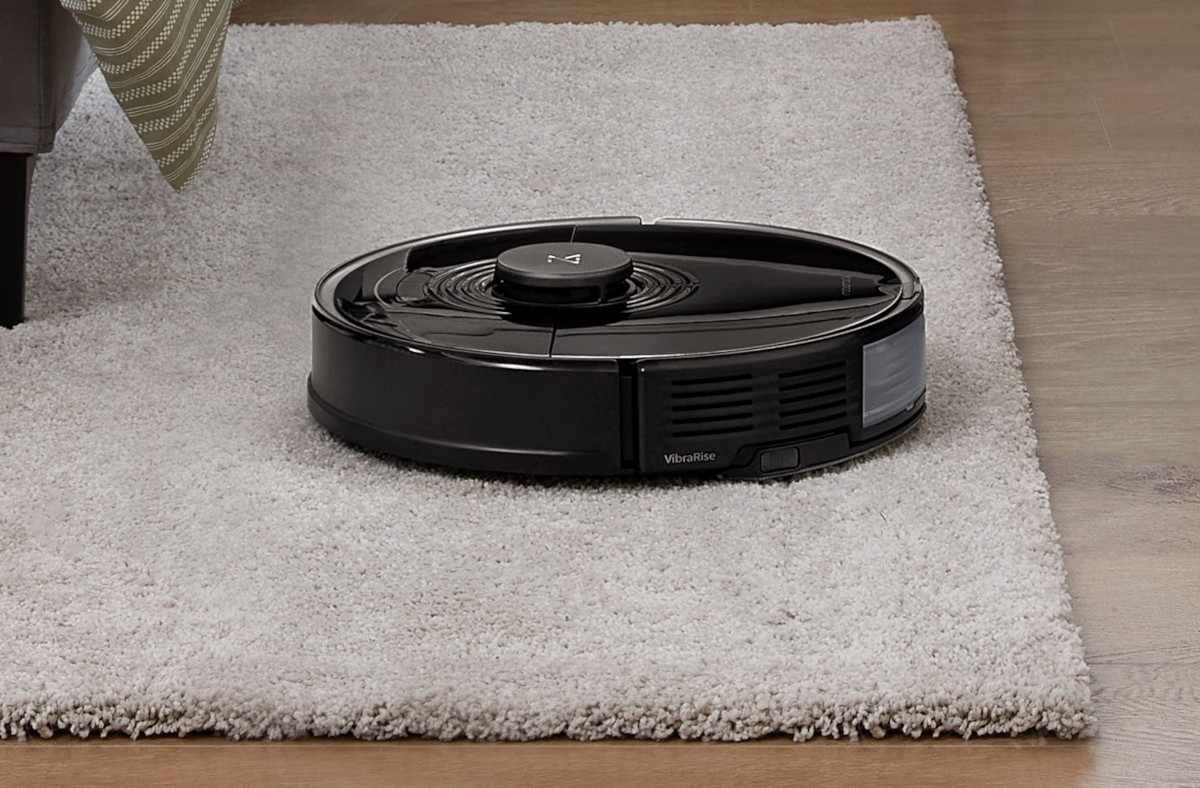
A robot vacuum cleaner can clean carpet by using suction, a rolling brush, and side brushes. The main brush lifts dirt from the fibers while the motor pulls dust into the bin. Some models also raise suction when they detect carpet.
On low-pile and medium-pile carpet, most modern robot vacuums perform well. They can collect:
• Dust and fine grit
• Crumbs and food pieces
• Pet hair
• Lint and small debris
• Loose soil brought in from outside
The answer changes with carpet thickness. A robot vacuum may struggle to move across shag carpet, deep plush carpet, or rugs with long tassels. Its wheels can sink into the fibers, and the brush may become tangled.
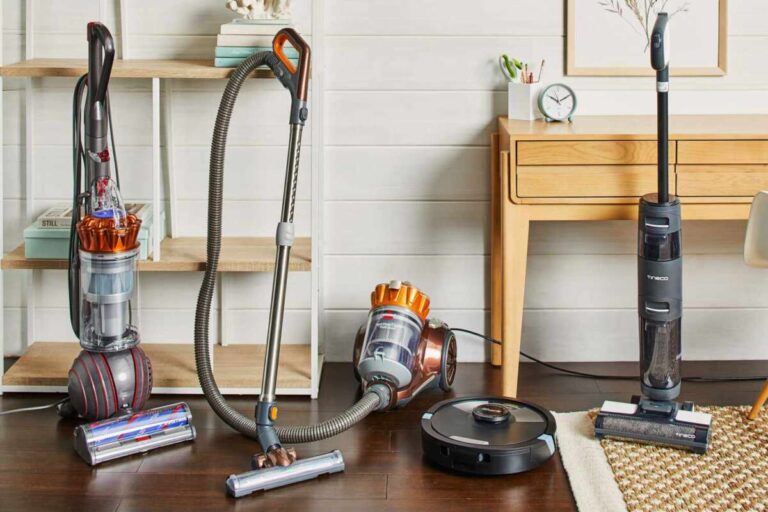
So, can robot vacuum cleaner clean carpet as deeply as an upright vacuum? Usually, no. Robot vacuums are best at regular surface cleaning and maintenance. A powerful upright or canister vacuum still has an advantage when dirt is deeply pressed into carpet.

How robot vacuums clean carpet
Robot vacuums use several parts to clean a carpeted floor. Each part has a different job, much like a small cleaning team working together.
Suction motor
The motor creates airflow that pulls dirt into the dustbin. Stronger suction often helps with fine dust and hair, but suction power alone does not tell the whole story. Airflow, brush contact, filtration, and floor design also affect performance.
Many models list suction in pascals, or Pa. A higher number can suggest stronger suction, but brands do not always test this number in the same way. Treat it as a useful clue, not a perfect comparison.
Main brush
The main brush reaches into carpet fibers and loosens dirt. Rubber rollers are often easier to maintain because they collect less hair than traditional bristle brushes.
A brush with deep fins or a patterned rubber surface may work well on pet hair. Still, long hair can wrap around any roller. Regular cleaning keeps the brush moving freely.
Side brushes
Side brushes sweep dirt from edges and corners toward the robot’s path. They help with wall edges but play a smaller role on the center of a carpet.
Carpet sensors
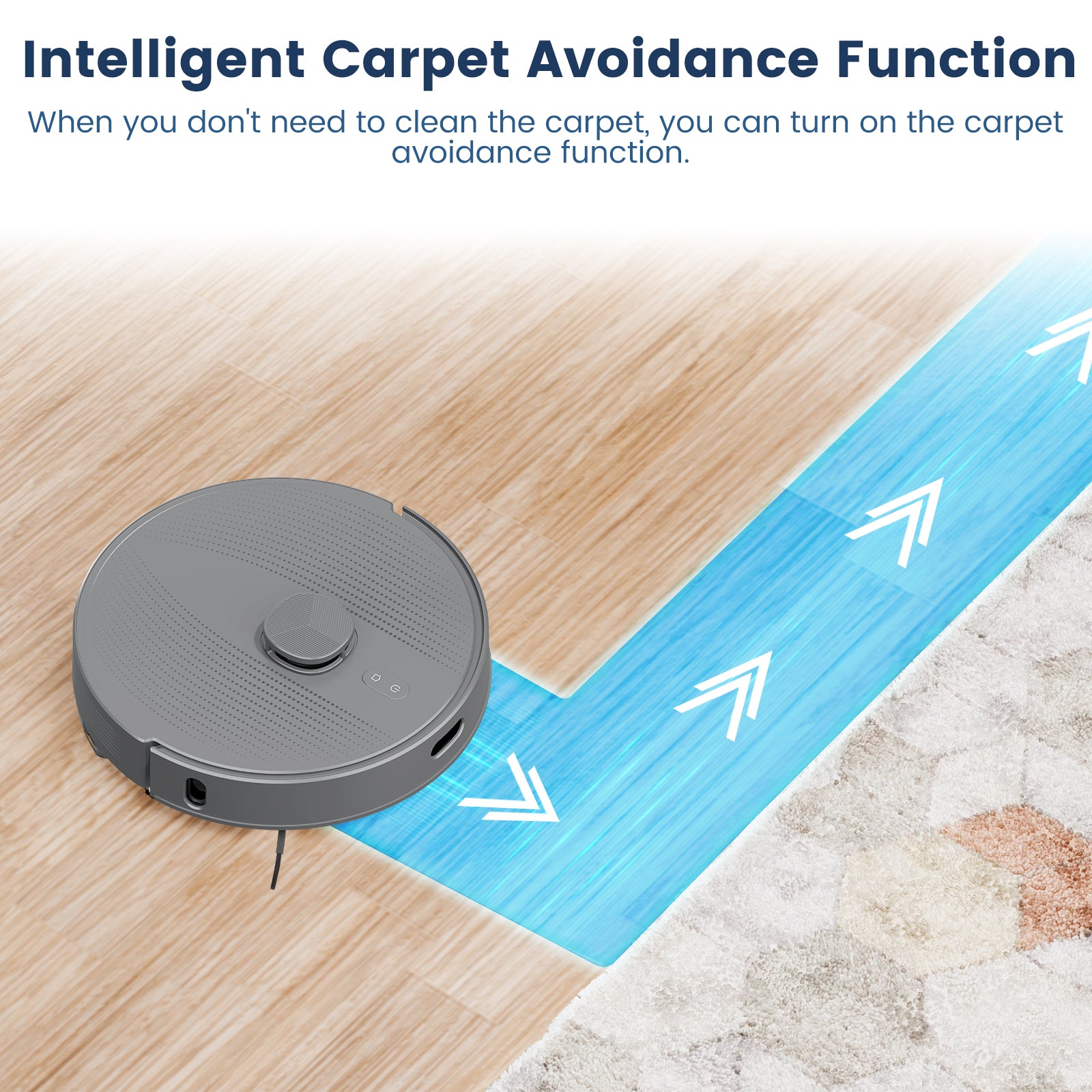
Some robot vacuums use sensors to detect carpet. When they move from hard flooring to carpet, they may increase suction automatically. This feature can improve cleaning while saving battery power on tile, wood, or vinyl.
Filters
A good filter traps fine particles that would otherwise return to the room. High-efficiency filters are helpful for homes with pets, dust sensitivity, or seasonal allergies. Replace or wash the filter only as the manufacturer allows.
Which carpet types work best?
Carpet texture has a major effect on robot vacuum performance. Before buying, look at the height, softness, and density of your carpet.
Low-pile carpet
Low-pile carpet has short, tight fibers. It is usually the easiest carpet for a robot vacuum to clean. Most models can move across it without much trouble.
This carpet type is a good match for automatic daily cleaning. The robot can remove dust and crumbs before they settle deep into the backing.
Medium-pile carpet
Medium-pile carpet has taller fibers and may need stronger suction. Many mid-range and premium robots handle it well, especially when they have large wheels and an automatic carpet boost mode.
Run the robot more slowly or use a stronger cleaning setting if the carpet holds pet hair. A second pass may also improve results.
High-pile and plush carpet
High-pile carpet is more challenging. The robot may move slowly, lose traction, or leave some dirt behind. Its brush may not reach the carpet base.
Some robots will clean high-pile carpet, but performance can vary from room to room. Check the manufacturer’s floor compatibility list before purchase.
Shag rugs
Shag rugs are among the hardest surfaces for robot vacuums. Long fibers can wrap around the brush, block the wheels, or confuse the robot’s sensors.
It is often safer to create a no-go zone around shag rugs. If you want automatic cleaning, choose a robot with strong obstacle detection and a brush designed to resist tangles.
Carpet with fringe
Rug fringe can get caught in a roller or wheel. Tuck the fringe under the rug or block the area with a virtual boundary. This small step can prevent repeated errors.

What are the benefits of using a robot vacuum on carpet?
A robot vacuum is not just a smaller upright vacuum. Its main strength is frequent, automatic cleaning.
It cleans often
Carpet collects dust every day. A robot can run on a schedule while you work, sleep, or spend time with family. Frequent cleaning prevents small particles from building up.
It helps with pet hair
Robot vacuums can collect loose dog and cat hair from carpet. This is especially useful during shedding season. For the best results, select a model with strong suction, a tangle-resistant roller, and a large dustbin.
It reaches under furniture
Many robots fit under beds, couches, and cabinets. These areas often collect dust because a full-size vacuum cannot reach them easily.
It reduces daily effort
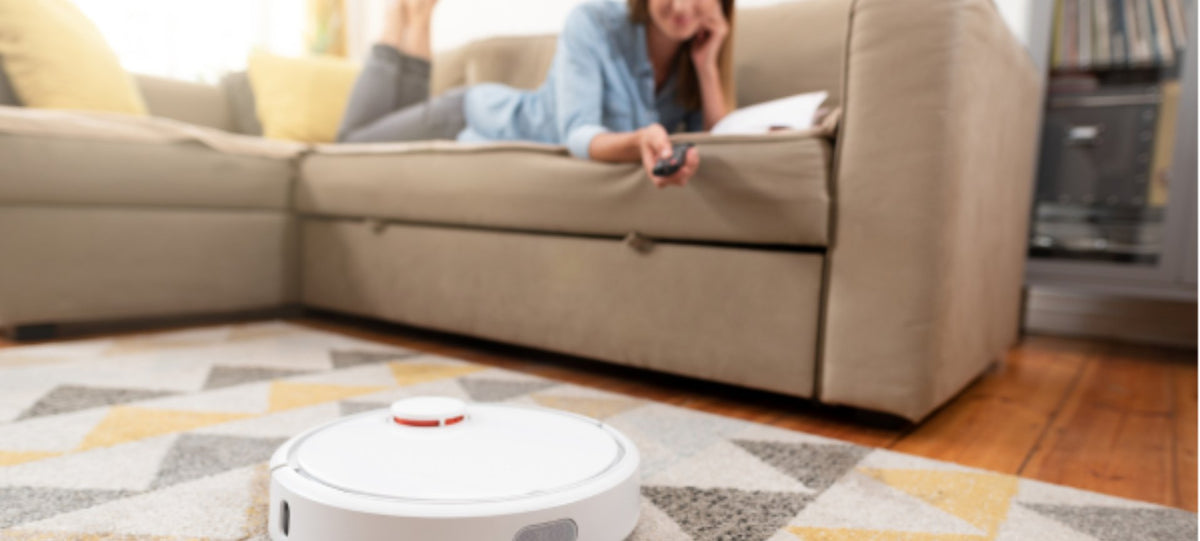
A robot vacuum does not remove every cleaning task, but it can reduce the number of manual vacuum sessions. Think of it as a floor maintenance tool rather than a complete cleaning replacement.
It can improve indoor cleanliness
Regular dust removal may help reduce visible debris and settled particles. However, a robot vacuum does not replace good ventilation, filter changes, carpet washing, or professional cleaning when needed.
What are the limitations of robot vacuums on carpet?
Knowing the limits helps you avoid disappointment. Can robot vacuum cleaner clean carpet? Yes, but no model handles every carpeted home in the same way.
It may miss deeply embedded dirt
Robot vacuums are often lighter and less powerful than upright vacuums. They may remove surface dirt but leave sand, grit, and fine dust deeper in dense carpet.
It may struggle with thick fibers
A robot needs enough traction to move. Very soft carpet can cause wheel slip or make the robot work harder. Some models may become stuck at the edge of a thick rug.
The dustbin may fill quickly
Pet hair and carpet debris take up space. A small dustbin may need frequent emptying, even if the robot has a self-emptying base.
It cannot remove stains
Robot vacuums collect dry debris. They do not remove spills, grease, mud stains, or odors. A carpet cleaner or spot treatment is needed for those problems.
It may create noise
Carpet boost mode can be louder than standard cleaning. If noise bothers you, schedule cleaning when you are away.
It needs regular care
Hair can wrap around the roller, and carpet fibers can collect around the wheels. A neglected robot cleans less effectively and may wear out faster.

Features to look for when buying a robot vacuum for carpet
The right features can make the difference between a helpful appliance and an expensive gadget.
Strong, measured cleaning performance
Look for independent tests that compare carpet pickup, not just advertised suction. A model should collect fine dust and larger debris in a controlled test.
Automatic carpet boost
This setting increases suction when the robot detects carpet. It can improve pickup and help preserve battery life on hard floors.
A suitable brush roll
Choose a rubber roller or hybrid brush that is easy to remove. If you have pets, prioritize designs that reduce hair wrapping.
Large wheels
Large wheels help the robot cross thresholds and thick rug edges. Small wheels may struggle with uneven transitions.
Effective navigation
LiDAR or camera-based mapping can help the robot clean in orderly rows. Good navigation reduces missed areas and repeated trips over the same spot.
Carpet-safe sensors
Some robots use floor sensors to avoid falling or detect surface changes. Read the product manual if you have dark carpet, reflective rugs, or unusual patterns, since some sensors may react poorly to them.
A high-quality filter
A washable or replaceable high-efficiency filter can help capture fine dust. Check the replacement cost before buying.
A self-emptying dock
A self-emptying base is helpful for carpeted homes with pets. It reduces daily maintenance, but you still need to inspect the brush, filter, wheels, and sensors.
How to get better carpet-cleaning results
Even the best robot vacuum needs a good setup. Use these steps to improve cleaning.
- Remove cords, socks, toys, and small objects from the floor.
- Secure rug fringe and loose carpet edges.
- Set no-go zones around shag rugs or fragile mats.
- Empty the dustbin before a deep cleaning run.
- Clean the main brush at least once a week if you have pets.
- Use carpet boost or maximum suction when the floor needs extra attention.
- Run the robot when the room is quiet and free of foot traffic.
- Make sure the charging dock has clear space around it.
- Replace filters and brushes according to the care schedule.
- Use a full-size vacuum every few weeks for deep cleaning.
In my testing approach, one common mistake is judging a robot after a single run. Carpet debris is not always collected at once, especially when it lies deep in the pile. A scheduled routine with two or three cleaning runs each week usually gives a more realistic result.
Another practical lesson is to inspect the brush after the first few runs. A robot can appear to work normally while hair slowly blocks the roller. Early maintenance prevents weak suction and error messages later.

Robot vacuum versus upright vacuum for carpet
Both machines have a place in a clean home.
| Feature | Robot vacuum | Upright vacuum |
|---|---|---|
| Daily automation | Excellent | Low |
| Deep carpet cleaning | Moderate | Usually stronger |
| Cleaning under furniture | Excellent | Limited |
| Large-area cleaning | Convenient | Often faster |
| Stair cleaning | Not suitable | Suitable with attachments |
| Spot cleaning | Limited | Better |
| Maintenance | Regular brush and filter care | Bag or bin and filter care |
Can robot vacuum cleaner clean carpet instead of an upright vacuum? It can replace some routine vacuuming, but most homes benefit from using both. Let the robot handle daily debris and use an upright or canister vacuum for deep cleaning, stairs, corners, and upholstery.
How often should a robot vacuum clean carpet?
The ideal schedule depends on foot traffic, pets, children, and the type of carpet.
• Low-traffic homes: Two or three runs per week may be enough.
• Homes with pets: Daily or every-other-day cleaning can control loose hair.
• Busy family homes: Daily cleaning helps remove crumbs and tracked-in soil.
• Allergy-sensitive homes: Frequent vacuuming with a clean high-efficiency filter may help reduce settled dust.
Do not run the robot without checking the floor first. Small items can damage the roller, and wet spills can create a mess. A robot vacuum is designed for dry debris only.
Common mistakes to avoid
A few simple errors can reduce cleaning quality or damage the appliance.
Ignoring the carpet height
Do not assume every robot works on every rug. Read the manual and check the return policy before using a robot on thick carpet.
Using the wrong suction setting
Quiet mode may not provide enough power for heavy carpet debris. Use a stronger setting when needed, but expect shorter battery life and more noise.
Skipping brush maintenance
A wrapped roller cannot lift dirt well. Remove hair with the included tool or small scissors, taking care not to cut the brush.
Leaving wet debris on the floor
Robot vacuums are not wet cleaners unless the model specifically supports mopping. Keep the robot away from wet carpet and liquid spills.
Blocking the dock
If the robot cannot return to its dock, it may stop with a low battery. Keep the dock on a flat surface with open space nearby.
Expecting stain removal
Dry vacuuming and stain cleaning are different jobs. Treat spills quickly with a carpet-safe method and follow the carpet maker’s care advice.
Frequently Asked Questions About Can Robot Vacuum Cleaner Clean Carpet
Can a robot vacuum clean thick carpet?
Some robot vacuums can handle medium or thick carpet, but performance varies. Models with strong suction, large wheels, and carpet boost usually perform better than basic models.
Can a robot vacuum clean carpet with pet hair?
Yes, a robot vacuum can collect loose pet hair from many carpets. Choose a model with strong suction, a tangle-resistant brush, and a dustbin large enough for your pet’s shedding level.
Will a robot vacuum damage carpet?
Most robot vacuums are safe for standard carpet when used as directed. Problems are more likely with loose edges, long fringe, delicate fibers, or a brush that is blocked by hair.
Can robot vacuum cleaner clean carpet and hardwood floors?
Yes, many robot vacuums can move between carpet and hardwood automatically. Some detect carpet and increase suction, while others require you to choose a cleaning mode in the app.
How often should I run a robot vacuum on carpet?
Two or three runs per week may suit a low-traffic home. Homes with pets, children, or heavy foot traffic may benefit from daily cleaning.
Does a robot vacuum replace a regular vacuum?
Usually, it does not replace a regular vacuum completely. It is excellent for daily maintenance, while an upright or canister vacuum is often better for deep carpet cleaning, stairs, edges, and upholstery.
Conclusion
Can robot vacuum cleaner clean carpet? Yes, it can handle daily dust, crumbs, pet hair, and loose debris on many low-pile and medium-pile carpets. Its performance depends on suction, brush design, navigation, carpet height, and regular maintenance.
Use a robot vacuum as an automatic maintenance partner, not as the only tool for every carpet-care job. Check your carpet type, choose suitable features, create safe boundaries, and keep a full-size vacuum for deep cleaning. Start with a consistent schedule, then adjust it based on your home’s traffic and debris.

Liora Pennings is a seasoned chef and kitchen enthusiast with a passion for turning everyday cooking into an effortless experience. With years of hands-on culinary expertise, she specializes in practical techniques, ingredient know-how, and smart kitchen solutions that help home cooks elevate their meals. At KitchFlair.com, Liora shares her best tips, time-saving tricks, and honest product reviews to guide readers toward a more efficient, enjoyable, and inspired cooking routine. Whether you’re a beginner or a seasoned home chef, Liora’s friendly, knowledge-packed insights make every visit to the kitchen a little easier—and a lot more delicious.