Can I Wash My Vacuum Cleaner Filter: Safe Cleaning Guide
Yes, you can wash some vacuum cleaner filters, but only when the manufacturer labels them washable.
Knowing whether you can wash your vacuum cleaner filter helps protect suction, indoor air quality, and the motor. The right method depends on the filter material, vacuum type, and care instructions, so this guide explains how to check, wash, dry, and replace it safely.
Can I Wash My Vacuum Cleaner Filter?
You can wash a vacuum cleaner filter only if it is marked washable or the owner’s manual says it can be rinsed. Many foam and plastic mesh filters are washable, but paper, HEPA, and cartridge filters may not be.
A washable filter usually has clear words such as:
• Washable
• Rinse with water
• Reusable
• Clean with cold water
A filter that says “do not wash” should stay dry. Water can damage its fibers, reduce its filtering power, or cause mold when it does not dry fully.
If you cannot find the manual, check the filter itself and search the exact vacuum model on the manufacturer’s website. This small step can prevent an expensive motor problem.
Which Vacuum Filters Are Washable?
The filter type matters more than the vacuum brand. A stick vacuum, upright vacuum, canister vacuum, and robot vacuum may all use several filter materials.
Foam filters
Foam filters are often washable. They are common in wet/dry vacuums, handheld vacuums, and some upright models.
You can usually rinse a foam filter with cool or lukewarm water. Do not twist it hard, as this can tear the foam and create gaps.
Plastic mesh filters
Plastic mesh filters can often be rinsed under running water. They catch larger dust and hair before debris reaches the main filter.
Use a soft brush if needed. Avoid sharp tools that can break the mesh.
Pleated paper filters
Pleated paper filters are usually not washable. Water can make the paper swell, weaken the pleats, and leave tiny gaps.
Tap or brush off loose dust only if the manual allows it. Replace the filter when it becomes clogged or damaged.
HEPA filters
Some vacuum HEPA filters are washable, but many are not. The term “HEPA” describes the level of filtration, not whether the filter can handle water.
A washable HEPA filter will normally say so on the filter or in the manual. If it does not, assume it is dry-clean only and replace it as directed.
Cartridge filters
Cartridge filters may contain paper, foam, fabric, or a mix of materials. Some wet/dry vacuum cartridge filters can be rinsed, while others must stay dry.
Never guess based only on the filter’s shape. Check the model instructions first.

How to Tell If a Filter Is Washable
The safest answer to “Can I wash my vacuum cleaner filter?” comes from the product label and manual. Look for care symbols or clear cleaning directions.
Follow these checks:
- Turn off and unplug the vacuum.
- Remove the filter carefully.
- Look for the word “washable.”
- Check the filter frame for a water symbol.
- Find the vacuum model number.
- Read the cleaning section in the manual.
- Contact the manufacturer if the instructions are unclear.
Do not rely on color alone. A blue or black filter is not automatically washable. Some washable filters look almost identical to dry-only filters.
Also inspect the filter’s condition. If it is cracked, torn, misshapen, or shedding fibers, washing will not restore it. A damaged filter should be replaced.

How to Wash a Vacuum Cleaner Filter Safely
If the filter is washable, cleaning it is simple. The key is gentle handling and complete drying.
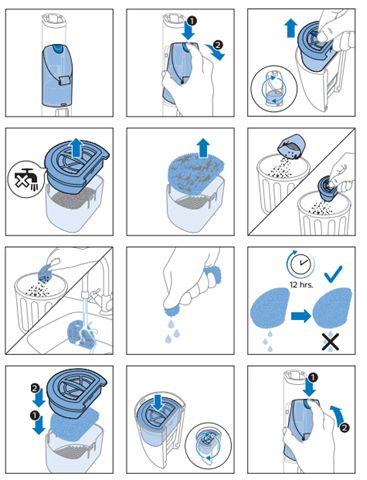
Step 1: Unplug the vacuum
Disconnect the vacuum from the outlet before opening the filter compartment. For a cordless vacuum, remove the battery if the design allows it.
This protects you from accidental startup and keeps water away from electrical parts.
Step 2: Remove loose debris
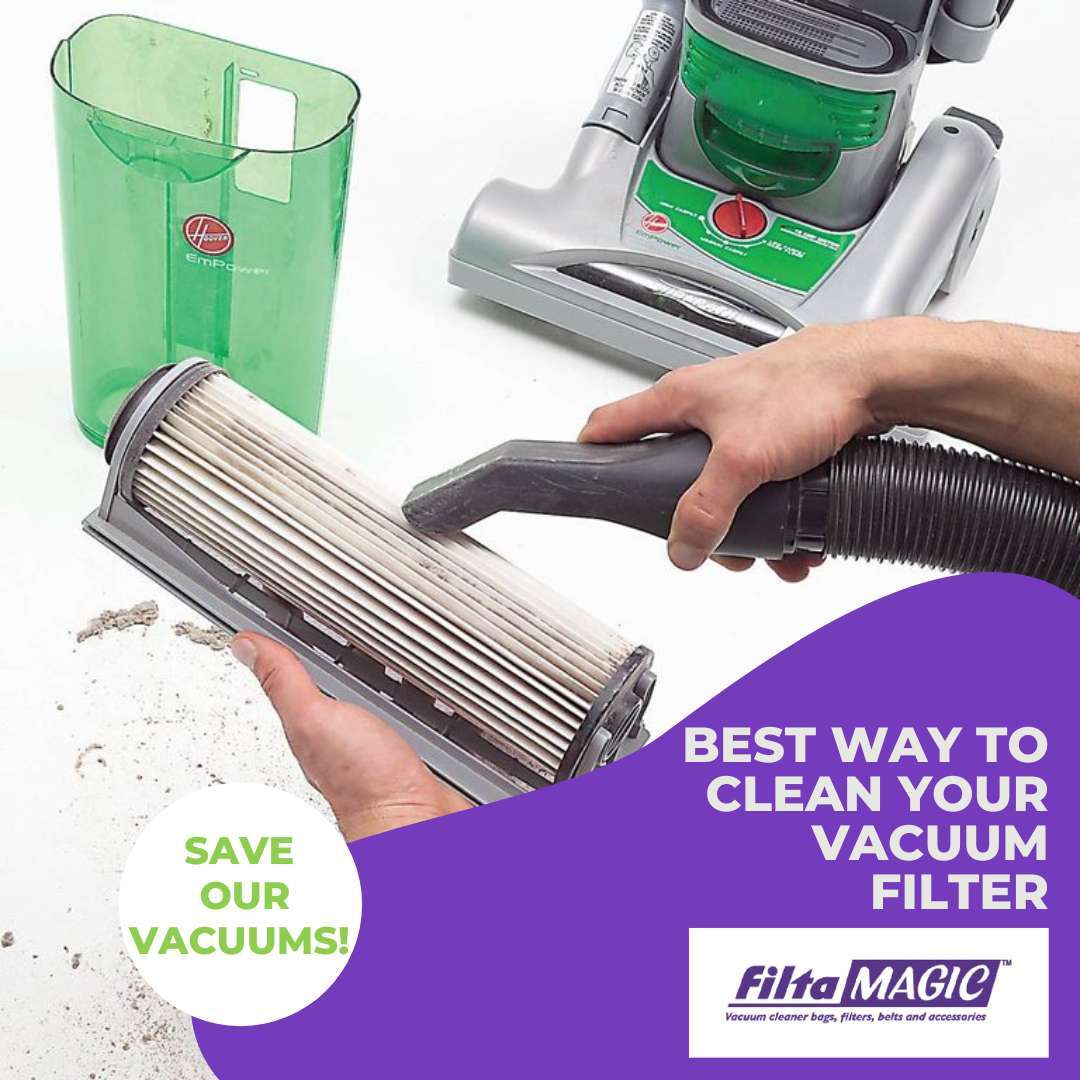
Take the filter outdoors or over a trash can. Tap it gently to remove dust and hair.
Do not shake a dusty filter near your face. Fine particles may contain pollen, pet dander, or other irritants. People with allergies may want to wear a mask and gloves.
Step 3: Rinse with cool water
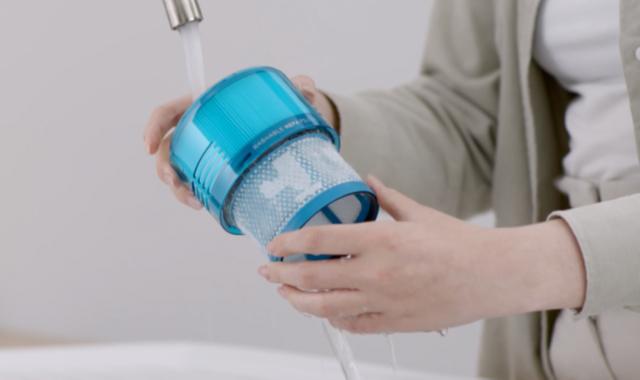
Hold the washable filter under a gentle stream of cool or lukewarm water. Rinse from the clean side toward the dirty side when the design makes this possible.
This helps push trapped dust out instead of driving it deeper into the filter.
Step 4: Use mild pressure
Squeeze a foam filter gently if the instructions allow it. Do not wring, twist, scrub hard, or use a stiff brush.
For a rigid mesh filter, use a soft brush only when needed. Do not use bleach, dish soap, laundry detergent, or strong cleaners unless the manufacturer approves them.
Step 5: Shake off excess water
Gently shake the filter or press it between clean towels. Do not use high heat to speed up the process.
A hair dryer, heater, clothes dryer, or direct heat can warp plastic and damage filter fibers.
Step 6: Air-dry completely
Place the filter in a warm, dry, well-ventilated area. Keep it away from strong sunlight and dusty surfaces.
Drying can take 24 hours or longer. The filter must feel dry inside and out before you reinstall it.
Step 7: Reinstall the filter correctly
Put the filter back only when it is completely dry and seated in the correct position. A loose filter can let dust reach the motor.
Run the vacuum for a short time and check for unusual noise, weak suction, or a dusty smell.
What Happens If You Use a Wet Vacuum Filter?
Using a wet filter can damage the vacuum and create a hygiene problem. Moisture may reach the motor, wiring, or other internal parts.
A damp filter can also trap dust and form a musty odor. In warm conditions, moisture may support mold and bacterial growth.
Common signs of a wet or poorly dried filter include:
• A musty or sour smell
• Reduced suction
• Dust blowing from the exhaust
• A hot motor smell
• Unusual rattling or whistling
• A filter that feels cool or damp
If you installed a wet filter, turn off and unplug the vacuum at once. Remove the filter and let it dry fully. If water reached the motor or the vacuum now makes a strange noise, stop using it and seek professional service.
A good rule is simple: if you are unsure whether the filter is dry, wait longer.
How Often Should You Clean or Replace a Vacuum Filter?
Cleaning frequency depends on how often you vacuum, the type of debris, and the filter design. A home with pets, children, allergies, or renovation dust may need more frequent care.
As a general guide:
• Check the filter every month.
• Wash a washable filter every one to three months.
• Check it more often in homes with pets.
• Replace disposable filters according to the manual.
• Replace any filter that is torn, crushed, or permanently dirty.
Do not wait for a major loss of suction. A clogged filter makes the vacuum work harder and may increase heat around the motor.
Some manufacturers recommend replacing a HEPA filter every six to twelve months. Others use a longer or shorter schedule. Treat that range as a guide, not a universal rule.
The best replacement time is based on the filter’s condition and your vacuum’s instructions.
Why Cleaning the Filter Matters
A clean filter helps the vacuum collect dust without blocking airflow. It can also reduce the amount of fine debris released through the exhaust.
Here are the main benefits:
• Better suction
• Less strain on the motor
• Lower risk of overheating
• Fewer dusty odors
• Better removal of fine particles
• More consistent cleaning results
A filter works like the lungs of the vacuum. When it fills with dust, air cannot move freely. Washing a washable filter clears the path, but it cannot repair worn filter fibers.
Cleaning the filter also helps you spot other problems. If suction remains poor after a clean, inspect the hose, brush roll, dust bin, seals, and air path.
Mistakes to Avoid When Washing a Vacuum Filter
Many filter problems come from good intentions. People often use too much force or reinstall the filter too soon.
Avoid these common mistakes:
Washing a nonwashable filter
Water can destroy paper and some HEPA filter media. Always confirm the filter type first.
Using hot water
Hot water may soften glue, deform plastic, or damage foam. Cool or lukewarm water is safer when washing is approved.
Adding cleaning products
Soap can leave a residue that blocks airflow. It may also damage filter coatings or create a strong smell.
Scrubbing aggressively
Hard scrubbing can tear pleats and create holes. A gentle rinse is usually enough.
Drying with heat
Heat can shrink foam and warp plastic. Natural air drying takes longer but is safer.
Reinstalling a damp filter
This is one of the most serious errors. Moisture can harm the motor and make the filter smell worse.
Forgetting the pre-filter
Some vacuums have a foam pre-filter and a separate exhaust or HEPA filter. Cleaning only one may leave the airflow restricted.
Cleaning Different Types of Vacuums
The answer to “Can I wash my vacuum cleaner filter?” can change by vacuum style. Each design has different airflow and filter locations.
Upright vacuums
Upright vacuums may have a pre-motor filter, exhaust filter, or HEPA filter. Remove only the parts shown in the manual.
Keep the dust bin and filter housing dry unless the instructions say they can be rinsed.
Canister vacuums
Canister models often use a bag or dust container plus one or more filters. A washable foam filter may sit near the motor.
Check for hidden filters behind the dust compartment. Never wash a paper bag or disposable filter.
Stick vacuums
Stick vacuums have small filters that clog quickly, especially in homes with pets. Many include a washable mesh or foam filter and a separate dry-only HEPA filter.
Let every washable part dry fully before placing it back in the compact housing.
Handheld vacuums
Handheld models often have a small reusable filter. Dust can build up fast because the filter has less surface area.
Clean it more often, but replace it when the material loses its shape.
Robot vacuums
Robot vacuum filters are often small pleated filters. Some can be tapped clean but not washed.
Since robot vacuums have compact motors, a clogged filter can reduce pickup quickly. Follow the cleaning instructions for the exact model.
Wet/dry vacuums
Wet/dry vacuums may use different filters for wet and dry pickup. A foam sleeve may be required for liquid, while a paper cartridge may be used for dry debris.
Never use the wrong filter for the task. Using a paper filter for liquid can ruin it, while using a wet filter for dry dust may reduce performance.
When Should You Replace the Filter?
Washing cannot restore a filter that has reached the end of its service life. Replace it if you notice physical damage or continued poor performance.
Look for:
• Tears or holes
• Loose seams
• Broken plastic frames
• Flattened foam
• Missing pleats
• Permanent gray or black buildup
• A strong odor after cleaning
• Dust escaping from the exhaust
You should also replace the filter if the vacuum manufacturer recommends a set schedule. Some filters gradually lose performance even when they look clean.