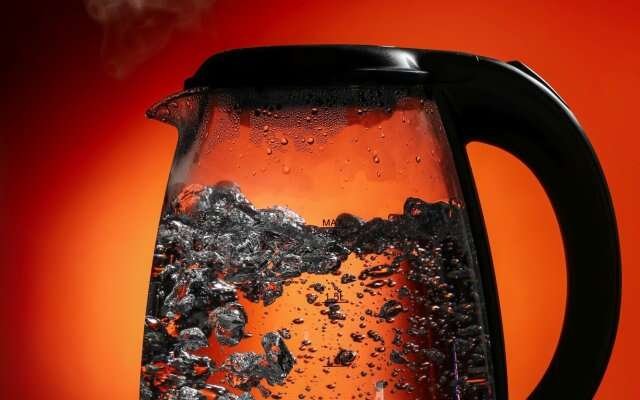
An electric kettle in a U.S. home usually lasts about 2 to 5 years with regular use. A basic stovetop kettle may last 5 to 10 years or longer, especially when made from stainless steel and kept dry between uses.
The exact answer depends on the kettle type, water quality, daily use, heating element, and care. A kettle used several times a day with hard tap water may wear out much sooner than one used a few times each week with filtered water.
There is no single official lifespan for every kettle. Instead, the best estimate comes from the kettle’s design, warranty, materials, use pattern, and condition. A kettle that still heats evenly, shuts off correctly, and has no damage may remain safe beyond its expected average life. A kettle with electrical or safety faults should be replaced at once, even if it is fairly new.


Average kettle lifespan by type
The kettle type is the first factor to consider. Electric kettles have more parts that can fail, while stovetop kettles have a simpler design.
| Kettle type | Typical service life | Main parts that wear |
|---|---|---|
| Basic electric kettle | 2–5 years | Heating element, switch, thermostat, power base |
| Premium electric kettle | 4–8 years | Thermostat, display, controls, heating element |
| Stovetop stainless-steel kettle | 5–10+ years | Handle, lid, spout, whistle |
| Glass electric kettle | 2–5 years | Heating element, glass body, lid, switch |
| Cordless electric kettle | 2–5 years | Connector, thermostat, base, heating element |
| Gooseneck electric kettle | 2–6 years | Temperature controls, thermostat, base |
These are practical ranges, not guarantees. They describe how long a kettle may remain usable under normal household conditions. They are not laboratory life ratings.
An electric kettle may fail sooner because it contains electrical controls, a thermostat, and a heating element. A stovetop kettle has fewer failure points, but its handle, lid, enamel, or whistle can still become unsafe.
A warranty can offer a useful clue. In the United States, many consumer kettles carry a limited warranty of about one to three years, but warranty length does not equal expected life. Always check the warranty for the exact model because terms vary by brand and product version.
What “lasting” means
A kettle can last in several different ways:
- Functional life: It still boils water.
- Safe life: It still operates without shock, fire, leak, or burn risks.
- Useful life: Its speed, temperature control, noise, and convenience still meet your needs.
- Cosmetic life: The body, finish, and markings still look acceptable.
These timelines do not always match. A kettle may still turn on but have a faulty auto-shutoff. In that case, it has not reached the end of its cosmetic life; it has reached the end of its safe life.
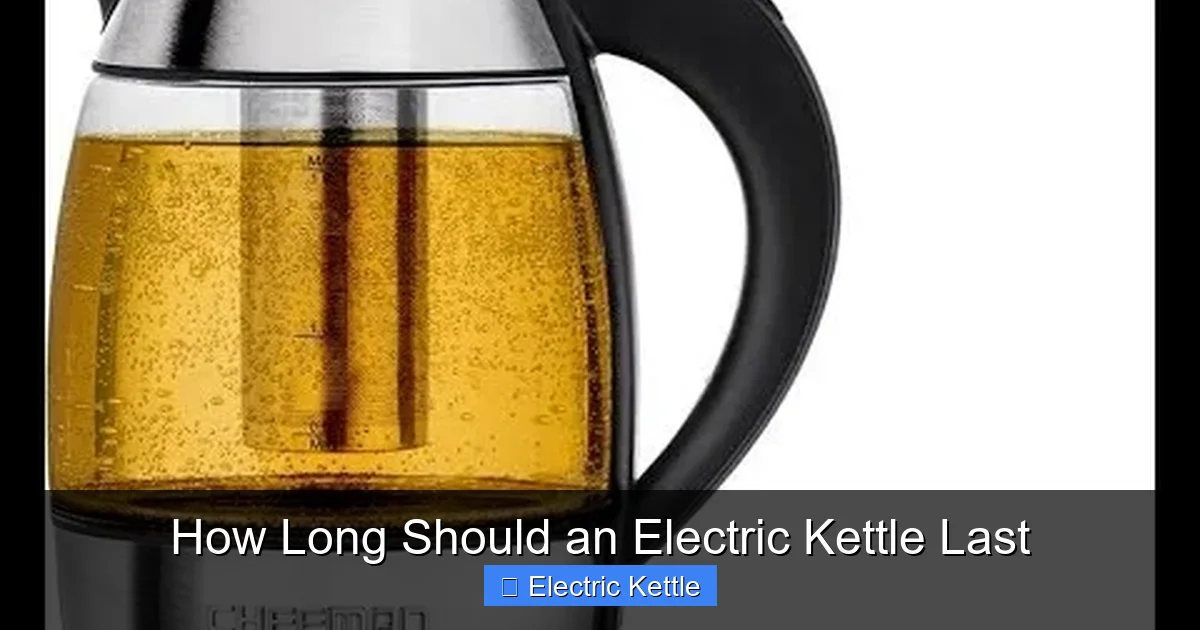
What affects how long an electric kettle lasts?
The biggest causes of early kettle failure are frequent use, mineral scale, heat stress, and poor cleaning. Water quality and daily habits often matter more than the purchase price.
1. Daily use
A kettle used once each morning has a much lighter workload than one used 10 times a day in a busy office. Each heating cycle adds heat to the element, thermostat, seals, and electrical contacts.
A simple way to estimate use is:
Daily cycles × 365 = approximate heating cycles per year


For example, a kettle used four times each day runs about:
4 × 365 = 1,460 heating cycles per year
That does not predict an exact failure date. It only shows why two kettles bought on the same day may age at very different rates.
2. Hard water and mineral scale
Hard water contains minerals such as calcium and magnesium. When water heats, some of these minerals can form a rough layer called limescale or mineral scale.
Scale can:
- Slow heating
- Increase energy use
- Make the kettle noisy
- Cause flakes to enter the water
- Cover the heating element
- Interfere with temperature sensing
- Shorten the life of the kettle
The U.S. Geological Survey explains that water hardness varies by location and is linked mainly to dissolved calcium and magnesium. A local water report can help you understand whether hard water is likely to affect your kettle.
Scale does not usually mean the water is dangerous by itself. It does mean the kettle needs cleaning. Follow the manual before using vinegar, citric acid, or a commercial descaler, since some manufacturers limit which products are approved.
3. Empty or low-water heating
Most electric kettles have boil-dry protection. This safety feature should switch the kettle off when it detects too little water. It is helpful, but it is not a reason to operate the kettle empty.
Repeated dry heating can stress the element and the kettle’s thermal controls. Do not turn on an electric kettle unless the water level meets the minimum mark in the manual.
4. Material and construction
Stainless steel usually tolerates daily use well, but it can become hot to the touch. Glass lets you see the water and scale, but it can crack from impact or sudden temperature changes.
Plastic kettles are often light and affordable. Their outside may stay cooler, but plastic parts can discolor, absorb odors, or become brittle with age. The quality of the switch, thermostat, lid, and base often matters more than the outer material alone.
5. Heat and moisture around the base
The electrical base should stay dry. Water on the base, plug, or connector can cause malfunction or shock.
Do not fill a kettle while it sits on its powered base. Remove the kettle first, fill it at the sink, and wipe the outside before placing it back.
6. Voltage and outlet conditions
Most U.S. household outlets provide about 120 volts. Many kettles sold in Europe, the United Kingdom, and other regions are made for about 220–240 volts.
Do not plug a 220–240-volt kettle into a standard U.S. outlet and assume a simple travel adapter will solve the problem. The appliance must be rated for the voltage supplied. A voltage mismatch can damage the kettle, trip a breaker, or create a fire hazard.


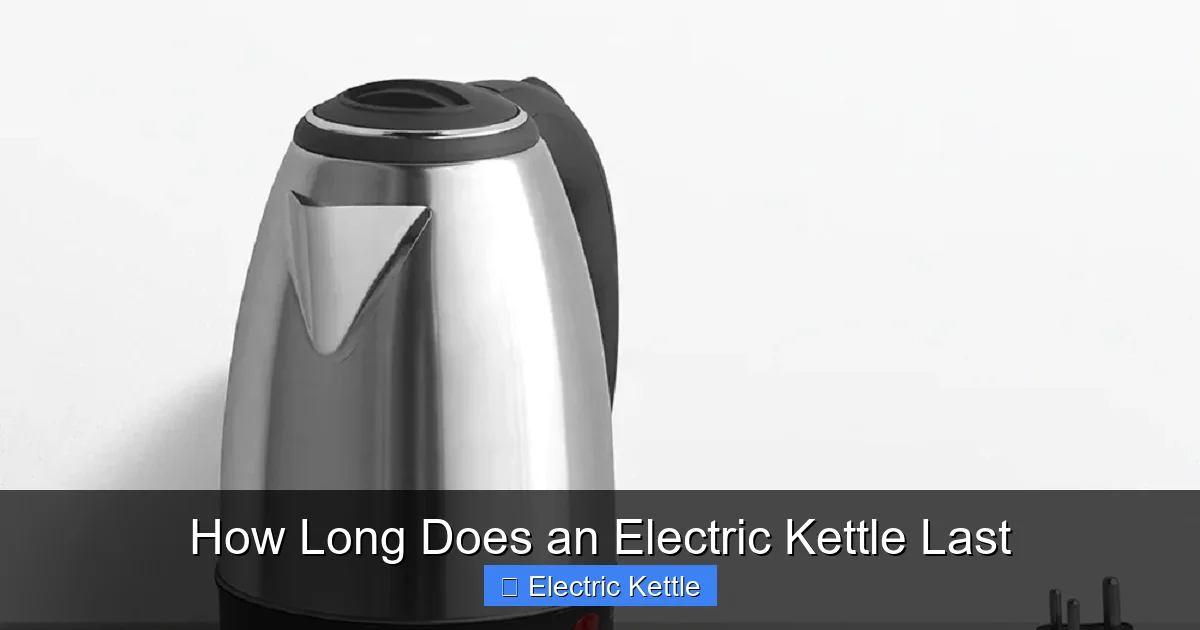
Signs your kettle needs replacement
Replace the kettle when it shows a safety fault, not only when it stops boiling. Some failures are obvious. Others appear as small changes before the kettle quits.
Replace it immediately if you notice:
- A damaged power cord, plug, or base
- Sparks, smoke, or a burning smell
- Tingling or an electric shock when touching the kettle
- Water leaking near the electrical base
- Cracks in the body, especially around the handle or bottom
- A switch that will not stay off
- An auto-shutoff that does not work
- A melted, warped, or scorched part
- A loose internal component that rattles
- Repeated breaker trips when the kettle runs
Unplug the kettle if you see smoke, sparks, melting, or cord damage. Do not open the appliance unless you are qualified to repair electrical equipment. The U.S. Consumer Product Safety Commission provides consumer guidance and recall information for household products, including electrical appliances.
These signs may call for cleaning first:
- White flakes in the water
- A chalky coating inside
- Longer boiling times
- Loud popping or rumbling
- A metallic or stale taste
- A temperature kettle stopping at the wrong point
Scale may cause these symptoms, but it is not the only possible cause. If cleaning does not solve the problem, replace the kettle rather than continuing to use one with uncertain temperature control.
A failed auto-shutoff is a serious fault
The auto-shutoff is one of the kettle’s key safety features. It should stop heating after the water reaches a boil or when the kettle is removed from its base, depending on the model.
If the kettle keeps heating after boiling, unplug it and stop using it. Do not rely on watching the kettle every time. A forgotten kettle can boil dry, overheat, damage the counter, or create a fire risk.
How to make a kettle last longer
Good care can extend useful life, but it cannot repair a damaged cord, failed thermostat, or cracked body. Use the care steps that match your kettle’s manual.
1. Use only the required amount of water
Fill the kettle with enough water for the cups you need, while staying above the minimum line. Avoid filling it to the maximum line for one cup.
Less water means:
- Faster boiling
- Less energy use
- Less time under heat
- Fewer minerals left behind after evaporation
Do not guess below the minimum mark. The heating element must remain covered.
2. Empty leftover water
When practical, pour out unused water after the kettle cools. Standing water can leave more scale and may create stale odors.
Do not store the kettle full for long periods unless the manual allows it.
3. Descale it on a regular schedule
The right schedule depends on your water. A home with hard water may need descaling every few weeks. A home with soft or filtered water may need it less often.
A practical approach is:


- Check the manual for an approved descaling method.
- Descale when you see buildup, hear unusual noise, or notice slower boiling.
- Rinse the kettle well.
- Run and discard one or more plain-water boils if the instructions call for it.
- Repeat sooner if scale returns quickly.
Do not use abrasive pads or metal tools on the heating element. Do not immerse an electric kettle, power base, plug, or cord in water.
4. Keep the outside and base dry
Wipe spills before placing the kettle on its base. Keep the base away from the edge of the counter and away from a sink where it may be splashed.
Never pull the plug by the cord. Grip the plug instead.
5. Avoid sudden temperature shock
Do not pour cold water into a very hot glass kettle unless the manual says it is safe. Let the kettle cool first.
For stovetop kettles, avoid heating an empty vessel. Keep the flame or burner under the base rather than the handle, lid, or whistle.
6. Do not overfill
Overfilling can force boiling water through the spout or lid. It can also wet the base or nearby surfaces.
Use the maximum fill line as a safety limit, not a target.
7. Store it with the lid open when appropriate
If the manual permits it, leaving the lid open after use can help the interior dry. This may reduce stale smells and trapped moisture.
Keep the kettle away from children. The body, steam, lid, and water can cause serious burns.

Electric kettle vs. stovetop kettle: which lasts longer?
A stovetop kettle usually has the longer potential life because it has fewer electronic parts. An electric kettle is often faster and more convenient, but its thermostat, switch, base, and heating element can fail.
The better choice depends on what you value:
| Priority | More suitable option |
|---|---|
| Long service life with simple parts | Stainless-steel stovetop kettle |
| Fast boiling at a U.S. outlet | Electric kettle rated for 120 volts |
| Precise brewing temperature | Electric temperature-control kettle |
| Low counter weight | Compact electric or lightweight stovetop kettle |
| Use during a power outage | Stovetop kettle with a safe heat source |
| Easy automatic shutoff | Electric kettle |
A stovetop kettle is not automatically safer. It can boil dry, become extremely hot, or spill boiling water. An electric kettle is not automatically less durable. A well-made model that is descaled and used correctly may last many years.
For most buyers, the key trade-off is simplicity versus convenience. A stovetop model may last longer, while an electric model may save time and offer automatic shutoff or temperature control.


Can you repair an old kettle?
Some kettle problems are simple to correct. Most electrical failures are not practical or safe for a typical home repair.
Problems that may be fixable without opening the kettle
- Mineral scale
- A clogged spout filter
- A dirty lid seal
- Water on the outside of the base
- A kettle that has entered a temporary overheat-protection state
Unplug the kettle and let it cool before cleaning. If the model has a removable filter, clean it as directed.
Problems that usually justify replacement
- Failed auto-shutoff
- Damaged cord or plug
- Cracked body
- Leaking near the base
- Burned connector
- Broken thermostat
- Repeated overheating
- Electrical smell or sparks
A cheap kettle may cost less to replace than to diagnose. More importantly, an incorrectly repaired appliance can create a shock or fire risk.
If the kettle is under warranty, contact the manufacturer before opening or discarding it. Keep the model number, purchase record, and photos of the fault. Check the CPSC recall database if the problem involves overheating, melting, fire, or electric shock.

Is it safe to use a kettle with limescale?
A small amount of limescale is usually a maintenance issue rather than an emergency. It can affect taste, noise, heating speed, and the life of the kettle.
The more serious concern is damage caused by scale or neglect. Stop using the kettle if scale is joined by leaking, exposed wiring, cracked parts, a failed shutoff, or a burning smell.
Do not scrape scale with a knife. Use the cleaning method listed in the manual. Some manufacturers recommend citric acid or a commercial descaler. Others provide specific limits for vinegar or cleaning solutions.
If flakes appear after cleaning, rinse the kettle several times and inspect the filter. Replace the kettle if the interior coating is peeling, the body is cracked, or the debris appears to come from a damaged part rather than harmless mineral scale.

How to decide whether to keep or replace your kettle
Use this quick decision process:
-
Check for safety faults.
Replace the kettle if it sparks, leaks near the base, smells burned, shocks you, or fails to shut off. -
Check for visible damage.
Cracks, melted plastic, a loose plug, or a damaged cord are replacement signs. -
Clean mineral scale if the kettle is otherwise sound.
Follow the manufacturer’s cleaning directions. -
Test normal operation while you remain nearby.
The kettle should heat, shut off, and cool without smoke, unusual smells, or repeated breaker trips. -
Compare repair cost with replacement cost.
A minor cleaning issue may be worth fixing. A failed electrical control usually is not. -
Consider the use pattern.
If you boil water many times each day, a more durable model or a longer warranty may matter. If you use it twice a week, careful cleaning may matter more than premium features.
A kettle does not need replacement just because it is three years old. Age is one clue. Safety, performance, and condition are better deciding factors.

Key takeaways
- An electric kettle commonly lasts 2 to 5 years in a U.S. home.
- A stainless-steel stovetop kettle may last 5 to 10 years or longer.
- Hard water, heavy use, scale, and dry heating can shorten kettle life.
- Descale the kettle according to the manufacturer’s instructions.
- Replace any kettle with a damaged cord, leak near the base, burning smell, sparks, cracks, or failed auto-shutoff.
- Check the voltage rating before using an imported kettle in the United States.
- A longer warranty can help, but it does not guarantee a specific lifespan.
Frequently asked questions
How often should I replace my electric kettle?
Replace it when it becomes unsafe or unreliable, not simply when it reaches a certain age. Many electric kettles last about two to five years, but light use and regular descaling may extend that period. A failed auto-shutoff, damaged cord, electrical smell, or leak calls for immediate replacement.
Does boiling water every day shorten a kettle’s life?
Daily boiling is normal use. The number of cycles matters more than the calendar age. A kettle used several times a day experiences more heat cycles and may wear sooner than one used once a day. Keeping the water level correct and removing scale can reduce that stress.
Is it better to leave water in an electric kettle?
It is usually better to empty unused water after use, especially if your water is hard. Standing water can leave mineral deposits and stale odors. Follow the manual if it gives different storage advice.
Can I use vinegar to descale a kettle?
Some manufacturers allow diluted white vinegar, while others recommend citric acid or a branded descaler. Check the manual first. Never mix vinegar with bleach or other cleaning chemicals. Rinse the kettle well after descaling.
Do expensive kettles last longer?
Not always. A higher price may pay for temperature control, quieter operation, stronger materials, or a better warranty. It does not guarantee a longer life. Look for a solid warranty, replaceable or cleanable filters, clear care instructions, and a safety shutoff.
Conclusion
Most electric kettles last around 2 to 5 years, while simple stovetop kettles can last much longer. The main threats are mineral scale, heavy daily use, dry heating, moisture around electrical parts, and worn safety controls.
Clean the kettle based on your water quality, use only the required amount of water, keep the base dry, and inspect the cord and shutoff. If the kettle leaks, sparks, smells burned, or fails to switch off, replace it rather than trying to extend its life.

Liora Pennings is a seasoned chef and kitchen enthusiast with a passion for turning everyday cooking into an effortless experience. With years of hands-on culinary expertise, she specializes in practical techniques, ingredient know-how, and smart kitchen solutions that help home cooks elevate their meals. At KitchFlair.com, Liora shares her best tips, time-saving tricks, and honest product reviews to guide readers toward a more efficient, enjoyable, and inspired cooking routine. Whether you’re a beginner or a seasoned home chef, Liora’s friendly, knowledge-packed insights make every visit to the kitchen a little easier—and a lot more delicious.